

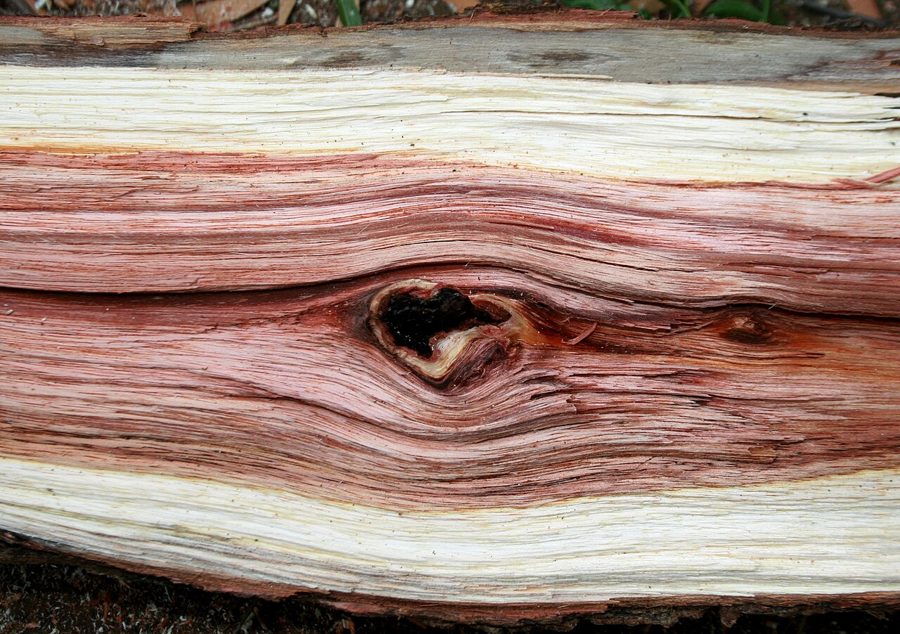

Overview
Australian blackwood is an Acacia, not a eucalypt, and is the favourite cabinet and tonewood of Tasmania. It is medium-weight and easy to work, and the better boards carry fiddleback or curl that rivals koa and walnut. Pick it for fine furniture, instruments and anything where figure matters.
Pros
- Easy to work and steam-bends (Wood Database).
- Lovely figure: fiddleback and curl are common in the better grades.
- Moderate hardness (1160 lbf Wood Database; WoodSolutions 4.9 kN, about 1100 lbf), so it is kinder to tools than the eucalypts.
- Wood Database calls it moderately durable; it works as a koa substitute.
Cons
- Costly, and cost climbs steeply with figure.
- Sensitizer: the Wood Database reports asthma-like symptoms and eye, skin and respiratory irritation, so use extraction and a respirator.
- Not for hard outdoor use.
- Colour varies board to board; plan to match.
Variants and subspecies
- Plain and light, medium and heavy figure grades: Hearne's January 2026 list prices 4/4 plain at $16 per board foot, light figure $22, medium $35 and heavy $50 (select and better).
- Quartersawn, veneer and tonewood sets, sold by the set or flitch.
- Tasmanian blackwood is not the same as African blackwood (a rosewood relative used for woodwinds): it is a different genus.
Working and finishing
Easy to machine and sand, with tear-out mainly where the figure changes direction; take light cuts or scrape. Steam-bends well. Finish with shellac, oil or lacquer to bring out chatoyance.
Staining and finishing colour
A clear finish is usually best. If you must colour it, dye is more even than pigment stain on figured boards; test first. It tends to darken and warm toward reddish brown with light.
Sustainability and handling
Blackwood grows wild in several countries, but nearly all commercial lumber comes from Tasmania, where roughly 8000 ha of north-west swamp forest are under blackwood silviculture on about 70-year native rotations, and plantations are being established (Tasmanian Timber industry blackwood notes). Sustainable Timber Tasmania holds Responsible Wood (PEFC-endorsed) forest certification and says it is working towards FSC; an advocacy release by the Wilderness Society (Dec 2019) said it had failed FSC assessment over old-growth and threatened-species management. I could not confirm certification for any individual board, so ask. The Wood Database notes it is invasive in some regions. IUCN status: no assessment was found. Not listed in the CITES Appendices according to the Wood Database; checked 2026-09, but CITES/Species+ could not be queried directly.
Popular projects
Fine furniture, cabinet doors, guitar and ukulele backs and sides, veneer, turnings and boxes.
Buying notes
Sold in 4/4 to 8/4 by figure grade; 8/4 plain was listed at $18 per board foot, and highly figured stock can exceed $100. Buy by looking at the actual board or sets in good light, and ask for Tasmanian provenance and a certificate if one exists.
Typical projects
- fine furniture
- guitars and ukuleles
- veneered panels
- turned items
- cabinet doors
Sources
Researched 2026-09-30. Prices, conservation status and CITES listings on this page are indicative and were checked on that date. They change: confirm them with your supplier, and with the relevant authority before importing or exporting.