Techniques
Every joint and construction technique the site uses, and whether the compiler builds it today.
Modelled
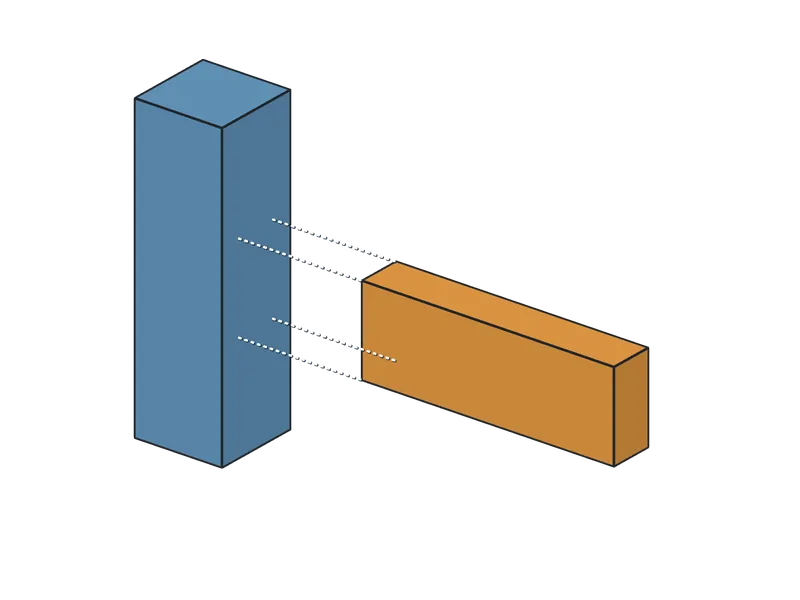
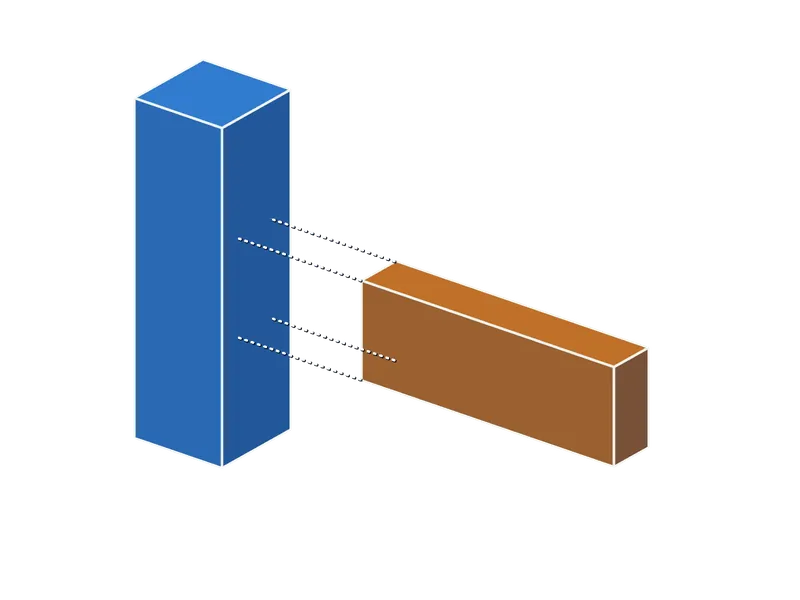
- Butt joint
Two square-cut faces glued or fastened together with no interlocking shape; strength comes entirely from the fastener or adhesive.
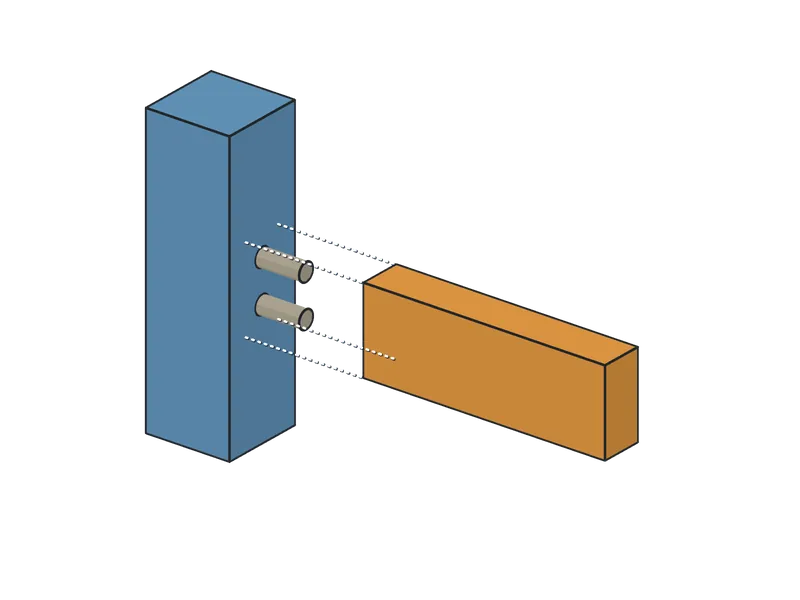
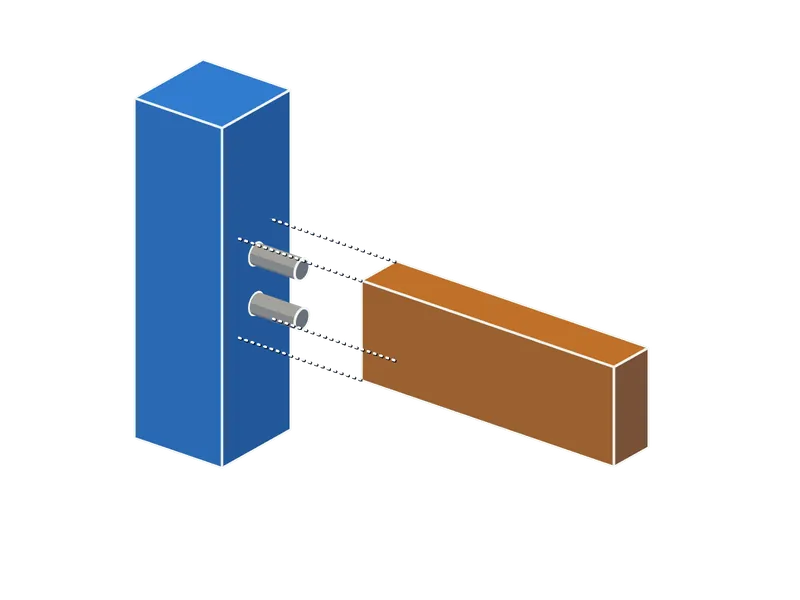
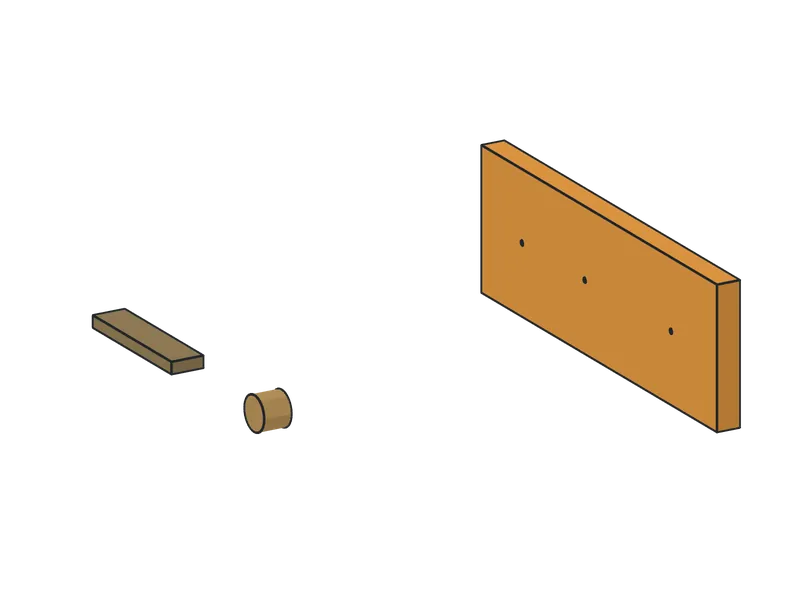
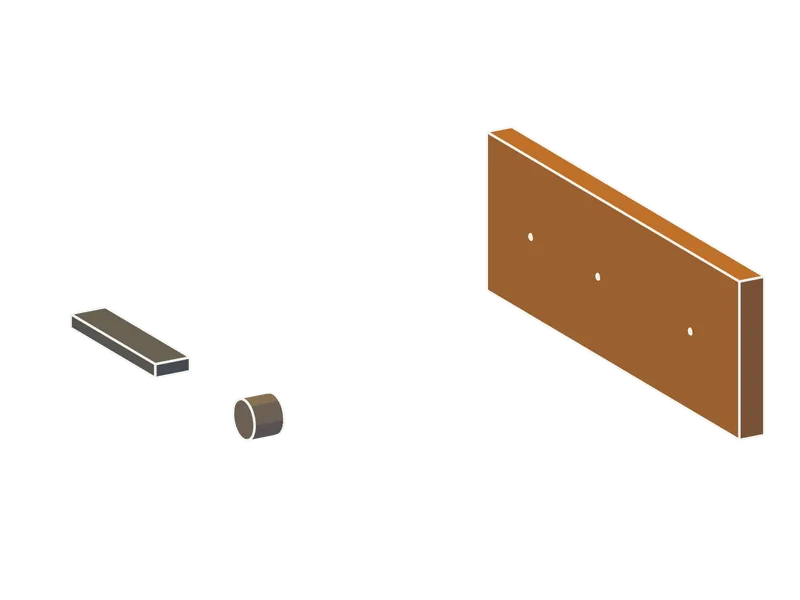
- Dowel joint
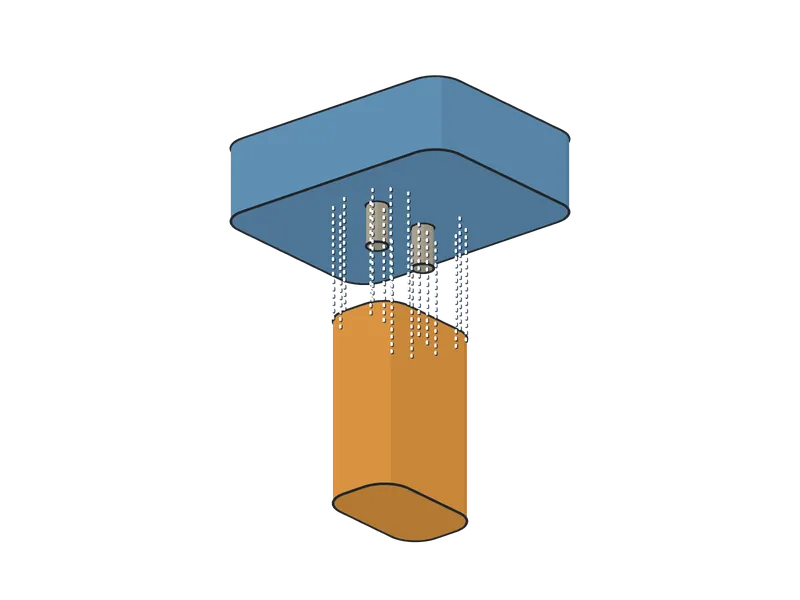
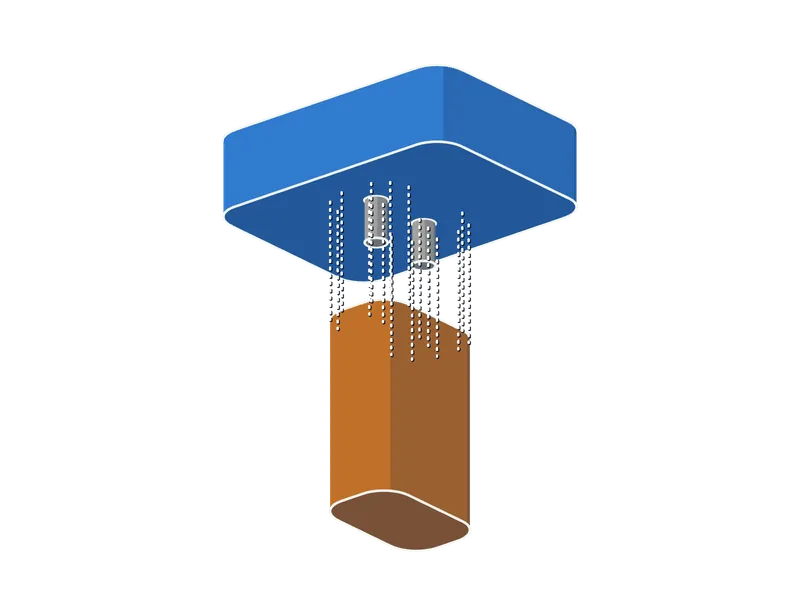
A joint held by round wooden pins glued into matching holes bored in both parts.
- Pocket-hole joint
A joint made by driving a screw through an angled, stepped hole bored in one part into the face of the other.
- Biscuit joint
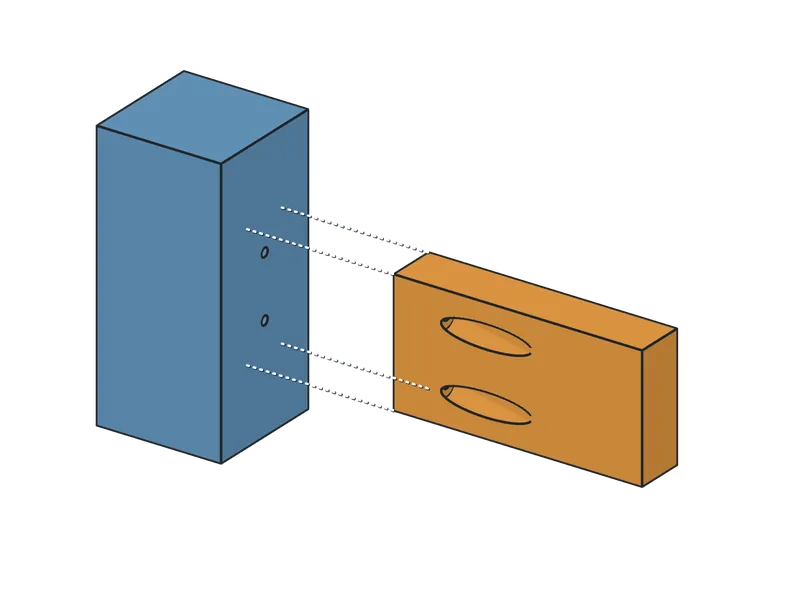
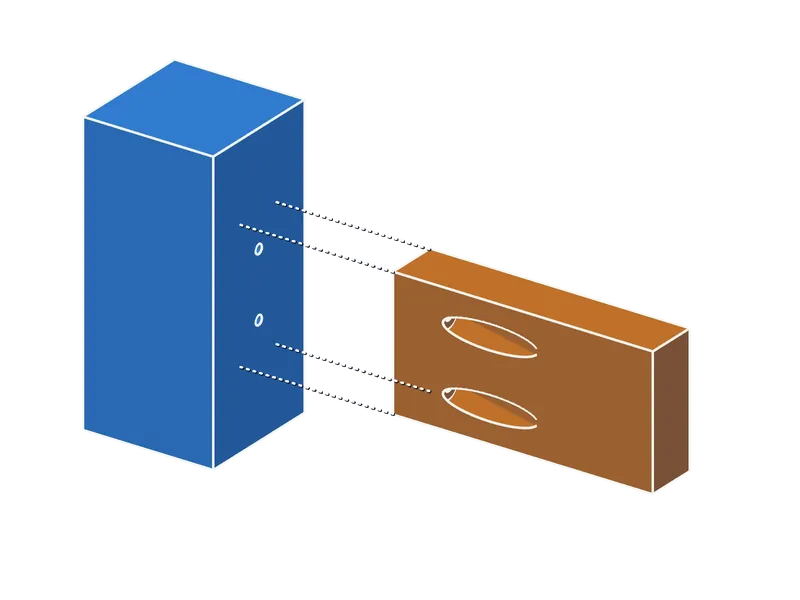
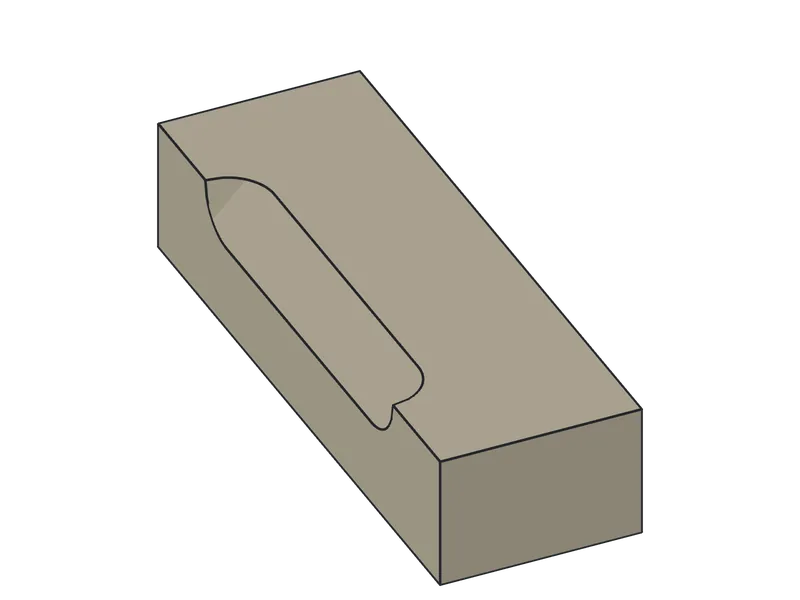
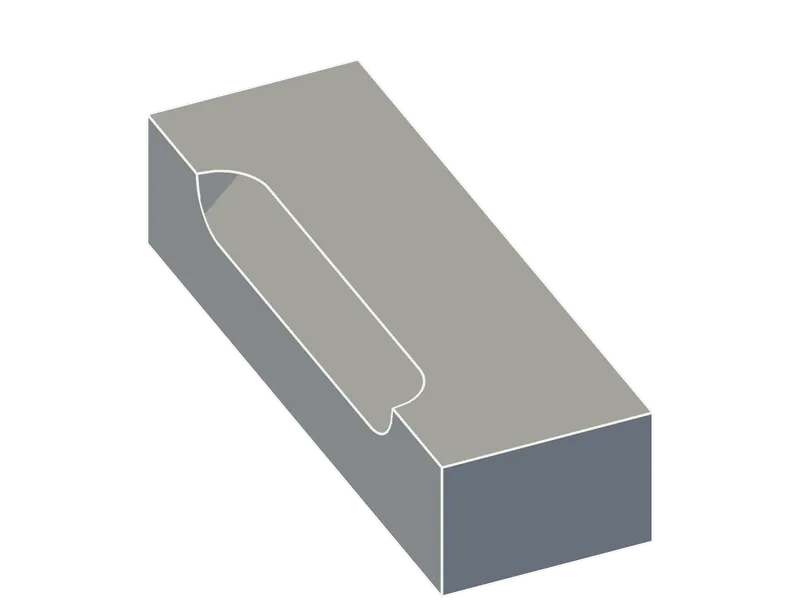
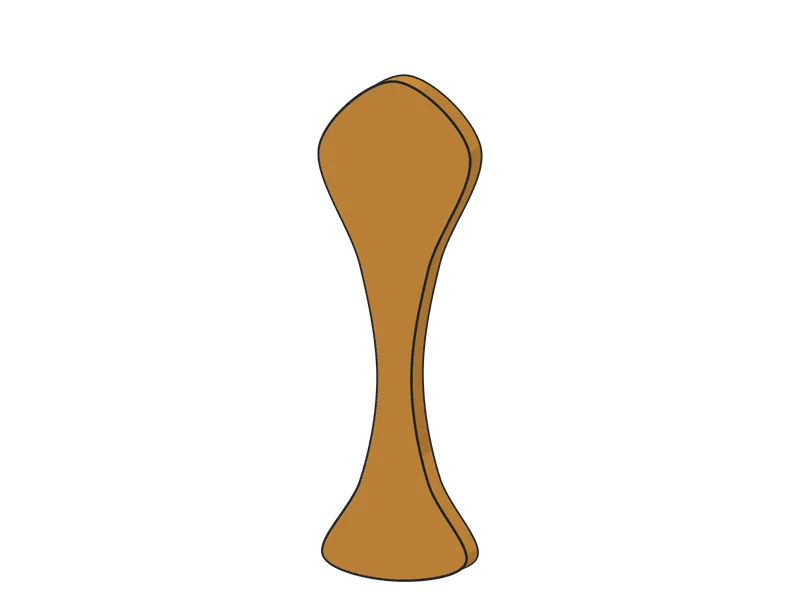
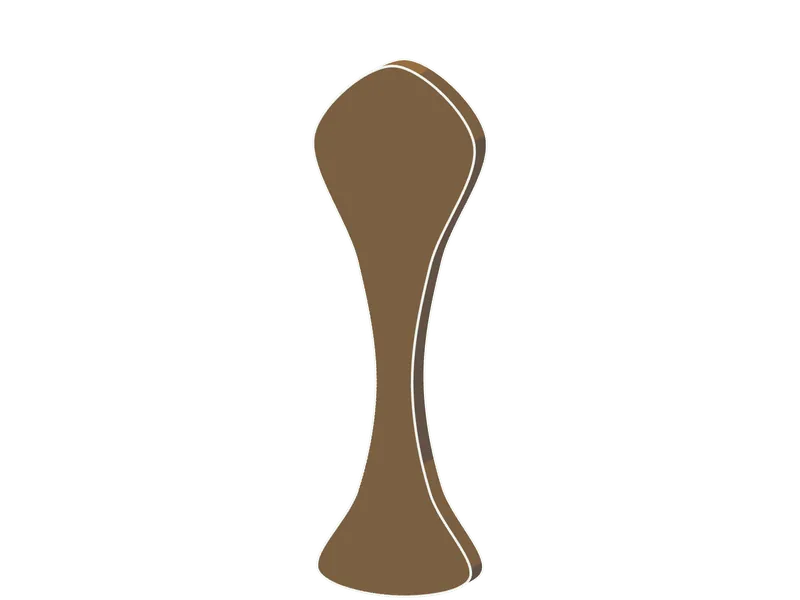
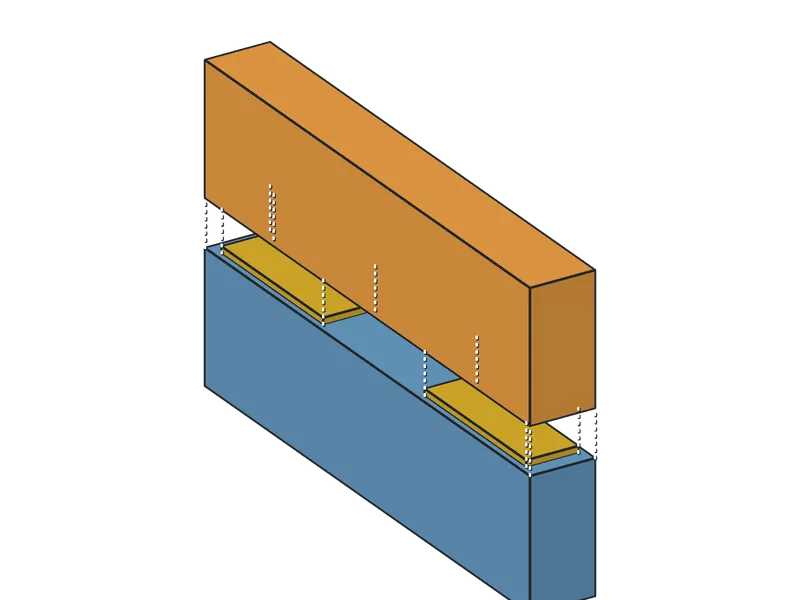
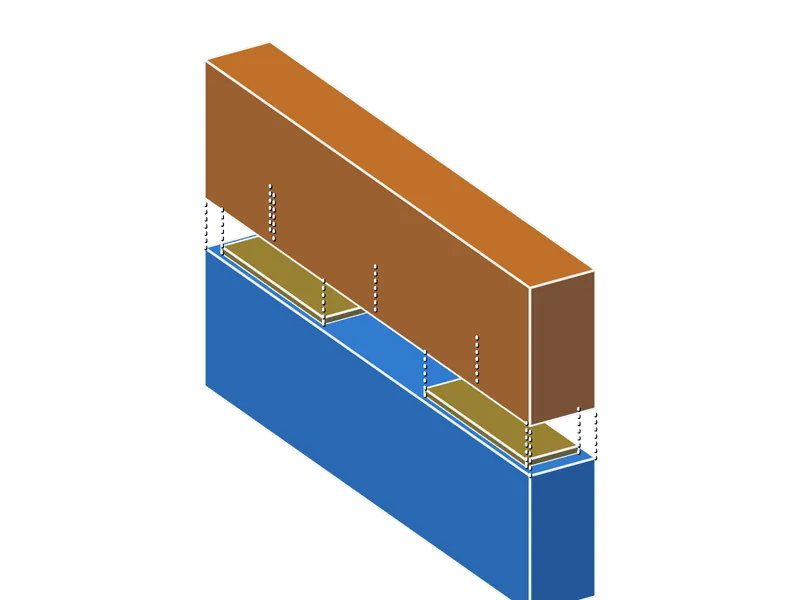
An alignment and reinforcement joint using a football-shaped compressed-wood wafer glued into matching slots cut with a biscuit joiner.
- Domino joint
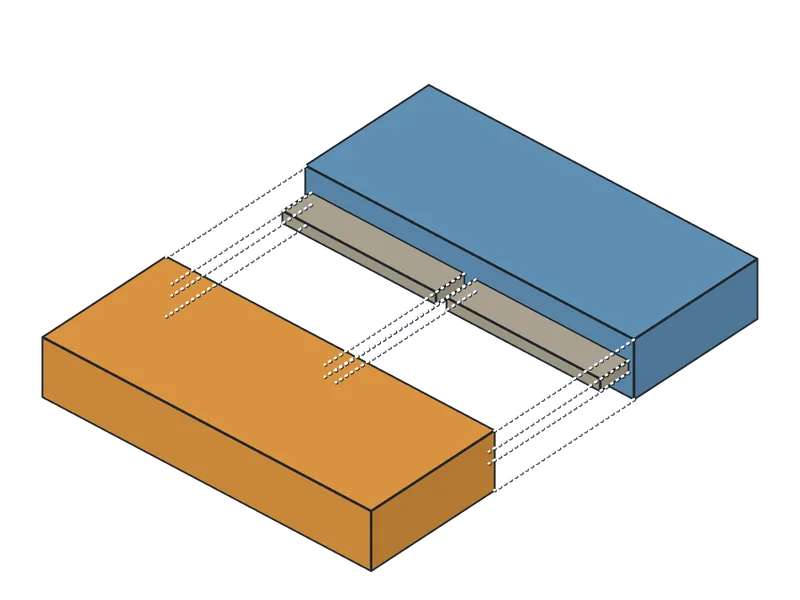
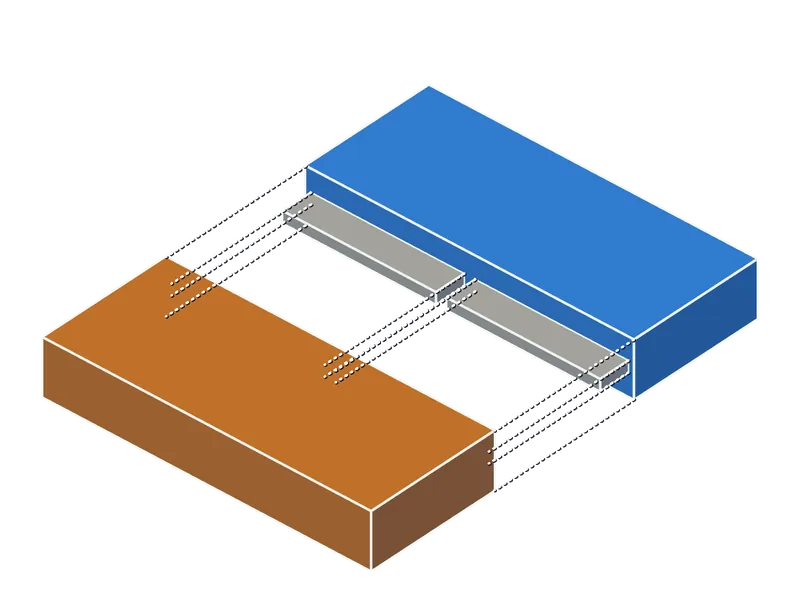
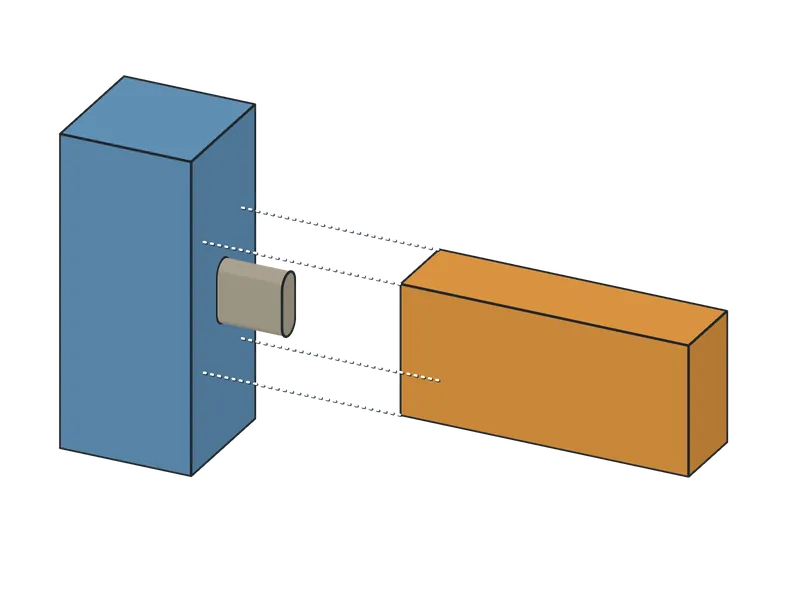
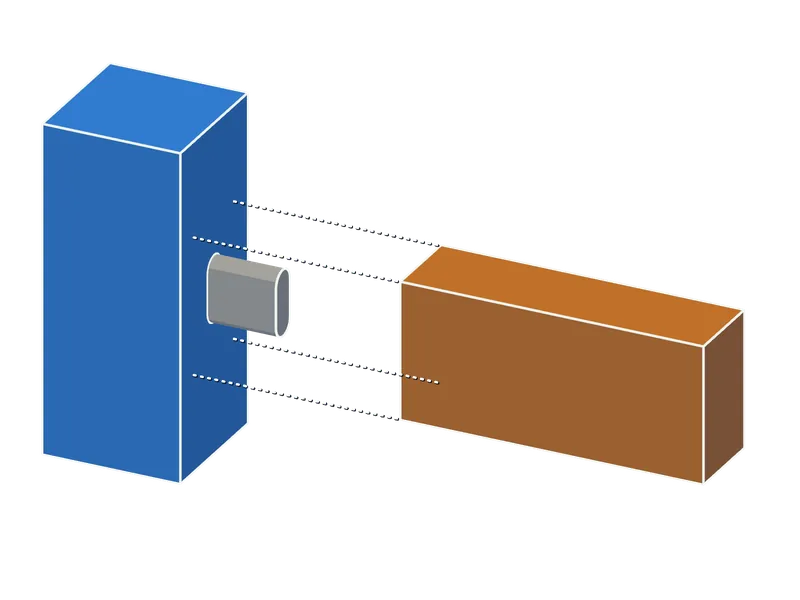
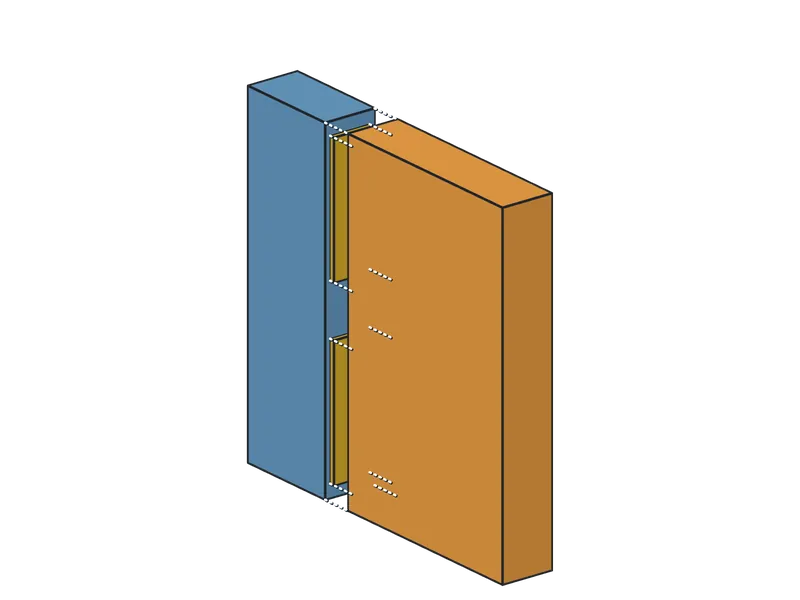
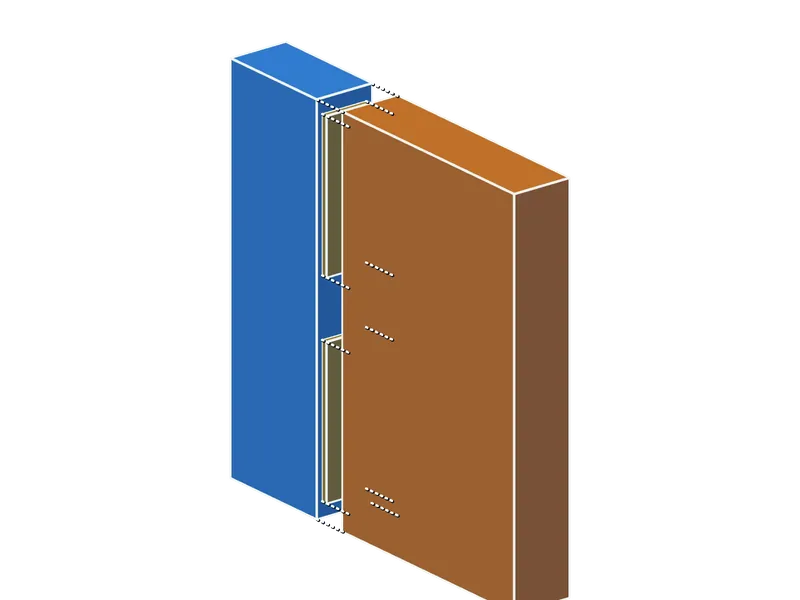
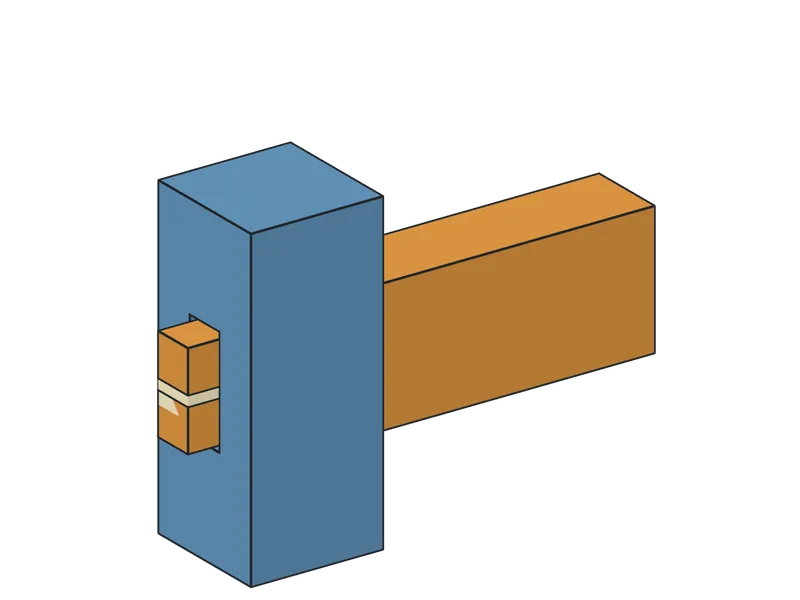
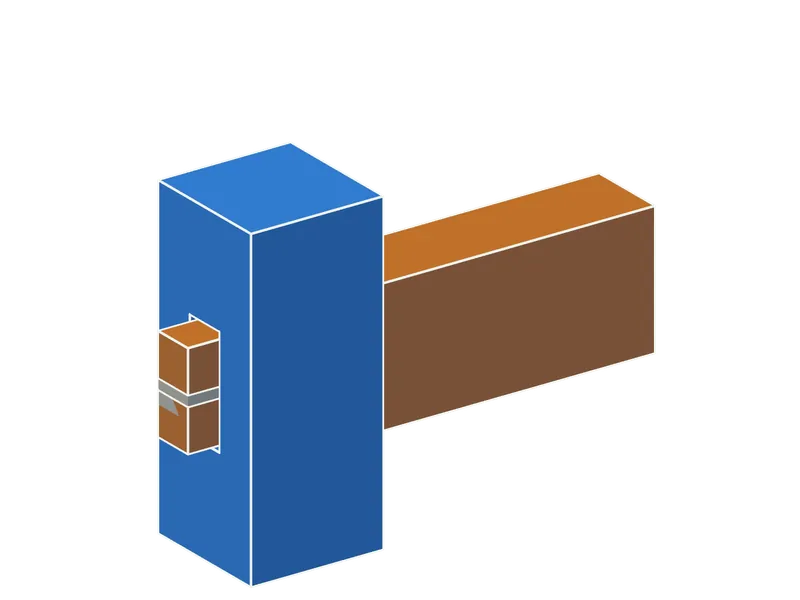
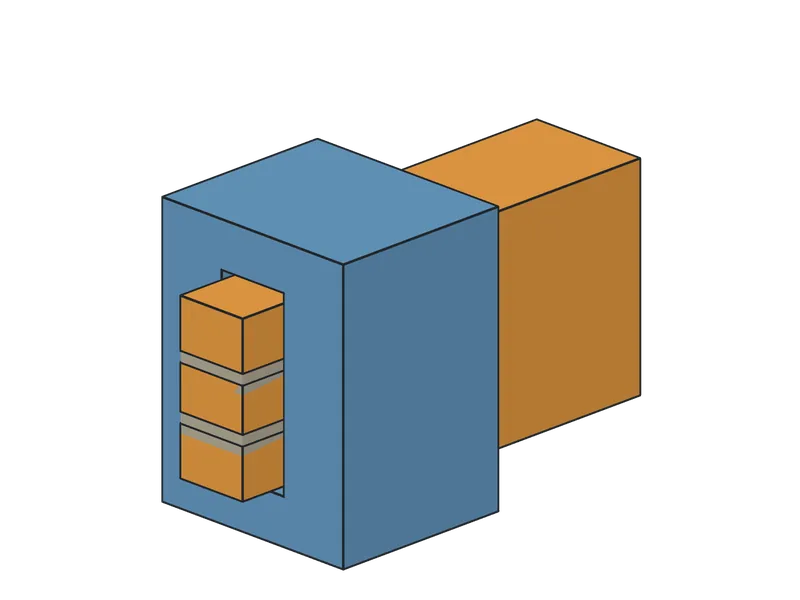
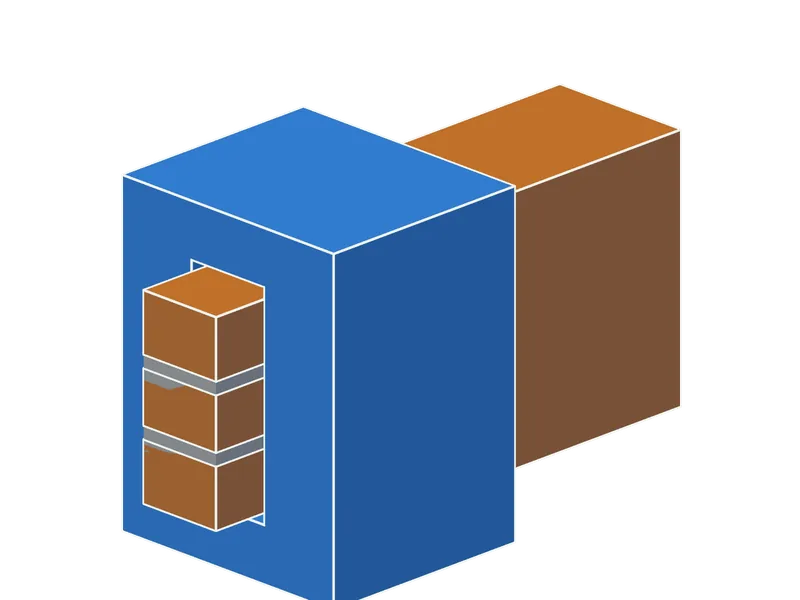
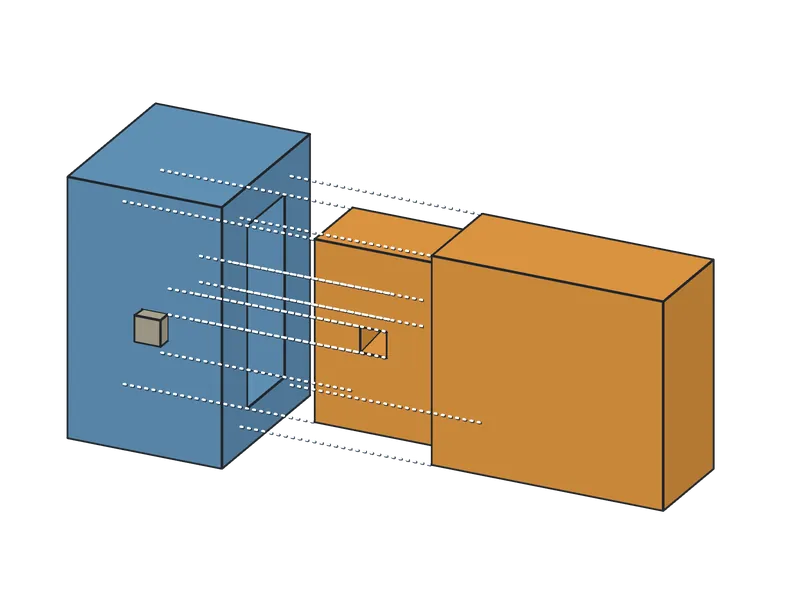
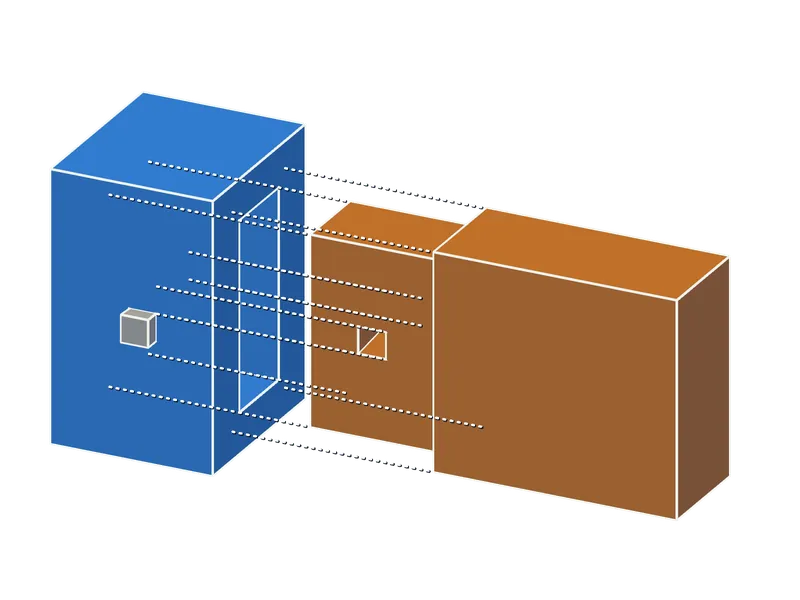
A loose-tenon joint made with the Festool Domino machine: a separate rectangular tenon glued into matching mortises cut in both parts.
- Edge-glue joint
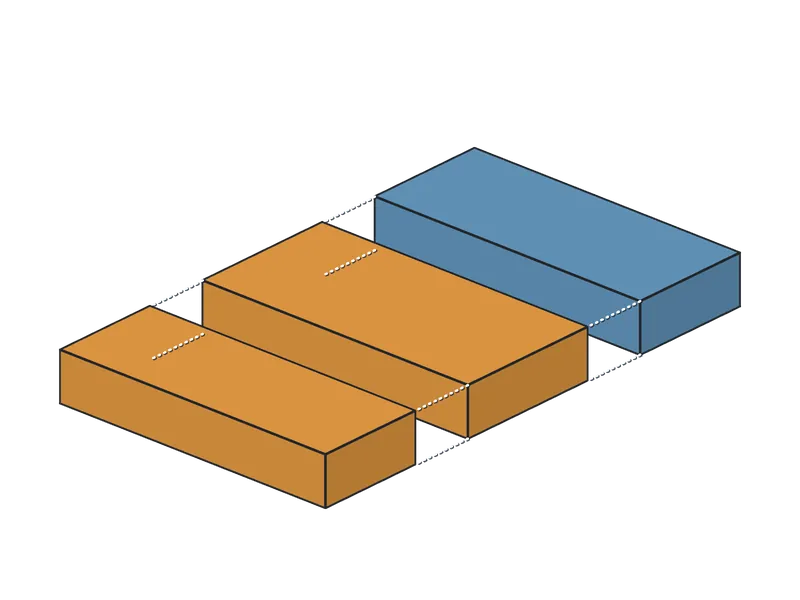
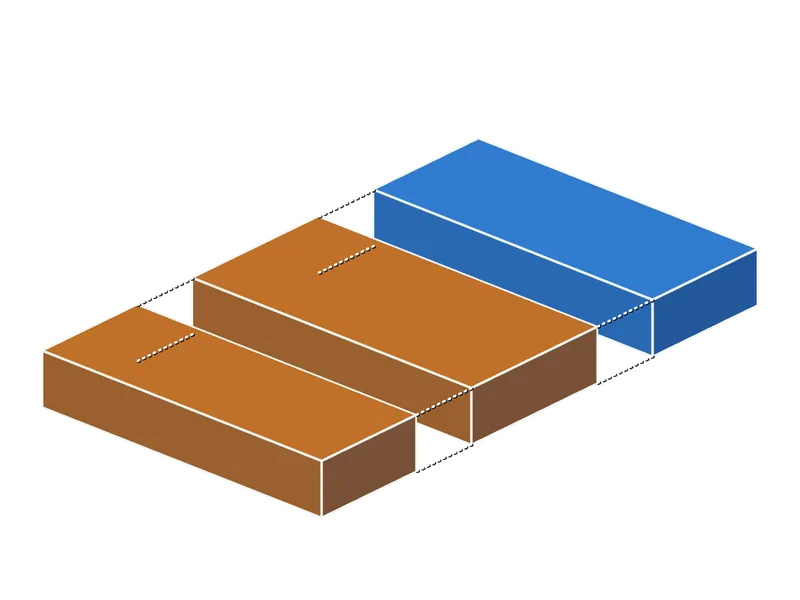
Boards joined edge to edge with glue alone, sometimes reinforced with biscuits, to build a wider panel from narrower stock.
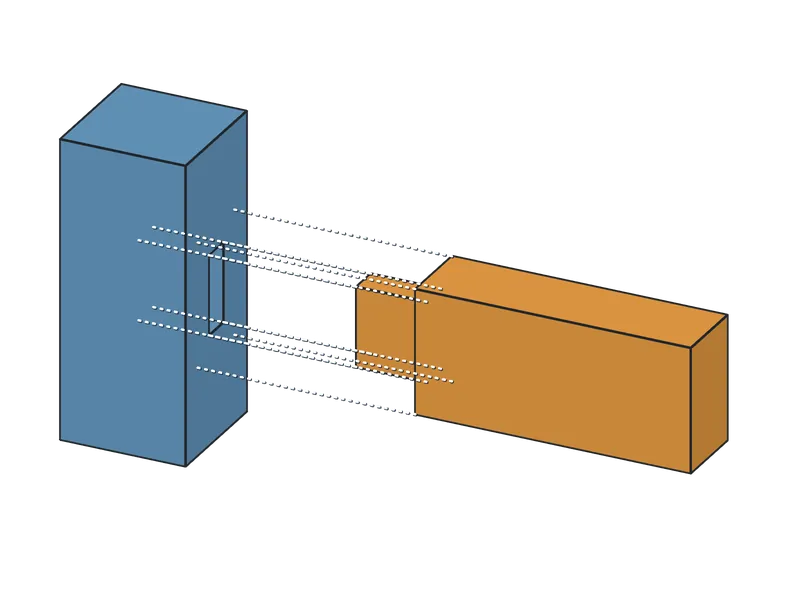
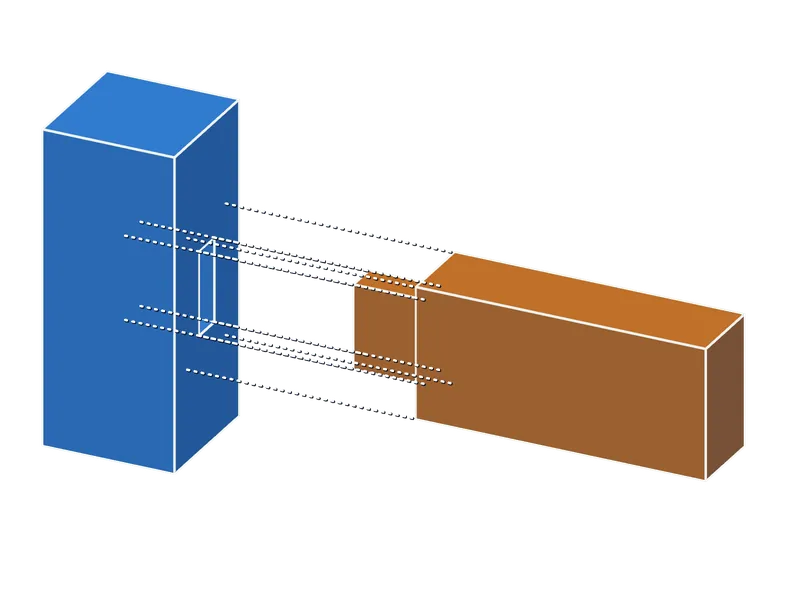
- Mortise and tenon
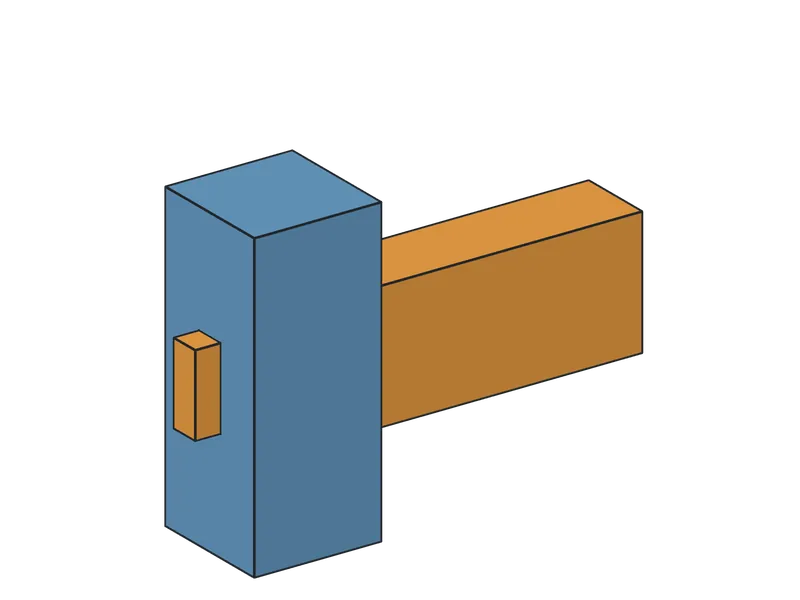
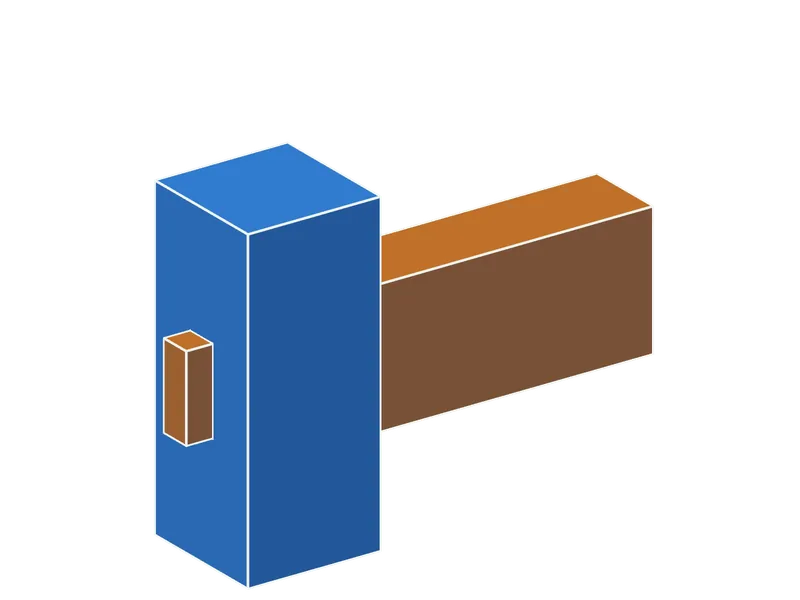
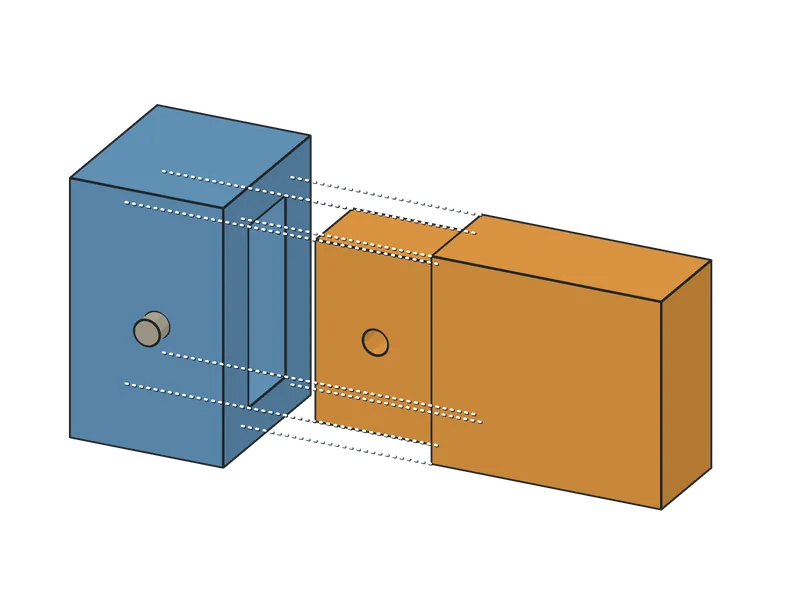
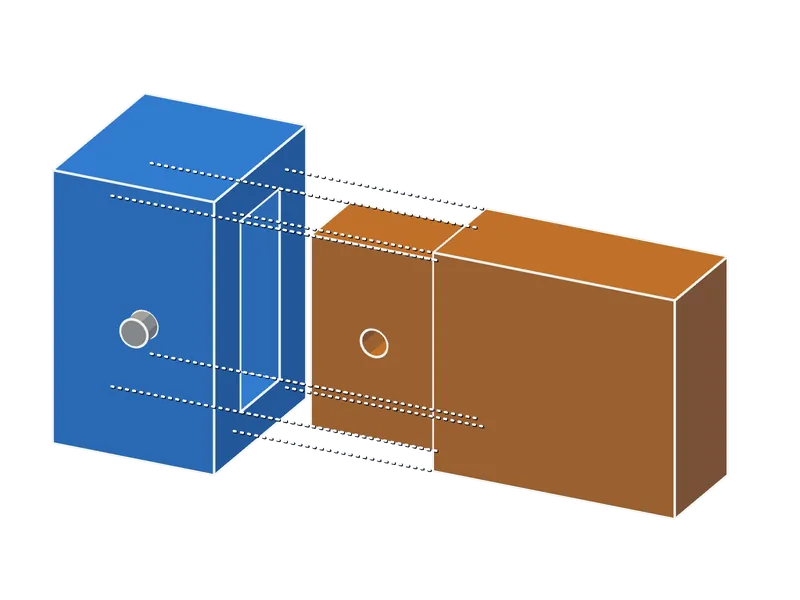
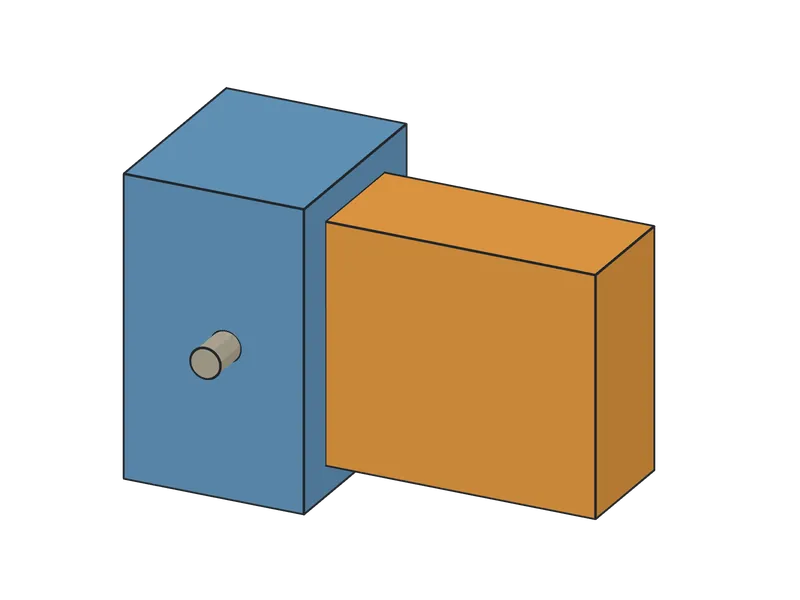
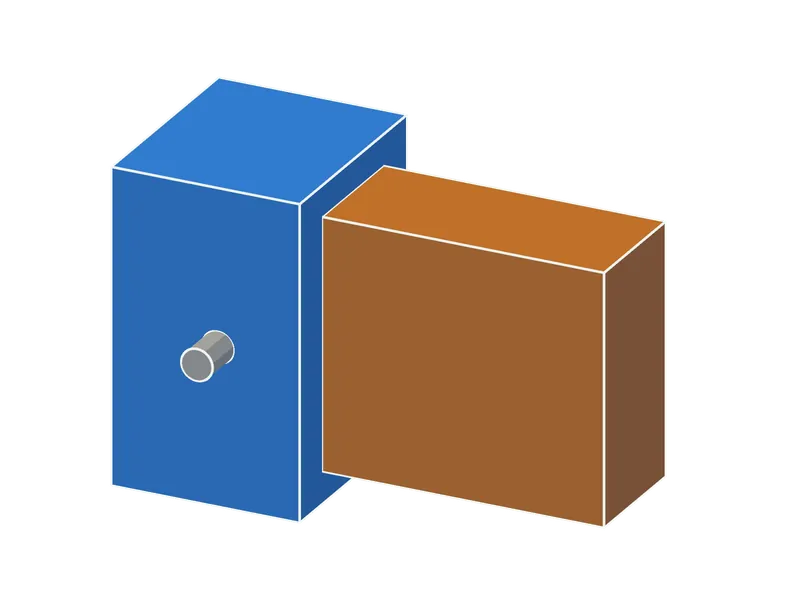
A joint in which a tongue (the tenon) projecting from one member's end fits a matching cavity (the mortise) cut into the other; the most common frame joint in solid-wood furniture.
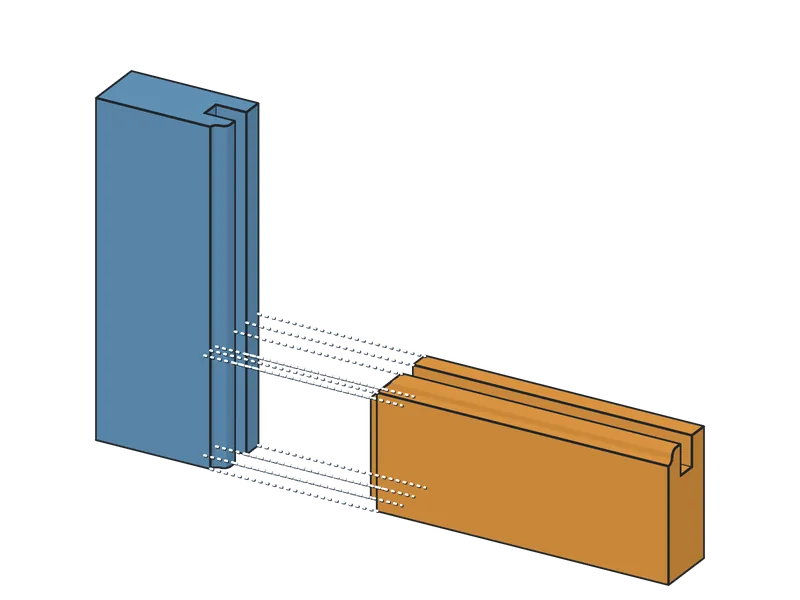
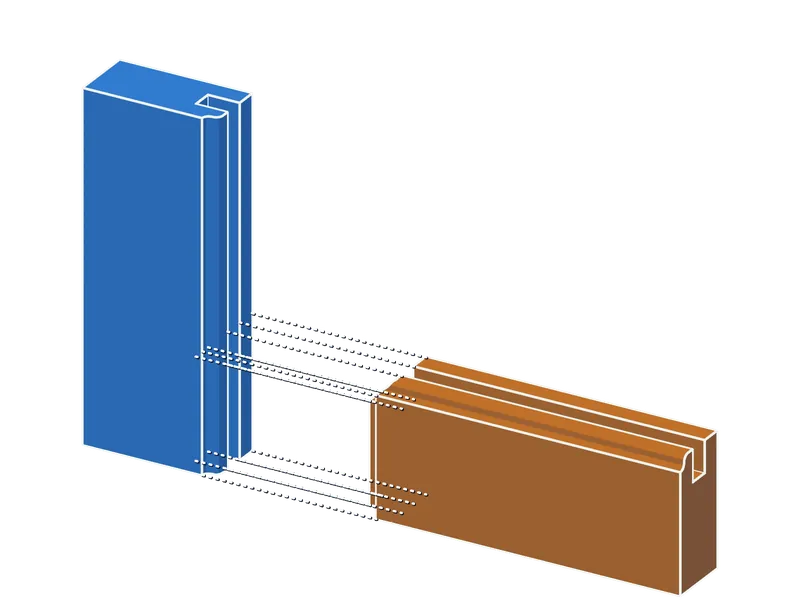
- Stile-and-rail joint
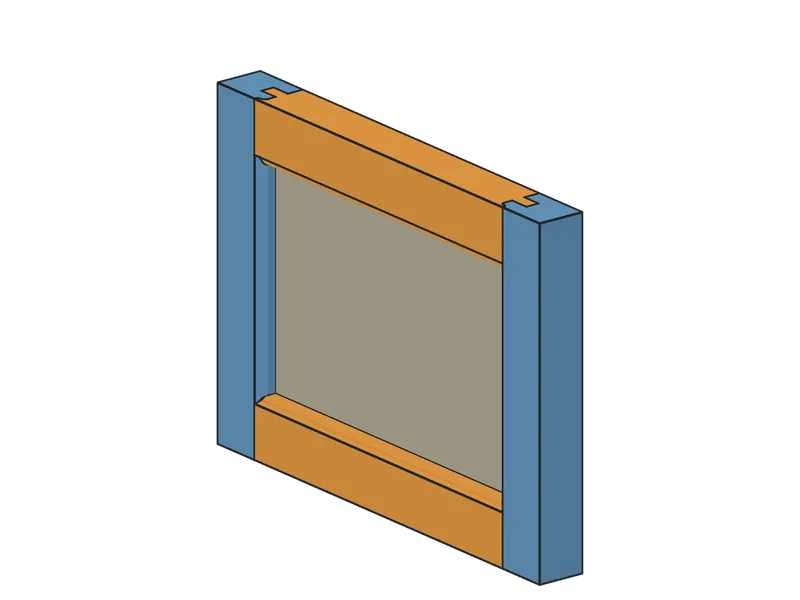
The stub-tenon-and-groove joint that connects a door or panel frame's upright stiles to its horizontal rails, with a groove running round the inside to carry a floating panel.
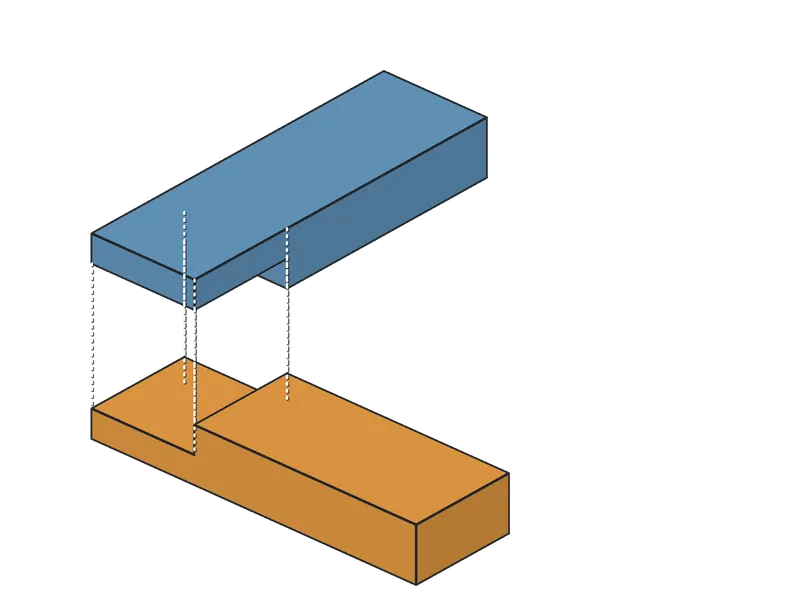
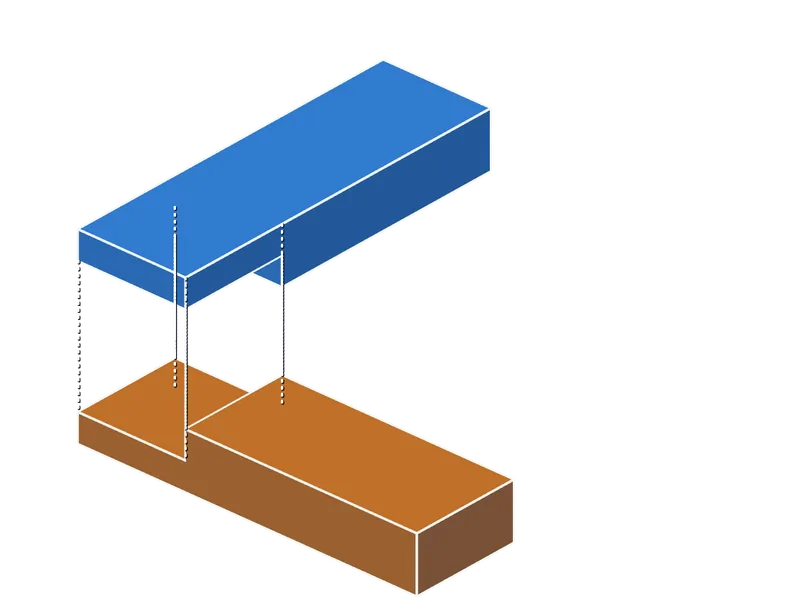
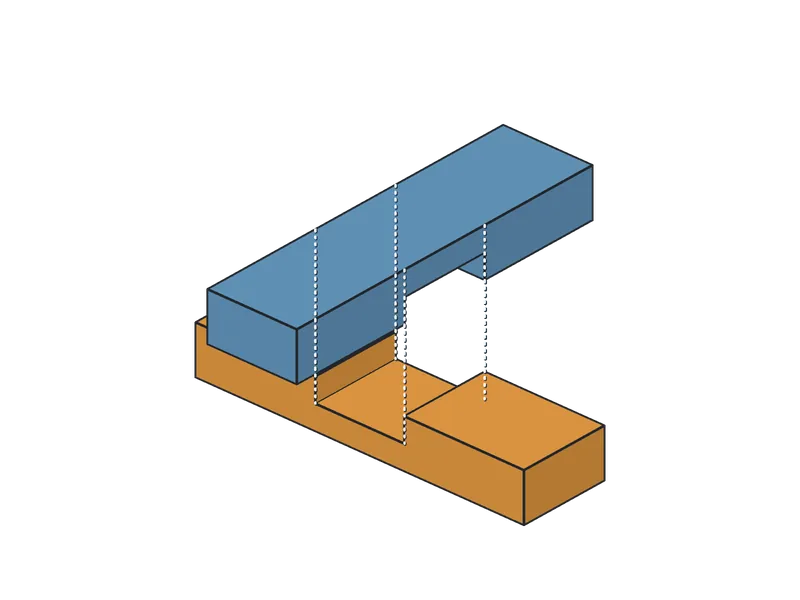
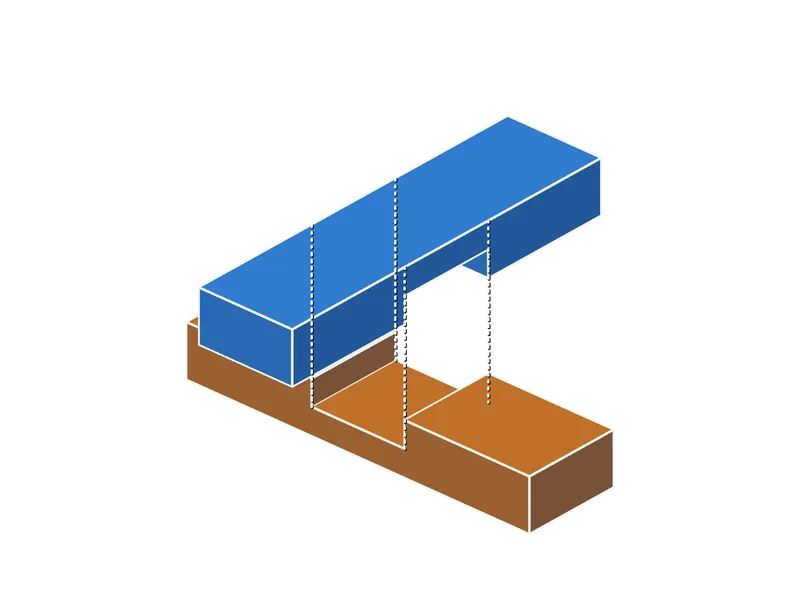
- Half-lap joint
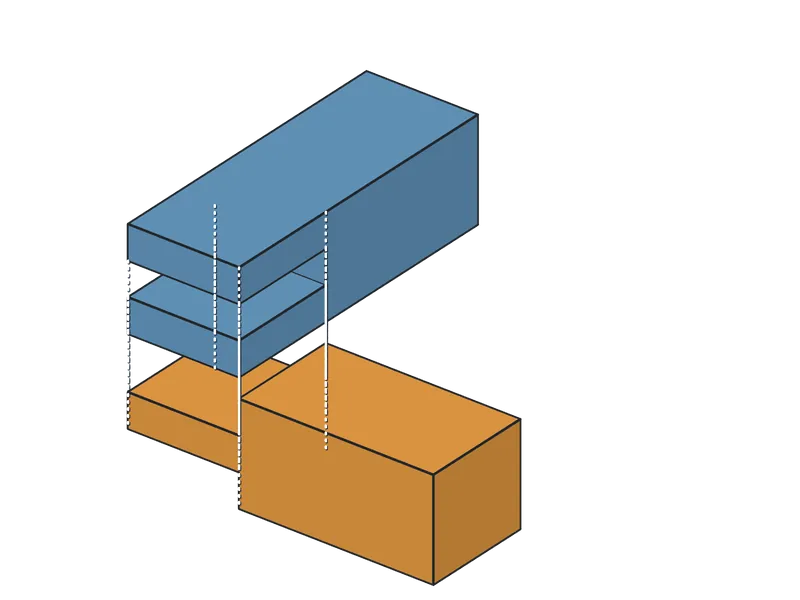
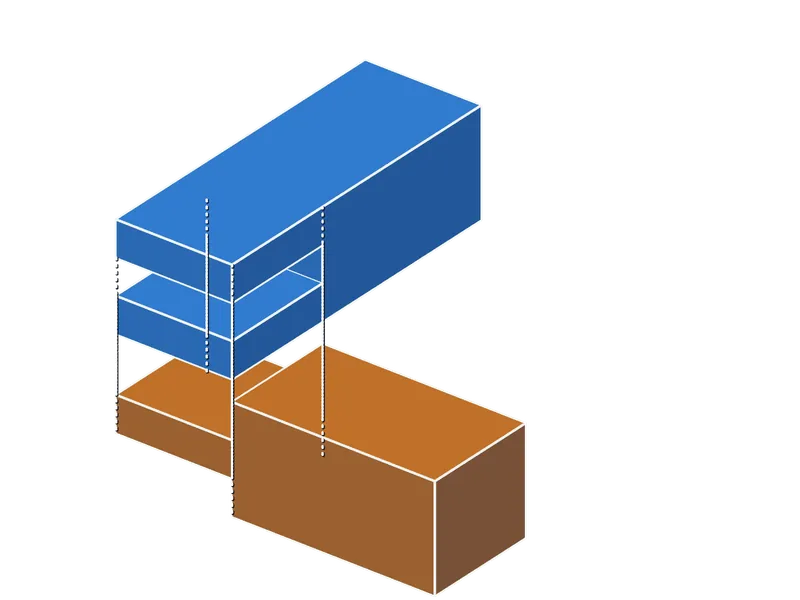
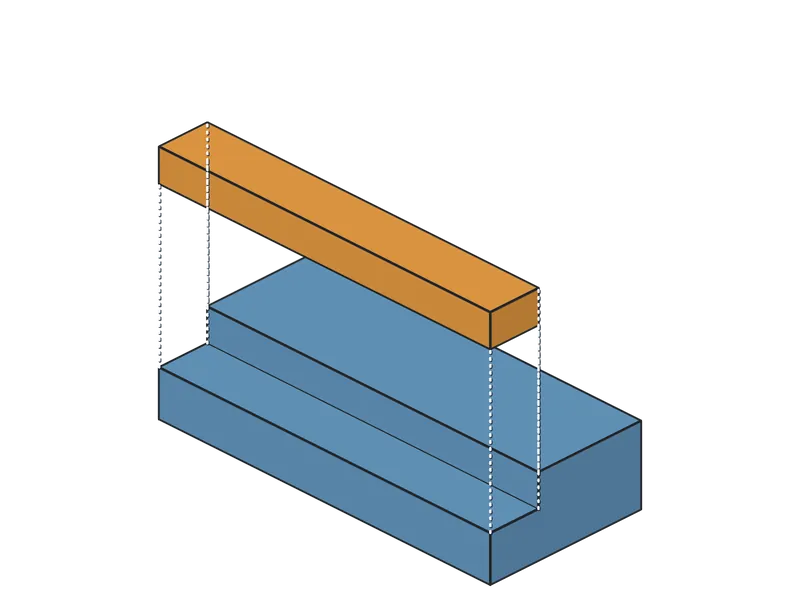
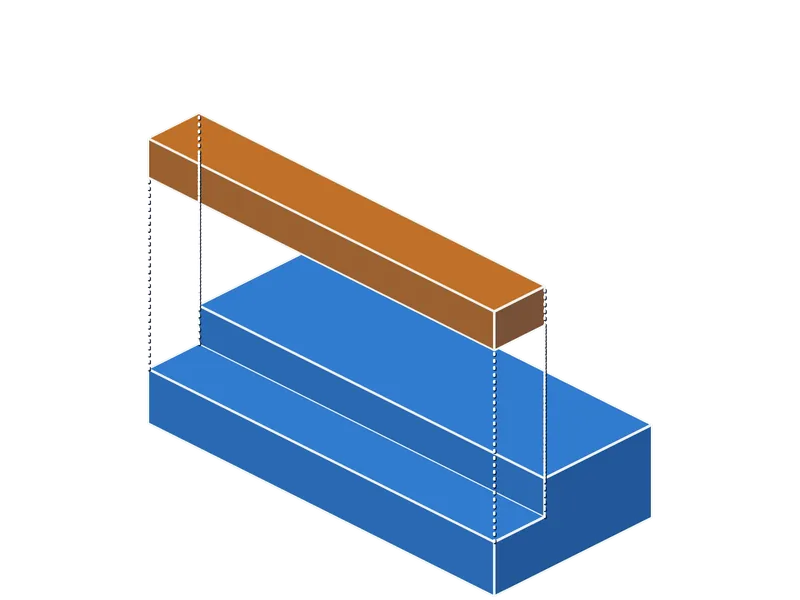
A joint at the end of one or both members where each loses half its thickness so the two overlap flush.
- Cross-lap joint
A half-lap cut in the middle of one or both members, so they cross and lie flush rather than meeting end to end.
- Bridle joint
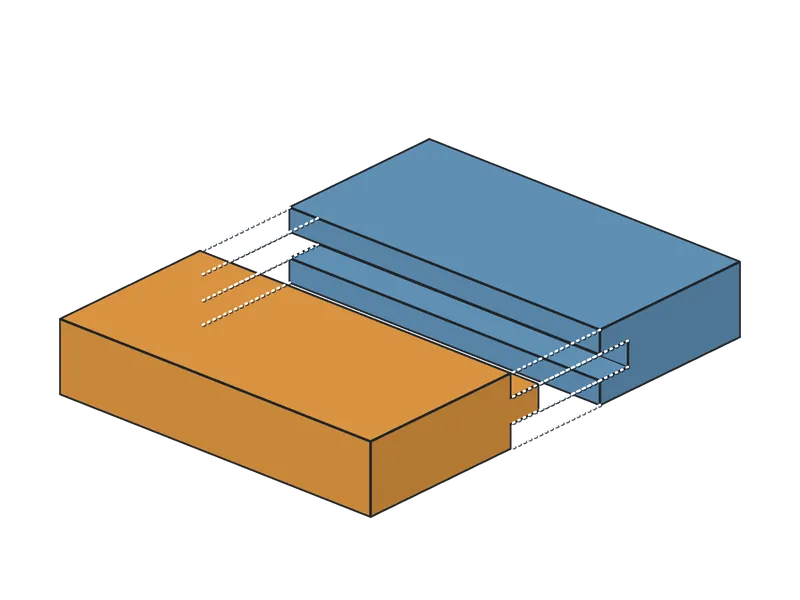
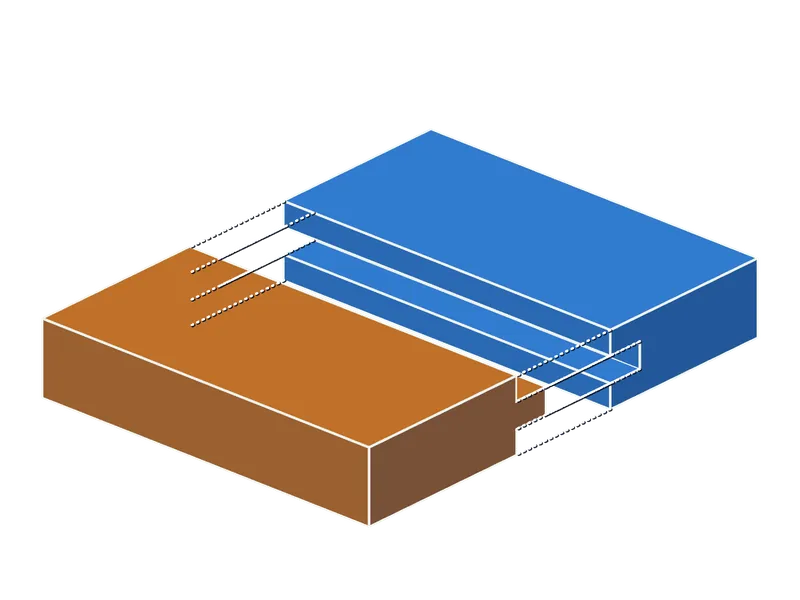
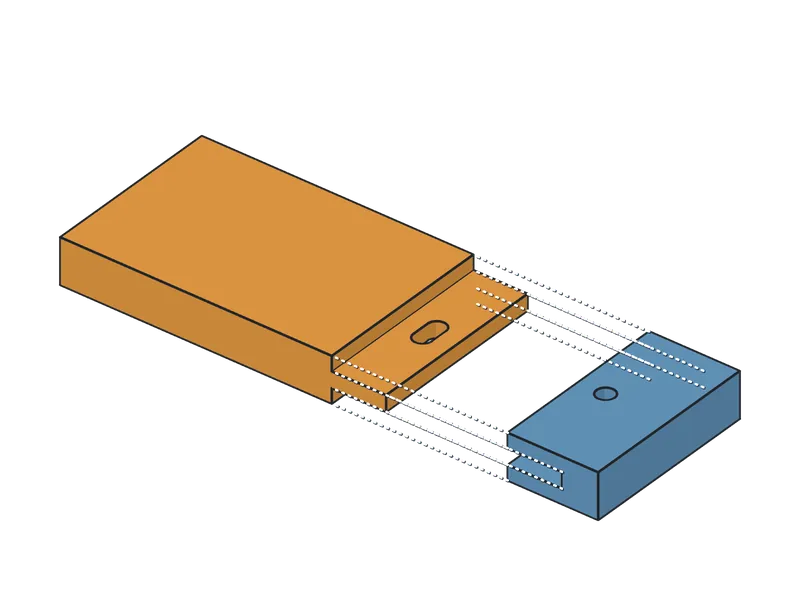
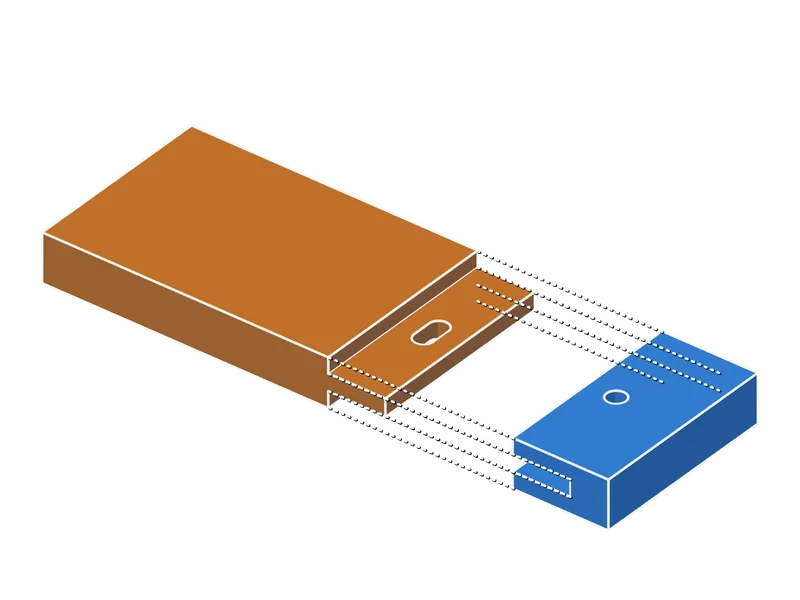
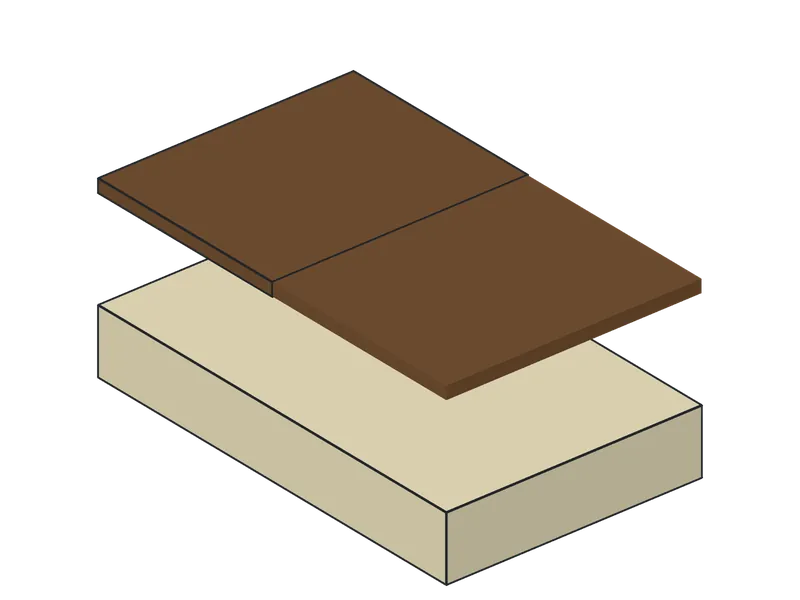
A joint in which a slot cut across the end of one member (the fork) receives the full width of the other member's end (the tongue) — a mortise and tenon with the mortise opened to the end.
- Mitre joint
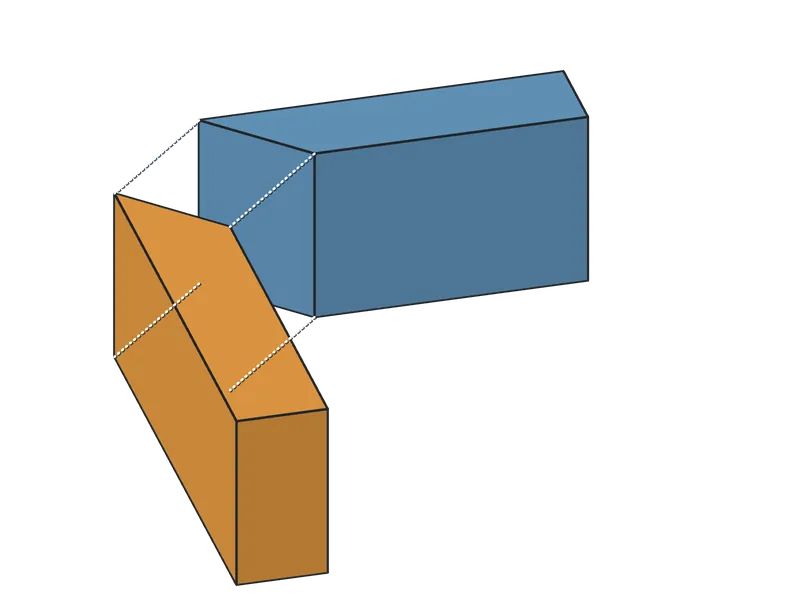
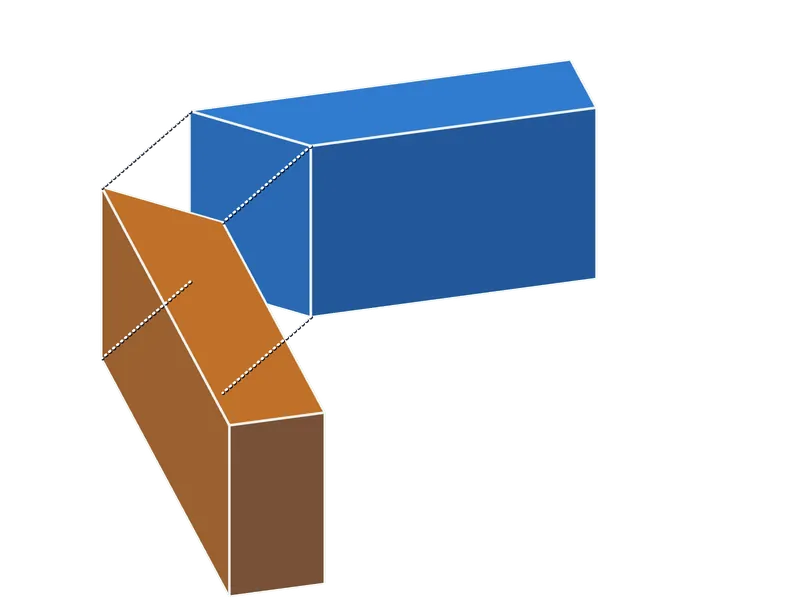
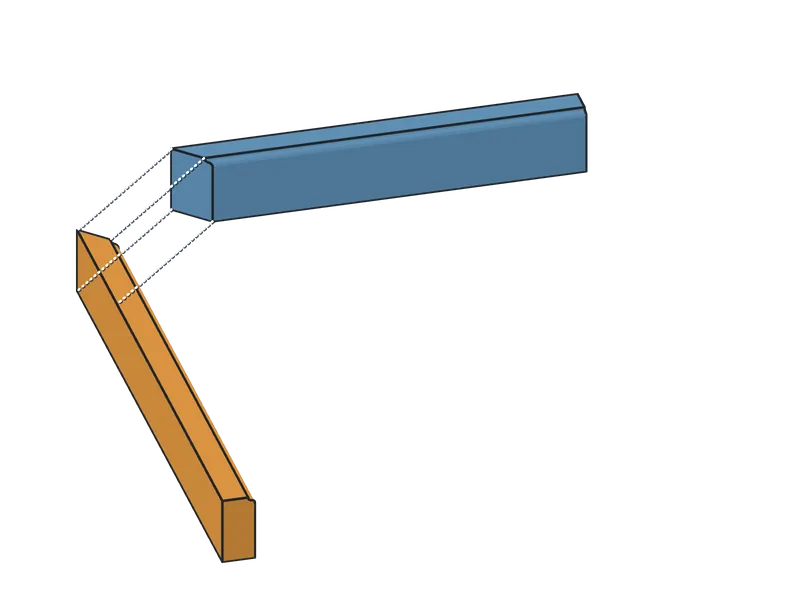
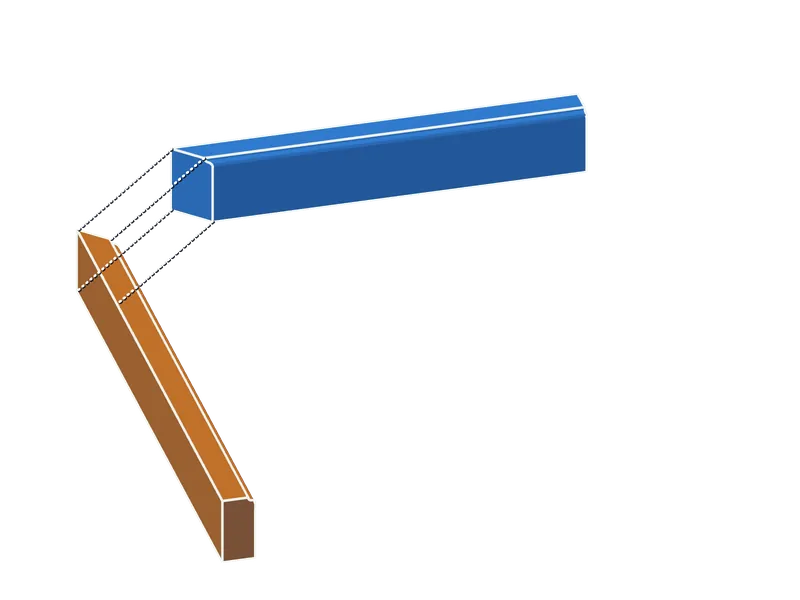
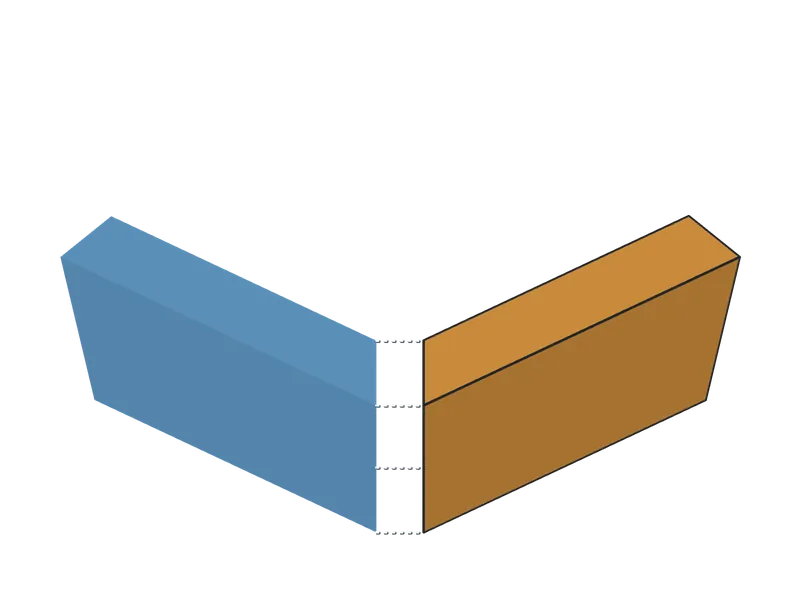
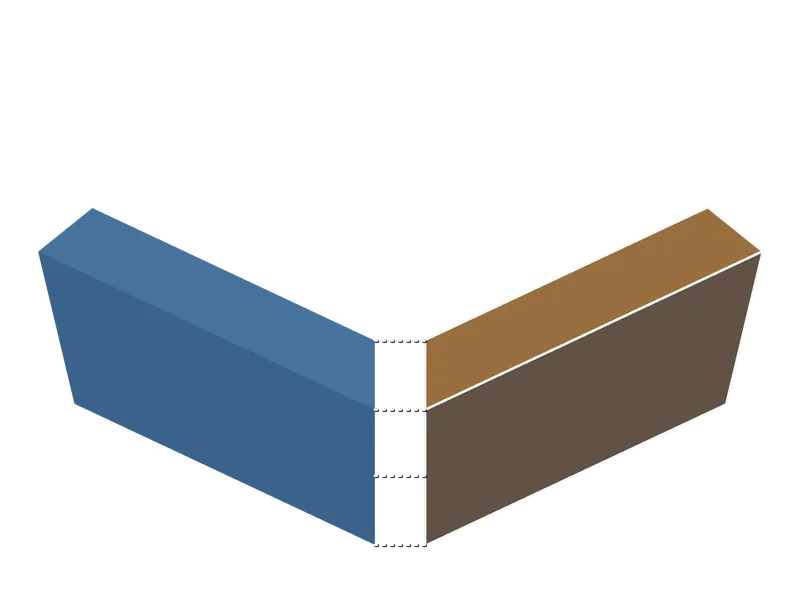
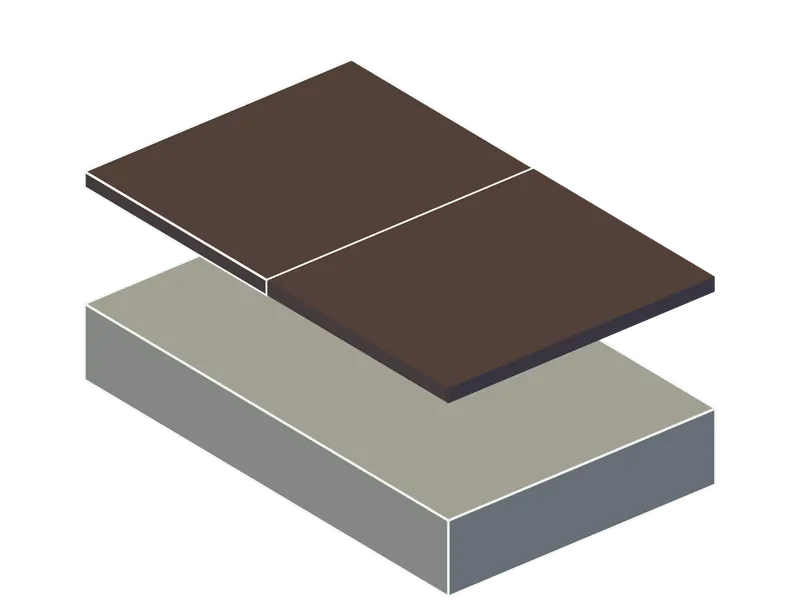
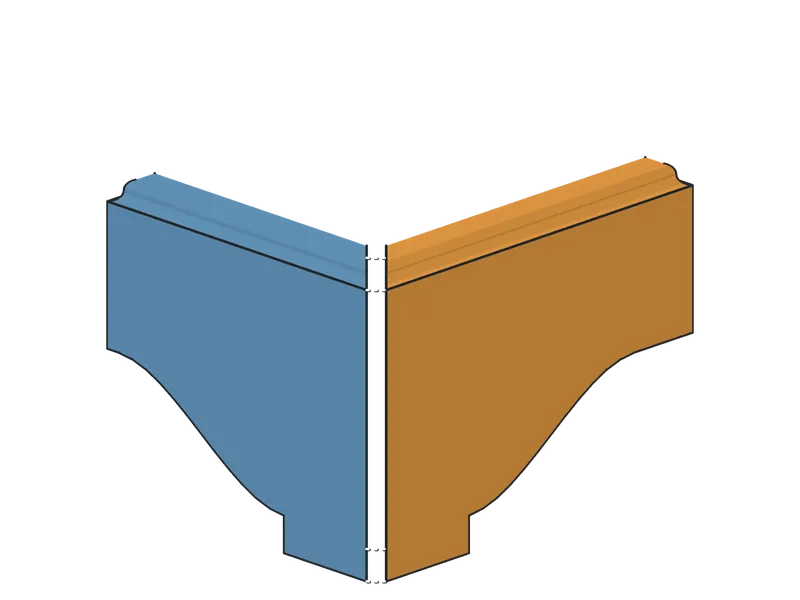
A joint where two members meet at a corner, each cut back at half the corner's angle so the joint line bisects it and no end grain shows face-on.
- Mitred moulding corner
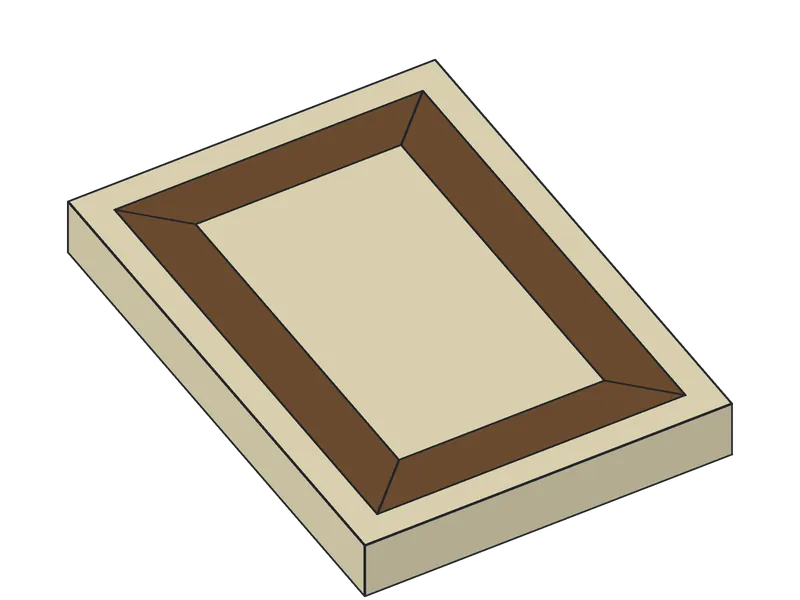
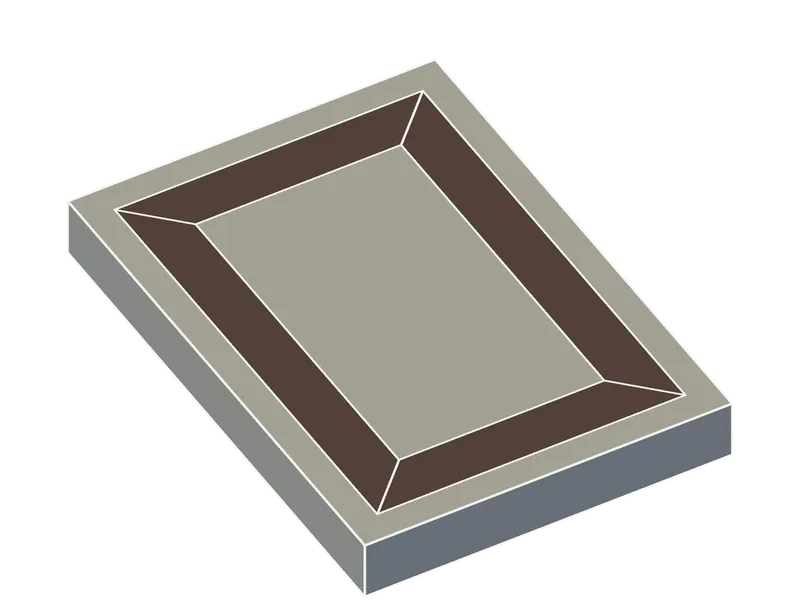
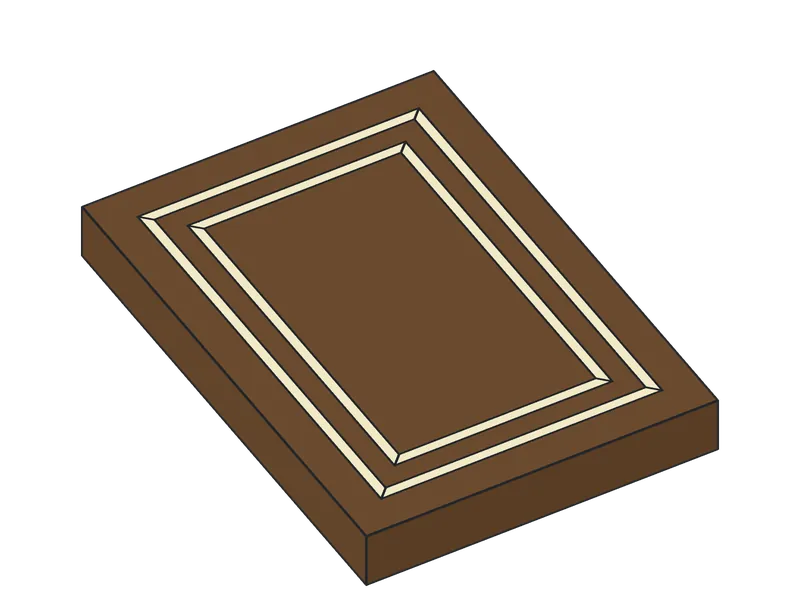
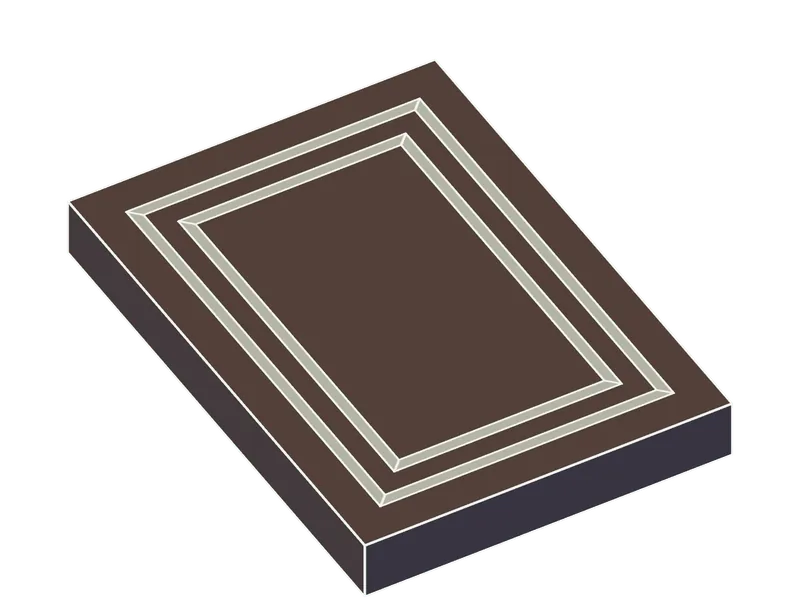
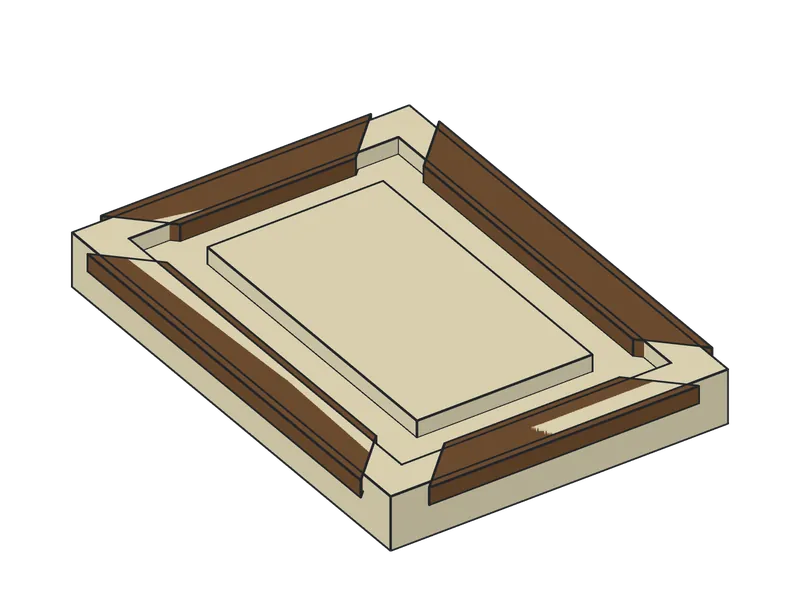
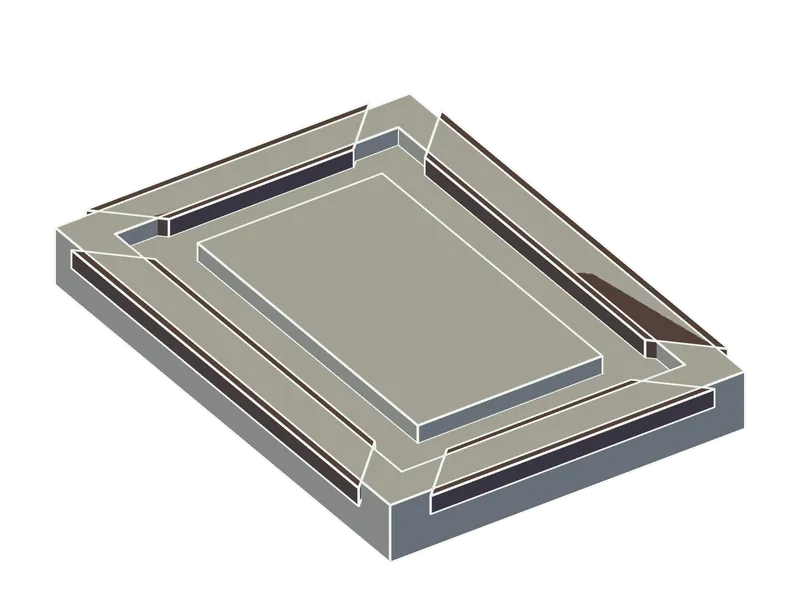
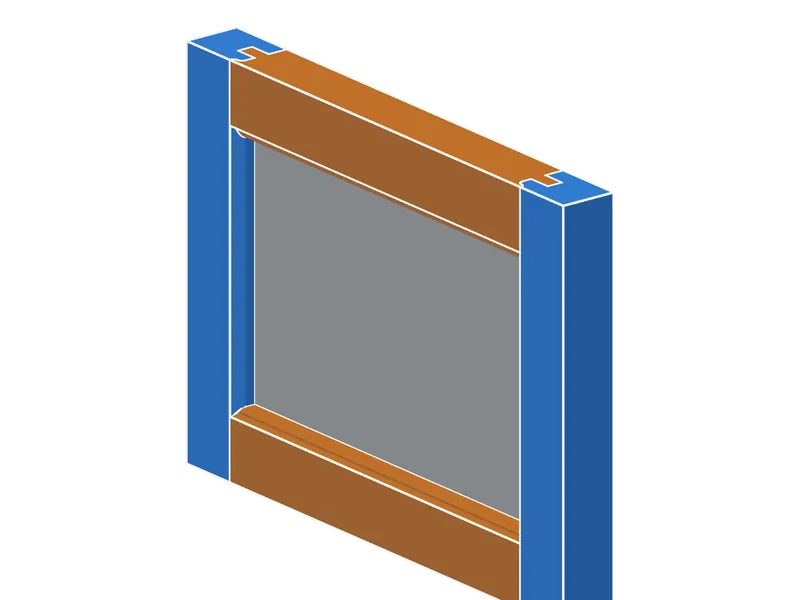
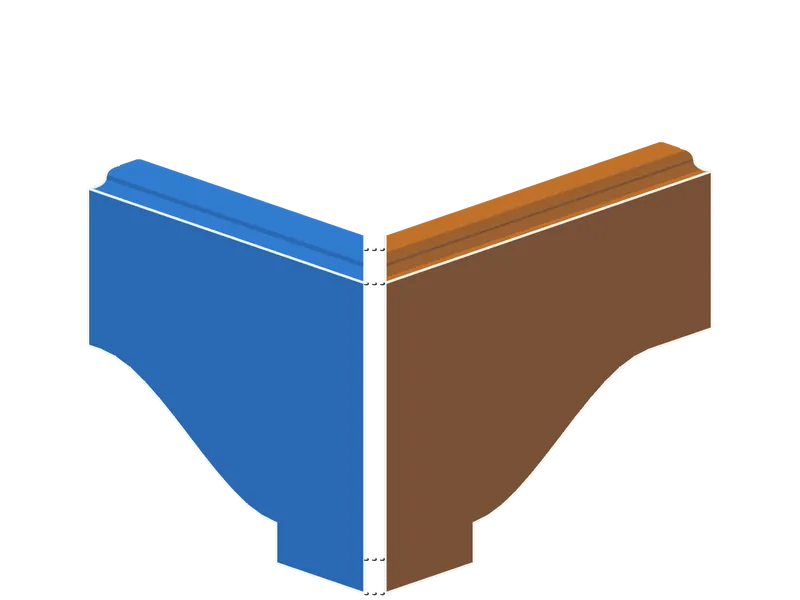
A mitred corner where both members also carry a stuck profile the whole way to the corner, so the moulding runs continuously round it — a door's own moulded frame corner (#460).
- Hardware mount
A joint whose parts are mounted with a purchased hardware item — a hinge, a pull — rather than a wood-to-wood feature: the wood takes at most a screw bore or a shallow recess for the hardware's leaf, and the item itself reaches the bill of materials, never the cut list (ADR-0017, ADR-0030).
- Box joint
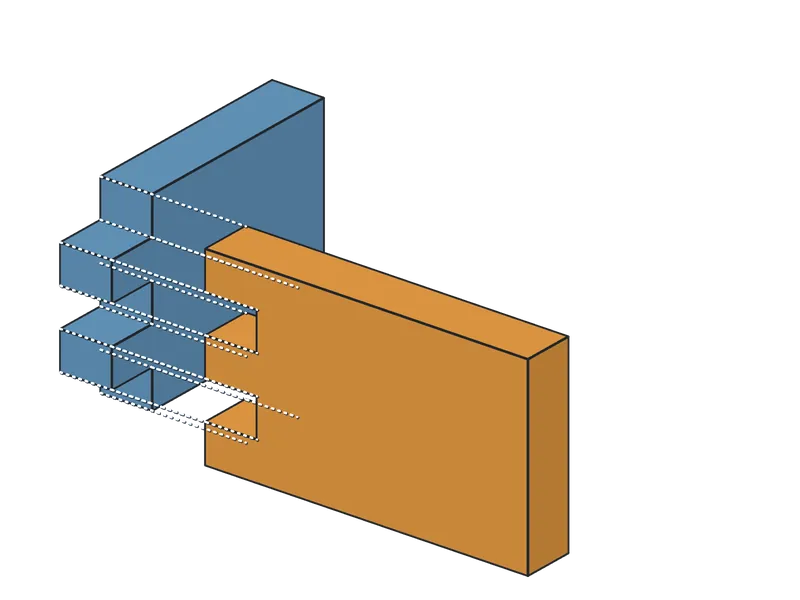
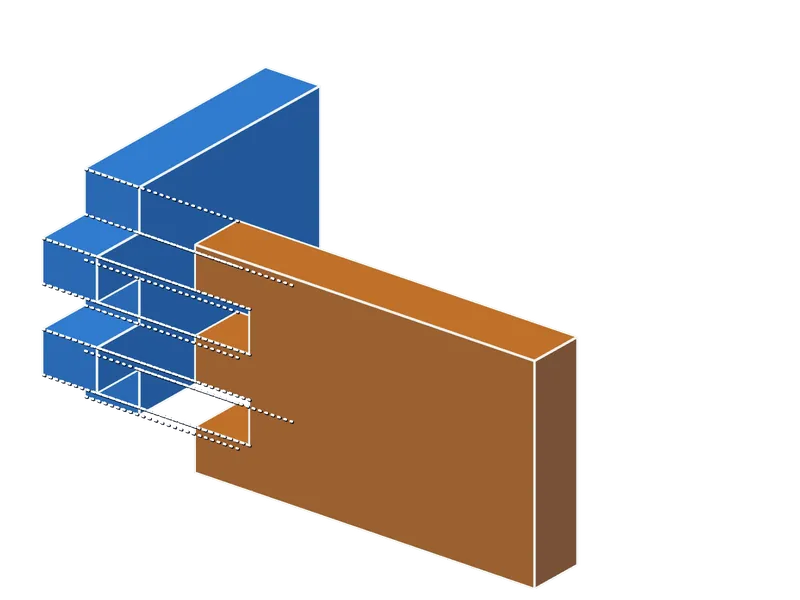
A corner joint of interleaved square fingers cut into the ends of both boards, glued together for mechanical strength and show.
- Through dovetail
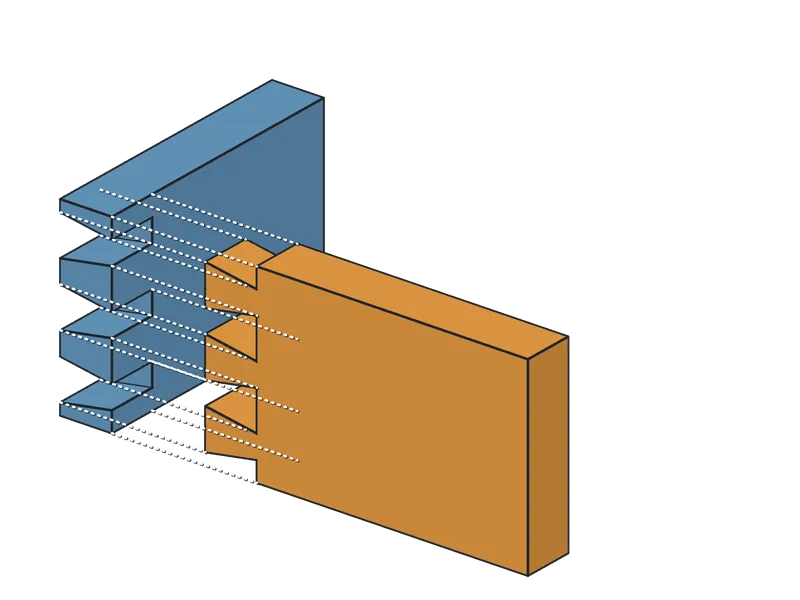
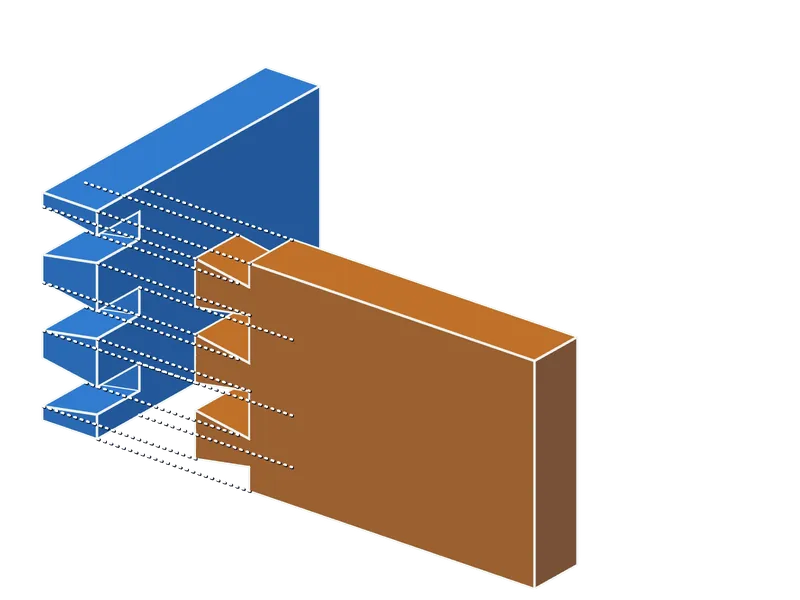
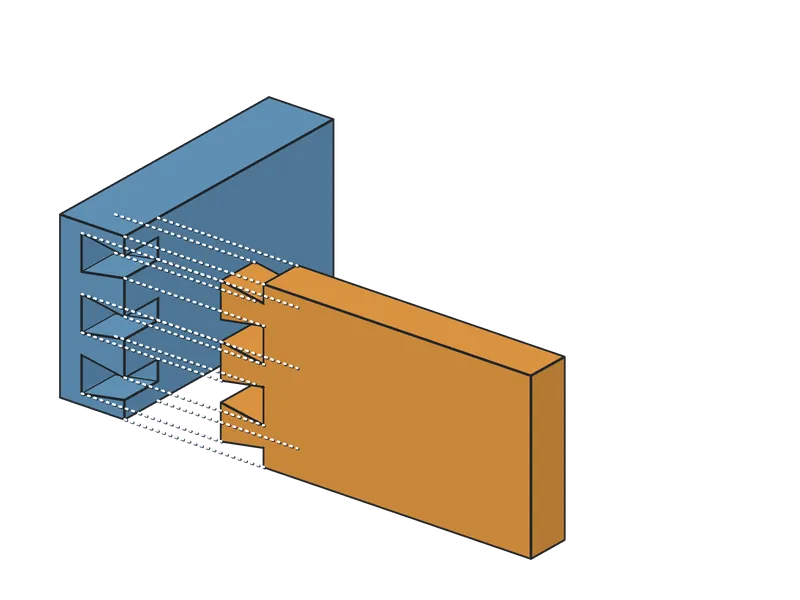
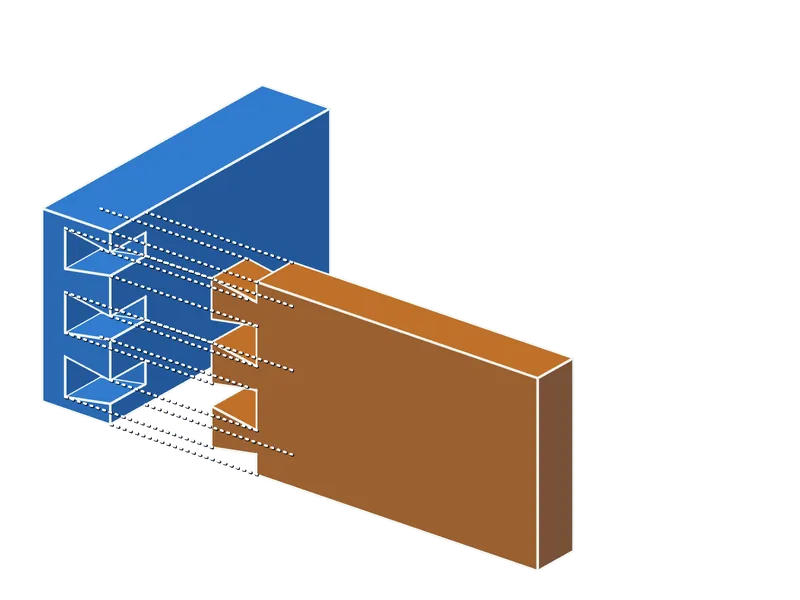
A corner joint of angled tails and pins visible from both faces of the corner, resisting the pulling-apart direction along the tails.
- Half-blind dovetail
A dovetail corner joint whose pins do not go through the show face, hiding the joint from the front — standard for drawer fronts.
- Tongue and groove
A joint where a tongue projecting from one board's edge or end fits a matching groove in the other, aligning the pieces and resisting shear across the joint.
- Dado
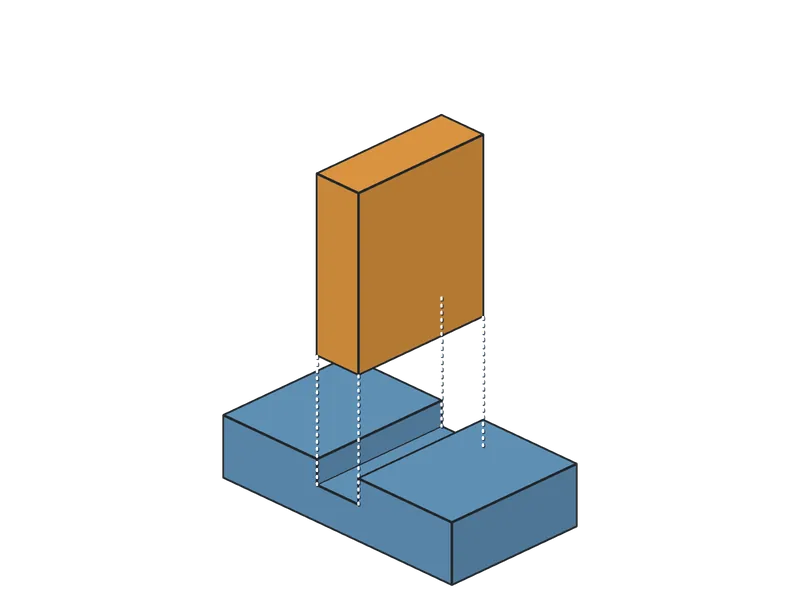
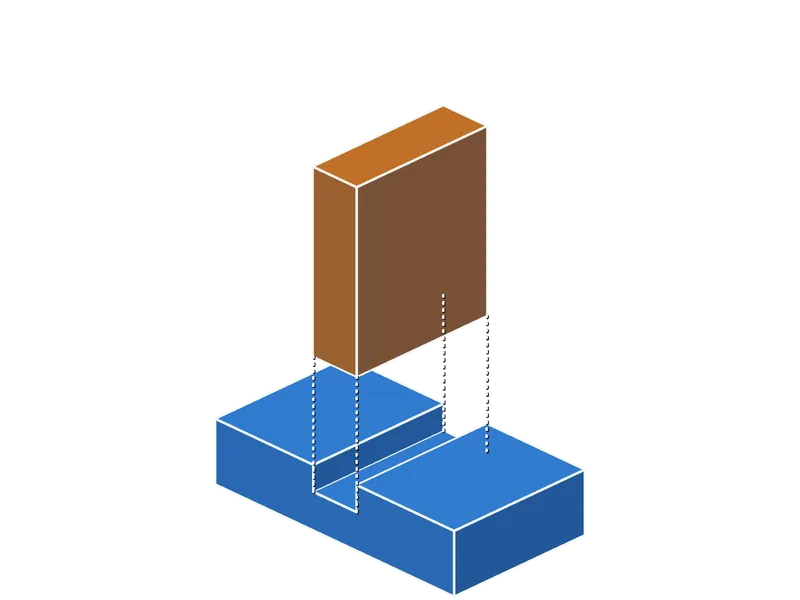
A flat-bottomed channel cut across the grain of a board to house the end or edge of another part, such as a shelf.
- Groove
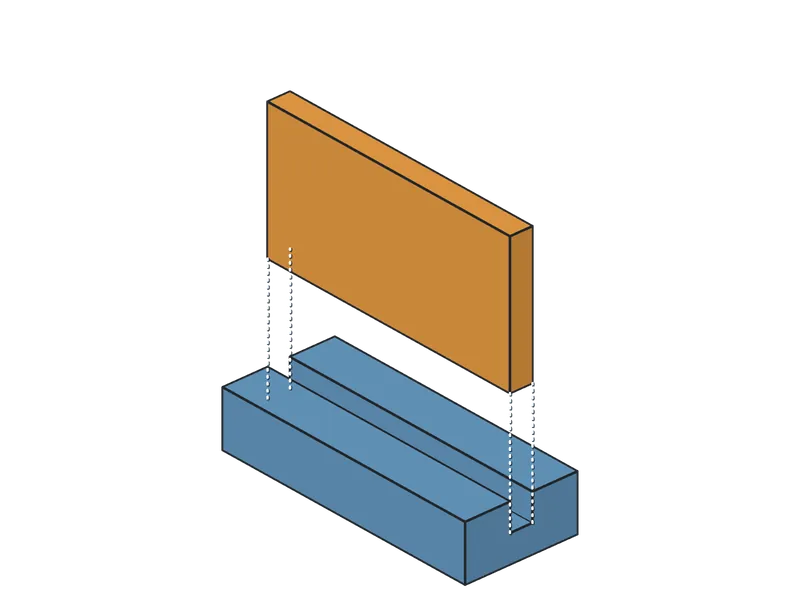
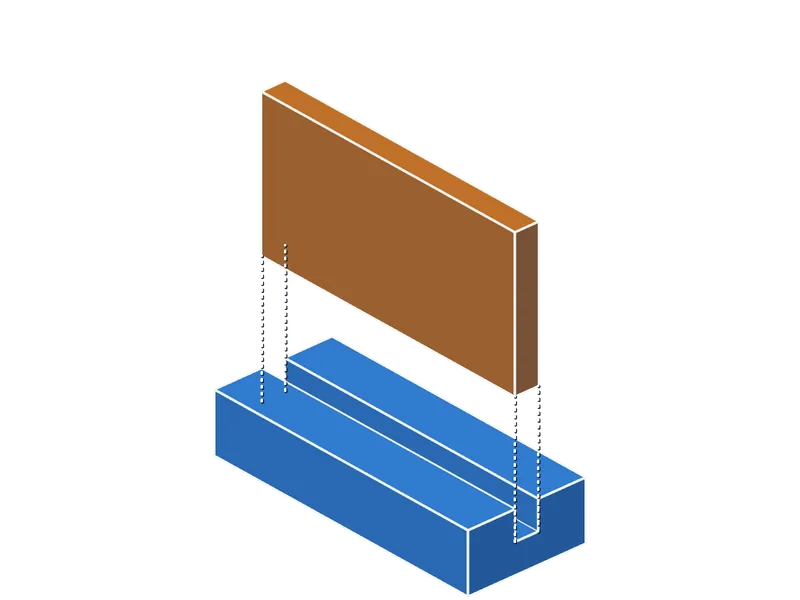
A flat-bottomed channel cut with the grain, most often to carry a floating panel or a drawer bottom.
- Rabbet
An L-shaped step cut along the edge or end of a board, usually to receive a panel, a back, or another board's edge.
- Chamfer
A flat bevel cut along an arris (a sharp edge), replacing the square corner with a single angled facet, usually 45°.
- Stopped chamfer
A chamfer that ends before the full length of the edge, tapering back to the square arris instead of running off the end.
- Roundover
An edge eased to a quarter-round or fuller radius rather than a flat chamfer facet.
- Bevel
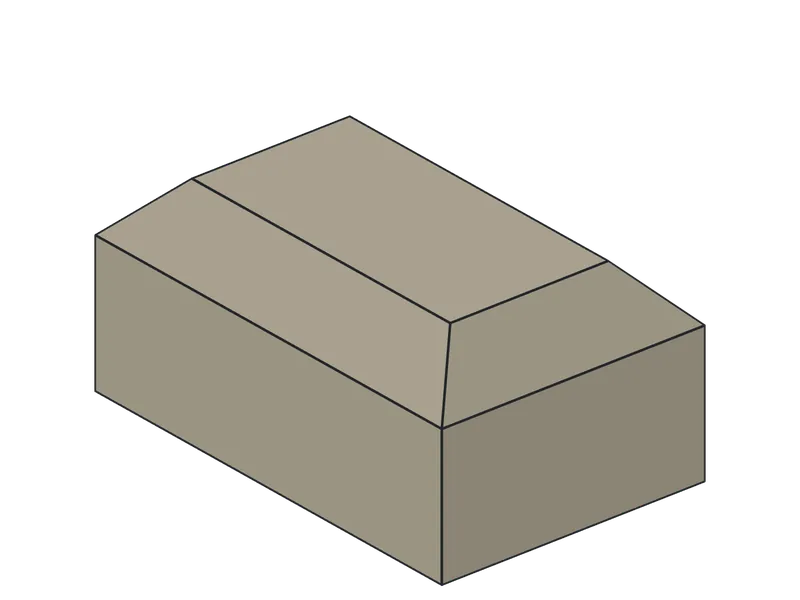
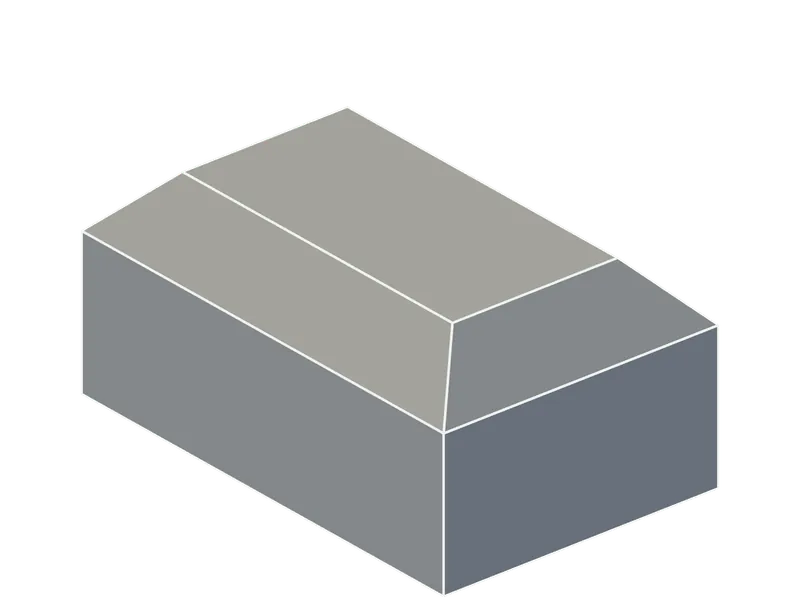
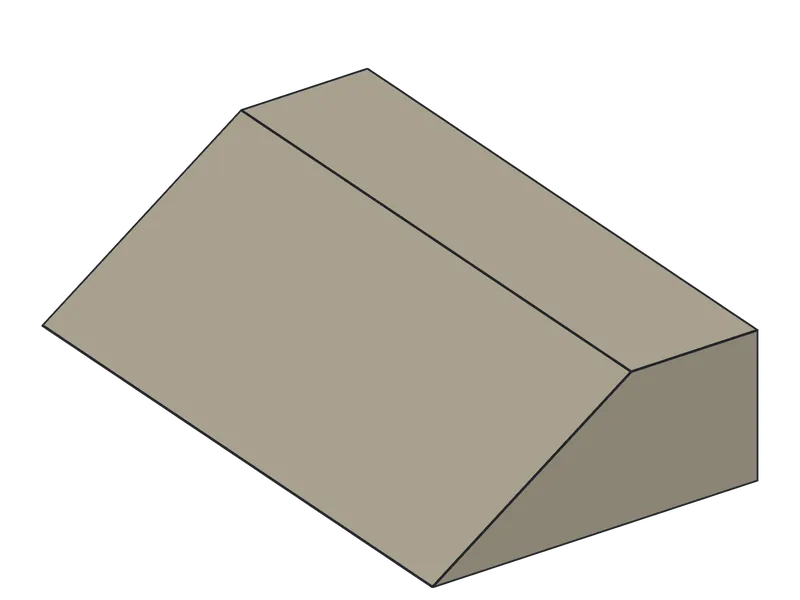
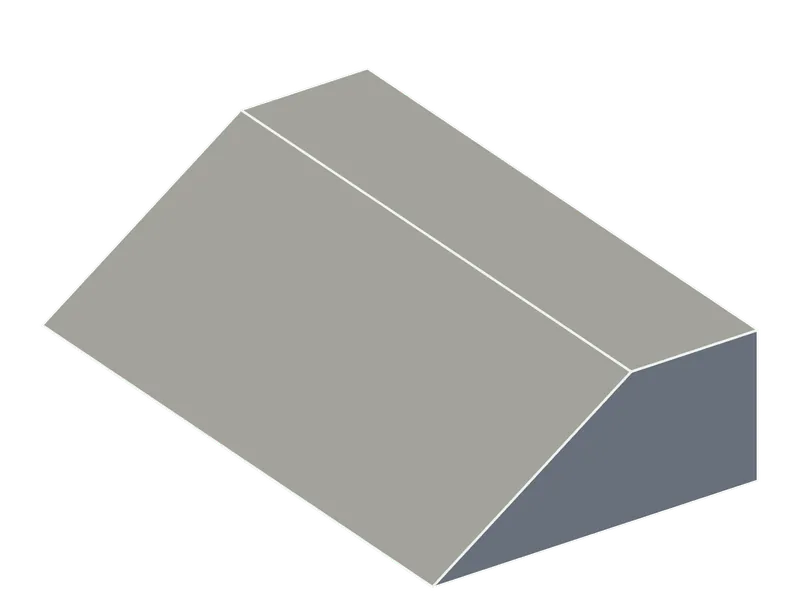
A sloped cut across an entire face or edge at an angle other than 90°, as opposed to a chamfer, which only removes an arris.
- Taper
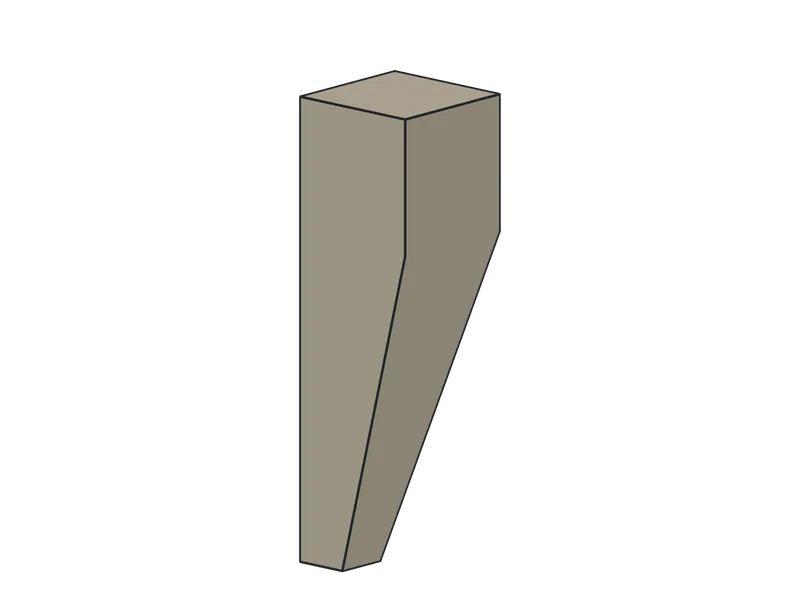
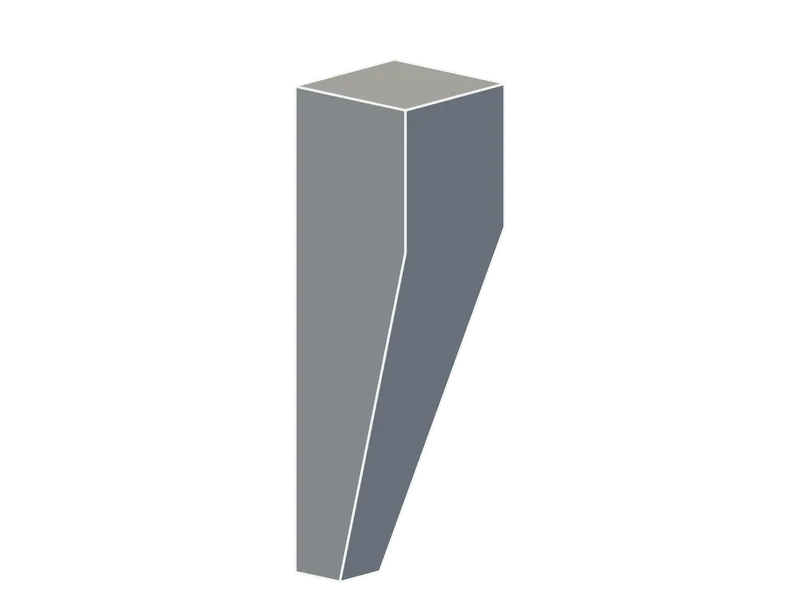
A gradual, straight-line reduction in a part's section along its length, most familiar on the inside faces of a leg below its apron.
- Cut path
The compiler's one raw cutting primitive: a straight or leaning planar cut swept along a direction, from which every other feature and joint cutter is built.
- Bored hole
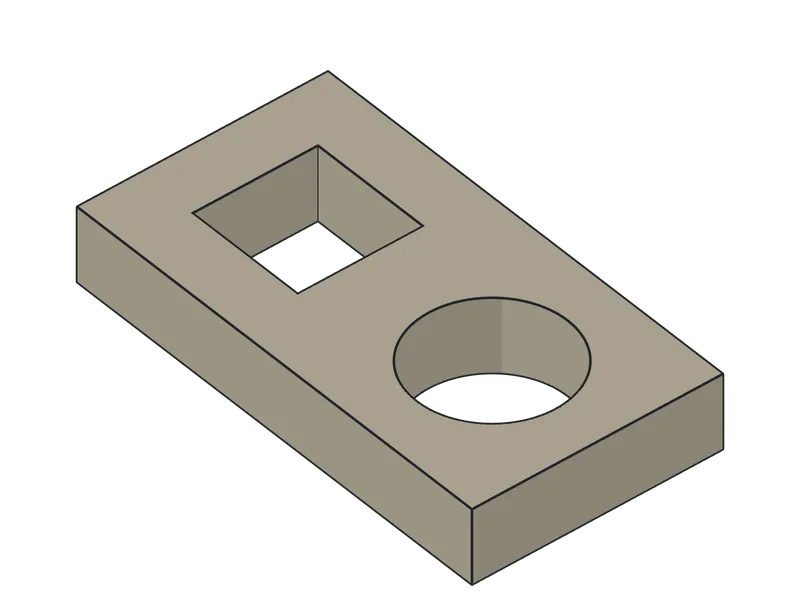
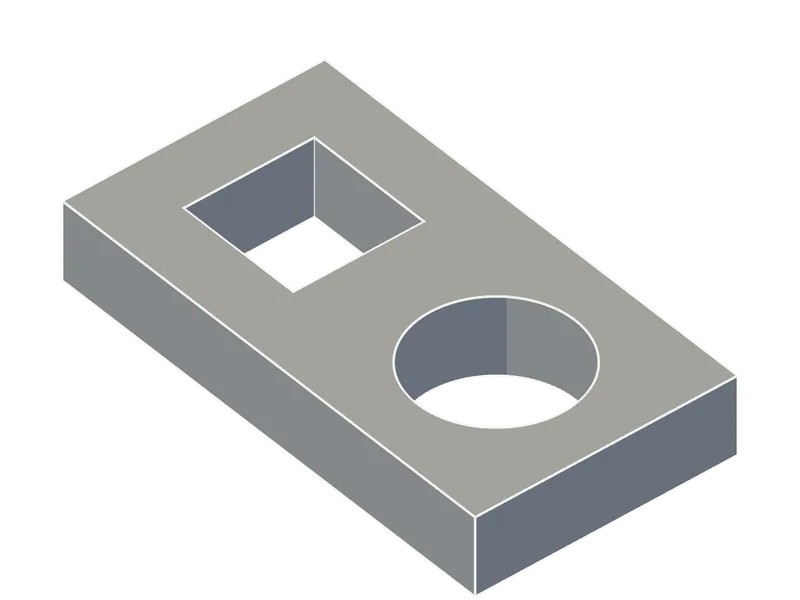
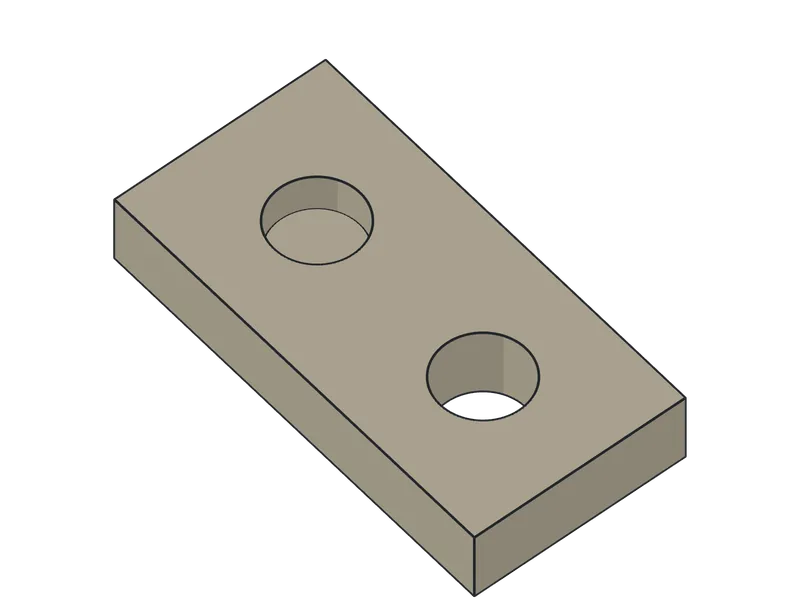
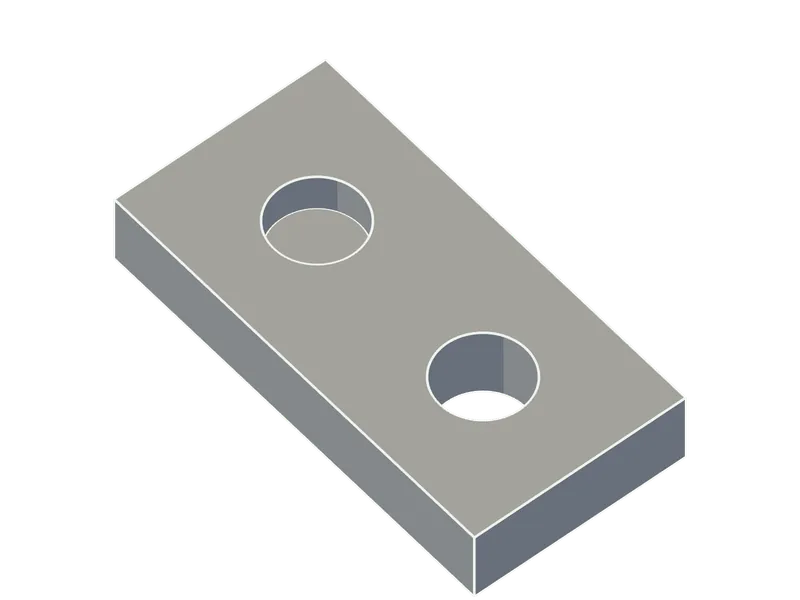
A cylindrical hole drilled to a diameter and depth, blind or through, for dowels, shelf pins, wiring or hardware.
- Lamination (glue-up)
Stock built by gluing several boards or plies face to face to reach a thickness or width no single board provides.
- Through tenon
A tenon cut long enough to pass entirely through the mortised part and appear at its far face.
- Wedged tenon
A through tenon locked by driving one or more wedges into saw kerfs in its protruding end, spreading it tight against the mortise walls.
- Kusabi
The Japanese wedged through-tenon: kerfs sawn into the tenon's end and wedges driven in so the tenon spreads along the mortised part's grain, locking the joint without glue.
- Haunch
A short second step left on a tenon's shoulder, matched by a step in the mortise, that fills the last part of a groove the tenon would otherwise leave open — common where a rail meets a stile above a panel groove.
- Tusk tenon
A through tenon that projects well past the mortised part and is locked by a separate tapered key driven through a slot in the tenon, so the joint can be knocked apart for transport.
- Round tenon
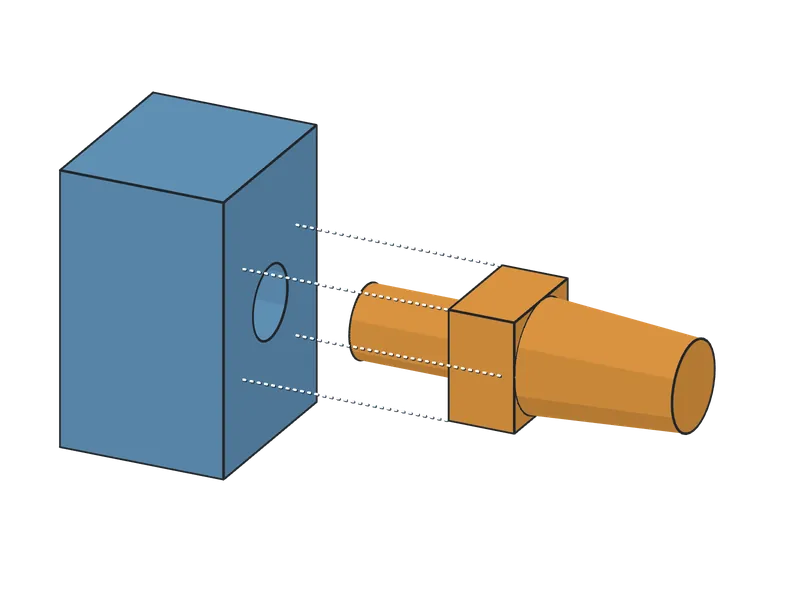
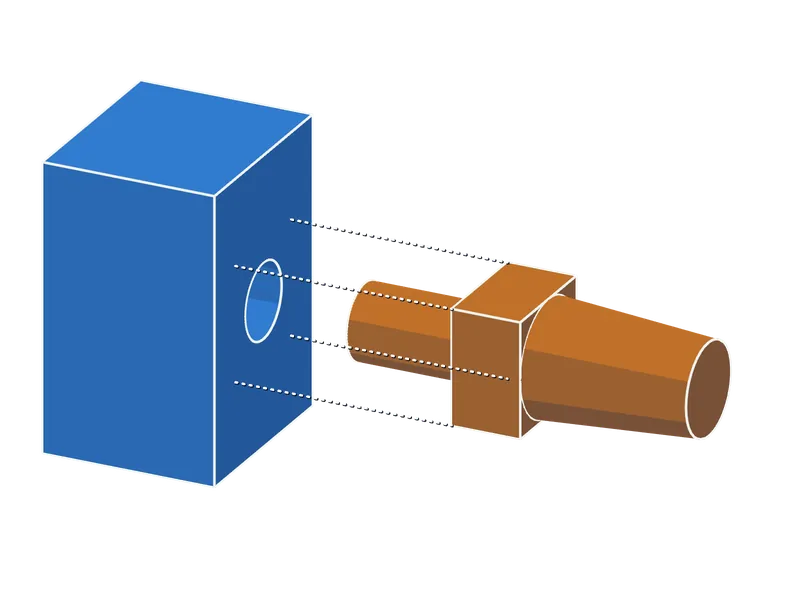
A cylindrical tenon turned on a lathe, rather than sawn square, that fits a bored round mortise — typical of turned chair and table joinery.
- Sliding dovetail
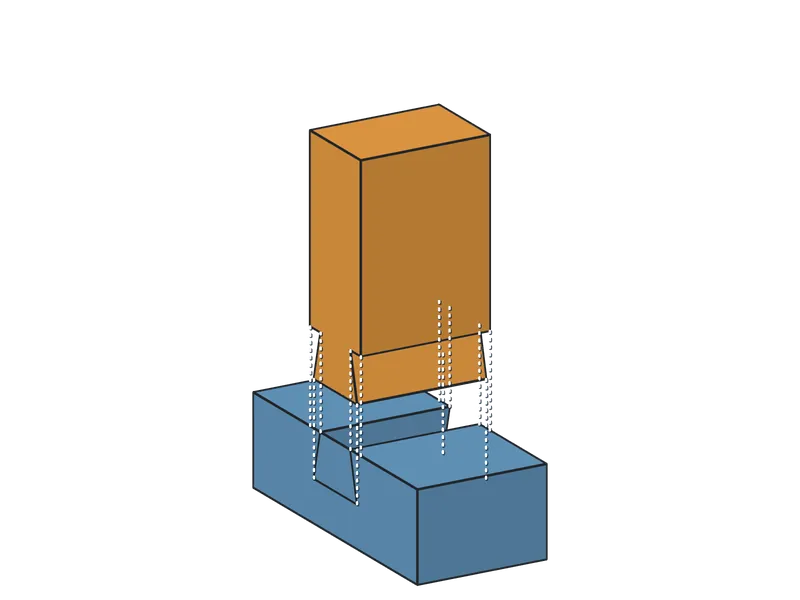
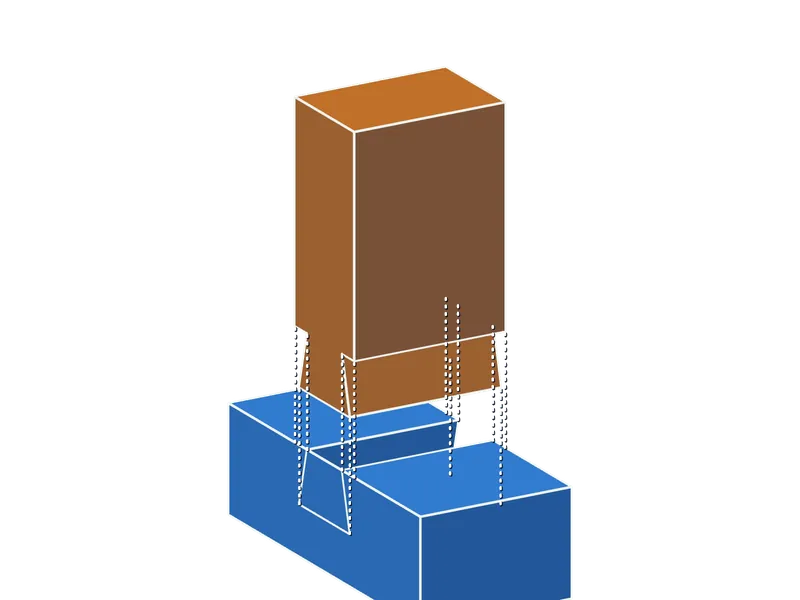
A dovetail-sectioned housing let across or along a board, into which a matching dovetailed tongue on another part slides, resisting the parts pulling apart in every direction but the slide.
- Sliding sleeve
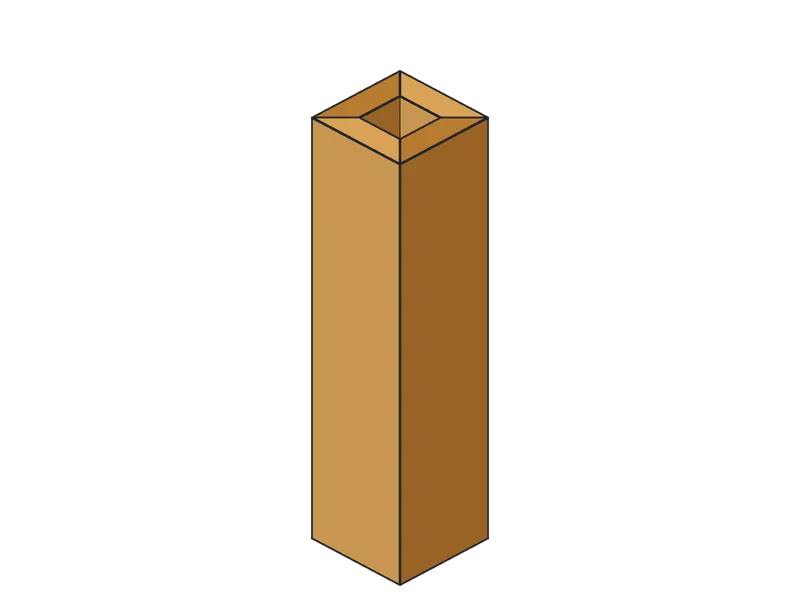
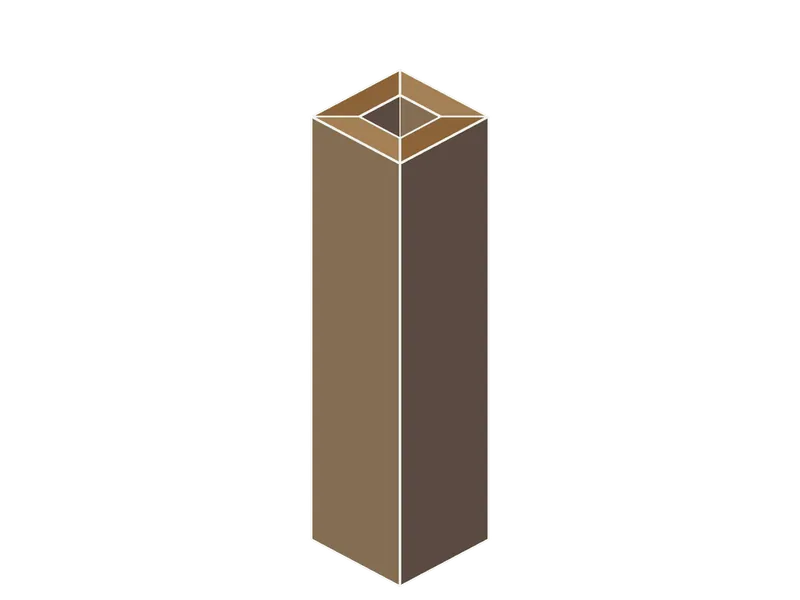
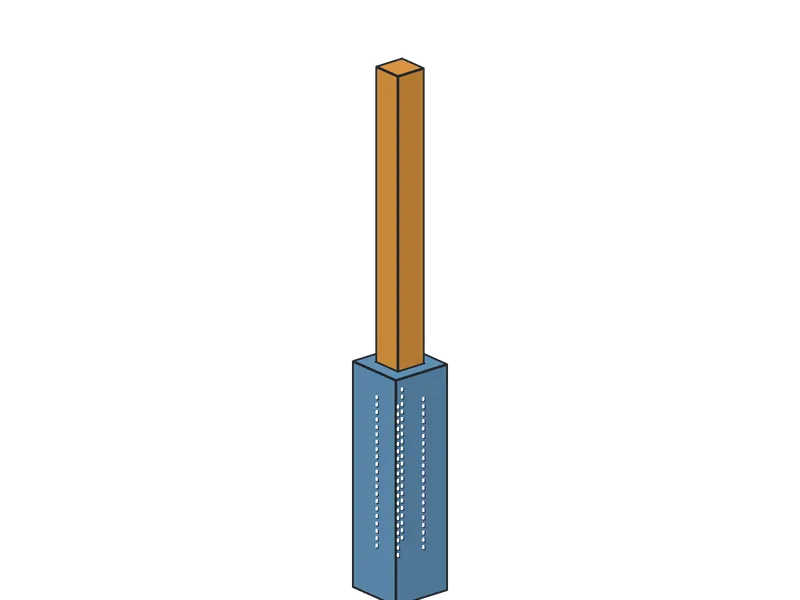
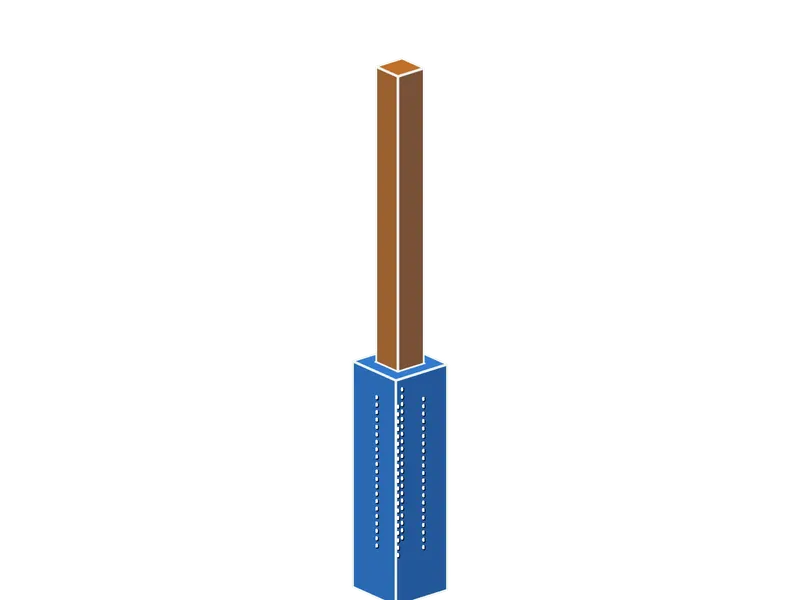
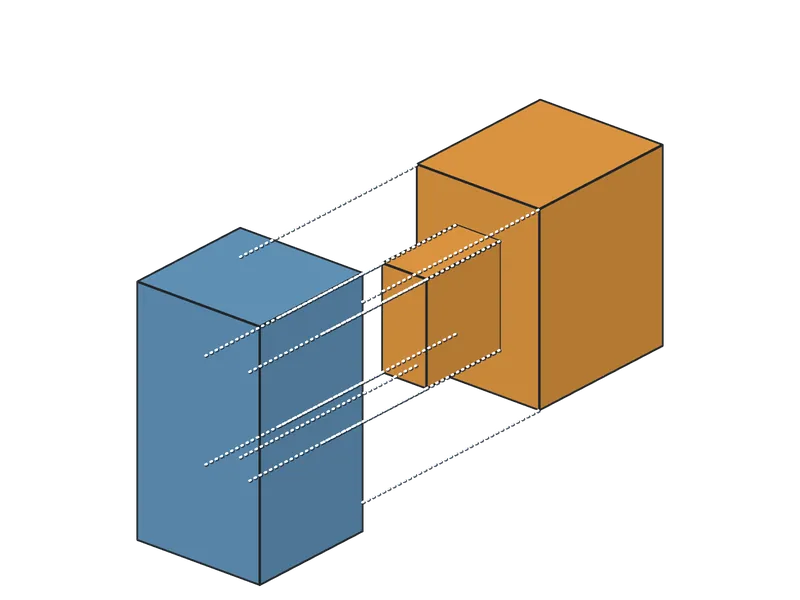
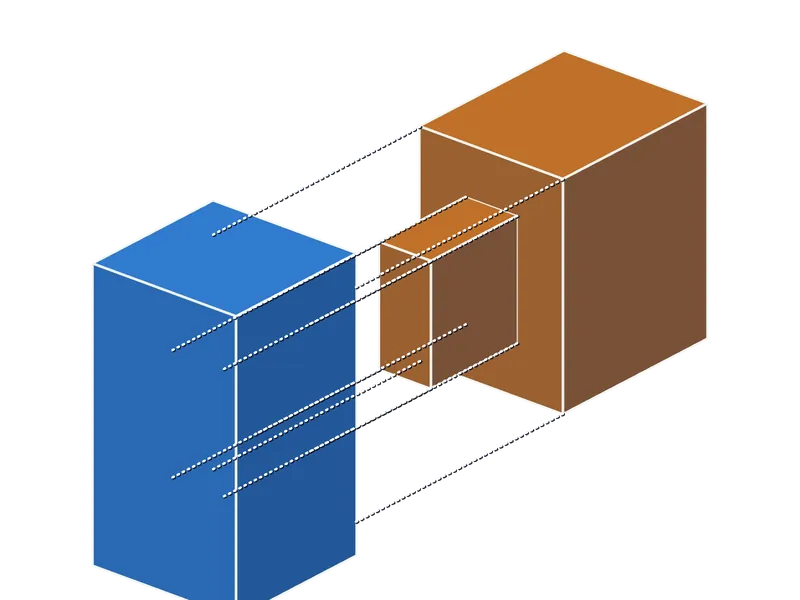
A hollow member bored to take a slimmer one, which stands in it at a set height (a telescoping column such as a music stand's); the bore is cut slightly wider than the inner member so it slides, and the height is a parked pose, not a swept travel.
- Compound mitre
A mitre cut on two axes at once — the boards both turn in plan and lean out of vertical — as at the corner of a splayed or canted frame.
- Breadboard end
A cross-grain cap tenoned or tongued onto the end of a wide panel, concealing end grain and keeping the end straight while the panel's width moves with humidity.
- Shoulder
The flat face left where a tenon's cheek steps in from the full width of its member, which seats against the mortised part's face when the joint is driven home.
- Glue block
A small triangular or square block glued into an interior corner to reinforce a joint or support a top, doing no joinery work of its own beyond the glue line.
- Turning
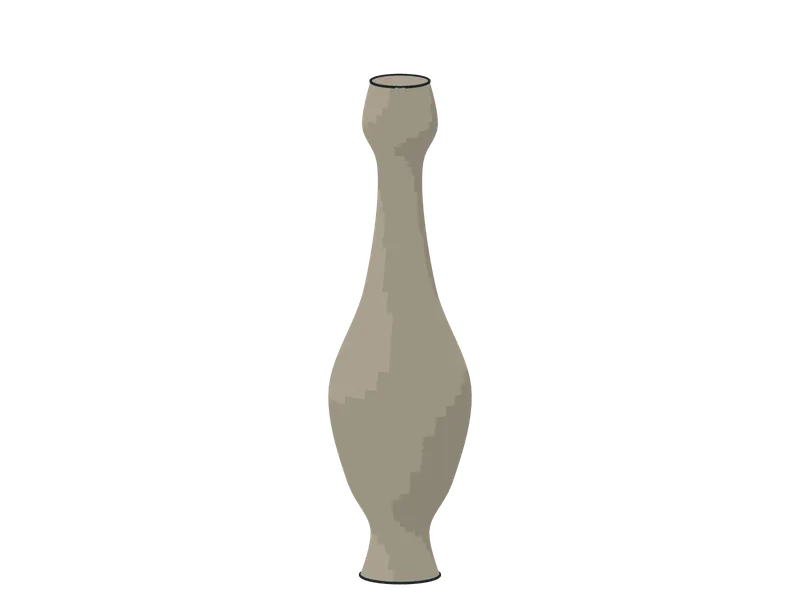
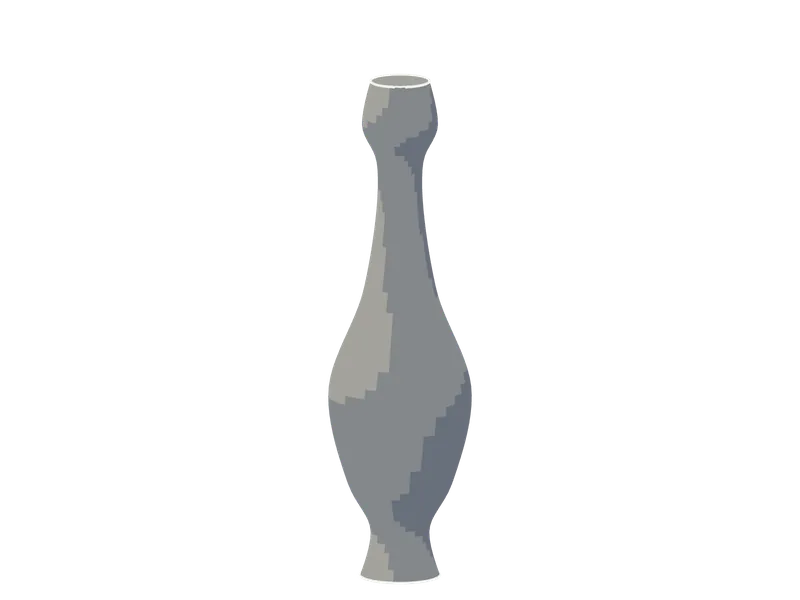
Shaping a part by rotating it on a lathe against a cutting edge, producing a body of revolution — round in every cross-section perpendicular to its axis.
- Turned leg
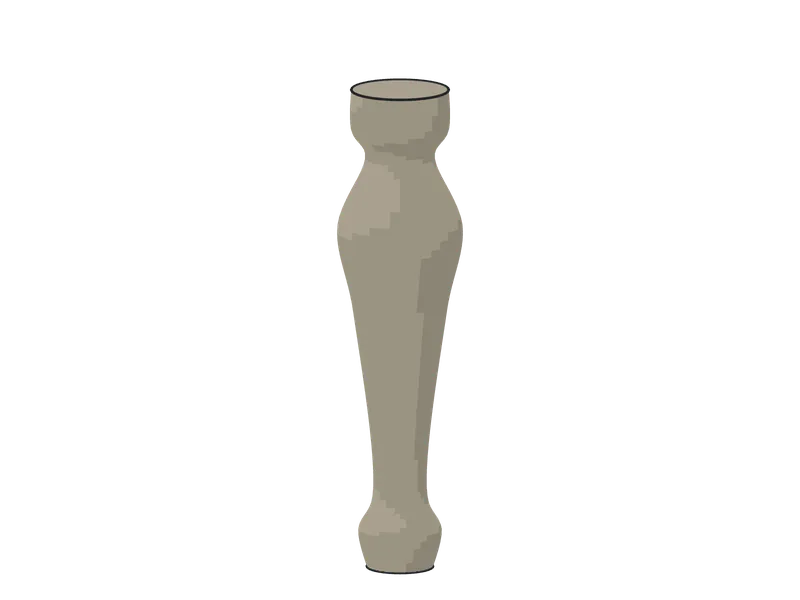
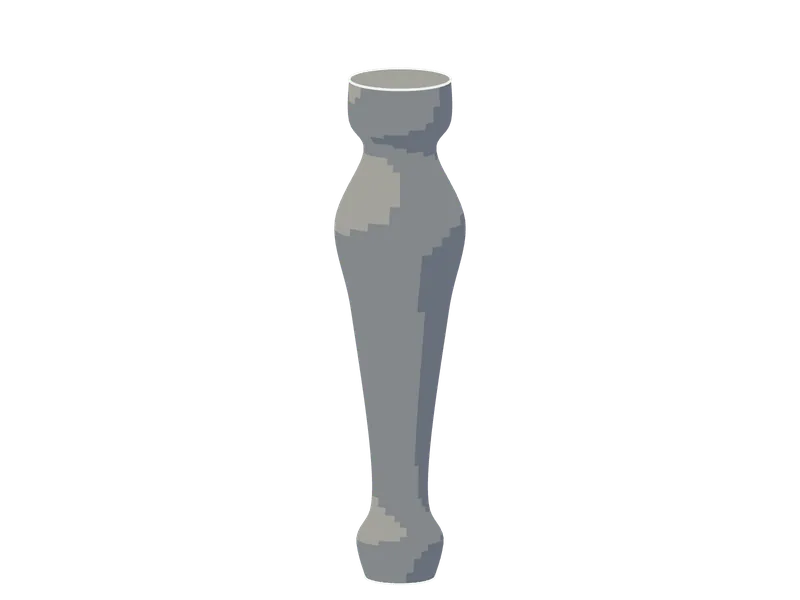
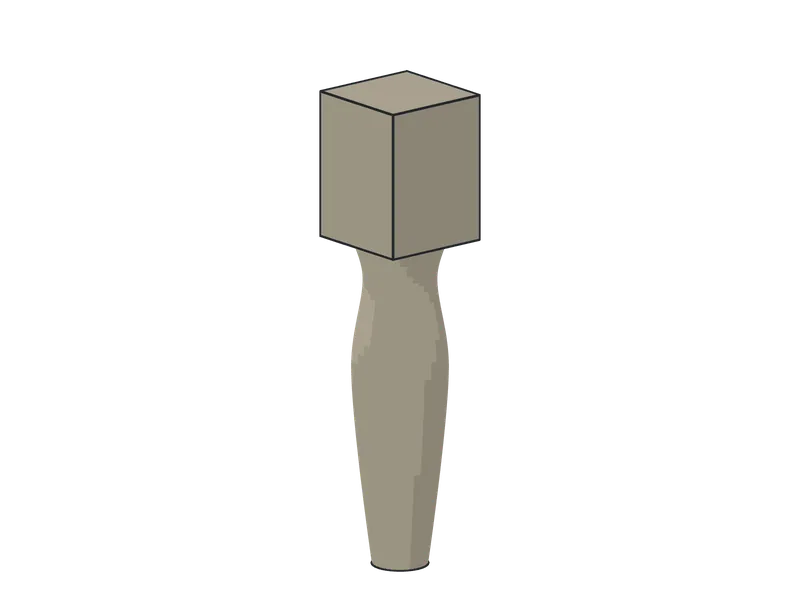
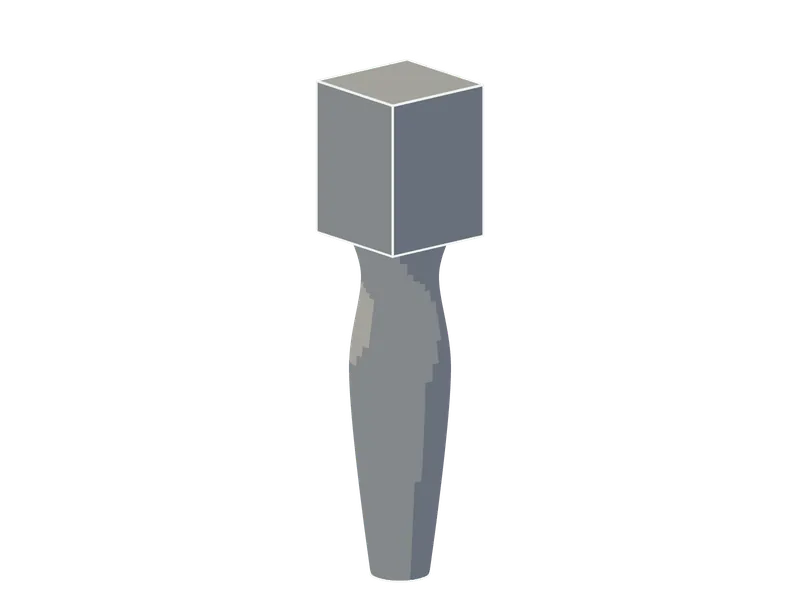
A leg shaped entirely or partly on the lathe rather than left square-sawn, often combining cylindrical, tapered and moulded sections.
- Baluster turning
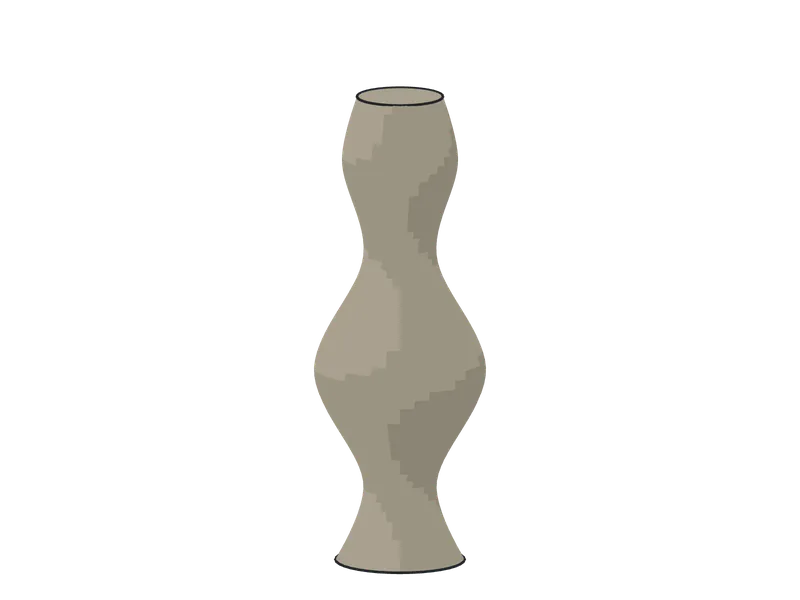
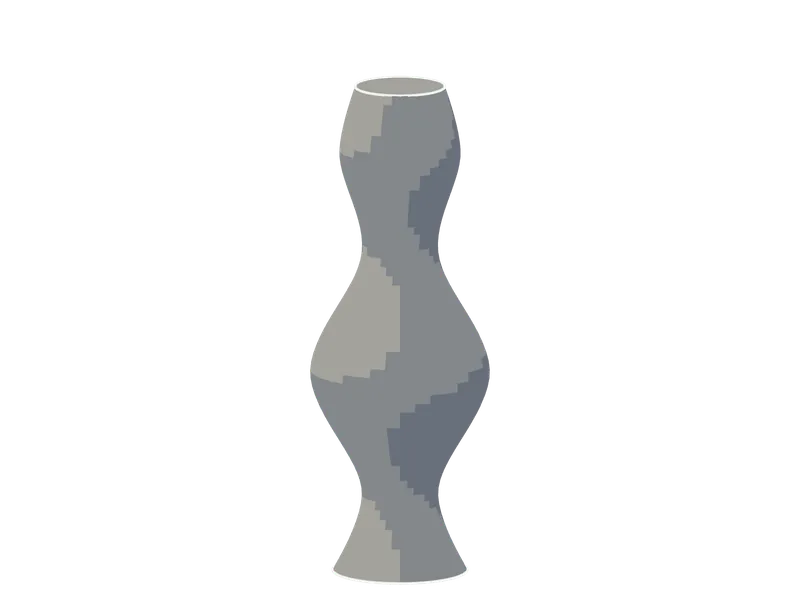
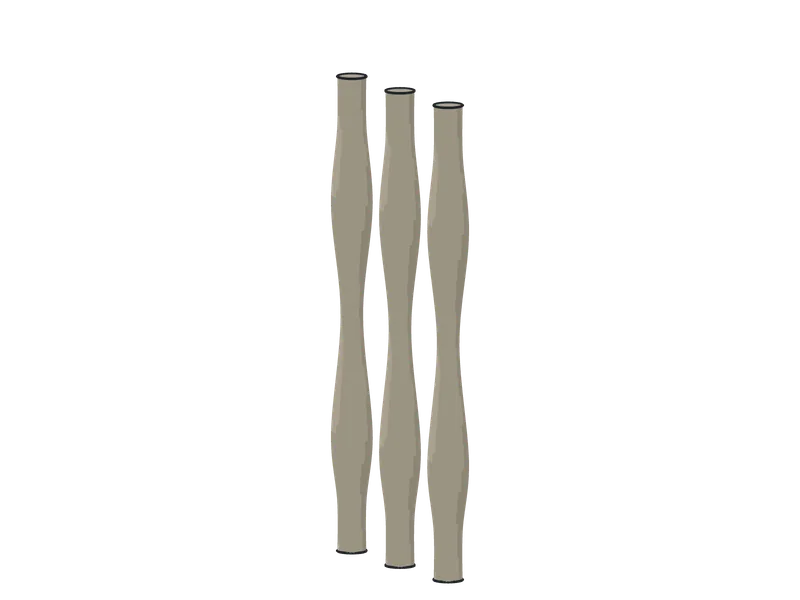
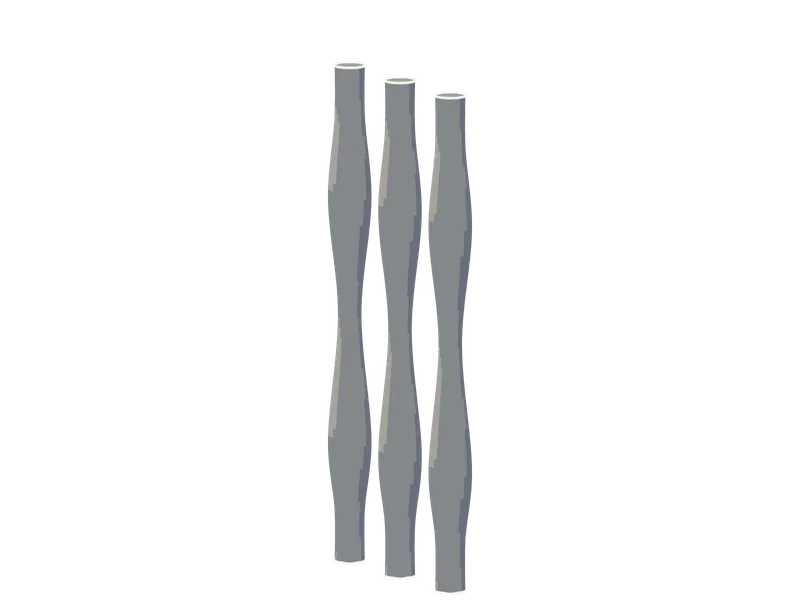
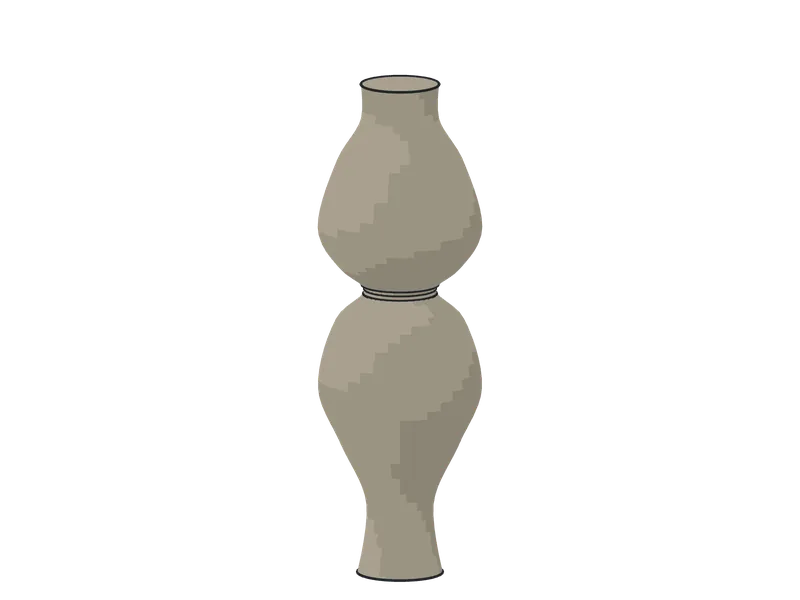
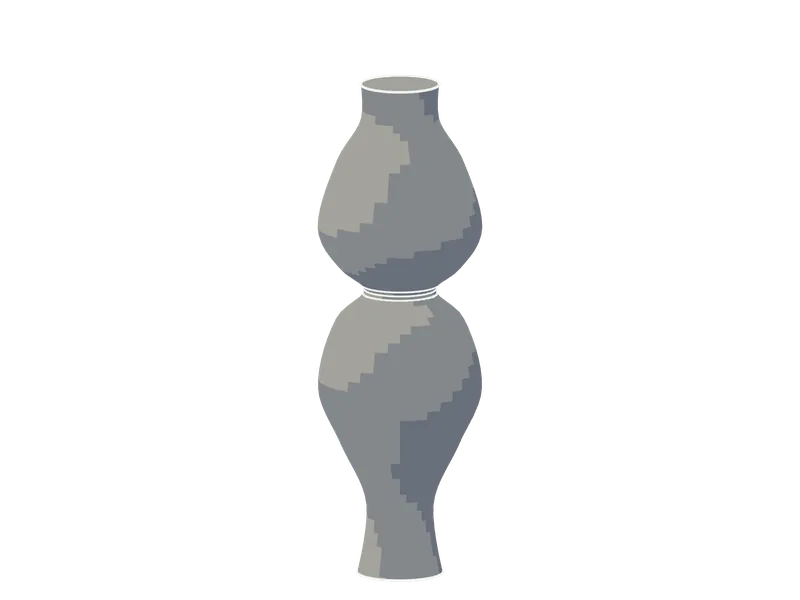
A turned profile with a swelling, vase-like body between narrower collars, borrowed from architectural stair balusters.
- Spindle
A slender turned rod, typically one of several set side by side, as in a chair back or a gallery.
- Trumpet leg
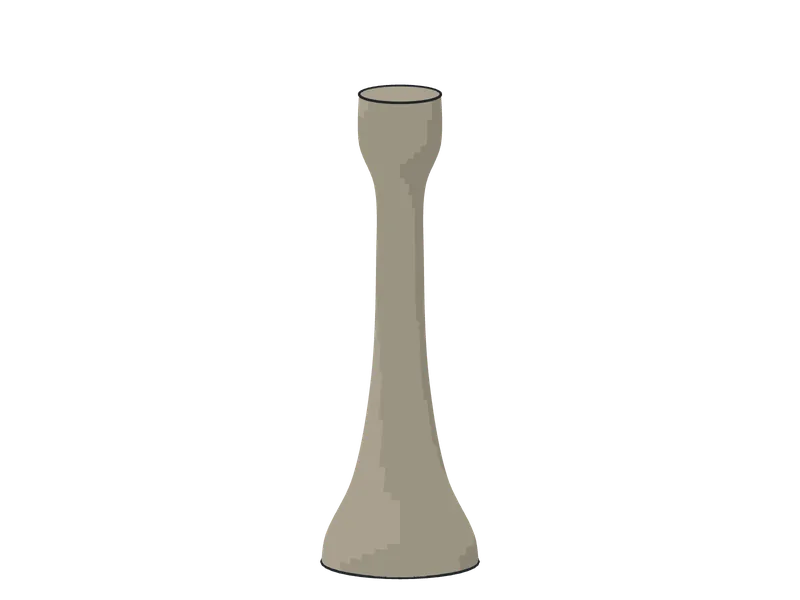
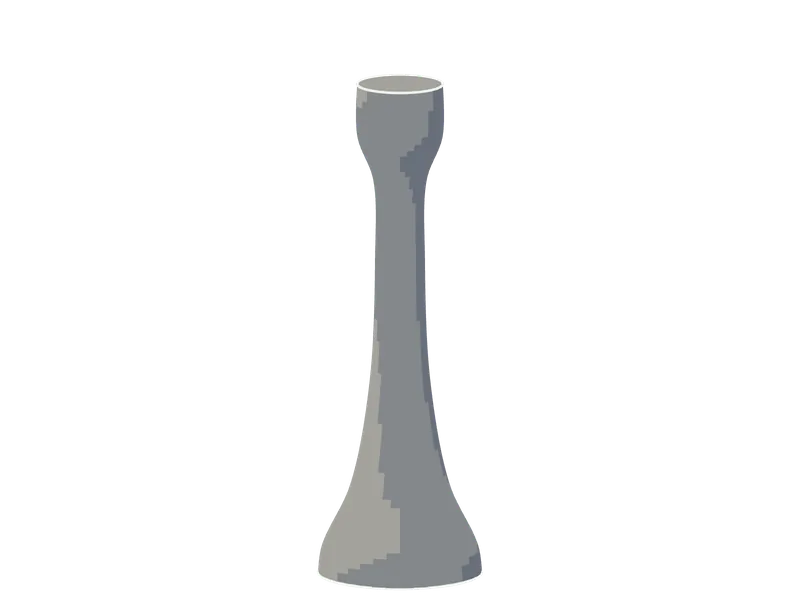
A turned leg that flares outward from a narrow waist near the top down to a wide turned foot, shaped like an inverted trumpet bell.
- Cup-and-cover turning
A bulbous turned leg profile of alternating cup (concave) and cover (a domed, lid-like swelling) sections, stacked between square blocks.
- Pommel
The short square (or otherwise non-round) block left where a turned member meets a square-sectioned part, giving flat faces for a mortise or a joint's shoulder.
- Bamboo turning
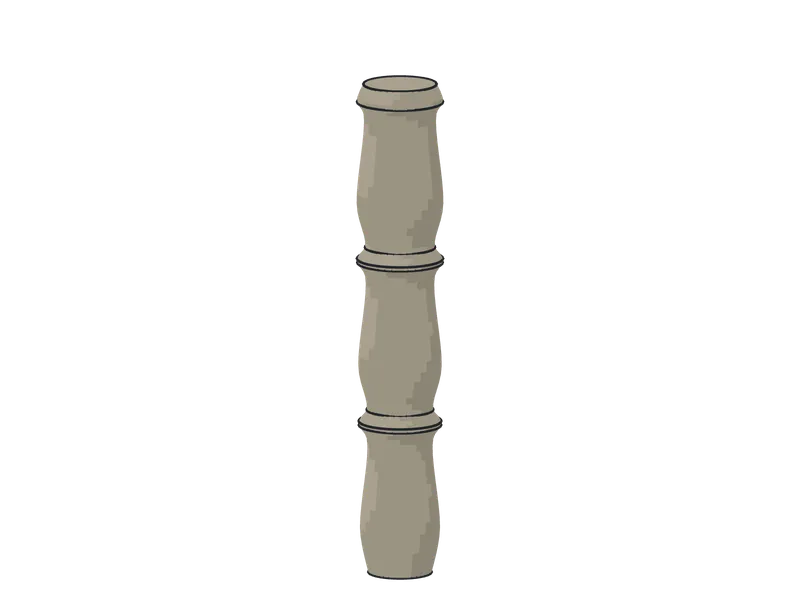
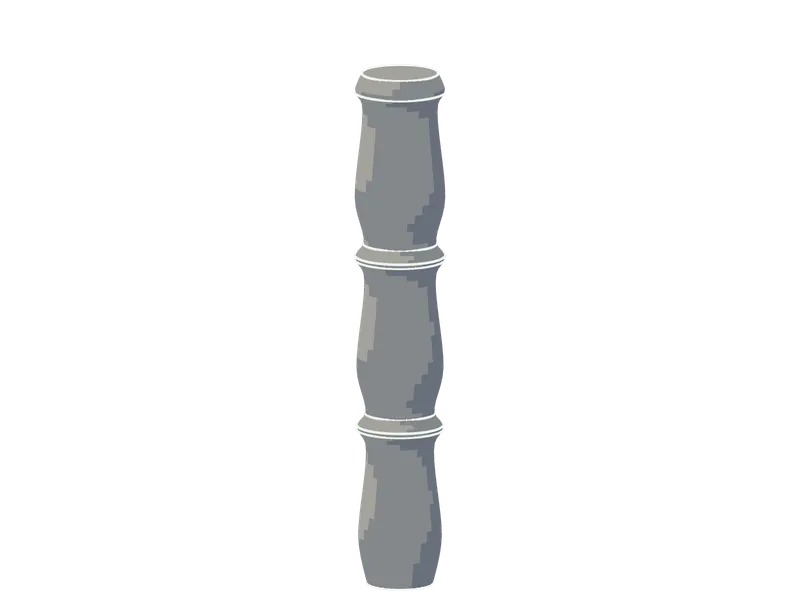
A turned profile of shallow rings and slight swells that mimics the nodes of a bamboo culm, used on faux-bamboo furniture legs and stretchers.
- Splay
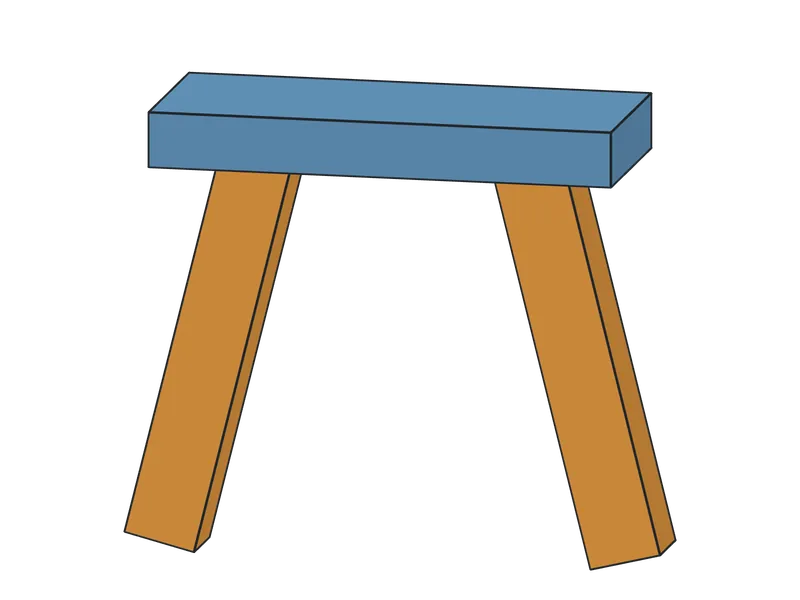
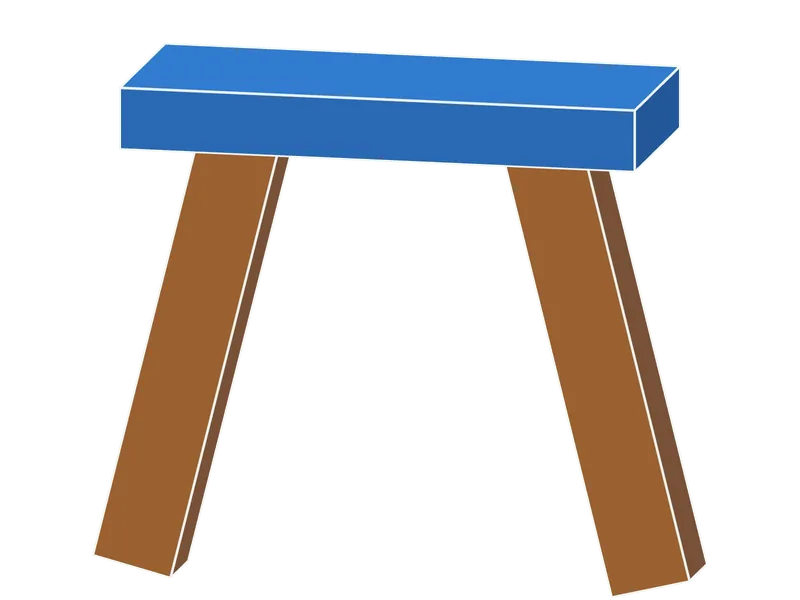
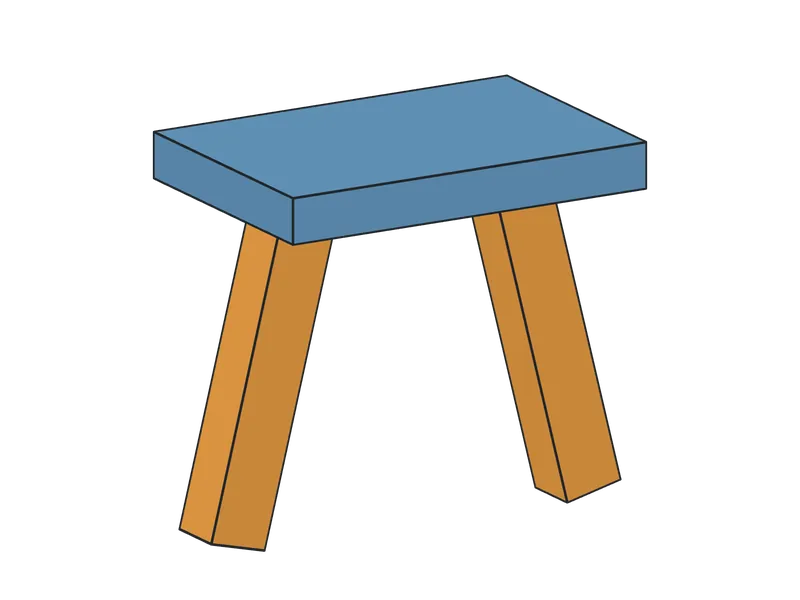
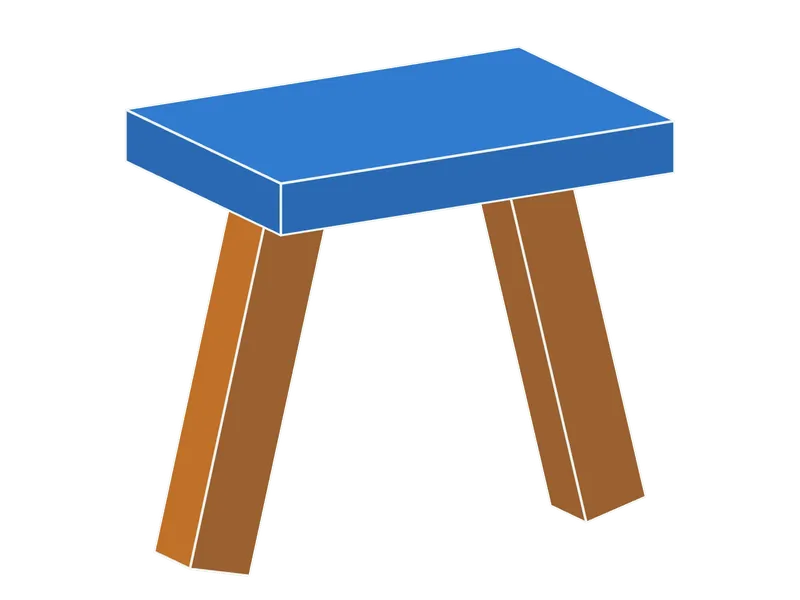
A leg or side set to lean outward from vertical in the sideways plane, widening the piece's stance toward the floor.
- Rake
A leg or side set to lean outward from vertical in the fore-and-aft plane, as distinct from splay's sideways lean.
- Cloud lift
A stepped, cloud-shaped notch cut into the edge of an apron, rail or shelf, characteristic of Greene & Greene work influenced by Chinese and Japanese joinery.
- Bootjack
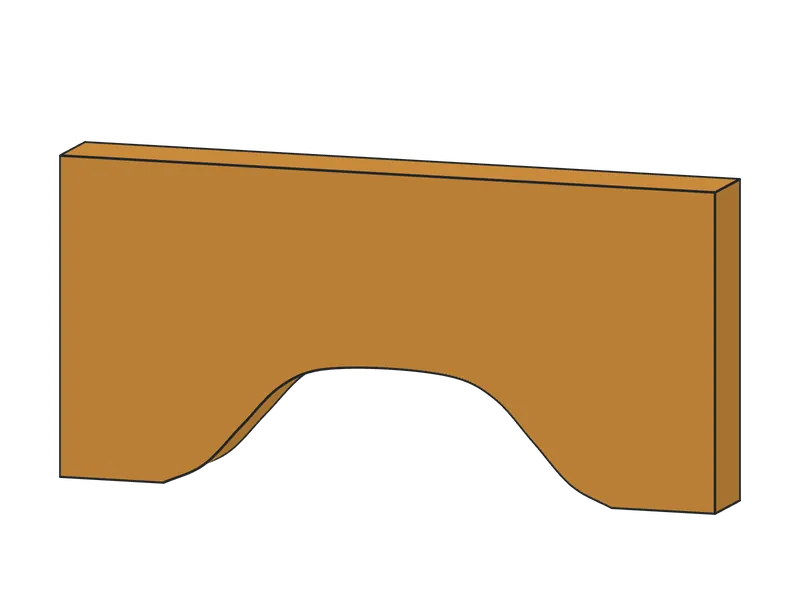
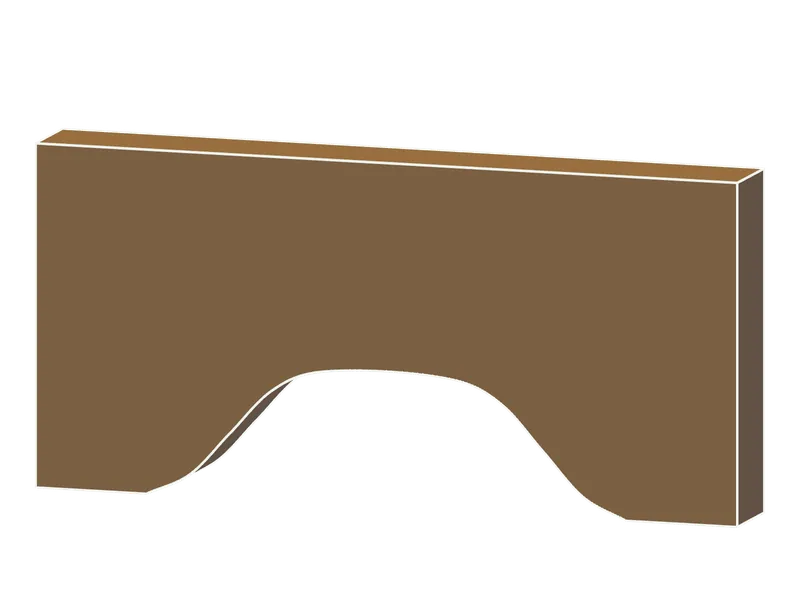
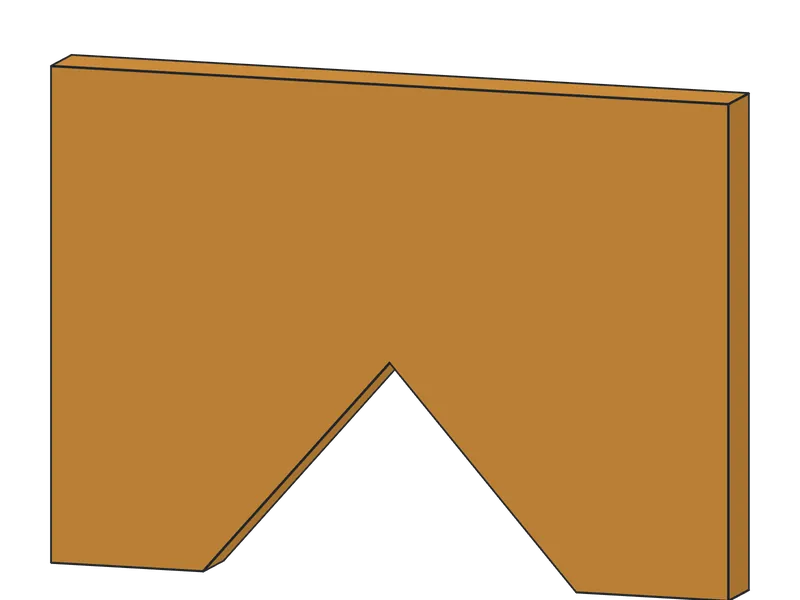
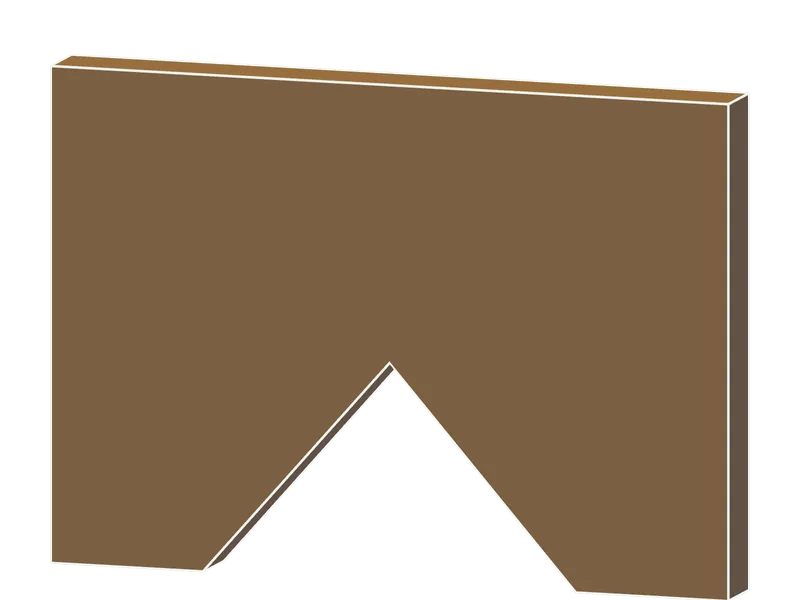
An arched or notched cut-out at the base of a chest or bench end board, forming two short feet — named for its resemblance to a boot-pulling jack.
- Serpentine front
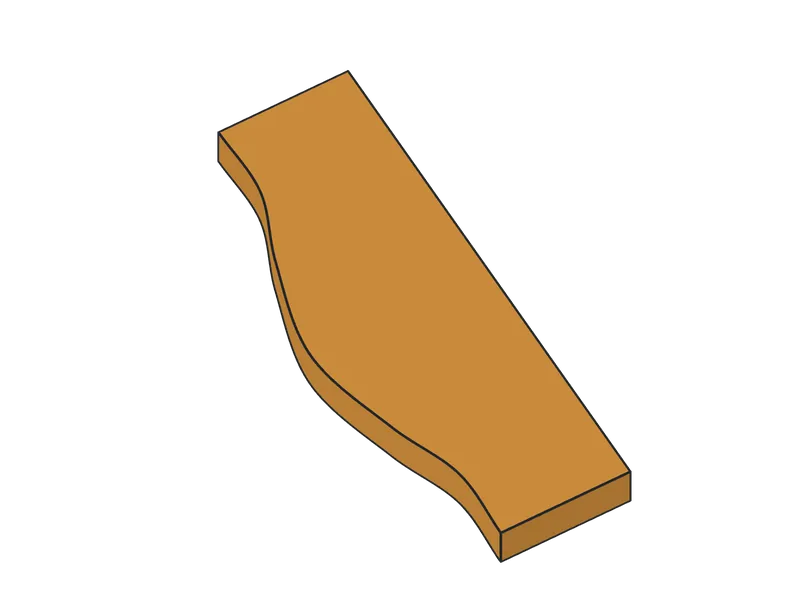
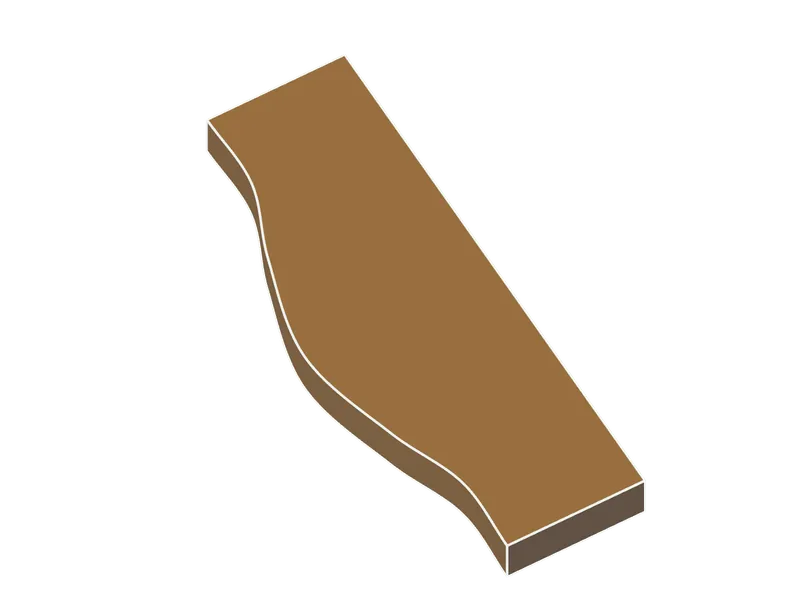
A case front whose face curves in plan — convex, then concave, then convex again — rather than running flat.
- Vase splat
A chair back's central upright, cut in outline to a vase or violin silhouette, wider at the shoulders and waisted below.
- Sunburst
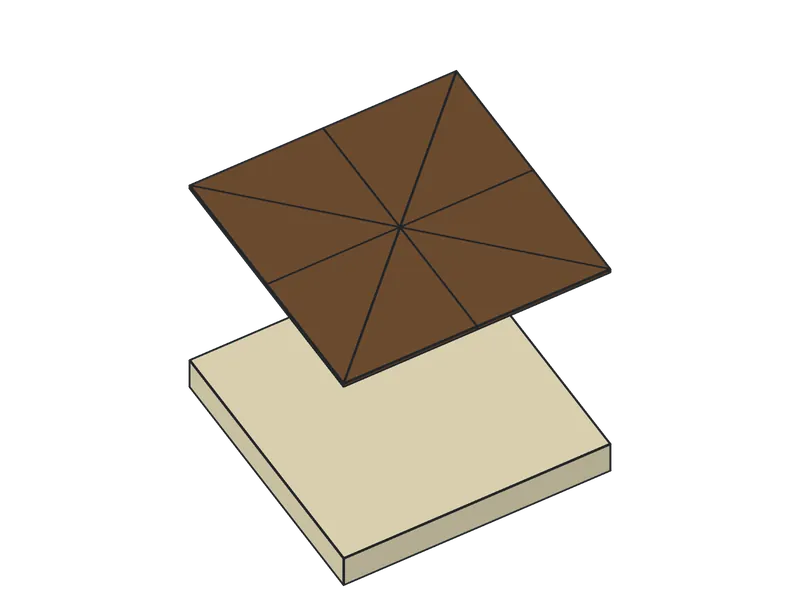
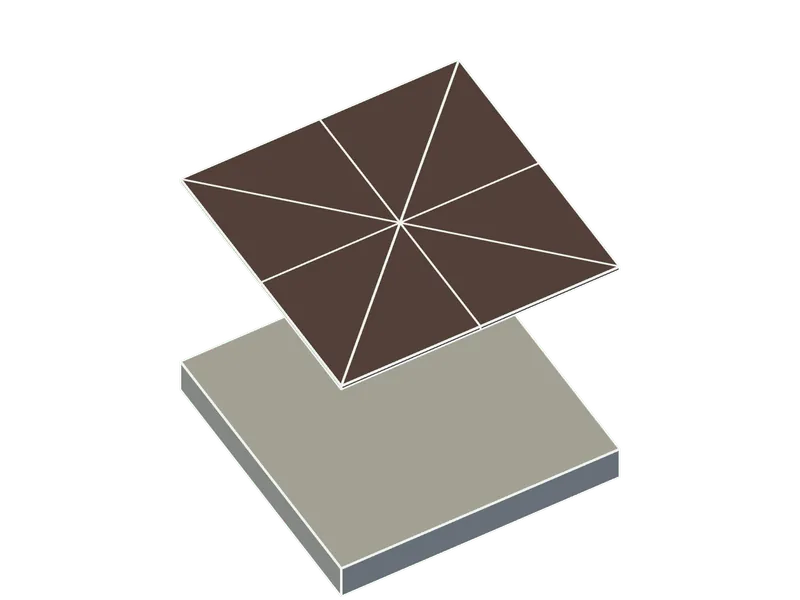
A radiating fan-of-rays motif, built either as inlaid veneer or as a shaped applied panel, common on Art Deco fronts and mirror frames.
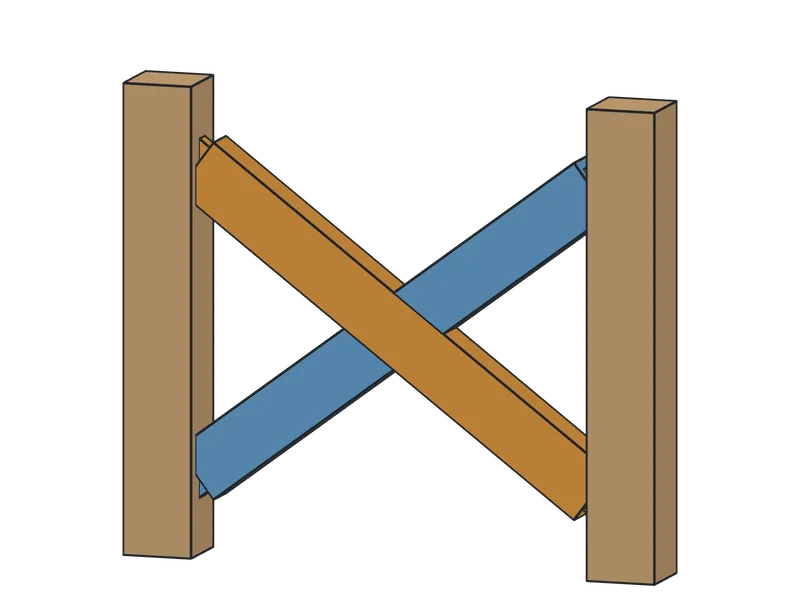
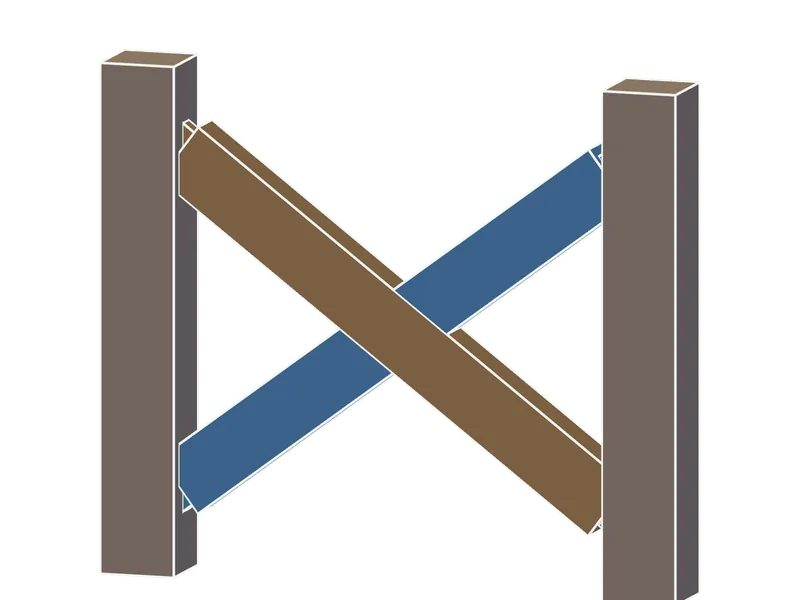
- Hayrake stretcher
An X-braced arrangement of stretchers between a table's legs, crossing diagonally like the rungs of a hay rake.
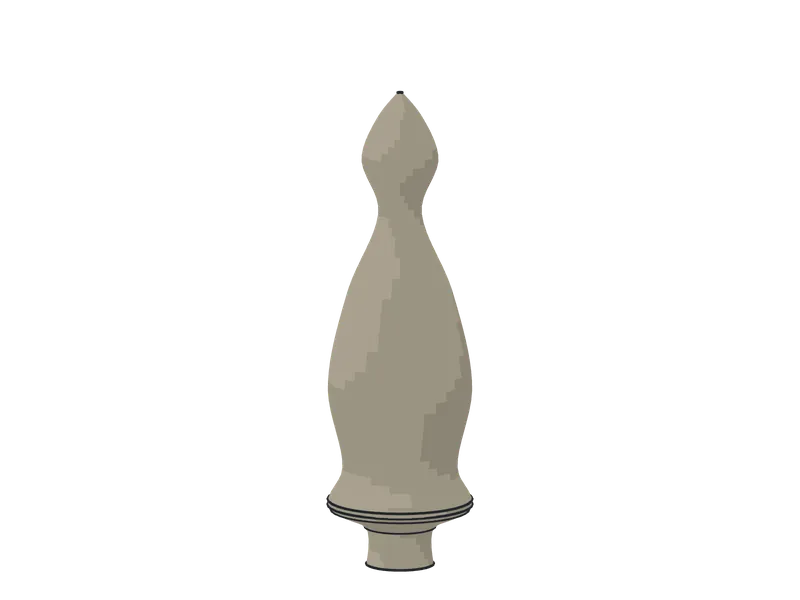
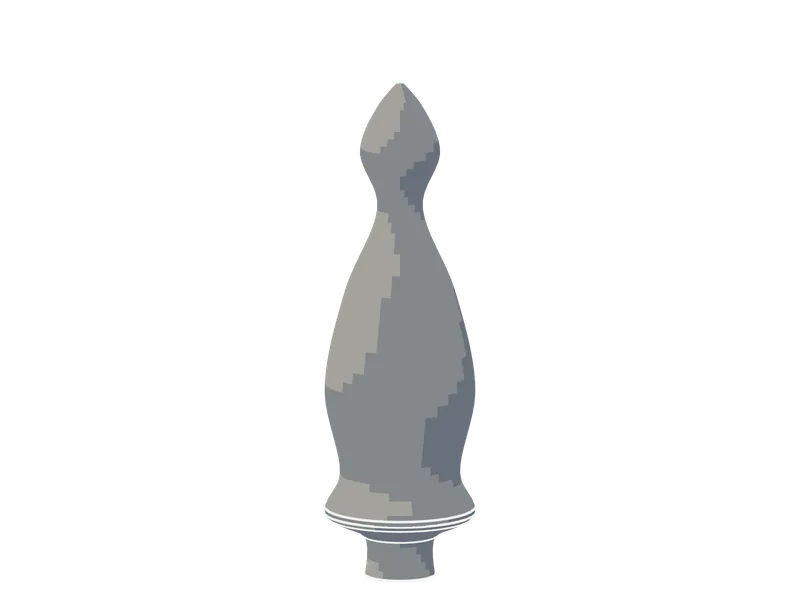
- Finial
A turned or carved ornament capping a post, chair back or clock case above its main structure.
- Veneer
A thin sheet of wood, sliced or sawn, glued to a substrate for its figure rather than its strength.
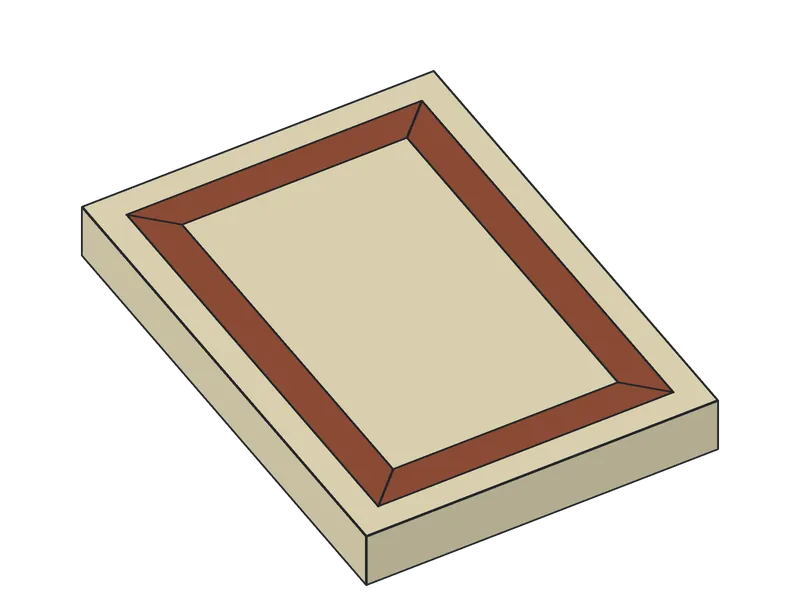
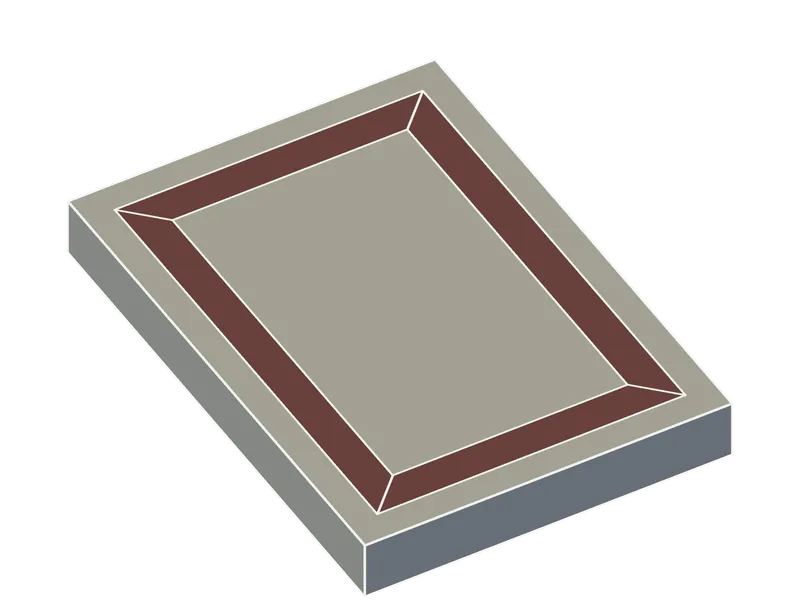
- Banding
A decorative border of contrasting veneer strips, straight or patterned, framing a panel or edge.
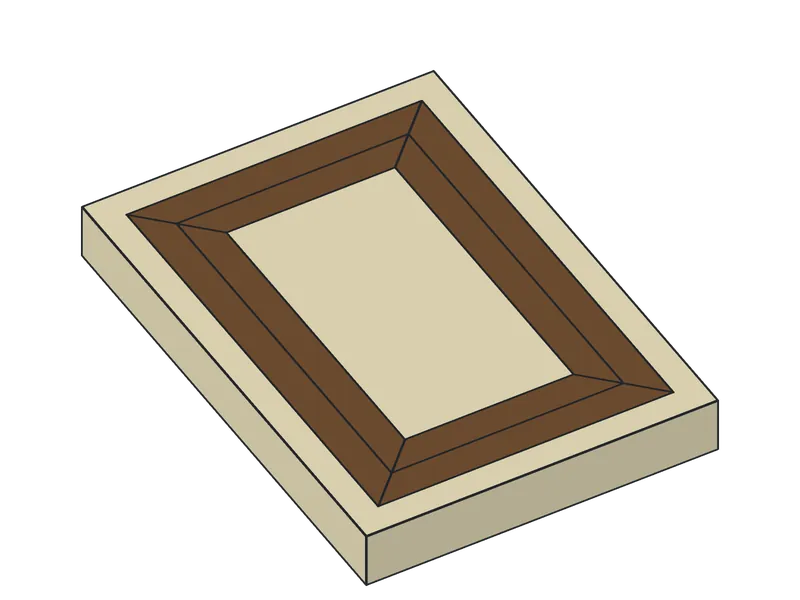
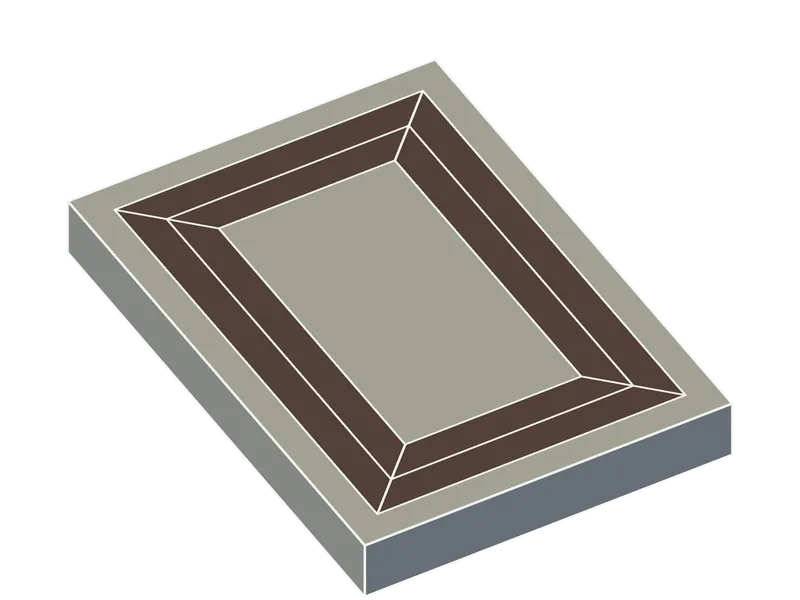
- Stringing
A very thin inlaid line, usually of contrasting wood or metal, run along an edge or around a panel as a fine border.
- Inlay
Material let into a recess cut in a solid or veneered surface so it lies flush — stringing and banding are its simplest, straight-line forms.
- Cross-banding
A veneer border laid with its grain running across (perpendicular to) the banding's length, giving a different figure and sheen from the field veneer.
- Herringbone banding
A banding pattern of narrow veneer strips laid in opposing diagonals, meeting in a zig-zag like a herringbone weave.
- Hinge
A hardware fitting, catalogued rather than modelled as wood, that lets a door or lid pivot against its case. Its leaf is let into a recess in each edge it joins; the compiler cuts the recess and draws the leaf, but models no swing (ADR-0030).
- Drawer pull
A handle or knob, of wood or metal, fixed to a drawer or door front to open it. The compiler bores its screw holes at a mark and draws the pull standing off the face, without making it a cut-list part (ADR-0030).
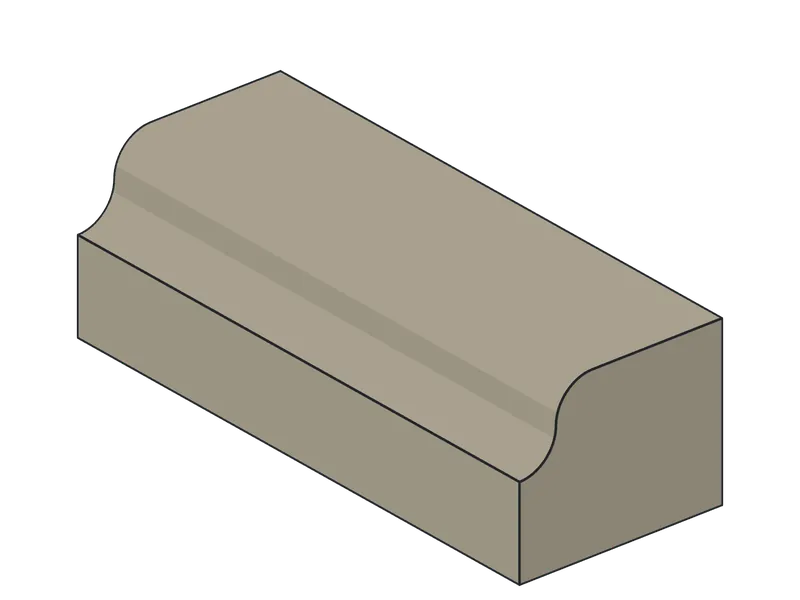
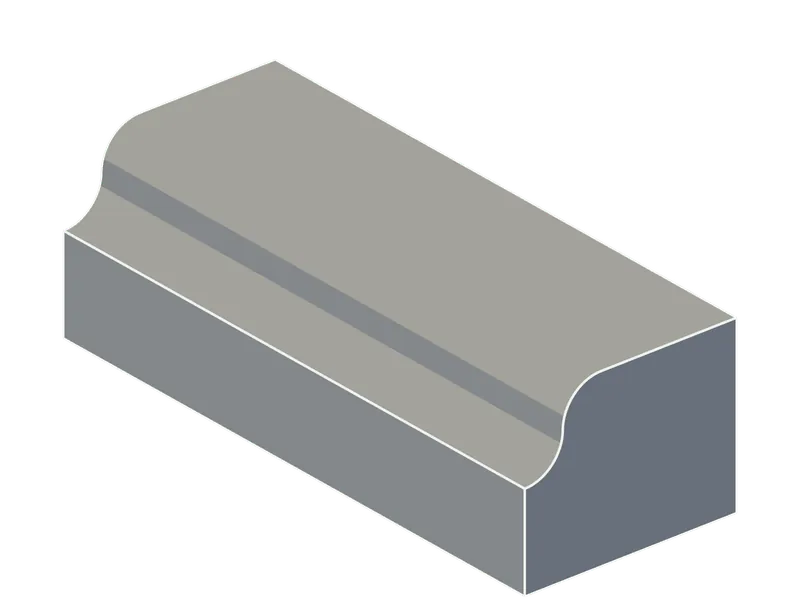
- Ogee
A continuous S-shaped moulding profile combining one concave and one convex curve.
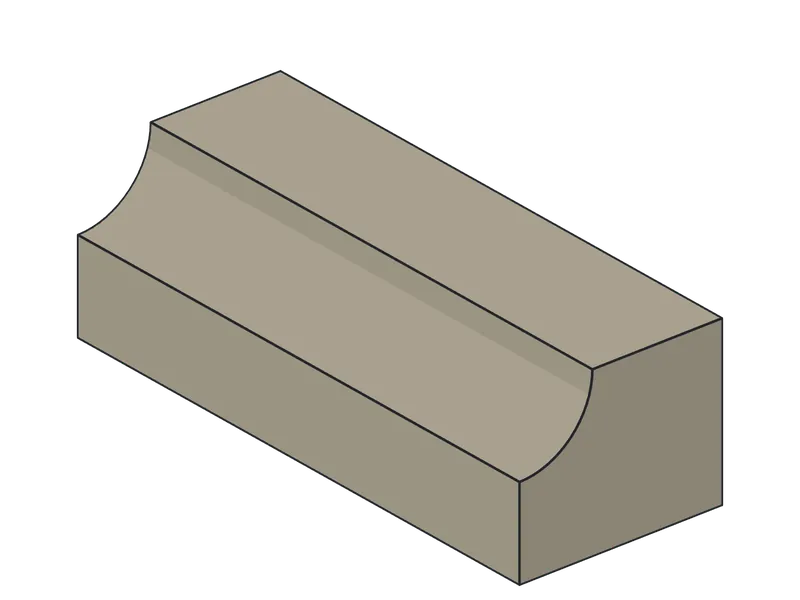
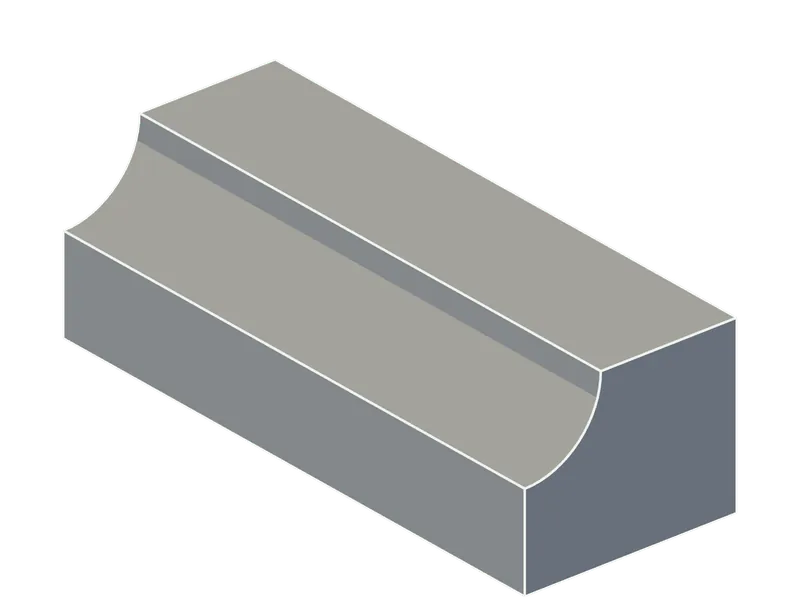
- Cove moulding
A concave quarter-round (or larger) moulding profile, the hollow counterpart of the ovolo.
- Cornice
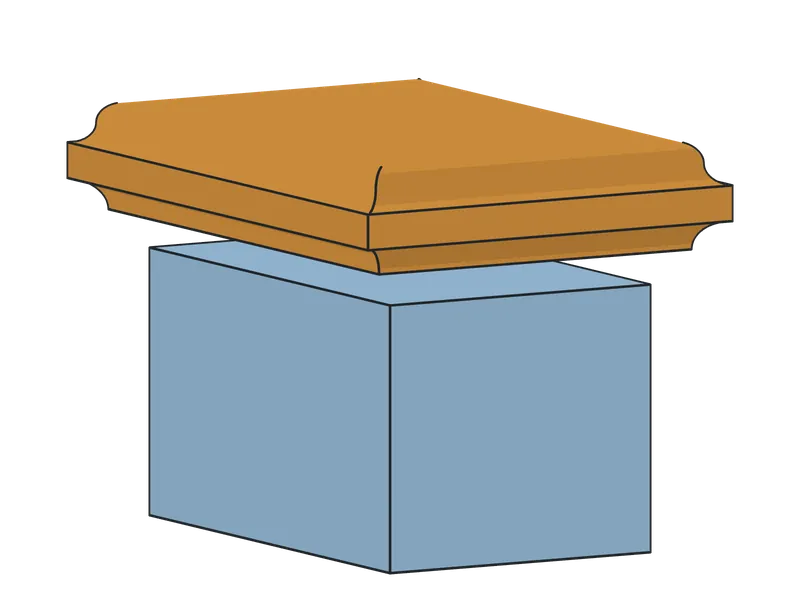
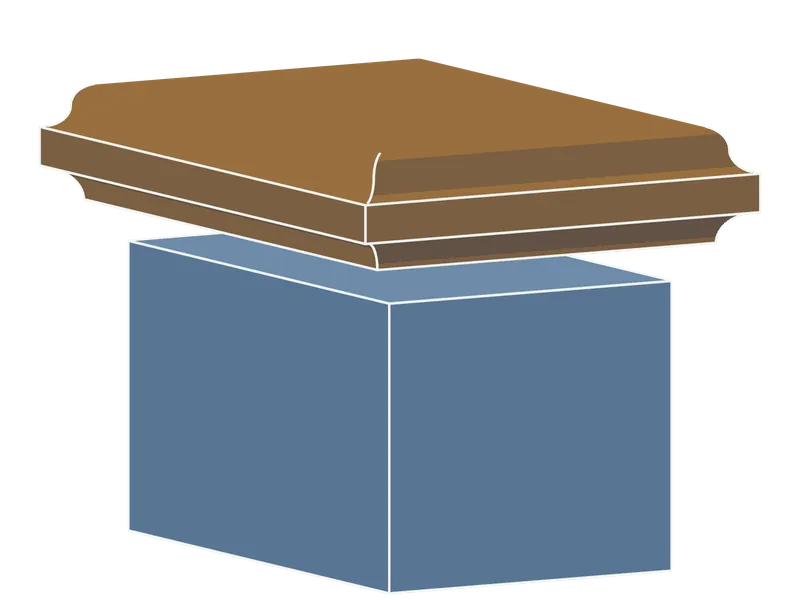
The projecting moulded band that finishes the top of a case piece, like a building's roofline.
Planned
- Komisen
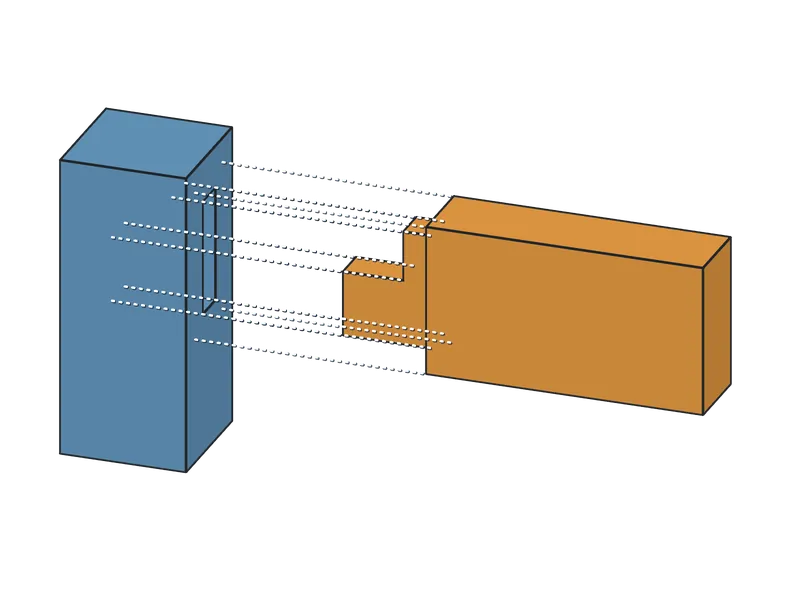
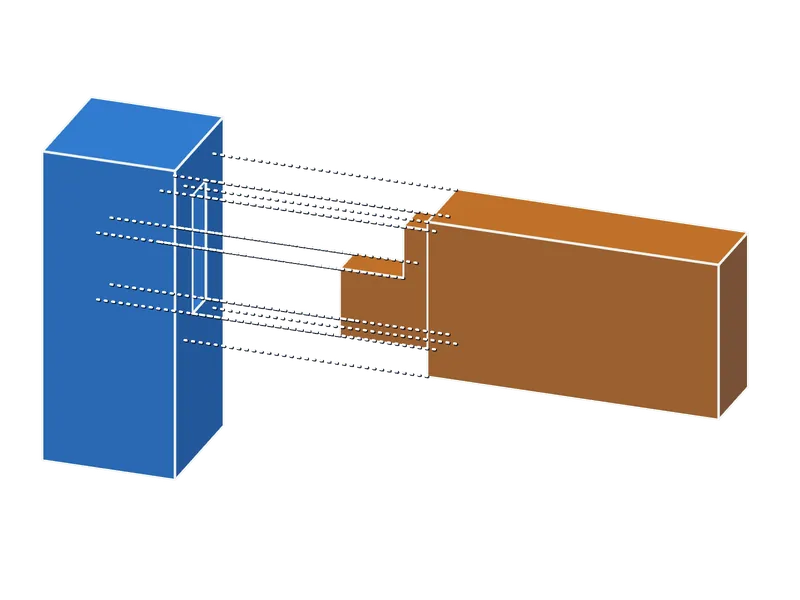
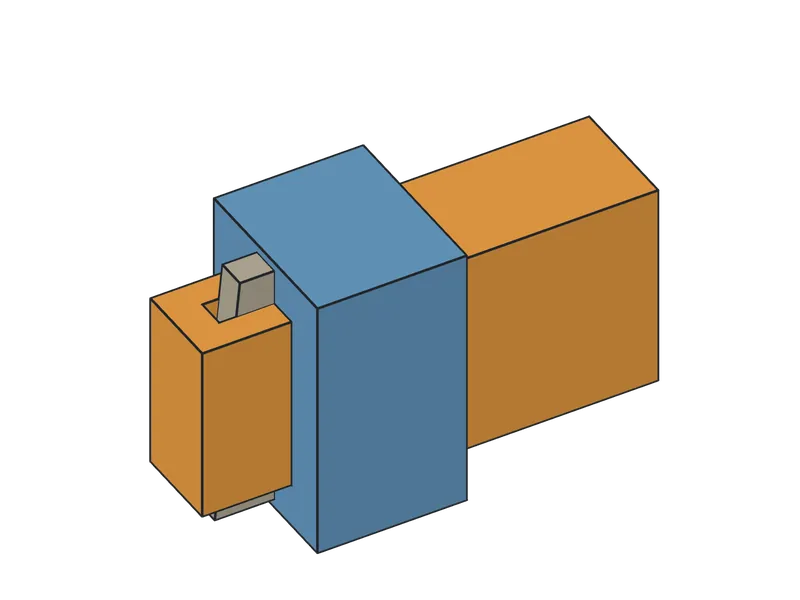
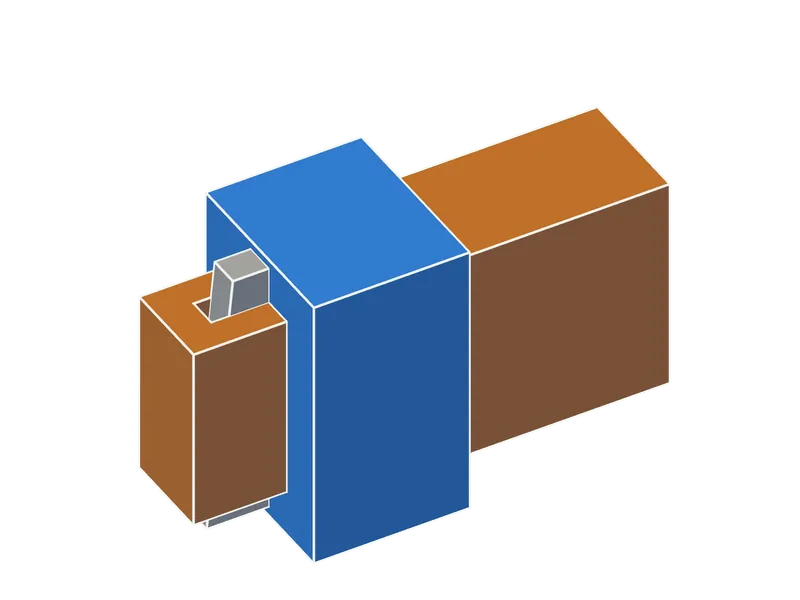
A small tapered square peg driven crosswise through a completed tenon and its mortise, locking the joint mechanically without glue.
- Drawbore
A peg through a mortise-and-tenon joint whose hole in the tenon is bored slightly nearer the shoulder than the holes in the mortised part, so driving the peg pulls the shoulder tight without clamps or glue.
- Peg
A round wooden pin, usually driven through a mortise-and-tenon joint, that locates or locks it; drawbored when its hole is offset to pull the joint tight.
- Graduated dovetail spacing
Dovetail pins cut narrower at a drawer's top edge and wider toward the bottom (or the reverse), a period convention rather than an equally spaced layout.
- Frame and panel
A construction where a light frame of stiles and rails, grooved on their inner edges, captures a floating panel that can move with humidity without splitting.
- Square-to-round transition
A member whose cross-section changes continuously along its length from square (or octagonal) to circular, as where a turned leg rises into a square post.
- Reeding
A row of parallel convex ridges, like closely spaced half-round beads, worked along a turned or straight member — the raised counterpart of fluting.
- Fluting
A row of parallel concave grooves worked along a turned or straight member — the sunk counterpart of reeding.
- Rung
A turned round stretcher joining a chair or stool's legs, tenoned into bored round mortises — the round-section equivalent of a square stretcher.
- Post-and-rung construction
Chair or stool framing built entirely from turned round posts and rungs jointed with round tenons in bored holes, rather than square mortise-and-tenon framing.
- Riven stock
Wood split along its grain with a froe and wedges rather than sawn, so the grain runs unbroken the length of the piece and the split face shows true quartersawn figure.
- Cabriole leg
A leg that curves outward at the knee and back in at the ankle in a continuous S-profile, sawn from a solid block and usually ending in a shaped foot.
- Pad foot
A plain, slightly flared disc-shaped foot terminating a cabriole leg, with no carved ornament.
- Ogee bracket foot
A case foot cut from a bracket whose outer profile is an S-curved (ogee) moulding, convex over concave, mitred at the corner.
- French foot
A case foot formed by sawing the front corner of the base moulding into a gentle outward, forward-raking curve, without a separate applied bracket.
- Spade foot
A square, downward-tapering foot, usually stop-fluted, terminating a straight square leg — common on Hepplewhite and Sheraton furniture.
- Sabre leg
A leg that curves back and slightly outward in a single concave sweep from seat to floor, like a cavalry sabre's blade, usually on a chair's rear legs.
- Horse-hoof foot
An outward-flaring turned or shaped foot resembling a horse's hoof, common on Chinese hardwood furniture.
- Knee block
A small shaped bracket filling the corner between an apron and a cabriole leg's knee, continuing the leg's curve up into the apron.
- Fretwork
An openwork or shallow-relief pattern of interlocking geometric lines, either pierced through the wood or cut only partway (blind fret).
- Pierced splat
A chair's vertical back splat cut through with an openwork pattern rather than left solid.
- Silhouette
A part whose distinctive shape comes entirely from its cut outline in one plane, with square-sawn faces rather than carving or turning.
- Crest rail
The topmost horizontal rail of a chair back, often shaped in outline (yoke, serpentine, tablet) rather than left straight.
- Whiplash curve
A long, asymmetric double curve — tight at one end, sweeping wide at the other — the characteristic line of Art Nouveau furniture.
- Scalloped edge
An edge cut into a repeating series of shallow, rounded arcs, as on a rack or shelf's front edge.
- Yoke (crest)
A chair crest rail shaped like an ox-yoke: curved down at the centre and swept up at the outer ends.
- Waterfall edge
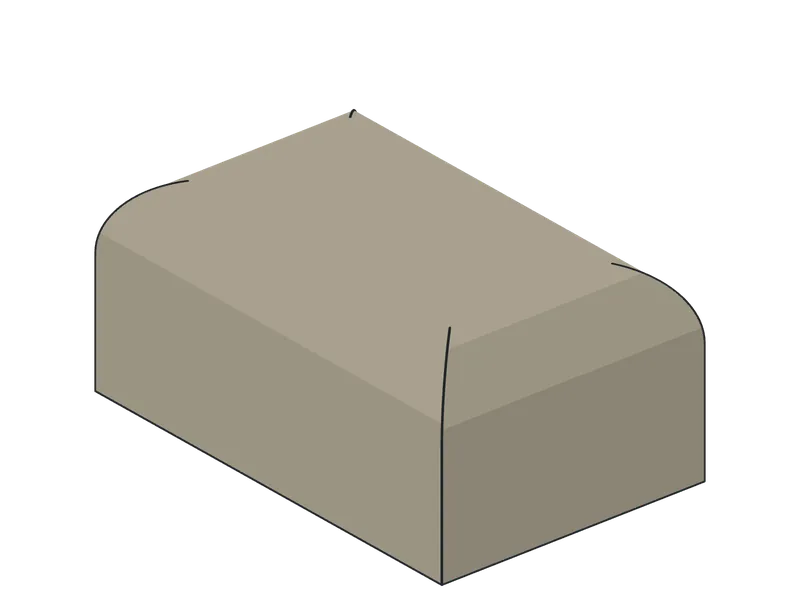
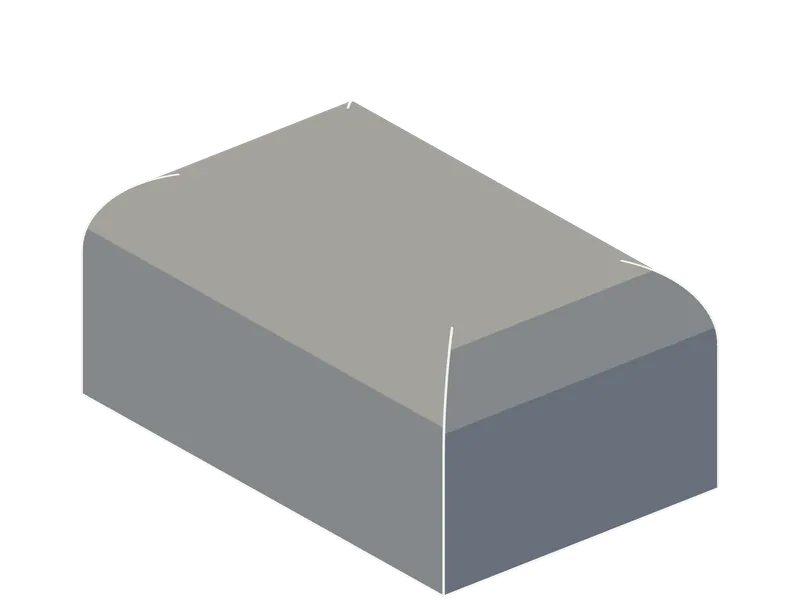
An edge or corner rounded over in a continuous curve from the top face down to the side, as if the surface were poured over the edge — typical of Art Deco veneer work.
- Shield back
A chair back whose outer frame is shaped in outline to a shield, usually filled with carved or pierced splats radiating from the seat rail.
- Block front
A case front worked in three vertical sections — the outer two raised, the centre recessed — each usually finished with a shell or fan carved at the top.
- Ear (crest rail)
A small outward flare or scroll at each end of a chair's crest rail or cabriole knee, beyond the line of the main curve.
- Stepped (skyscraper) massing
A case front or cornice built up in receding stepped tiers, echoing an Art Deco skyscraper's setback silhouette.
- Humpback stretcher
A stretcher shaped with a raised, arched centre between its two legs, rather than left as a straight bar.
- Ladder-back chair
A chair whose back is a row of horizontal slats set between two uprights, like the rungs of a ladder.
- Fan-back Windsor
A Windsor chair whose back spindles splay outward from the seat in a fan, rising to a straight or shaped top rail with no bent bow.
- Woven seat
A chair seat built up by weaving natural or synthetic cord, rush or splint across the seat rails, rather than a solid wood or upholstered seat.
- Book-matched veneer
Adjacent veneer leaves from the same flitch laid side by side and flipped like the pages of a book, so their figure mirrors across the joint.
- Oyster veneer
Veneer sliced across a small branch or root at a steep angle, showing concentric rings like the inside of an oyster shell, laid edge to edge in a repeating pattern.
- Burl veneer
Veneer sliced from a burl (a swirling, knotted growth on a tree), prized for its dense, irregular figure.
- Cockbead
A thin, proud half-round or square strip run around a drawer front's edge, standing slightly above the surrounding case surface to protect the veneer's edge. The rabbet it sits in can be cut today; the bead itself waits on mouldings.
- Ebonising
Staining or dyeing a lighter wood black to imitate ebony, usually on turned or applied details rather than the whole carcass.
- Gilt-bronze mount
A cast and gilded bronze fitting applied to a case or leg, purely decorative or protecting a vulnerable corner or foot (a sabot).
- Paterae
A small oval or circular medallion, inlaid or carved, applied as a repeated ornament on a Federal or Hepplewhite surface.
- Bellflower
A drop-shaped, three-lobed motif resembling a stylised flower, run in a diminishing chain down a Federal leg — inlaid in light wood or carved.
- Caster
A small swivelling wheel fitted to a leg's foot so the piece can be rolled rather than lifted.
- Cane seat
A chair seat or back panel woven from narrow strips of rattan cane through holes bored round its frame.
- Webbing
Woven jute or cotton strapping tacked across a seat frame to support a cushion or upholstery.
- Ovolo
A convex quarter-round moulding profile, the simplest classical convex section.
- Half-round moulding
A convex moulding profile that is a full semicircle in section, often run at a drawer edge or a door's meeting stile.
- Thumbnail edge
A narrow, gently rounded lip worked along a drawer front's edge, named for its resemblance to a thumbnail's curve.
- Apron
A rail running beneath a tabletop or between chair or case legs, stiffening the frame and often carrying the leg joinery.
- Stretcher
A horizontal member joining two legs below the seat or tabletop, bracing the frame against racking.
- Stile
A vertical member of a frame — a door, panel or chair back — into which the horizontal rails join.
- Rail
A horizontal member of a frame, running between stiles or legs.
- Skirt (case)
A shaped or plain board running along the base of a case piece, below the lowest drawer or the carcass, often concealing the foot joinery.
- Plinth
A separate, usually simple base a case piece sits on, distinct from its feet or bracket-foot skirt.
- Corbel
A small bracket, often shaped or carved, projecting from a case or frame to support an overhanging member, visually or in fact, above it.
- Carcass
The box-like body of a case piece — the sides, top, bottom and back a chest, cabinet or bookcase is built from — before its drawers, doors or drawer runners.
- Pediment
A shaped, often triangular or scrolled crown fitted above a case piece's cornice, echoing an architectural pediment.
- Seat rail
The rail running around a chair's seat frame, into which the legs and, if any, the back posts join.
- Trestle
A table base of two upright end frames joined by a single long stretcher, rather than four independent legs.
- Waisted frame
A leg-and-apron frame set in from the edges of the top or seat it carries, so the case appears to narrow (wear a waist) below the surface it supports.
- Waistless frame
A leg-and-apron frame set flush with the edges of the top or seat it carries, with no inset waist between them.
- Shadow gap
A deliberate narrow gap left between two adjoining surfaces — a door and its case, or two panels — so a line of shadow reads as a clean visual break instead of a touching seam.
- Knife edge
A top or seat edge planed or routed down to a thin, crisp line rather than left at full thickness or eased with a roundover.
- Mirrored (handed) placement
Placing a left and right copy of the same part as true mirror images of each other, rather than as two identical copies rotated.
- Peg schedule
A rule that places a series of identical features — pegs, holes or dovetail pins — at computed positions along a run, rather than writing each one out by hand.
Out of scope
- Ball-and-claw foot
A carved foot representing a bird's or dragon's claw gripping a ball, terminating a cabriole leg.
- Quadrilinear leg
A square leg built or selected so straight, matching grain figure runs unbroken up all four faces, prized in Stickley-era Mission case pieces.
- Lunette
A half-moon (semicircular) carved or incised motif, often repeated in a row along a rail — common on Jacobean oak.
- Bow-back Windsor
A Windsor chair whose back bow is a single steam-bent piece running continuously from one arm or seat position, over the top, to the other.
- Comb-back Windsor
A Windsor chair with a low bow-back topped by a separate row of spindles rising to a horizontal comb rail.
- Sack-back Windsor
A Windsor armchair whose bow forms both the arm rail and the back bow in one continuous bent piece.
- Continuous-arm Windsor
A Windsor chair whose arm rail and back bow are steam-bent from a single length of wood, without a joint at the sides.
- Crinoline stretcher
A continuous, roughly D-shaped or oval stretcher swept in a curve between a chair's legs, named for its resemblance to a hooped skirt frame.
- Tilter
A leather-thonged pivot let into a Shaker chair's rear feet, letting the sitter rock the chair back onto them without it sliding.
- Swallowtail fingers
The angled finger joint that closes the lapped seam of a Shaker steam-bent oval box, shaped like a swallow's forked tail.
- Marquetry
A picture or pattern built entirely from shaped veneer pieces of different woods (or other materials), glued up and applied as a single sheet.
- Carving
Shaping or ornamenting wood by removing material with edge tools (gouges, chisels) freehand, rather than by a straight or rotary cutter.
- Strapwork
A carved or applied ornament of interlaced band-like ribbons, associated with Jacobean and Renaissance Revival casework.
- Tambour
A flexible sliding shutter of narrow wood slats glued to a canvas backing, running in grooves to close a desk or case opening.
- Bent lamination
A curved member built by gluing several thin, flexible plies together over a curved form, so the glued-up stack holds the form's curve once cured.
- Steam bending
Softening solid wood with steam so it can be bent around a form and will hold the curve once it cools and dries.
- Freeform (saddled) seat
A seat sculpted with doubly-curved, hand-shaped surfaces — dished for the sitter and rounded at the edges — rather than built from flat or ruled cuts.
- Butterfly key
A bowtie-shaped wooden key let into two adjoining boards to bridge a crack or a seam and stop it from spreading.
- Maloof joint
Sam Maloof's freehand-shaped, glued and doweled joint between a chair's rockered leg and its sculpted seat, smoothed after assembly rather than cut to a fixed geometric profile.
- Mitred tenon tip
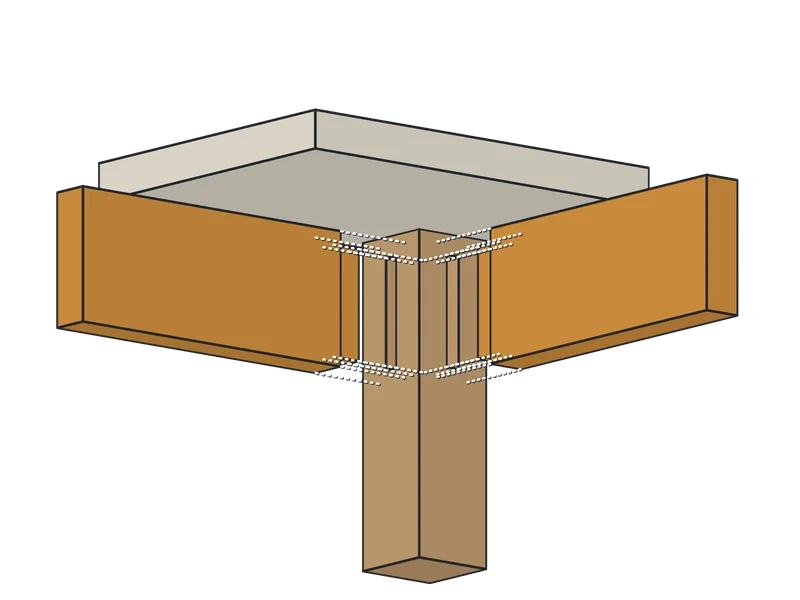
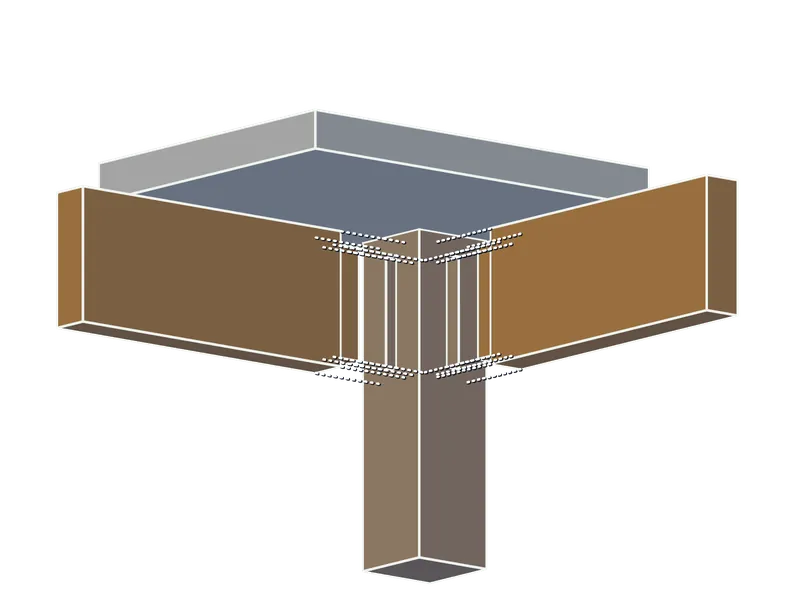
Two tenons entering one part at the same corner, each cut back at 45° at its tip so they meet without colliding inside the mortised part.
- Three-way mitre
A corner where three mitred members meet along three mutually perpendicular planes at once, as at the top corner of a case.
- Scarf joint
A joint that lengthens a member by overlapping two angled or stepped cuts along its length, rather than joining end to end square.
- Raised panel
A panel whose field is bevelled down to a raised centre proud of its frame, the bevel's profile undercutting back to a flat show face — a moulded profile no straight or leaning ruled cut can reproduce.