


Overview
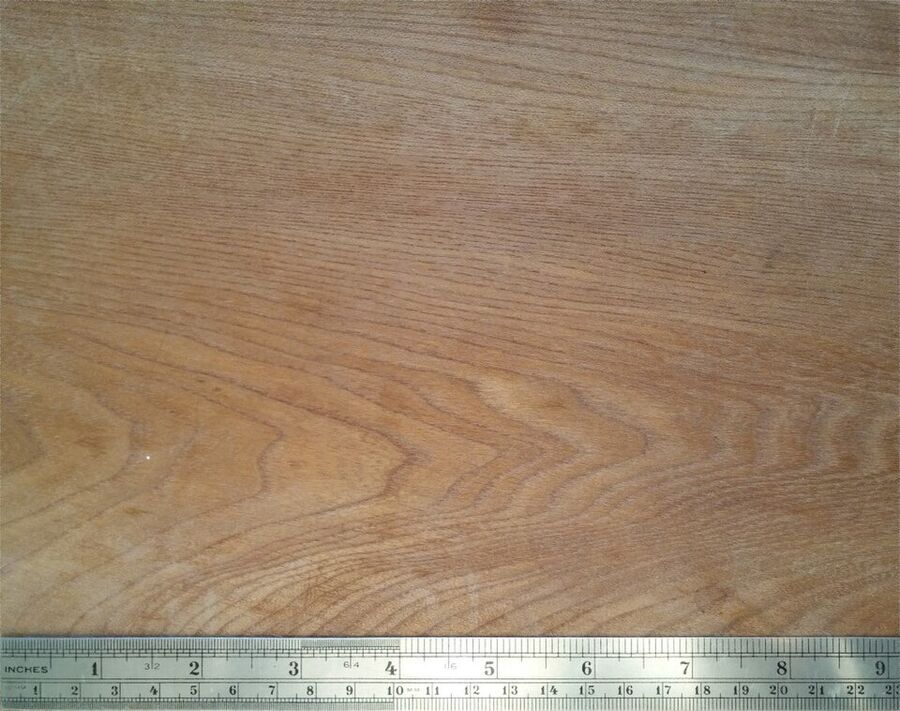
European elm is a reddish-brown, interlocked-grain timber with a bold, rustic, cathedral grain. Wych elm (Ulmus glabra) and English elm (U. procera) are the two main species, and both have been hit hard by Dutch elm disease, so good mature timber is scarce. Pick it for statement tables, chair seats and burr veneer; it is a difficult timber to plane and it is not stable.
Pros
- Very resistant to splitting thanks to its interlocked grain (Wood Database); holds nails and screws well.
- Steam-bends well, and glues, stains and finishes well.
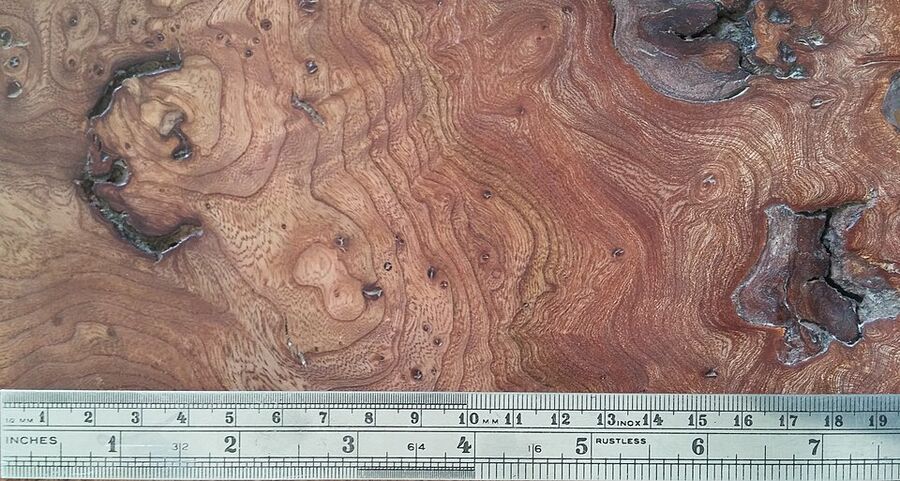
- Strong rustic character; elm burr is one of the most distinctive European figures.
- Traditional chair-seat wood: Wikipedia notes English Windsor chairs have elm seats for cross-grain strength.
Cons
- A challenge to work because of interlocked grain, especially quartersawn; planing can cause tear-out or fuzzy surfaces.
- Poor dimensional stability (English elm: 5.0% radial, 7.0% tangential shrinkage; wych elm 12.4% tangential), so design for movement.
- Non-durable and susceptible to insect attack; indoor use.
- Reported as a sensitizer (eye and skin irritation).
- Supply is limited because of Dutch elm disease.
- Green elm smells strongly and unpleasantly; once dry it has very little odour.
Variants and subspecies
- Wych elm (U. glabra, Scots elm): Janka 990 lbf, about 605 kg/m3; heartwood light to medium reddish brown.
- English elm (U. procera; sometimes treated as a synonym of U. minor; Carpathian elm): Janka 810 lbf, about 565 kg/m3. Wood Database says burls of English elm are often called Carpathian elm burl.
- Burr elm: heavily knotted figure used for veneer and turning.
- Wood Database gives each species its own page, and the two pages report the same working traits (interlocked grain, non-durable, Dutch elm disease). Wych elm is the denser and harder of the two.
Working and finishing
Wood Database: grain is interlocked, so planing can cause tear-out; poor dimensional stability, but it glues, stains and finishes well. Use a sharp, high-angle plane or a scraper, and take light cuts. Pre-drill: nails and screws hold well.
Staining and finishing colour
Takes stain and clear finishes well. The grain has bold, uneven patterns, so oil or clear wax usually shows it best.
Sustainability and handling
Dutch elm disease is a fungal disease spread by Scolytus bark beetles that has wiped out millions of elms worldwide (Wood Database; Wikipedia). Wood Database reports no CITES listing for wych or English elm. IUCN: Wikipedia's taxobox lists U. glabra and U. minor as data deficient, and U. procera is not listed separately, so the field here is n/a (checked 2026-09-30). Elm is reported as a sensitizer. EU traders should note the EU Deforestation Regulation (30 December 2026 for large and medium operators). US imports need a Lacey Act plant declaration (16 USC 3372(f)).
Popular projects
Windsor chair seats, rustic tables and sideboards, burr veneers, bowls and turned objects. Wood Database lists boxes, baskets, furniture, hockey sticks, veneer and archery bows among typical uses.
Buying notes
Elm is sold in Europe as waney-edged kiln-dried boards. UK prices are higher than ash or sycamore. In the US it is rare. Ask for dry, stable stock cut from sound, felled or storm-damaged trees, and check for beetle holes and checks.
Typical projects
- chair seats
- Windsor chairs
- tables and sideboards
- burr veneer panels
- bowls
- boxes
More pictures

Sources
- www.wood-database.com/wych-elm
- www.wood-database.com/english-elm
- en.wikipedia.org/wiki/Dutch_elm_disease
- en.wikipedia.org/wiki/Windsor_chair
- en.wikipedia.org/wiki/Ulmus_glabra
- en.wikipedia.org/wiki/Ulmus_minor
- www.suttontimber.co.uk/trade/prices
- environment.ec.europa.eu/topics/forests/deforestation/regulation-de...
- www.law.cornell.edu/uscode/text/16/3372
Researched 2026-09-30. Prices, conservation status and CITES listings on this page are indicative and were checked on that date. They change: confirm them with your supplier, and with the relevant authority before importing or exporting.