

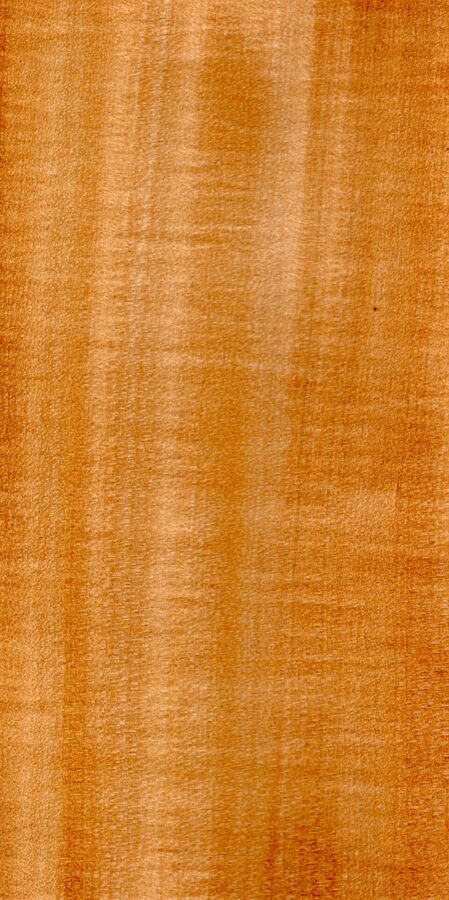

Overview
European lime or linden is a pale, soft, fine-textured wood that cuts crisply in every direction, and it is the carver's wood of Europe. Wood Database calls it perhaps one of the most suitable species for hand carving. In the US it is replaced by basswood. Choose it for carving, models, turned work and painted pieces, not for load-bearing furniture or anything outdoors.
Pros
- Easy to work, very soft and light; one of the best woods for hand carving (Wood Database).
- Pale white to cream, uniform colour with only subtle growth rings.
- Good strength-to-weight, and slightly heavier and harder than American basswood (Wood Database).
- Fairly inexpensive within its natural range in Europe.
Cons
- Soft (Janka 700 lbf, 535 kg/m3), so it dents and bruises easily.
- Non-durable for heartwood decay; indoor use only.
- Needs sharp cutters during planing or shaping to avoid fuzzy surfaces.
- Rarely sold in the US as lumber; thick specialty carving stock I found costs about $21-23 per bf.
Variants and subspecies
- Small-leaved lime (Tilia cordata) and large-leaved lime (T. platyphyllos): the two main European species; Wood Database treats the hybrid Tilia x europaea (common lime) as the entry species. Wikipedia's IUCN-based taxobox gives both parents Least Concern.
- Linden is the usual name in the US for European and other lindens; American basswood (Basswood, T. americana) is a cousin that plays the same role, per Wood Database.
- Lime has no figure grades; it is sold plain, as carving blanks or as boards.
Working and finishing
Wood Database: easy to work, very soft and light, but sharp cutters are needed to avoid fuzzy surfaces. Shrinkage is moderate (5.0% radial, 7.5% tangential). It carves with hand tools in all directions, takes fine detail and glues well; keep every edge razor sharp.
Staining and finishing colour
Takes stain and dye evenly but, being soft and pale, can look pale and plain. Paint, gesso and gilding are traditional on carved lime. Clear finishes keep it creamy.
Sustainability and handling
Wood Database reports lime is not CITES-listed (checked 2026-09-30) and notes no health effects beyond the usual dust risks. Wikipedia's IUCN-based taxobox gives T. cordata and T. platyphyllos Least Concern. EU traders should note the EU Deforestation Regulation (30 December 2026 for large and medium operators). US imports need a Lacey Act plant declaration (16 USC 3372(f)).
Popular projects
Linden carving has a long history: Wikipedia ties linden to the Veit Stoss altarpiece, and Grinling Gibbons to the carvings at St Paul's Cathedral. Today it is used for relief carving, model-making, turned objects and cutting boards; Wood Database lists carvings, veneer, plywood, cutting boards, hat racks, musical instruments and turned objects.
Buying notes
In Europe, lime is sold as kiln- or air-dried boards and carving blanks at low prices. In the US, a few specialty yards sell thick German lime blanks at several times what a basswood board costs, so consider basswood for a US project unless the European species matters. Check the stock is air-dried or kiln-dried and free of end checks.
Typical projects
- relief and figure carving
- altarpieces
- turned objects
- cutting boards
- musical-instrument parts
- veneer and plywood
Sources
Researched 2026-09-30. Prices, conservation status and CITES listings on this page are indicative and were checked on that date. They change: confirm them with your supplier, and with the relevant authority before importing or exporting.