

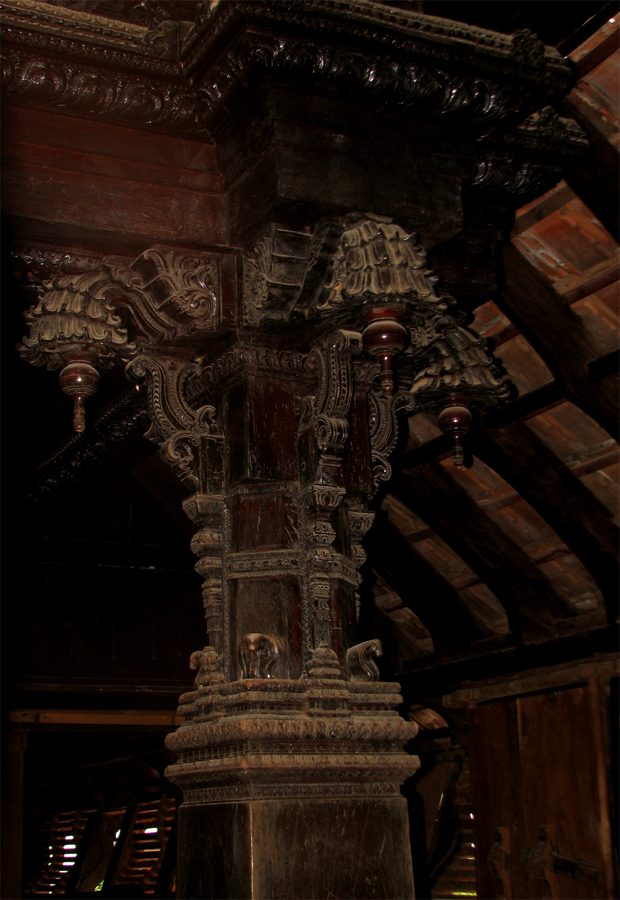

Overview
Jackfruit is a South Asian fruit tree whose timber has long been used for furniture and instruments in India and Southeast Asia. It starts a vivid yellow and ages to a warm brown. The tree is felled for wood when it has finished fruiting, which makes it a reasonable choice for people who want a tropical timber without a forest source.
Pros
- Termite- and fungus-resistant, and used extensively for furniture and construction where it grows (Wikipedia).
- Colour is striking when fresh and ages to a rich brown.
- Comes from a crop tree grown for fruit, not from natural-forest felling.
- Traditional tonewood for string instruments such as the veena.
Cons
- Hard to find in North America: it is mainly traded as slabs and turning blanks, rarely as surfaced lumber.
- I found no reliable Janka or density figure in the sources checked, so hardness is unconfirmed; test samples before committing.
- Early colour is not final; expect it to darken noticeably over months.
- Supply is thin outside South Asia, so matching boards for a large piece can be difficult.
Variants and subspecies
- Heartwood: the bright yellow-to-brown core, used for furniture and instruments.
- Sapwood: paler; usually trimmed off or left on slabs for contrast.
- Other Artocarpus timbers are sold under their own names and are not the same wood.
Working and finishing
Hardness is not firmly documented, so sample a board first and keep tools sharp. Take light passes if the grain turns out interlocked, and wipe any waxy-feeling surface with solvent before gluing.
Staining and finishing colour
Most makers use clear oil, shellac or lacquer to show off the colour change. Because the wood darkens on its own, stain is rarely needed; if you do dye it, test first, because the final shade is hard to predict through the natural ageing.
Sustainability and handling
Not in the CITES Appendices (checked 2026-09 against the Appendices in force from 5 March 2026). GBIF reports the species as Not Evaluated by IUCN (checked 2026-09). The Lacey Act's 2008 amendment covers timber products (Wikipedia, Lacey Act), and the EU deforestation regulation applies to wood products from 30 December 2026 for large and medium operators. I found no dust-health notes for the wood in the sources opened; the latex the sources mention relates to handling the fruit. Wear a dust mask as you would for any hardwood.
Popular projects
Traditional furniture, carved figures, instrument bodies (including the veena), turned bowls, oars and barrels in the tree's home range.
Buying notes
Expect slabs and blanks from specialty exotic-wood sellers; one US slab seller listed it at about $10 per board foot in 2026-09. Ask for photographs of the actual board, because colour varies a great deal between fresh-cut and aged stock.
Typical projects
- veena and other string instruments
- furniture
- carved figures
- turned bowls
- oars and barrels
Sources
- www.cochinwood.in/blogs/post/wood-jackwood-artocarpus-heterophyllus
- en.wikipedia.org/wiki/Jackfruit
- mastergardenproducts.com/jackfruitwoodslab.htm
- commons.wikimedia.org/wiki/File:Padmanabhapuram_Palace_Single_Wood_...
- cites.org/eng/app/appendices.php
- environment.ec.europa.eu/topics/forests/deforestation/regulation-de...
Researched 2026-09-30. Prices, conservation status and CITES listings on this page are indicative and were checked on that date. They change: confirm them with your supplier, and with the relevant authority before importing or exporting.