


Overview
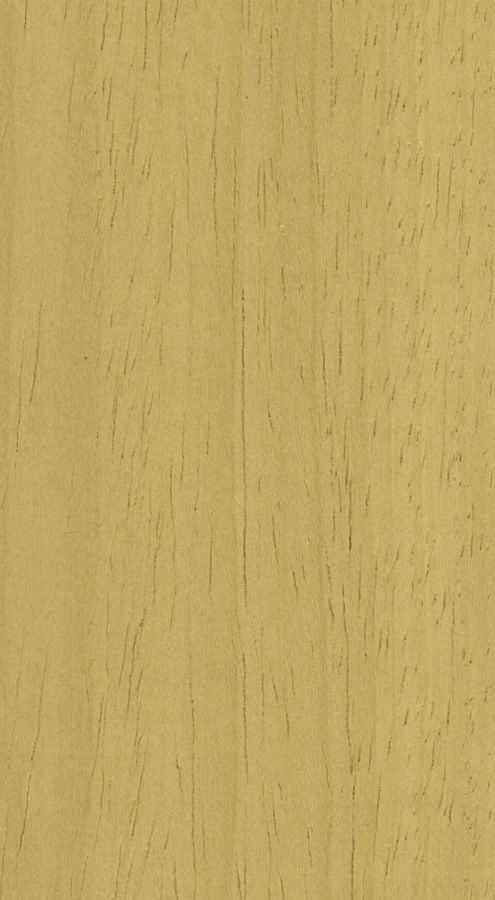
Obeche (Triplochiton scleroxylon), ayous or African whitewood, is pale yellow, soft, light and bland, used as a blank canvas for staining, painting and carving, much like basswood. It is relatively inexpensive.
Pros
- Very soft and lightweight (Janka 440 lbf, about 380 kg/m3) with a decent strength-to-weight ratio.
- Easy to work; carves, stains, glues and finishes well.
- IUCN Least Concern, and grown on plantations.
- Relatively inexpensive for an imported hardwood.
- Used as an alternate tonewood for electric guitar bodies.
Cons
- Non-durable; poor termite and borer resistance, and borer holes or fungal stain are not uncommon.
- Interlocked grain can leave rough surfaces.
- Reported as a sensitizer, with runny nose, sneezing, hives and asthma-like symptoms.
- Soft, so it dents.
- Mostly sold as veneer or plywood.
Variants and subspecies
- Triplochiton scleroxylon: the only species.
- Names: ayous, samba, wawa and African whitewood.
- Look-alike: Basswood is the usual comparison for carving.
Working and finishing
Easy overall; sharp tools for interlocked grain. Carves, glues and finishes well.
Staining and finishing colour
Stains well, per Wood Database, and is often painted. Watch for fungal stain in poorly dried stock.
Sustainability and handling
CITES: not listed (Wood Database; APHIS CITES Timber Species Manual, checked 2026-09-30). IUCN: Least Concern; also grown on plantations within its natural range (Wood Database). FSC availability is not verified here. The US Lacey Act makes it unlawful to trade wood taken or exported in breach of the source country's laws (fws.gov/law/lacey-act), so buy from dealers who can name the country and species. If a piece will be exported to or sold in the EU, Regulation (EU) 2023/1115 (the EUDR) requires due-diligence evidence that wood products are deforestation-free and legally produced; check its current application date with your buyer.
Ethical call: one of the better-sourced African woods. Health: reported sensitizer with eye, skin and respiratory irritation, runny nose, sneezing, hives and asthma-like symptoms. The US National Cancer Institute reports strong, consistent associations between wood-dust exposure and cancers of the nasal cavity and sinuses, so use extraction and a respirator when sanding.
Popular projects
Carving, interior millwork, veneer and plywood, guitar bodies, painted furniture and blanks.
Buying notes
Lumber is sometimes available, but it is mainly exported as veneer or plywood. The front-matter price is an estimate. Check for borer holes and fungal stain.
Typical projects
- carving
- interior millwork
- plywood and veneer
- guitar bodies
- painted furniture
Sources
Researched 2026-09-30. Prices, conservation status and CITES listings on this page are indicative and were checked on that date. They change: confirm them with your supplier, and with the relevant authority before importing or exporting.