


Overview
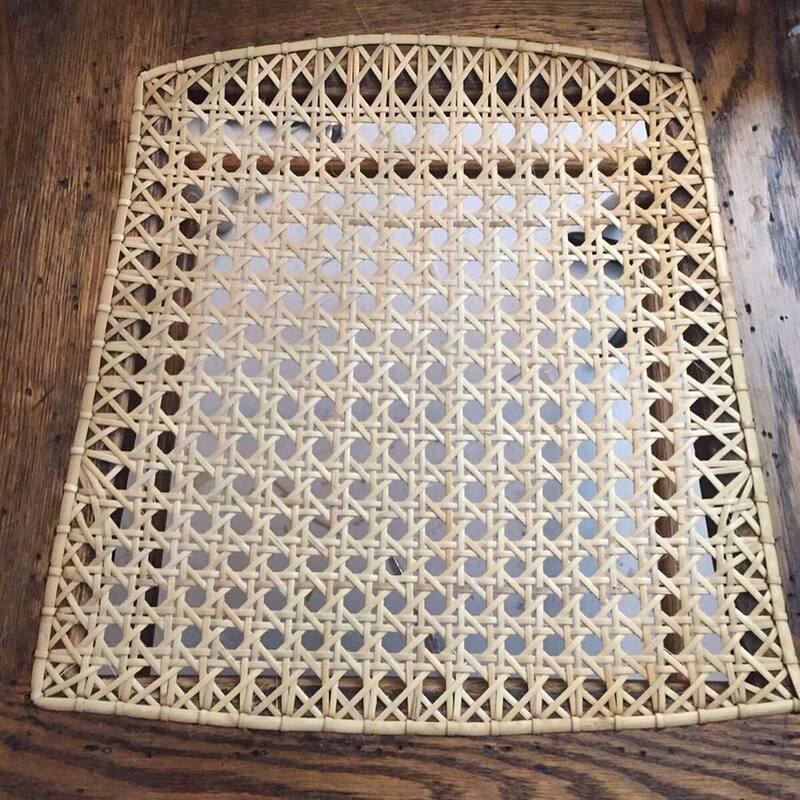
Rattan is not a wood but the stem of a climbing palm. About 600 Old World species in the palm subfamily Calamoideae, mostly in Southeast Asia, give a solid, flexible cane of near-constant diameter (about 2 to 5 cm, per Wikipedia). It is used whole for furniture frames, split into strips for weaving, and woven into webbing for caned panels. "Wicker" is a weaving technique, not a material. This entry covers rattan, cane webbing, wicker and the common substitutes.
Pros
- Rattan is stronger than the willow and reed traditionally used in European wicker (Wikipedia).
- Pre-woven cane webbing lets a beginner cane a chair seat or a cabinet door panel.
- Open weave adds airflow and a lightweight, traditional look.
Cons
- Almost all rattan is still wild-harvested; supplies are threatened by deforestation and overexploitation (Wikipedia).
- Solitary species die when harvested, though clustering species can be sustainable (Wikipedia).
- Processing can be polluting (Wikipedia).
- A natural fibre, so not suited to weather; synthetic wicker exists for that reason.
Variants and subspecies
- Rattan pole: whole stems for frames.
- Cane (peel): the glossy skin peeled from the stem and used for weaving seats; historically "Manila cane" or "Malacca cane" (Wikipedia).
- Core / round reed: the inner core is used for wicker weaving and round reed.
- Cane webbing: pre-woven sheets in grades such as fine, finer and superfine, sold by width, from about $0.80 per running inch at 12 in wide.
- Wicker: a technique documented since ancient Egypt, using willow, rattan, reed or bamboo, or synthetic fibres (Wikipedia).
- Synthetic wicker: Lloyd Loom (paper-wrapped wire) and plastic or resin "all-weather wicker" over aluminium frames (Wikipedia).
- Seagrass: a twisted grass cord used for seats; listed by suppliers alongside cane, but we did not source properties or prices.
- Desmoncus: a New World palm used as a rattan substitute (Wikipedia).
Working and finishing
We did not find a verified source for fitting methods, so follow the supplier's instructions for the webbing you buy. In outline, wicker is woven over a frame, and pre-woven webbing is fitted into a seat or door panel.
Staining and finishing colour
Cane skin is glossy and dense, so pigment stain sits on the surface; most people dye, oil or varnish it.
Sustainability and handling
Rattan is almost all wild-harvested (Wikipedia). We did not find a CITES listing or an IUCN rating, so cites is none and conservation n/a pending a check. Buy from suppliers that can name the species and source, and consider FSC-certified or plantation material where offered. We have not verified an embodied-carbon figure. Synthetic wicker avoids the harvest but is plastic or resin.
Popular projects
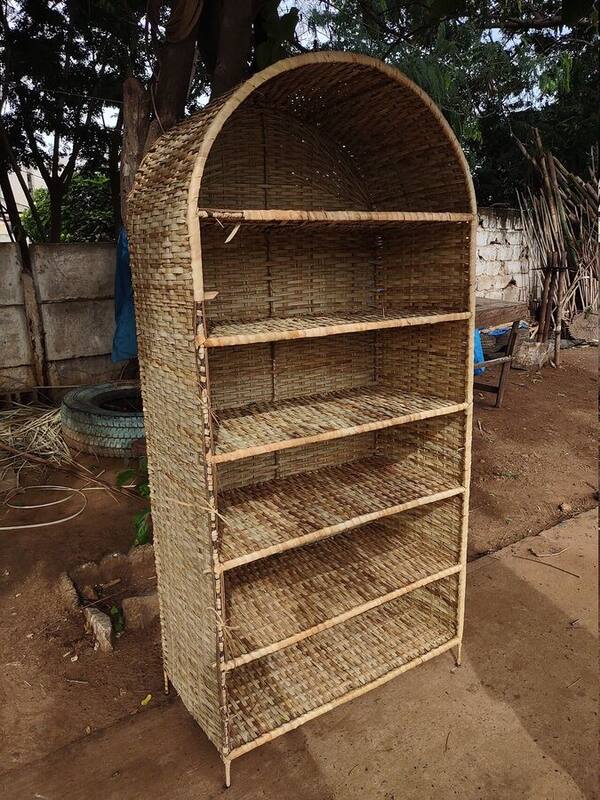
Caned chair seats and backs, caned cabinet and wardrobe doors, headboards, shelving, baskets and, as wicker furniture, chairs and tables.
Buying notes
Cane webbing is sold by the foot in a given width and mesh. One US supplier prices fine 1/2-in-mesh webbing from $0.80 per running inch at 12 in wide to $3.60 at 36 in, which works out to roughly $9.60-14.40 per sq ft; superfine goes to about $18. Check the mesh size and weave type (including the Viennese weave, Wiener Geflecht) before ordering.
Typical projects
- chair seats and backs
- caned cabinet doors
- headboards
- baskets
- wicker furniture
- room dividers
More pictures

Sources
Researched 2026-09-30. Prices, conservation status and CITES listings on this page are indicative and were checked on that date. They change: confirm them with your supplier, and with the relevant authority before importing or exporting.