

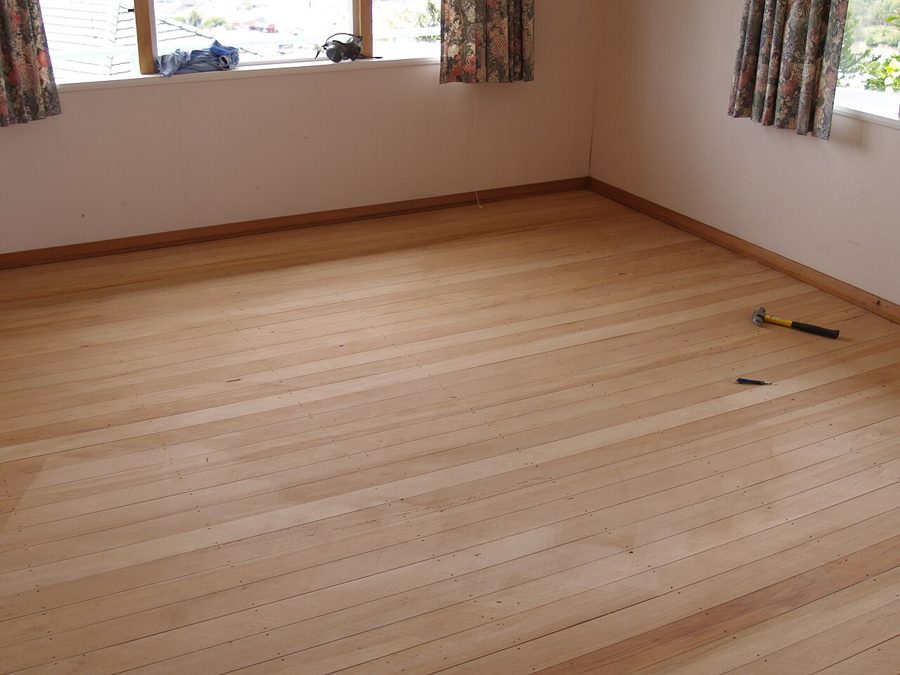

Overview
Rimu is New Zealand's best-known native timber: a medium-weight softwood with a warm, streaky yellow-to-red-brown heartwood. It built the country's older houses and remains a favourite furniture and flooring wood there. It is chosen for its colour and fine finish, and today mostly as recycled stock.
Pros
- Rich, varied colour; highly figured burr and stump wood are especially prized (National Association of Woodworkers NZ).
- An excellent finishing timber that turns well, glues easily and takes coatings very well (Te Namu).
- Heartwood is moderately durable (class 3) and dense when clear.
- Plentiful as recycled timber, which avoids new logging.
Cons
- Hardness sources disagree: 3.62 kN (about 814 lbf) from Te Namu against about 1,010 lbf from Vienna Woods, so treat it as soft-to-medium for a softwood and test your board.
- End grain is hard to sand and drinks up finish.
- Sapwood is less durable (class 4), so keep it out of damp or ground contact.
- Rarely stocked outside New Zealand, and shipping adds cost.
Variants and subspecies
- Clear heartwood: straight, dense, good-looking; the premium grade.
- Recycled rimu: reclaimed house timbers, widely sold in New Zealand.
- Burr and stump wood: swirling figure, mainly for turners and feature pieces; stump wood is heavier and denser.
Working and finishing
Machines well with sharp tools. Sand end grain patiently and seal it before the finish goes on, or it absorbs too much. Glues and coats easily. Turners report spectacular colour and a good finish with care.
Staining and finishing colour
The natural colour is the main attraction, so clear oil, shellac or lacquer is typical. Stain follows the streaks, so test first; sealing end grain evens absorption.
Sustainability and handling
Not in the CITES Appendices (checked 2026-09 against the Appendices in force from 5 March 2026). IUCN assessed the species Least Concern, stable, in 2013 (Wikipedia). Wikipedia states rimu is protected from logging under New Zealand's Forests Act 1949 as amended in 1993, and the National Association of Woodworkers says government controls restricted milling from 1987, with limited milling continuing on the South Island's West Coast. I could not retrieve the legislation itself, so ask any supplier for provenance papers. The Lacey Act's 2008 amendment covers timber products (Wikipedia, Lacey Act), and the EU deforestation regulation applies to wood products from 30 December 2026 for large and medium operators. Rimu dust tends to irritate the eyes and nose (National Association of Woodworkers NZ), so use extraction and a mask.
Popular projects
Furniture, flooring, mouldings and trim, bowls and platters, and joinery in New Zealand.
Buying notes
NZ retailers list recycled rimu around NZ$2,400 per cubic metre in an archived listing, roughly US$3.20 per board foot at the 2026-09-30 exchange rate, and tongue-and-groove flooring at roughly US$14 per board foot. Both are New Zealand prices, not US retail. Prefer recycled stock and ask for provenance. Check the botanical name: the Wood Database page titled "rimu" actually describes Huon pine, a different tree.
Typical projects
- furniture
- flooring
- mouldings and trim
- turned bowls and platters
- joinery
Sources
- web.naw.org.nz/timber/Rimu
- tenamutimber.co.nz/technical-information/rimu
- www.viennawoods.co.nz/how-hard-wearing-are-nz-native-timber-floors
- en.wikipedia.org/wiki/Dacrydium_cupressinum
- www.musgroves.co.nz/product-category/timber/rimu
- commons.wikimedia.org/wiki/File:Rimu_after_first_cut.jpg
- cites.org/eng/app/appendices.php
- environment.ec.europa.eu/topics/forests/deforestation/regulation-de...
Researched 2026-09-30. Prices, conservation status and CITES listings on this page are indicative and were checked on that date. They change: confirm them with your supplier, and with the relevant authority before importing or exporting.