Art Nouveau
History
Art Nouveau emerged around 1890 as a deliberate break from historical revival styles, taking hold first in France, centered on Nancy and Paris, and in Belgium, centered on Brussels, before parallel movements sprang up elsewhere under other names — Jugendstil in Germany, the Secession in Vienna, Modernisme in Barcelona, and the Glasgow School in Scotland. In Nancy, Émile Gallé and Louis Majorelle led a naturalist strand of the style, richly carved and marquetried; the École de Nancy that grew up around this work was formally founded in 1901 with Gallé at its head until his death in 1904. In Paris and Brussels, Hector Guimard, Victor Horta and Henry van de Velde pursued a more abstract, linear version of the same impulse. The style was costly and entirely hand-made, and it burned out within about two decades.
Elements
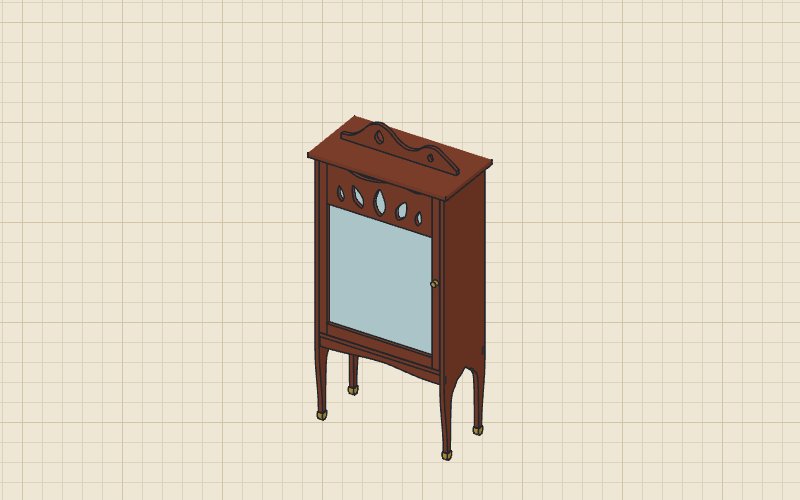
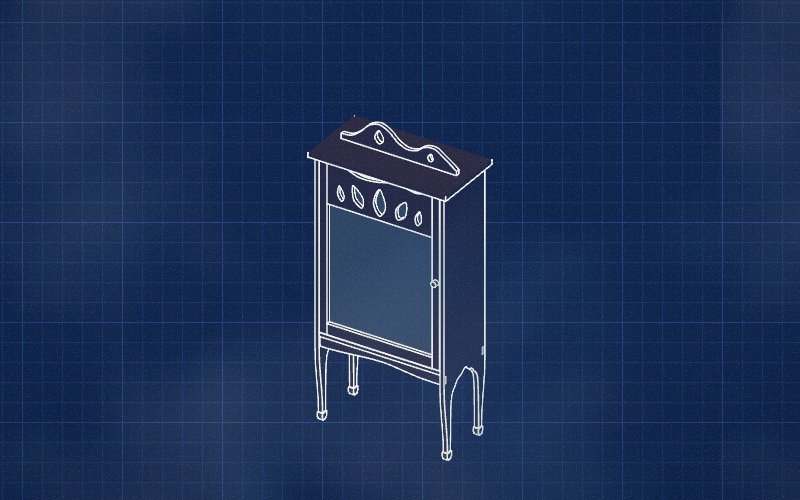
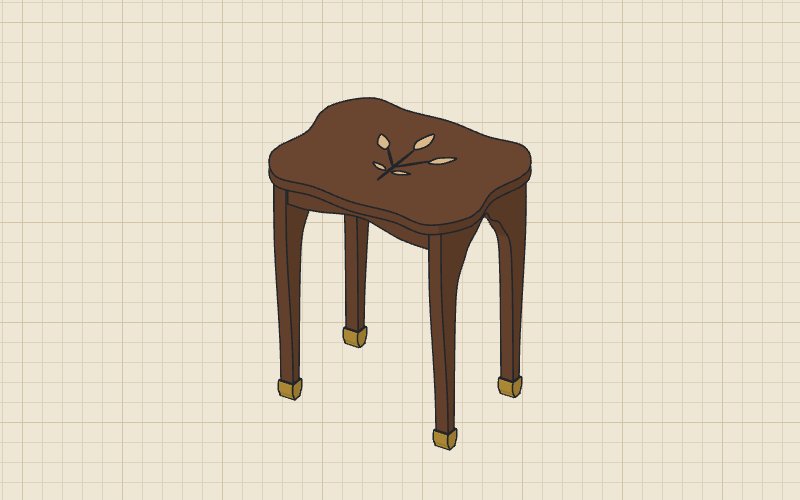
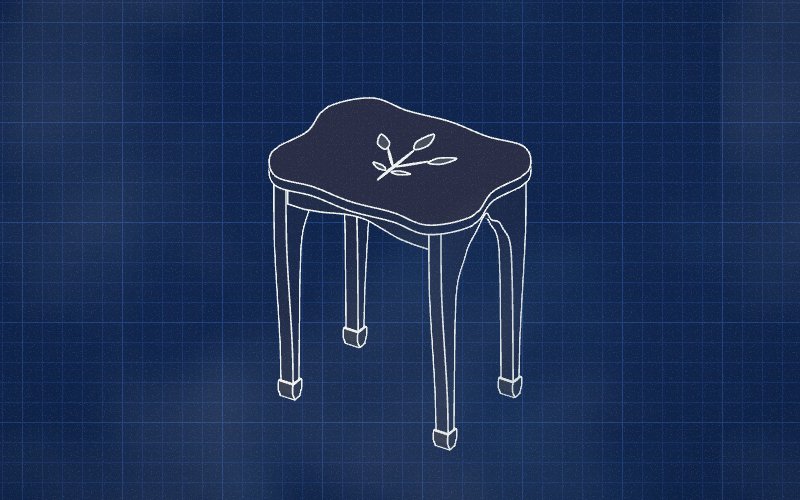
Art Nouveau furniture is drawn from growing things — stems, tendrils, leaves, water lilies, dragonflies — and from the abstract whiplash curve, with structure and ornament fused so completely that a leg can appear to become a stem flowing straight into the apron with no visible joint. Legs swell, taper and often split into separate stems near the top, ending in carved roots or gilt-bronze sabots, while chair backs are carved and pierced with plant and whiplash motifs. The style's two signature techniques are sculptural carving in the round, which lets structure and decoration merge into one continuous form, and pictorial marquetry — Gallé above all cut landscapes, flowers and verses in many species of veneer. Gilt bronze or wrought-iron mounts in plant forms, and stained or leaded glass, complete pieces whose overall silhouette stays organic and often asymmetrical in its details even when the piece as a whole is symmetrical in mass.
Leaders in this style: historical designers and makers whose work inspired it (inspired by, not reproduced):