

Glasgow Rose
History
This furniture belongs to Scotland's Glasgow Style, produced roughly between 1897 and 1910 in Glasgow and nearby Helensburgh as part of complete architectural interiors — Kate Cranston's tea rooms, a private flat on Mains Street, and a house at Helensburgh built for a client named Blackie. It grew out of the same late-19th-century reform impulse as English Arts and Crafts but took a different path: rather than treating furniture as a display of visible joinery, its designer conceived each piece architecturally, as a shaped visual element within a room.
Chairs, for instance, were made exaggeratedly tall so that a set of them would form a kind of screen around a table — a spatial idea as much as a furniture-making one. Documented makers in Glasgow's cabinetmaking trade built the pieces to these architect-driven designs, and the style's dark-stained or ebonised oak, or its white-painted surfaces, carried ornament that was stylised rather than structural: a rose, a cut-out square, a lattice, a flying bird.
Elements
The style is recognizable by its elongated verticals (very high chair backs, tall narrow cabinets) set against a single strong contrasting element such as an oval crest or a flat panel. Legs are square or rectangular and often taper; on one signature chair, the back legs even change section as they rise, square at the floor and round near the top. Backs vary between a wide, pierced oval crest carrying a flying bird, and a tall, straight ladder of thin cross bars topped with a square lattice.
Ornament runs in two opposite registers. Dark work pairs stained or ebonised oak with a cut-through square motif; light work is painted white and combined instead with organic leaf, tendril, and rose forms, though little of the original white paint survives unrestored today. Surfaces stay plain and flush, broken by inset decorative gesso panels or small square cut-outs and grids, and — unlike the Arts and Crafts furniture it grew up alongside — the joints themselves are not treated as ornament; they are stained or painted over rather than left exposed.
Leaders in this style: historical designers and makers whose work inspired it (inspired by, not reproduced):
Designs
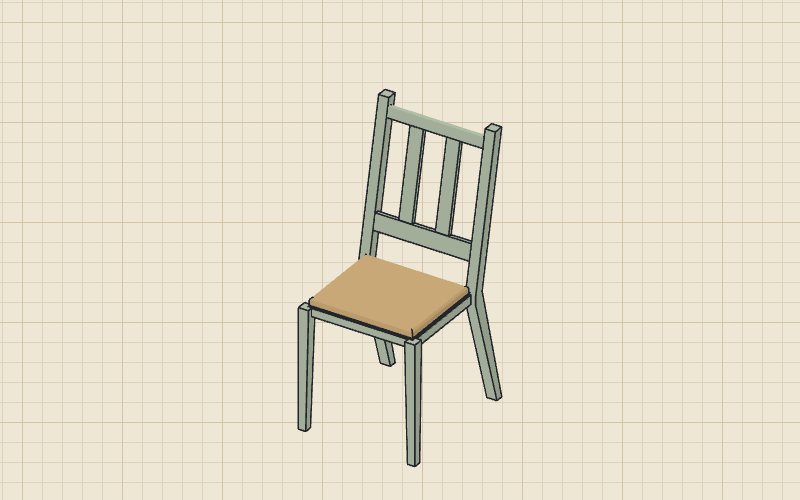
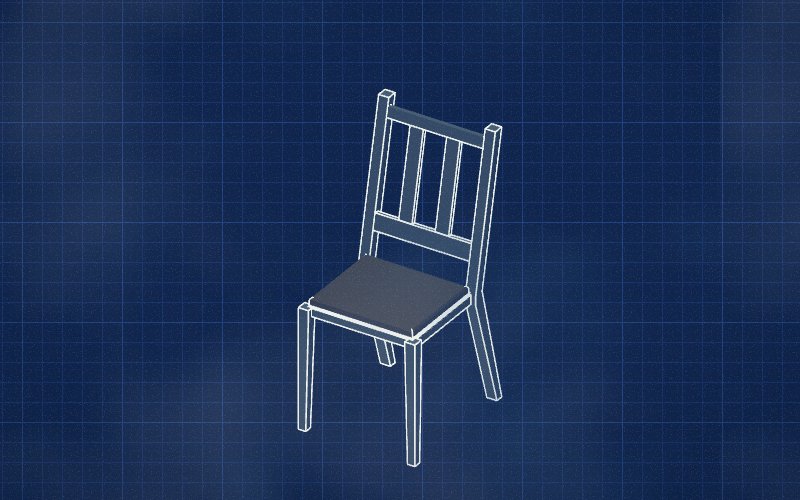
Dining Chair
17.3 × 20.4 × 39.4 in (440 × 517 × 1000 mm)
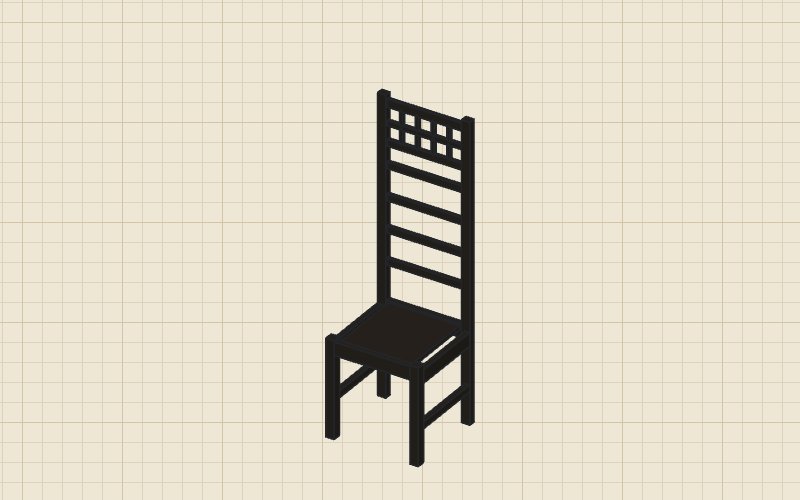
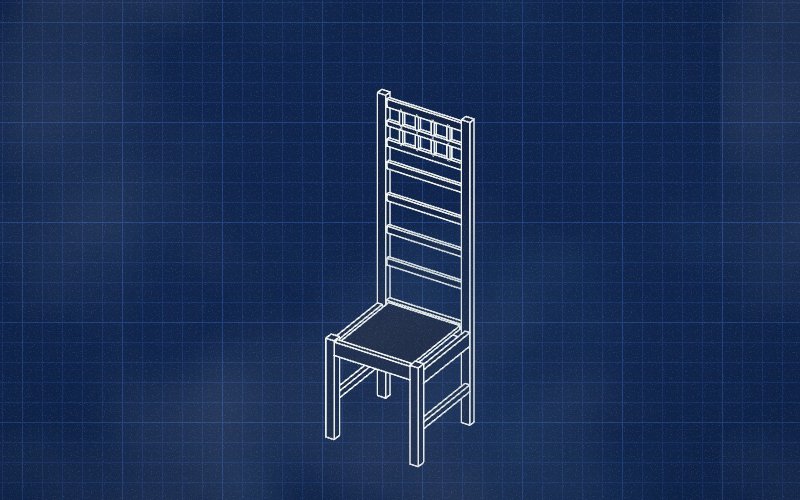
High-Back Ladder Chair
16.5 × 15.7 × 53.1 in (420 × 400 × 1350 mm)
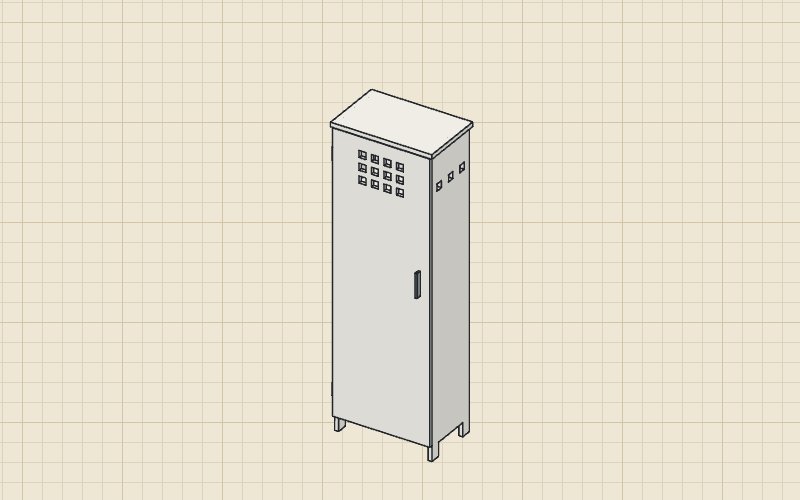
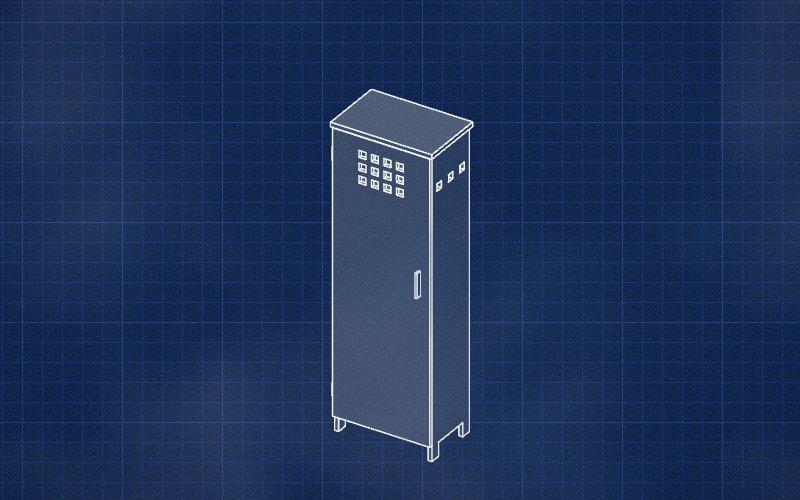
Tall White Cut-out Cabinet
23.0 × 15.8 × 68.9 in (584 × 402 × 1750 mm)