

Hepplewhite
History
Named for George Hepplewhite, this neoclassical furniture furnished the middle-class English house from roughly 1780 to 1800, and crossed the Atlantic to become a strand of American Federal furniture from about 1785 to 1810. Its principal source was a design book — The Cabinet-Maker and Upholsterer's Guide — published by Hepplewhite's widow Alice in 1788, with further editions in 1789 and 1794, offering nearly three hundred designs to the trade.
Coming after Robert Adam's archaeologically informed classicism, the style straightens and lightens the curving Rococo forms that preceded it: slender square legs taper cleanly to the floor, chair backs take shield and oval shapes, and fronts curve gently in serpentine and bow profiles. Ornament moves from carving into the surface to ornament laid flat onto it, in inlay and veneer.
Elements
The look is light, delicate, and rectilinear, with graceful curves appearing in plan rather than in bulk — serpentine, bow, and D-shaped (demilune) fronts distinguish sideboards, commodes, and card tables, and the sideboard with drawers and cupboards emerges here as an entirely new form. Legs are square and tapered, often only on their inside faces, ending plain or on a spade foot — a separately shaped block that tapers again to the floor. Case pieces commonly stand on splayed French feet rising from a shaped skirt.
The shield back is the style's most recognizable chair form, its pierced or carved splat filled with urns, drapery, Prince of Wales feathers, or wheat ears radiating from a carved lunette. Ornament is otherwise almost entirely inlay and veneer: satinwood and holly stringing, cross-banding, oval and fan paterae, and chains of bellflowers set against contrasting veneer panels of satinwood, mahogany, and tulipwood. Construction relies on mortise-and-tenon joinery for legs and aprons, with tapers cut only after the joinery is complete, curved fronts sawn from thick stock or built up in stack-laminated layers, and inlay let into grooves scratched or routed into the surface.
Leaders in this style: historical designers and makers whose work inspired it (inspired by, not reproduced):
Designs
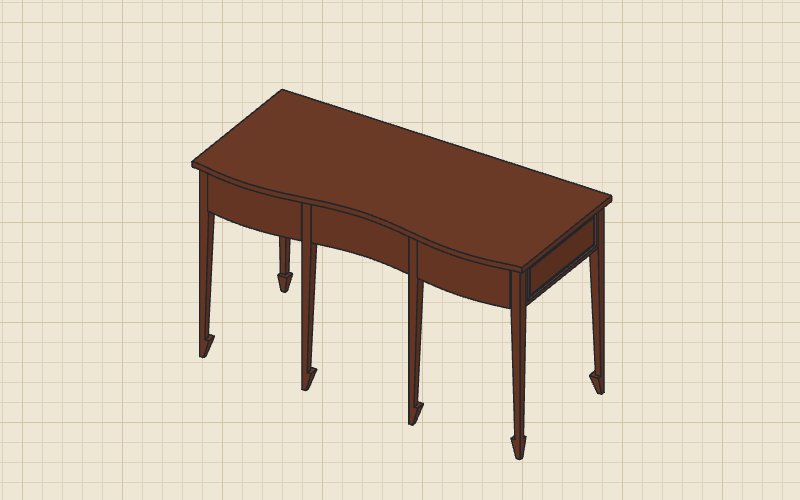
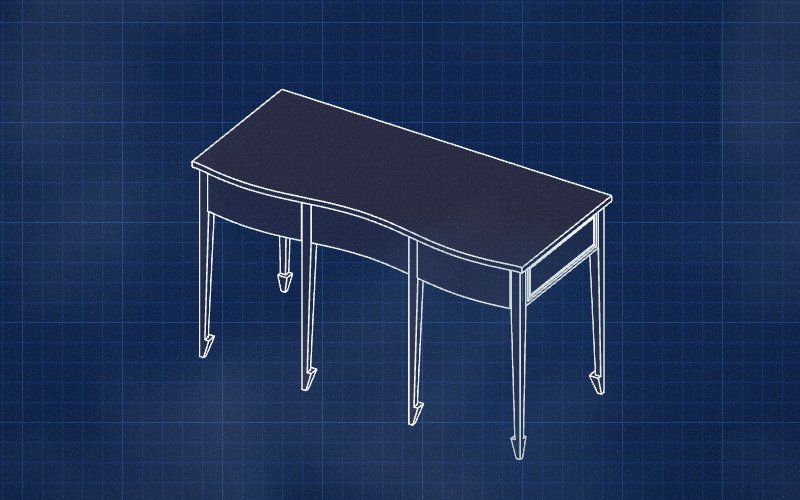
Serpentine Sideboard
60.8 × 27.2 × 35.4 in (1544 × 692 × 900 mm)
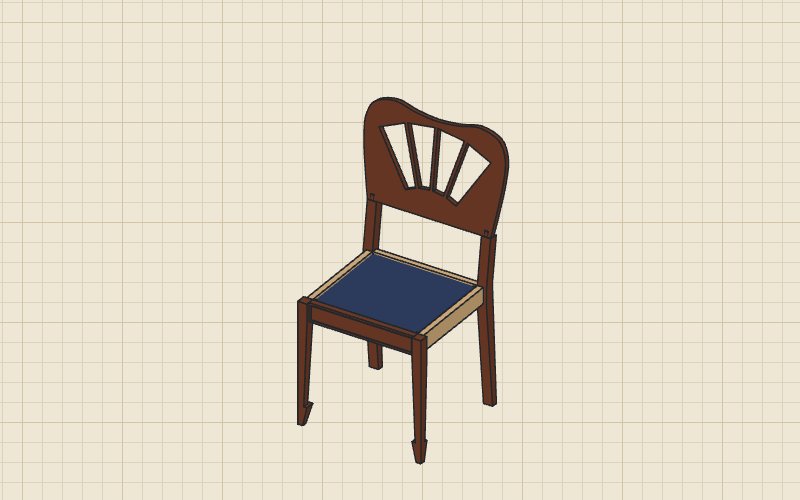
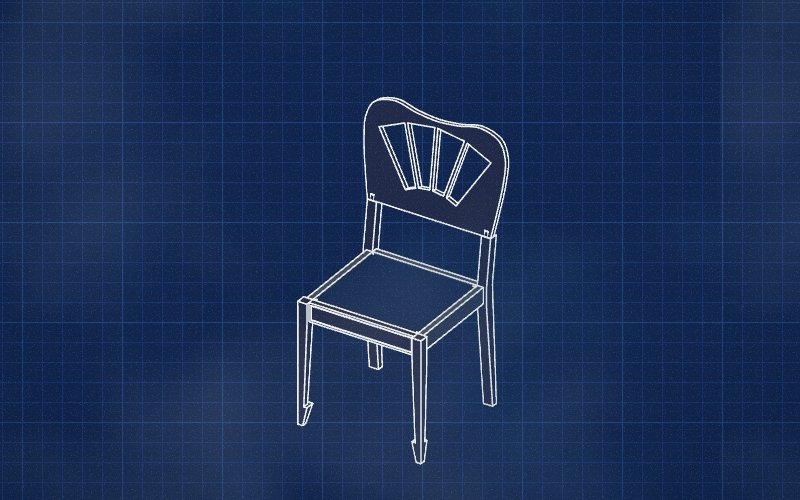
Shield-Back Side Chair
20.7 × 18.8 × 38.5 in (526 × 478 × 978 mm)
Hardware for this style
Hinges, pulls, fasteners and other hardware that guides to this style name.
- Hinges
- Back-flap hinge