

Jacobean
History
This heavy, rectilinear oak furniture belongs to England's early Stuart period, roughly 1603 to 1649, though the joined-oak tradition it represents continued well beyond that strict window, running through the rest of the 17th century and crossing the Atlantic into colonial Massachusetts and Connecticut, where it is sometimes called 'Pilgrim' furniture. It was made by joiners rather than cabinetmakers, using riven green oak split along the radius of the log rather than sawn — a method that keeps stiles and rails naturally quartersawn and flat, and lets panels be cut very thin.
The furniture's boxy, massive character comes directly from its making: every carcase is built as a frame of stiles, rails, and muntins, mortised, tenoned, and pegged together, with thin panels floating free in grooves to allow for seasonal movement. Carved ornament traditions, such as the stalk-and-flower panels associated with the Devon region, were carried by emigrating craftsmen — a shop lineage tied to a joiner named Thomas Dennis is documented moving this tradition to Ipswich, Massachusetts.
Elements
Forms here are boxy and built to last generations rather than to be moved: wide low chests, tall court and press cupboards, long refectory tables, and heavy panelled armchairs. Legs are left as square blocks wherever a rail or stretcher joins in, with bulbous cup-and-cover turnings — often gadrooned or carved with leaves — filling the sections between; later in the period these turnings slim down into spiral, barley-twist forms. Low, square stretchers run close to the floor, carrying the feet on stools and tables.
Frame-and-panel construction appears everywhere: chest fronts divided into three or four panels by muntins, chair backs formed from a single carved panel, tabletops of boards pinned to the frame. Carving is shallow and linear, cut directly into flat rail and panel surfaces — rows of lunettes, interlaced strapwork, lozenges, and stalk-and-flower motifs — while mouldings are run along edges with a moulding plane or scratch stock. The signature joint is the drawbored mortise and tenon, its peg hole bored slightly off-center so that driving a tapered peg pulls the joint tight without glue. Oil and wax finishes darkened naturally with age, though some American examples retain their original painted color.
Designs
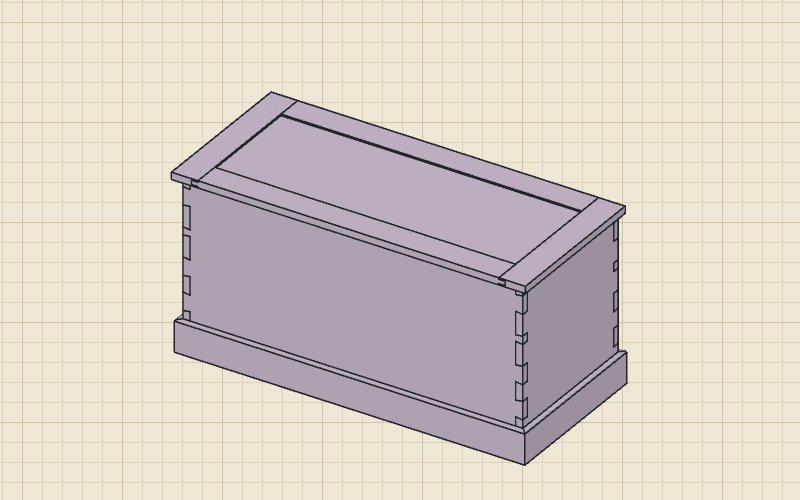
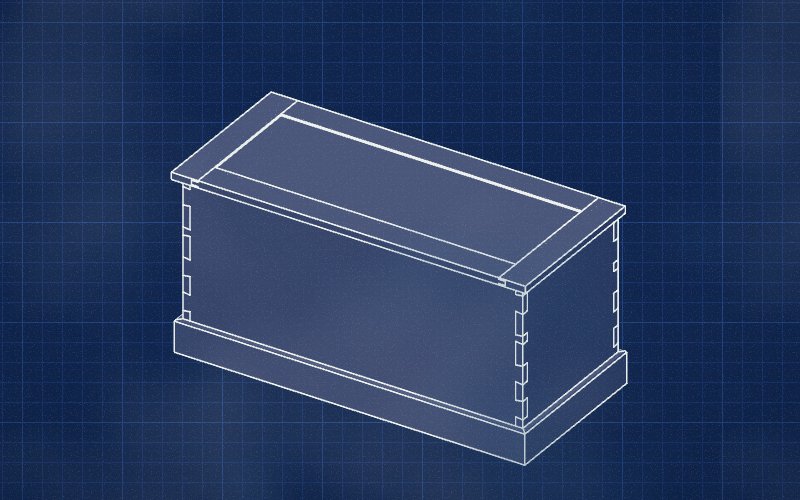
Dovetailed Blanket Chest
39.4 × 18.1 × 19.7 in (1000 × 460 × 500 mm)
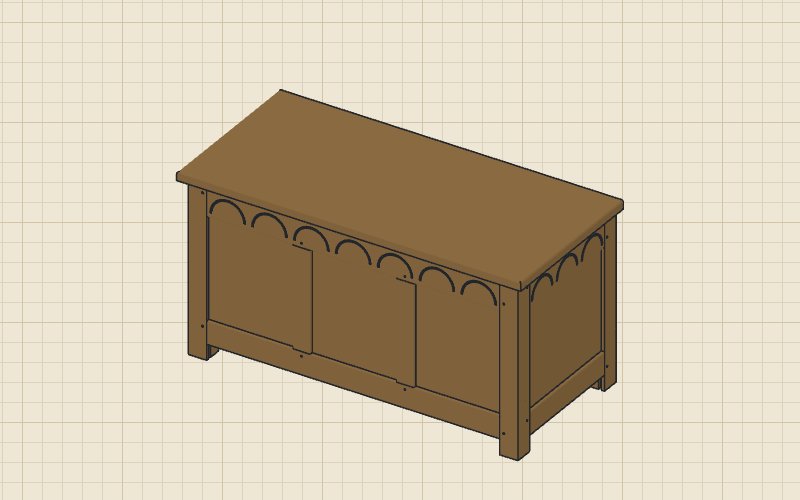
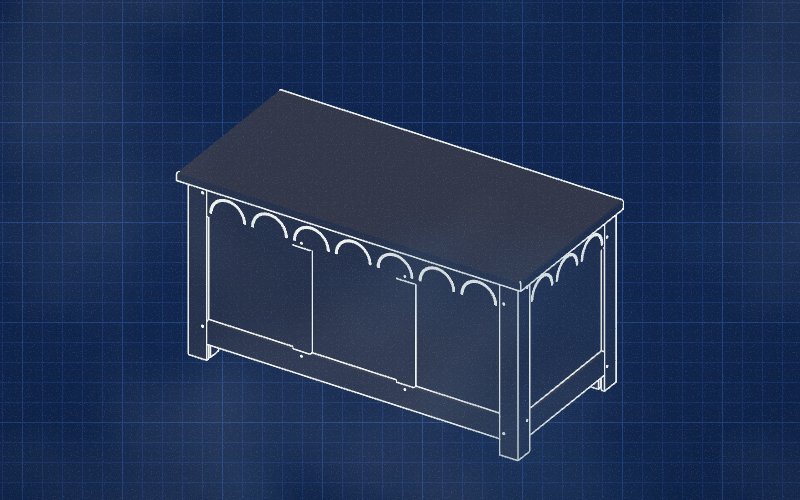
Jacobean Joined Chest
47.2 × 22.2 × 24.8 in (1200 × 565 × 630 mm)
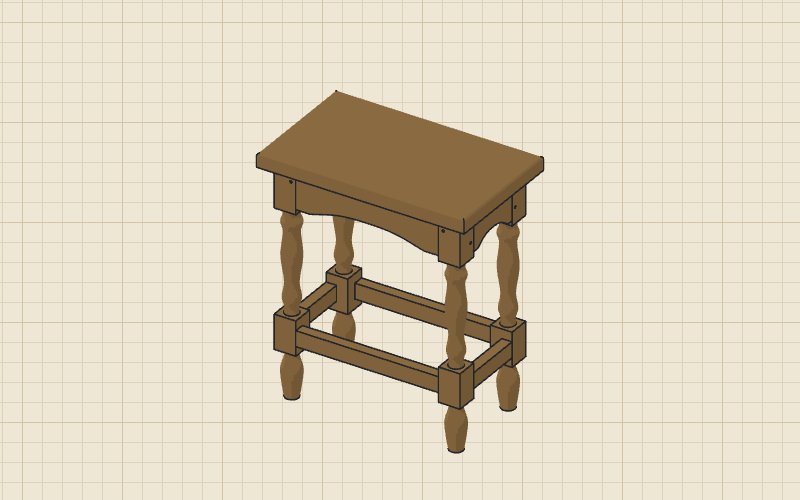
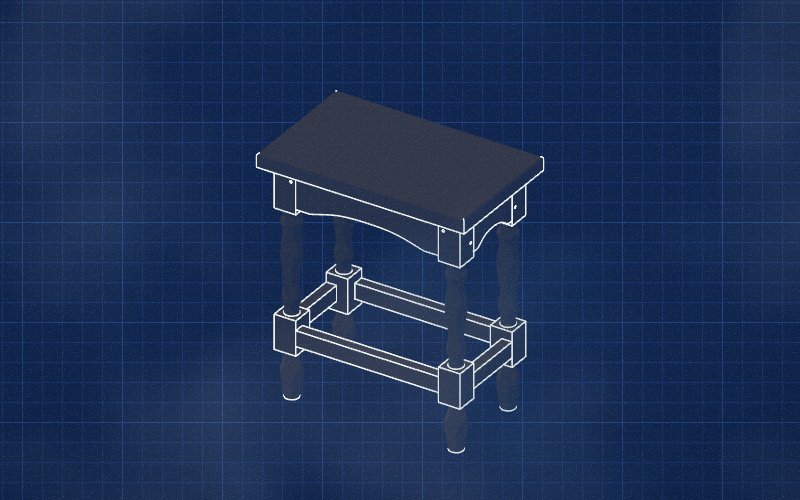
Jacobean Joint Stool
18.9 × 11.4 × 22.0 in (480 × 290 × 560 mm)
Hardware for this style
Hinges, pulls, fasteners and other hardware that guides to this style name.
- Drawer slides
- Wooden drawer runner