

Postmodern
History
Postmodern furniture emerged in the 1970s and ran through about 1990, its two centers the United States and Italy, as a rebuttal to modernism's suspicion of ornament and its insistence on pure function. Where modernism had stripped historical styles away, postmodern designers — mostly architects working in wood and plywood rather than trained furniture makers — brought them back, but as quotation rather than revival: flattened, enlarged, cut out of plywood, printed on laminate, painted in unexpected colors.
The clearest wood examples came from architects reworking eighteenth- and nineteenth-century chair types as symbols of themselves. Two architects designed a set of nine historical chairs for a major furniture manufacturer in 1984 — versions of period silhouettes reduced to a flat cut-out, some printed with pattern — molded and laminated in plywood. Another architect worked in the same spirit at architectural scale, and a Milanese design collective pursued a laminate-clad branch of the same movement. By the time of a major London survey around 1990, the moment had largely run its course, leaving behind furniture that treated history as an image to quote rather than a technique to inherit.
Elements
The defining move of postmodern furniture is reduction to silhouette: a familiar historical chair back, pediment or crest is cut as a flat two-dimensional outline from sheet stock rather than carved in the round, so the material's thickness shows plainly at the edge. Scale itself becomes a design tool — ornament blown up oversized, parts flattened into cartoon-like proportions — turning a serious period form into something closer to a symbol of that form. On case pieces, bases take on architectural shapes: plinths, columns, and stepped, skyline-like profiles.
Ornament here is applied as picture rather than earned through craft. Surfaces carry printed or painted pattern laid directly over a historical outline, alongside contrasting veneers such as bird's-eye maple, lacquer, brass trim and mirror glass, with classical motifs rendered in simplified line rather than deep relief.
Construction follows the same logic: it is industrial and deliberately not the point. Bent laminated plywood is pressed in molds and cut to shape; carcasses are veneered and lacquered; some pieces are hand-painted wood-frame furniture rather than carved originals. The joinery stays hidden — the design lives entirely in the outline and the surface.
Leaders in this style: historical designers and makers whose work inspired it (inspired by, not reproduced):
Designs
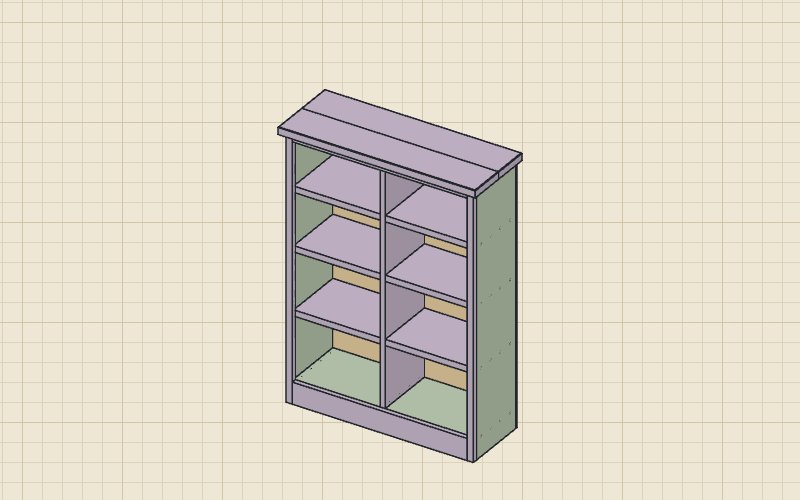
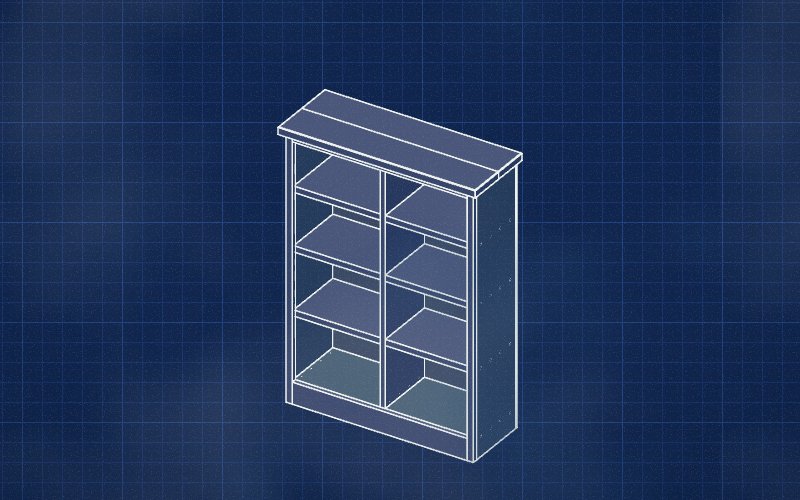
Knock-Down Bookcase
31.5 × 11.8 × 43.3 in (800 × 300 × 1100 mm)
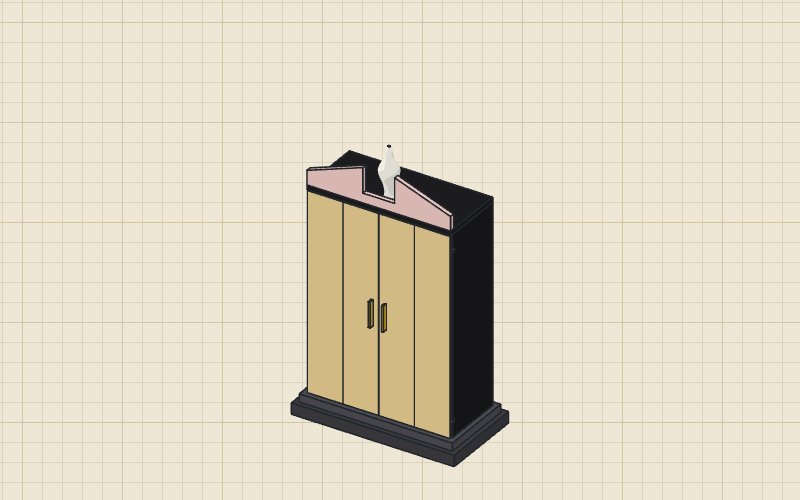

Postmodern Broken Pediment Cabinet
40.2 × 21.2 × 68.1 in (1020 × 539 × 1730 mm)
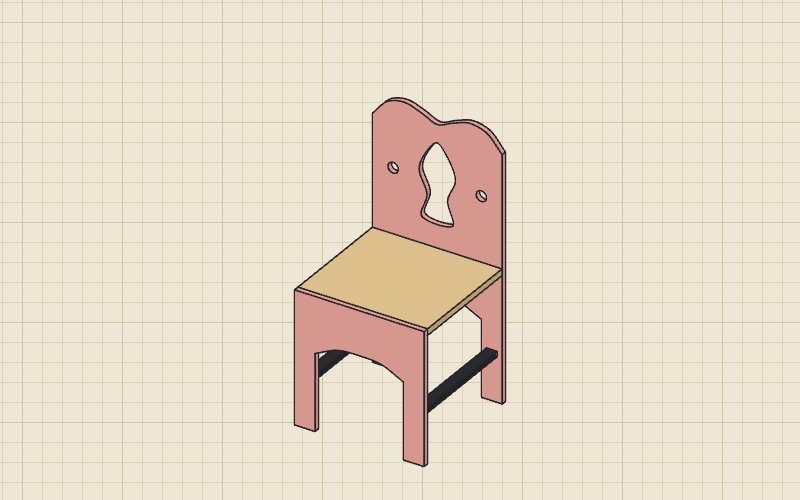
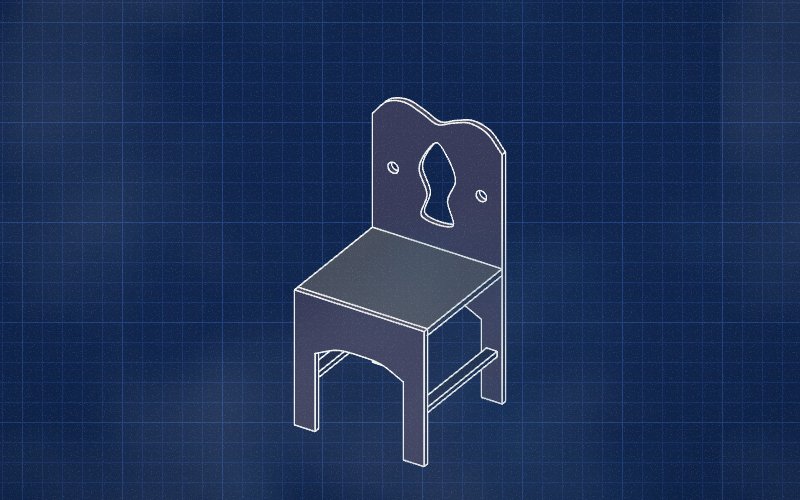
Postmodern Flat Silhouette Chair
17.3 × 17.2 × 35.4 in (440 × 436 × 900 mm)
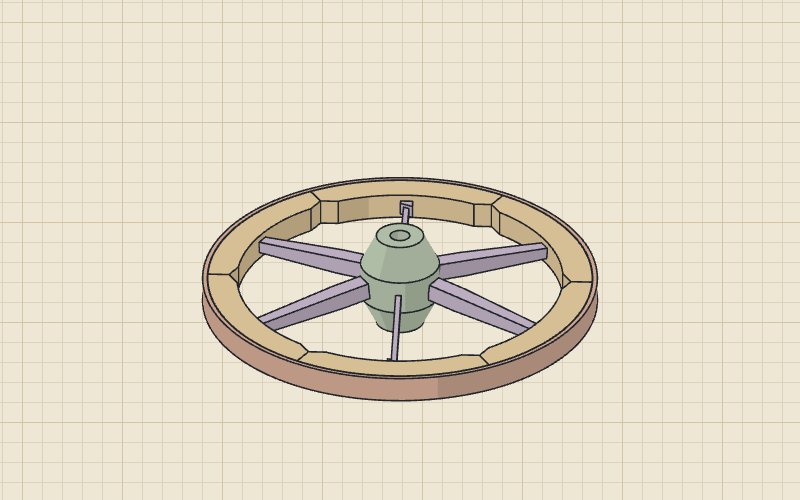

Wagon Wheel
39.4 × 39.4 × 9.8 in (1000 × 1000 × 250 mm)