Windsor
History
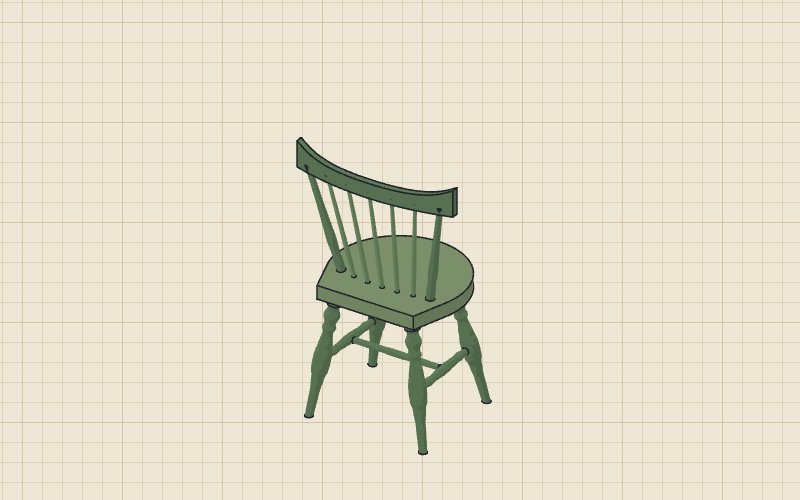
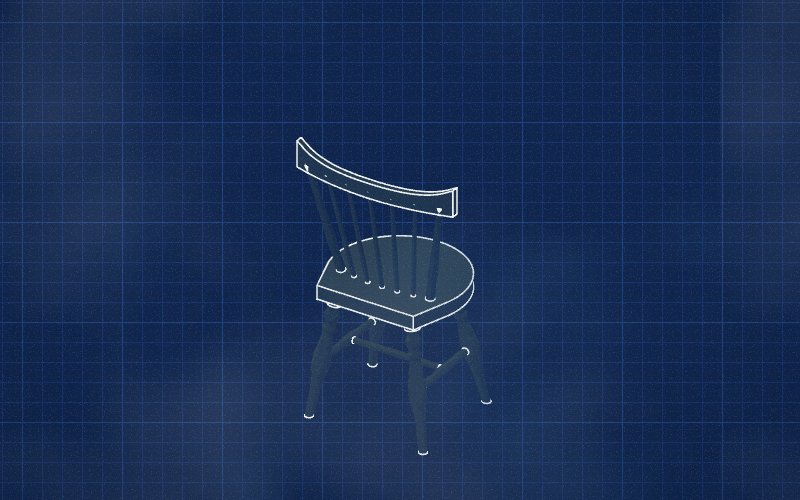
The Windsor chair originated in England in the early 18th century and reached America from the 1730s and 1740s, first made in Philadelphia; it flourished there from about 1750 to 1830 and has been made continuously ever since. Its defining engineering idea is that every part is socketed into a single thick solid-wood seat rather than built around a joined frame: legs from below, spindles and back posts from above.
American Windsors, introduced from England, developed their own character quickly — all-spindle backs with boldly turned legs, distinct from the English tradition, which often kept a pierced central splat in the back. Windsors were built from several different woods, each chosen for the job a given part had to do, and painted over to unify that mix into one finished color.
Elements
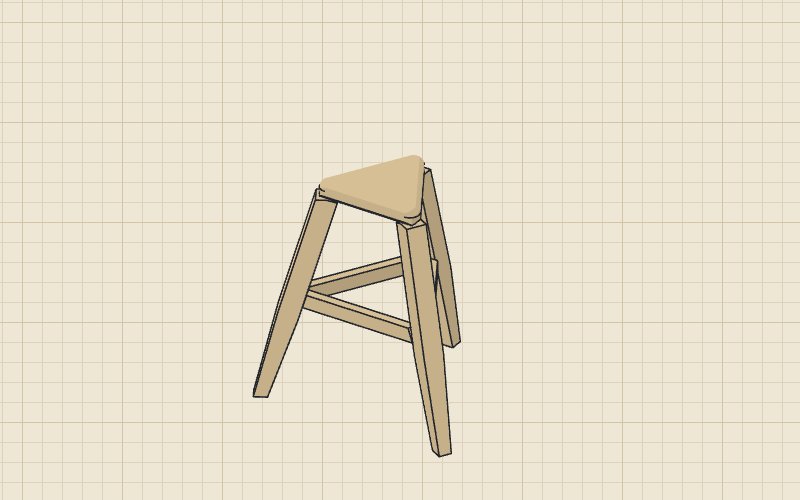
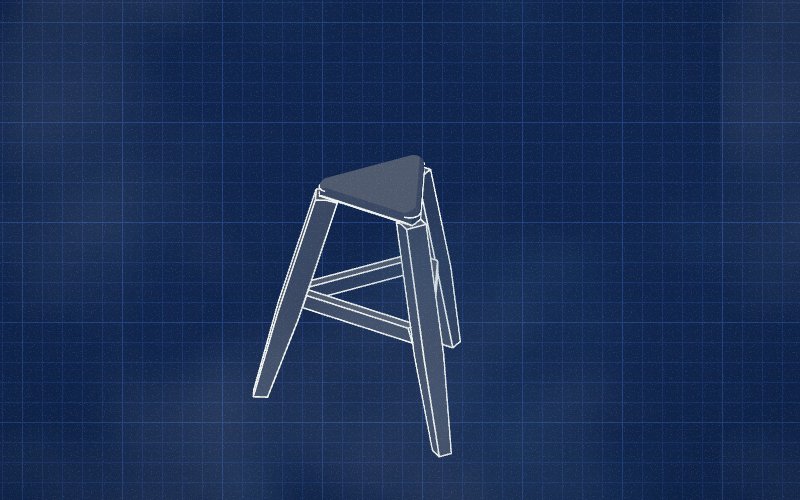
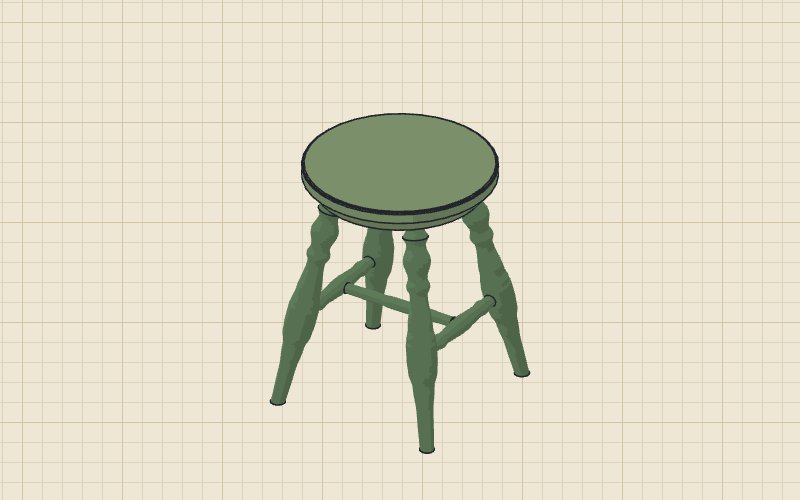
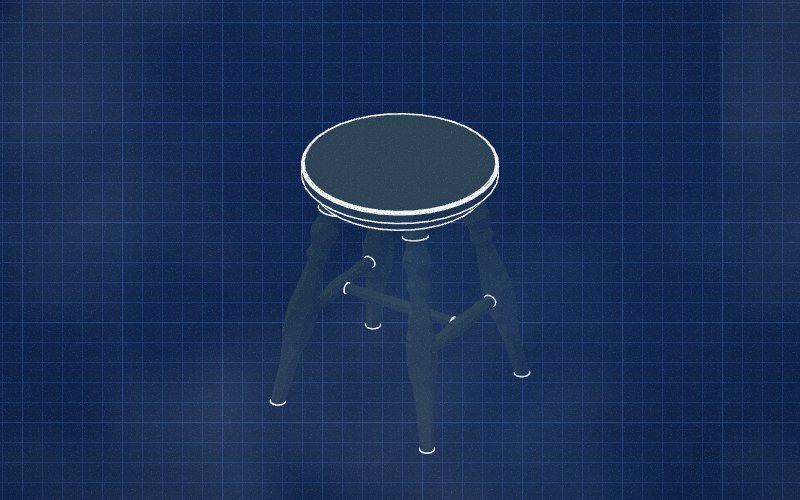
Everything starts from the seat: a thick plank shaped, or "saddled," with adze, scorp and travisher into a hollow that fits the sitter. Legs are turned, strongly raked and splayed, and socketed straight into the seat's underside — vase-and-ring baluster turnings with a tapered foot on 18th-century Philadelphia chairs, scored "bamboo" turnings as a later fashion — and braced by an H-stretcher in America or a curved crinoline stretcher in England. The back rises as a fan or cage of slender spindles in named forms: the comb-back, the earliest American type, where spindles pass through an arm rail to a shaped crest; the sack-back, with a bent bow above the arm rail; the bow-back, a single hoop with no arms; the fan-back, with no arm rail at all; and the continuous-arm, where bow and arms are one bent piece.
The turning itself is the ornament — balusters, rings, vases, bamboo nodes, shaped ears on the crests — with no applied ornament of any other kind; American chairs were painted, almost always green before the Revolution, otherwise brown or black, specifically to hide the mix of woods used part by part. Construction is green woodworking throughout: spindles and bows are riven from the log and shaped with drawknife and spokeshave, bows and arm rails steam-bent on forms, and legs turned from air-dried stock with a tapered round tenon fitted into a conical mortise reamed into the seat at a compound rake-and-splay angle, then wedged across the seat grain and planed flush.