

Overview
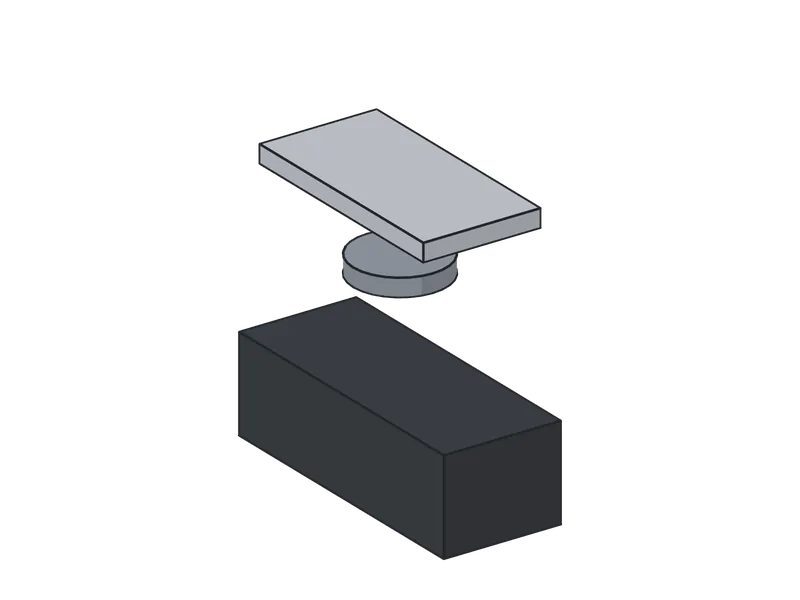
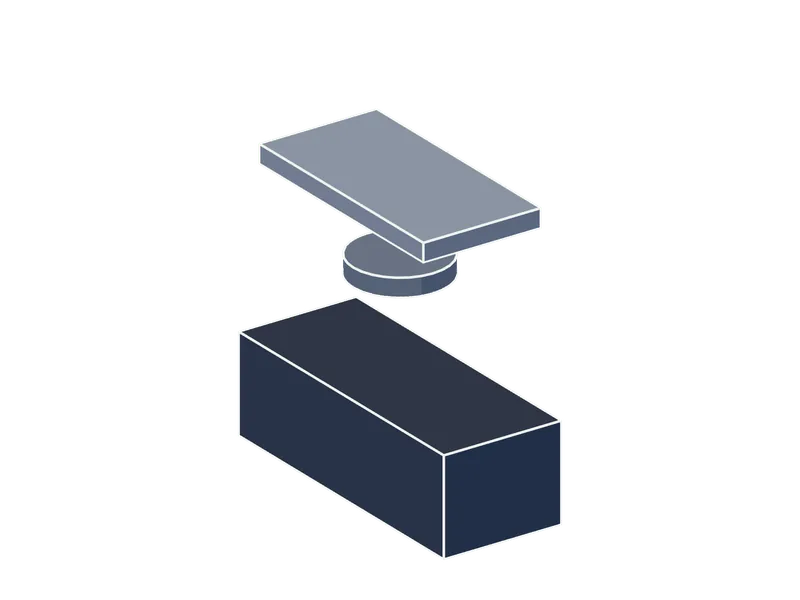
A magnetic catch holds a door or drawer shut by magnetic attraction: a magnet, in a plastic or metal case, is fixed to the carcass, and a steel strike plate to the door. Wikipedia's latch entry defines a latch or catch as a fastener that joins surfaces while allowing regular separation. The magnetic type has no moving part to wear and no sound beyond a click; it is the usual choice for kitchen and bedroom cabinet doors.
Types and sizes
- Surface-mount: a small box screwed inside the carcass with a strike plate screwed to the door. Often adjustable.
- Recessed (pocket): a round magnet or a cup magnet pressed or glued into a drilled hole, with a steel disc or screw head on the door; invisible from outside.
- Double magnet: holds heavier or warped doors.
- Touch-release: combines a magnet with a push mechanism; see Push-to-open latch.
- Holding force from under 1 kg to over 8 kg (under 2 to over 18 lb); choose by door size.
Where it is used
Common in contemporary and Shaker-inspired cabinets and in any door that needs a quiet, handle-free hold. Period furniture used the roller catch (Roller catch) or wooden turn buttons (Turn button).
Choosing and sizing
Use one catch per door up to about 600 mm (24 in) high; two on taller or warped doors. Match the pull force to the door weight and warp: a small door needs 1 to 2 kg (2 to 4 lb); a tall wardrobe door needs more. Keep the catch near the opening edge, at about two-thirds of the door height.
Installation
- Close the door and mark the catch height on the carcass.
- Screw the catch to the carcass (surface) or bore the magnet's hole (recessed) with a Forstner or twist bit.
- Fix the strike plate to the door so it touches the magnet when closed, with no gap; adjust with the screw slots.
- Test the hold; if the door springs open, move the catch closer to the opening edge or add a second.
- For a recessed magnet, glue in with epoxy and leave a 0.5 mm (1/64 in) skin.
Wood movement and species
A solid door that cups or moves seasonally changes the gap between magnet and plate, and the force falls sharply with gap. Fit the catch where the door is stiffest, near the stile, and use an adjustable strike. Plywood and MDF hold the screws better than particleboard (MDF (medium-density fibreboard)). Brass strike plates avoid stain in oak; steel plates are required for the magnet to grip.
Common mistakes
- Magnet and plate not touching: the catch does nothing. Shim or adjust.
- Too weak for a warped door: add a second catch or a stronger one.
- Loose rare-earth magnets in a children's room: they are dangerous if swallowed, so fix them firmly or choose a different catch.
Related
- Roller catch: a stronger mechanical alternative.
- Push-to-open latch: for handle-less doors.
- European concealed hinge: the hinge that usually goes with it.
Suitable for
Fixes into: hardwood, sheet, engineered.
Sources
Updated 2026-10-03. Sizes and ratings are typical trade figures drawn from the sources above. A load rating is the maker's rating for one product, not a property of the type: check the maker's own sheet, and test a fit on scrap before cutting good wood.