


Overview
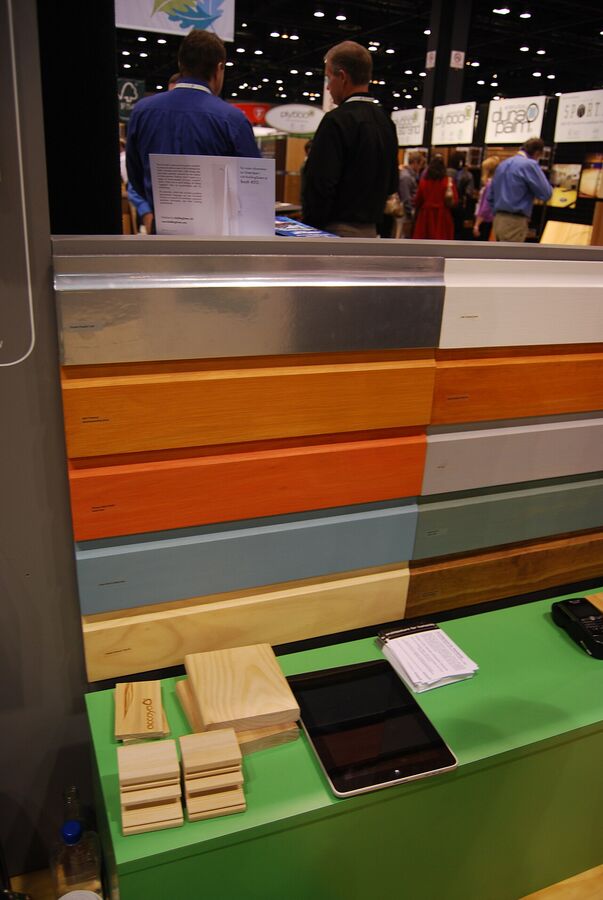
Accoya is radiata pine that has been acetylated: the wood is treated with acetic anhydride, which swaps some of the wood's water-loving hydroxyl groups for acetyl groups, so it takes up far less water. It looks like clean, pale pine, but swells and shrinks much less and resists rot. People choose it for outdoor furniture, windows, doors and decking where a painted or clear-finished softwood would otherwise move and decay. Strength and durability figures below come from the maker's own guide (Accsys, via distributor Hewn) and retailers, so they are manufacturer claims.
Pros
- Very stable. The guide's table puts Accoya's shrinkage (wet to 65% RH) at 0.8% radial and 1.6% tangential, against 6.6% and 8.0% for ipe, 1.4% and 2.5% for Kebony, and 2.3% and 4.0% for thermally modified ash.
- Durability class 1 (EN 113 / AS 5604), per the guide.
- Warranty of 50 years above ground and 25 years in the ground or fresh water (guide); Capitol City repeats the claim.
- Works with standard tools, with sharp knives (guide). Sanding before finishing is often unnecessary.
- Waste can be burned like untreated wood (guide).
Cons
- Costly for a pine: about $15-17 per board foot rough at the one retailer I opened.
- Soft. The guide gives side hardness of 4,100 N (about 920 lbf converted) and end hardness of 6,600 N (about 1,480 lbf). Compare this with the harder Kebony and hardwoods before choosing it for a bench top.
- Residual acetic acid, pH 4-5.5, with a slight vinegar odour when freshly cut (guide). It affects some glues, coatings and any adhesive that needs moisture to cure.
- Corrodes ordinary fixings. The guide strongly recommends stainless, and Capitol City says to use stainless hardware and polyurethane glue outdoors.
- Sticker marks can leave discoloration up to 1/4 in (6 mm) deep (guide).
- Uncoated surfaces fade with UV (guide).
Variants and subspecies
None of note as a species: Accoya is a single product, from radiata pine. It is sold as lumber (4/4 and 8/4 at Capitol City), decking and cladding profiles, and windows and doors. Accoya is a brand; Wikipedia's page covers the acetylation process. For the other chemical route see Kebony (furfurylation), and for the heat route see thermally modified wood.
Working and finishing
Moisture content below 8% is suitable for processing (guide). Use sharp tools. Gluing needs care: the slight acid affects some adhesives and any that need moisture to cure, so follow the guide's gluing section or use polyurethane glue as Capitol City recommends outdoors. Use stainless screws.
Staining and finishing colour
The guide says sanding before finishing is often unnecessary. Coatings and glues can be affected by the residual acid, so test and follow the maker's finishing advice. Left uncoated, the wood fades under UV. I did not find sourced staining results, so I cannot say how evenly stains take.
Sustainability and handling
Accoya is made from radiata pine. The guide states waste can be incinerated like untreated wood. I found no conservation concern in my sources for the base species and did not verify FSC claims, so ask the seller. The acid odour fades; treat sawdust like any softwood dust, with extraction.
Popular projects
Decking, cladding, exterior joinery (windows and doors), garden benches and tables, and anything outdoors painted or clear-coated where movement would break the finish.
Buying notes
Capitol City stocks it rough 4/4 and sells it per board foot ($15.15-17.05 on sale, $15.90-18.50 regular). Alan McIlvain's page gives about 2.9 lb per board foot dry. Buy stainless fixings at the same time.
Typical projects
- decking
- cladding
- windows and doors
- outdoor furniture
Sources
Researched 2026-09-30. Prices, conservation status and CITES listings on this page are indicative and were checked on that date. They change: confirm them with your supplier, and with the relevant authority before importing or exporting.