


Overview
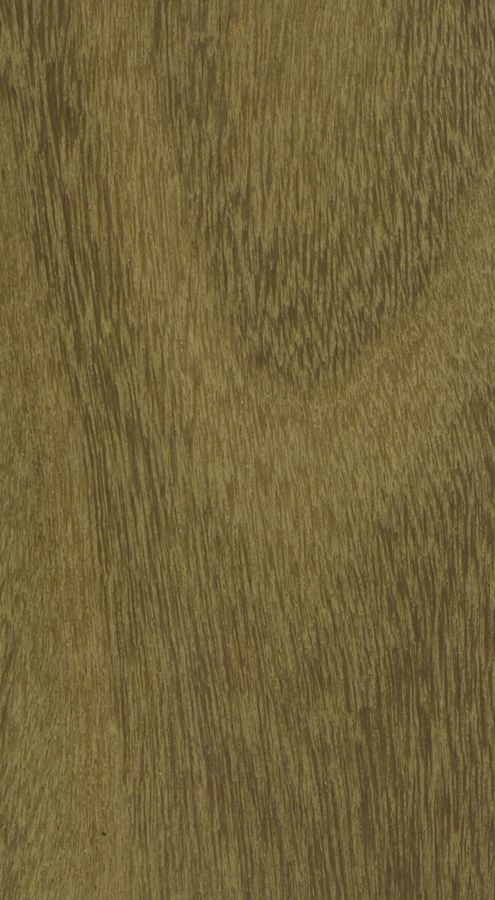
Afrormosia (Pericopsis elata) is a yellowish-brown wood, sometimes with a reddish or olive hue, that darkens with age. It looks like teak, and is very durable and easy to work. It is also called African teak and afromosia.
Pros
- Easy to work with hand and machine tools.
- Very durable, with good insect and borer resistance.
- Janka 1,570 lbf, about 725 kg/m3.
- Teak-like looks with similar weight and strength, per Wood Database.
- Low radial shrinkage (3.2% radial, 6.2% tangential).
Cons
- CITES Appendix II and IUCN Endangered.
- Interlocking grain can cause tear-out; slight cutter blunting.
- Dark stains where it meets iron.
- Reported as a sensitizer.
- Priced above iroko, at about $19 a board foot.
Variants and subspecies
- Pericopsis elata: the only commercial species.
- African teak: also applied to Iroko; neither is related to Teak.
- Substitutes: Iroko is similar and not CITES-listed.
Working and finishing
Works readily, though light passes help on interlocked grain. Use stainless or brass fixings. It glues and finishes well.
Staining and finishing colour
Generally left natural; colour darkens with age. It stains dark where it contacts iron.
Sustainability and handling
CITES: Pericopsis elata is in Appendix II from any country, covering logs, lumber, veneer, plywood and transformed wood (further-processed wood), but not finished goods (APHIS CITES Timber Species Manual; checked 2026-09-30). IUCN: Endangered, from a population reduction of over 50% in three generations (Wood Database). FSC availability is not verified here. The US Lacey Act makes it unlawful to trade wood taken or exported in breach of the source country's laws (fws.gov/law/lacey-act), so buy from dealers who can name the country and species. If a piece will be exported to or sold in the EU, Regulation (EU) 2023/1115 (the EUDR) requires due-diligence evidence that wood products are deforestation-free and legally produced; check its current application date with your buyer.
Ethical call: a poor choice unless the supplier documents a legal, certified source; Iroko gives a similar teak-like look without the CITES listing. Health: reported sensitizer. The US National Cancer Institute reports strong, consistent associations between wood-dust exposure and cancers of the nasal cavity and sinuses, so use extraction and a respirator when sanding.
Popular projects
Boat decks and trim, outdoor furniture, joinery, flooring and veneered panels.
Buying notes
Woodworkers Source lists quartersawn 4/4 at $18.99 and 8/4 at $19.99 per board foot (September 2026). Ask for CITES paperwork and the country of origin.
Typical projects
- boatbuilding decks
- outdoor furniture
- flooring
- joinery
- veneer
Sources
- www.wood-database.com/afrormosia
- www.woodworkerssource.com/lumber/exotic/Afromosia.html
- www.aphis.usda.gov/sites/default/files/cites.pdf
- www.fws.gov/sites/default/files/documents/CoP19%20timber%20outcomes...
- www.fws.gov/sites/default/files/documents/2026-01/ole-public-bullet...
- www.fws.gov/law/lacey-act
- eur-lex.europa.eu/eli/reg/2023/1115/oj
Researched 2026-09-30. Prices, conservation status and CITES listings on this page are indicative and were checked on that date. They change: confirm them with your supplier, and with the relevant authority before importing or exporting.