


Overview
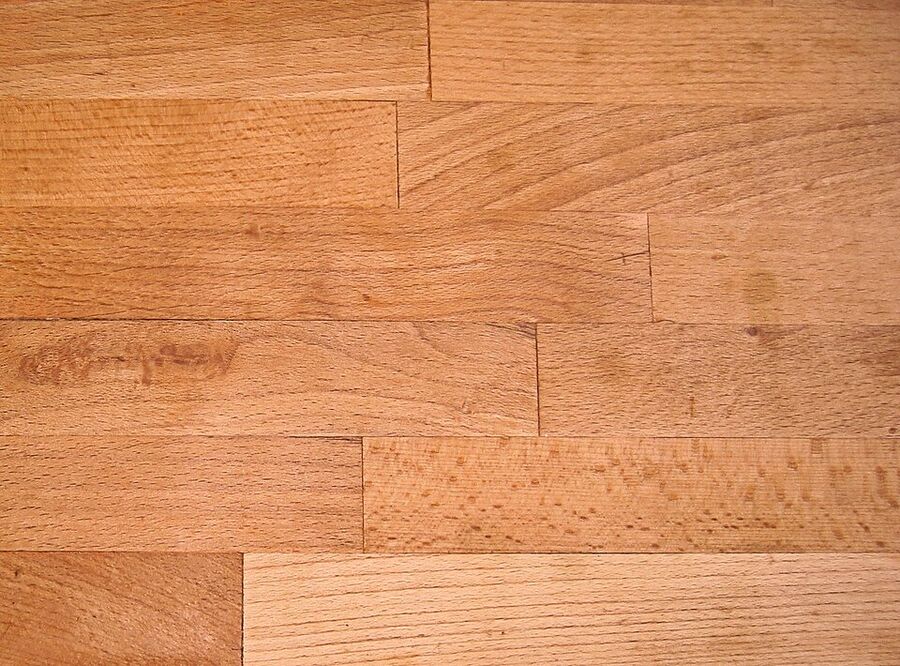
European beech is the workhorse of Continental furniture: fine, even-textured, strong, cheap and very good at being bent. Wood Database lists furniture, flooring, plywood, musical-instrument pinblocks and turned objects among its uses. It has little figure, so makers choose it for structure, chairs and anything painted or stained, rather than for looks. It is the wood of Michael Thonet's bentwood chairs.
Pros
- Fine, uniform texture; machines well, glues, finishes and turns well.
- Steam-bends superbly (Wood Database), which is why it dominates bentwood furniture.
- Hard (Janka 1,450 lbf) and strong for the price; very economically priced within Europe. West Wind lists it at $8.50-9.50 per bf in the US.
- Takes paint, stain and clear finishes evenly.
Cons
- Wood Database rates it non-durable or perishable with poor insect resistance, so keep it indoors.
- Large movement in service (5.8% radial and 11.7% tangential shrinkage, green to oven-dry; a T/R ratio of 2.0), so design for movement and use well-dried stock.
- Reported sensitizer; eye, skin and respiratory irritation; Wood Database also notes a nasopharyngeal cancer risk with unprotected occupational exposure.
- Plain look: little figure, so it is chosen for structure rather than beauty.
Variants and subspecies
- Steamed beech: kiln or steam treatment equalises colour and gives a golden to pinkish tone; Wood Database says veneer tends to be slightly darker. Unsteamed beech is paler and can be more varied. Ask which you are buying.
- Thonet-type bentwood: chair No. 14 went into production from 1859, using beech from the beech woods in Moravia (Wikipedia). It was the practical result of bending solid beech with steam.
- American beech (Fagus grandifolia) is a separate species not covered here.
Working and finishing
Wood Database calls beech overall good: it machines, glues, finishes and turns well and bends superbly. Allow for movement, particularly in wide panels. Pre-drill for screws near ends. The fine, closed grain finishes smoothly and holds paint well.
Staining and finishing colour
Beech takes stain and dye evenly because the grain is fine and uniform. It stays pale and plain under clear finishes, and can look pinkish under oil. A colour-matched dye gets it near cherry, walnut or oak colours, but the lack of figure means it will still look like beech to a trained eye.
Sustainability and handling
Wood Database reports beech is not CITES-listed; the IUCN status for Fagus sylvatica is least concern (Wikipedia taxobox; checked 2026-09-30). Certified supply in Europe is common; PEFC was founded by European small forest owners and FSC also operates there. EU operators face the EU Deforestation Regulation, which covers wood and furniture from 30 December 2026 for large and medium operators (30 June 2027 for micro and small, per the Commission). US imports need a Lacey Act plant declaration (16 USC 3372(f)). Wear a respirator when sanding: the reported health effects above are from fine dust.
Popular projects
Bentwood and café chairs, kitchen furniture, workbench tops, children's furniture, turned objects, painted furniture, and plywood. Wikipedia lists furniture, chairs, parquet and stairs among its uses.
Buying notes
In the US, European beech is a specialty import sold in select-and-better grades at 4/4 to 8/4 (West Wind). Look for kiln-dried stock and say whether you want steamed or not. For anything that will see damp, pick a different species. The price here is a US yard price; in Europe beech costs far less.
Typical projects
- bentwood and café chairs
- workbenches
- kitchen furniture
- turned objects
- children's furniture
- flooring
- stairs
Finishes that suit this
Sources
- www.wood-database.com/european-beech
- en.wikipedia.org/wiki/Fagus_sylvatica
- en.wikipedia.org/wiki/Michael_Thonet
- www.westwindhardwood.com/product/hardwoods/beech-european
- environment.ec.europa.eu/topics/forests/deforestation/regulation-de...
- www.law.cornell.edu/uscode/text/16/3372
- pefc.org/discover-pefc/what-is-pefc
- fsc.org/en/about-us
Researched 2026-09-30. Prices, conservation status and CITES listings on this page are indicative and were checked on that date. They change: confirm them with your supplier, and with the relevant authority before importing or exporting.