


Overview
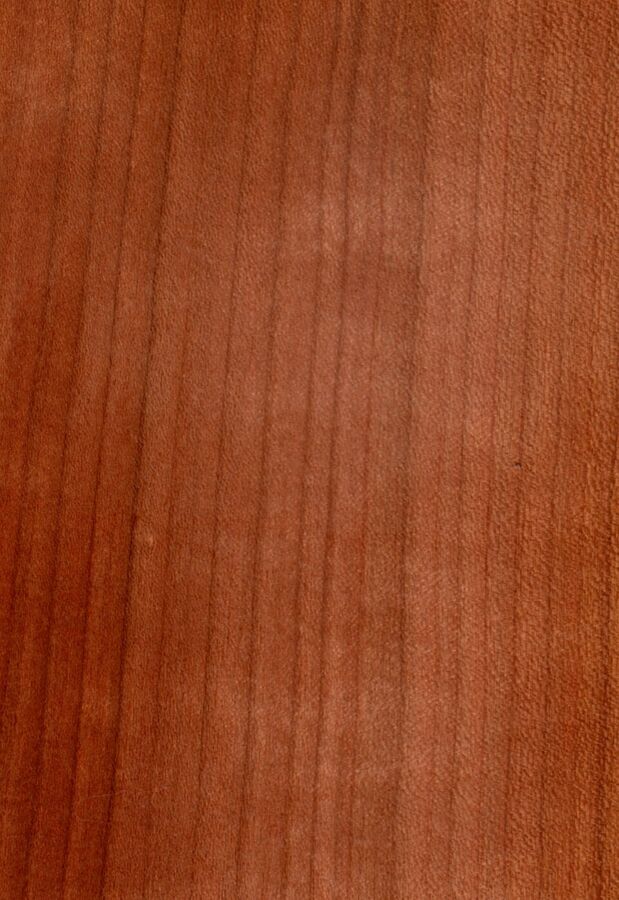
European cherry is the sweet or wild cherry (Prunus avium): a fine-grained, pinkish-brown wood that darkens richly with age, close in look to American black cherry but less often seen in the US. It is a classic furniture and veneer wood in Europe and a staple of Biedermeier work. Choose it for refined, warm furniture and small, finely finished pieces.
Pros
- Easy to work with machine and hand tools (Wood Database).
- Fine, close grain with a smooth finish; light pinkish brown that deepens to a golden brown with time and light.
- Strong furniture credentials: Wood Database lists veneer, furniture, cabinetry, turned objects, musical instruments and carvings.
- Moderate price within Europe; the UK trade price I found is low.
Cons
- Blotches when stained, because of the fine, close grain; a sealer or gel stain is advised.
- Heartwood is moderately durable to non-durable, and susceptible to insect attack; indoor use.
- Usually sold only in smaller sizes or as veneer, and rarely available as lumber in the US (Wood Database).
- Softer than hard maple (Janka 1,150 lbf against 1,450 lbf; 600 kg/m3), so it dents more easily than maple.
Variants and subspecies
- Sweet or wild cherry (Prunus avium): the species covered here; Wood Database gives wild cherry and European cherry as other names.
- Orchard timber: Wood Database says it is typically available only in Europe or from orchards.
- American black cherry (Black cherry, Prunus serotina) is a different, more widely sold timber; Wood Database says it has been reported to cause respiratory effects, which is not reported for sweet cherry.
Working and finishing
Wood Database: easy to work with both machine and hand tools; difficulties arise mainly in staining. Shrinkage is moderate (5.1% radial, 8.4% tangential). Planes, turns and sands to a fine finish.
Staining and finishing colour
Fine, closely grained cherry is prone to blotchy stain. Use a sanding sealer or gel stain as Wood Database advises, or skip stain and let it darken naturally. Oil, shellac and clear lacquer give the best results; Wood Database notes the colour darkens with light exposure.
Sustainability and handling
Wood Database reports sweet cherry as not CITES-listed; Wikipedia's IUCN-based taxobox gives Least Concern (Rivers, 2017; checked 2026-09-30). Wood Database notes no adverse health effects have been reported for sweet cherry, though black cherry has respiratory reports; treat any wood dust with care. EU traders should note the EU Deforestation Regulation (30 December 2026 for large and medium operators). US imports need a Lacey Act plant declaration (16 USC 3372(f)).
Popular projects
Tables, chests, cabinets, small boxes, musical instruments, carvings and veneered panels. Wikipedia's Biedermeier article records local cherry, ash and oak being used in place of imported mahogany in the 1815-1848 period.
Buying notes
In Europe, buy kiln-dried planks from timber yards; in the US it is rarely sold as lumber, and a US yard offering "cherry" generally means American black cherry. Choose pieces from one tree for matched colour. Expect small sizes and veneer.
Typical projects
- fine furniture
- cabinets
- veneer
- musical instruments
- turned objects
- carvings
Sources
Researched 2026-09-30. Prices, conservation status and CITES listings on this page are indicative and were checked on that date. They change: confirm them with your supplier, and with the relevant authority before importing or exporting.