


Overview
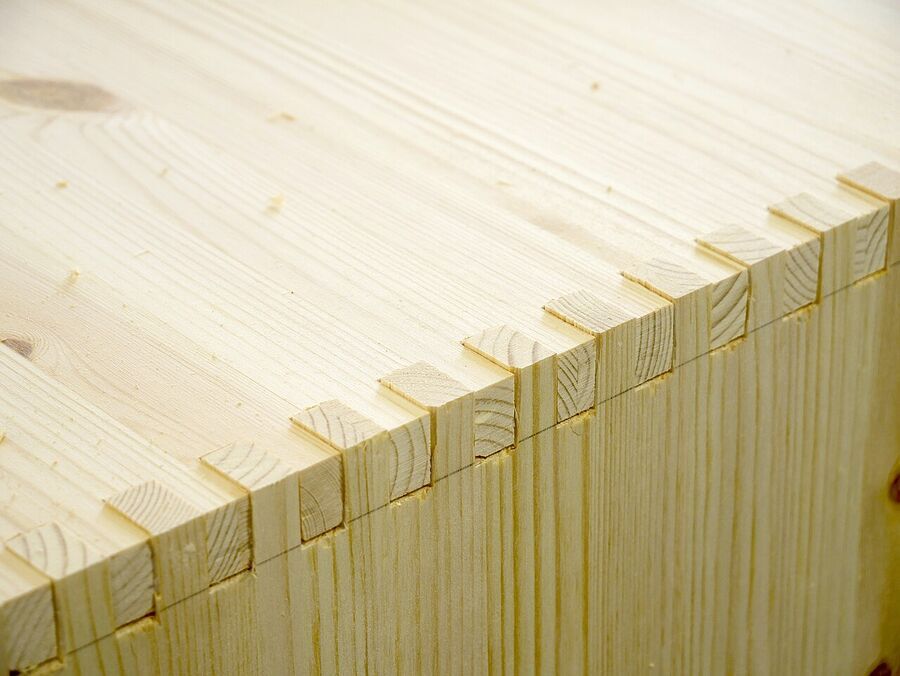
Finger-jointed lumber is made by cutting small pieces of clear wood, usually 18 to 24 inches (460-610 mm) long, with interlocking "fingers" on each end and gluing them into long boards (Wikipedia). Solid dimensional lumber is typically limited to 22-24 ft; finger-jointing can make lengths up to 36 ft in a 2x6 (Wikipedia). It is cheap, straight and consistent, and is meant to be painted. Pick it for trim, shelving, door parts and paint-grade cabinets.
Pros
- Long, straight boards from short clear pieces, with the defects (knots) cut out.
- Finger-jointing is the dominant method for precut wall studs (Wikipedia).
- An affordable alternative for non-structural hardwood that will be painted (Wikipedia).
- Takes paint well, hides its seams, and usually machines like the species it is made of.
Cons
- The joints show under stain or clear finish, which is why it suits paint (Wikipedia).
- Mixed grain and colour across short blocks gives a patchwork look under clear coats.
- Our sources give no moisture-resistance rating for non-structural stock, so assume interior use unless the maker says otherwise.
Variants and subspecies
- Paint-grade softwood boards and trim: usually pine or spruce, with visible joints.
- Hardwood finger-jointed stock: used for painted work (Wikipedia).
- Structural finger-jointed lumber and studs: made for building; the tapered/scarfed finger joint is the most common long-piece joint (Wikipedia).
- Glulam end joints: in glulam the laminations are end-jointed with a finger joint about 1.1 in (28 mm) long, glued with melamine-formaldehyde or phenol-formaldehyde resin (Wikipedia); see Glued laminated timber (glulam).
- Finger-jointed trim: baseboards, floor boards and door construction (Wikipedia).
Working and finishing
It works like the underlying species, so use ordinary sharp tools. Plane and sand across joints carefully, since glue lines can dull edges. Fill and prime before painting so the seam does not telegraph. We did not source adhesive or tool-wear data for this entry.
Staining and finishing colour
Poorly suited to stain: the short blocks differ in colour and absorb unevenly, and the finger joints stay visible (Wikipedia). Use paint. If you must use a clear coat, expect a visible patchwork.
Sustainability and handling
Finger-jointing turns short offcuts into usable length, which uses more of each log. We did not find a verified carbon figure, certification data or a formaldehyde rating for generic finger-jointed boards. Glue is typically a structural resin; Wikipedia lists melamine-formaldehyde or PF resin for glulam end joints. Buy FSC-certified stock where offered. Store flat and dry.
Popular projects
Painted baseboards, casings and door parts; shelving and cabinet frames to be painted; and, in building, wall studs.
Buying notes
Sold by the linear foot or board foot at big-box and lumber yards. We did not find a verified price, so the range here is an estimate: check local pricing. Look for a "paint grade" label, inspect joints for gaps, and avoid it where you want a stained or natural look.
Typical projects
- painted trim and baseboards
- door parts
- shelving
- painted cabinets
- wall studs
Sources
Researched 2026-09-30. Prices, conservation status and CITES listings on this page are indicative and were checked on that date. They change: confirm them with your supplier, and with the relevant authority before importing or exporting.