

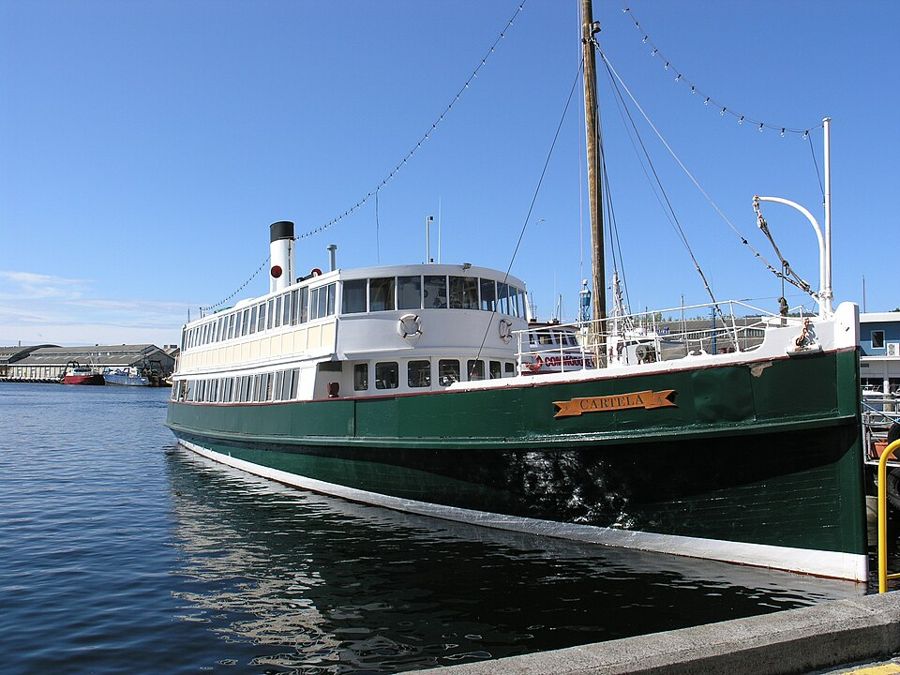

Overview
A Tasmanian specialty softwood: a fine, honey-yellow wood with a unique aroma and exceptional durability, long used for boatbuilding and prized for fine furniture and turning. Trees take centuries to mature, so supply is limited and expensive.
Pros
- Fine, uniform texture; straight or wavy grain.
- Very good durability in marine applications (Wood Database).
- Easy to work and turns beautifully; glues and finishes well.
- Hard for a softwood (about 920 lbf).
Cons
- Slow growth and limited supply mean high prices (Wood Database).
- Wavy or knotty grain can be slightly problematic.
- Hard to find outside Australia.
- The Wood Database page lumps Dacrydium (rimu) species with it, and their properties differ.
Variants and subspecies
- Huon pine (Lagarostrobos franklinii) is the Tasmanian species.
- Rimu (Dacrydium cupressinum) is a related New Zealand wood sometimes called NZ red pine.
- Not a true pine: southern-hemisphere conifers such as Kauri and Parana pine are also not Pinus.
Working and finishing
Cuts, turns and planes easily with sharp tools. Wavy or knotty areas can chip. Glues and finishes well. Work with dust extraction: the Wood Database notes irritation to nose, eyes and throat for the related Dacrydium.
Staining and finishing colour
Typically finished clear with oil or lacquer; the golden colour and fine grain are the feature. Very fine texture means little blotching.
Sustainability and handling
Not CITES-listed (Wood Database; checked 2026-09-30). Conservation status is described differently: the Wood Database calls Lagarostrobos franklinii conservation dependent, while the species page on Wikipedia gives IUCN Least Concern (both checked 2026-09-30). Because trees reproduce only after several hundred years, buy only from legal, salvaged or well-documented sources.
Popular projects
Boat planking, fine furniture and cabinets, turned bowls and pens, veneers and flooring.
Buying notes
Exported in small quantities and mainly sold by Tasmanian specialty suppliers. No retail listing was opened for this guide, so the price range is an estimate. Ask for provenance (salvaged or plantation-managed).
Typical projects
- boatbuilding
- fine furniture
- turned pieces
- veneer
- flooring
Sources
Researched 2026-09-30. Prices, conservation status and CITES listings on this page are indicative and were checked on that date. They change: confirm them with your supplier, and with the relevant authority before importing or exporting.