


Overview
Kaya, Torreya nucifera, is a Japanese conifer and the most prized wood for go boards. Wikipedia describes it as yellow-gold with fine, uniform grain, and says players value the click of a stone on it. It is not a mainstream furniture timber; this entry is here because it is one of the most expensive worked woods in Japanese tradition. Kaya is not ginkgo; they are different trees (see Ginkgo). I found no Janka or density figure from a source I could open.
Pros
- The reference board wood: yellow-gold colour, fine uniform grain and a pleasing sound with stones (Wikipedia).
- Recognised grade system for boards (tenmasa and tenchimasa, per Wikipedia).
Cons
- Extremely expensive: Wikipedia puts go boards at about $1,000 to over $20,000 depending on grade.
- Not stocked as ordinary lumber anywhere I could find.
- No hardness, density or machining data from a source I could open.
- Wikipedia says the tree is protected in Japan, so supply is constrained.
Variants and subspecies
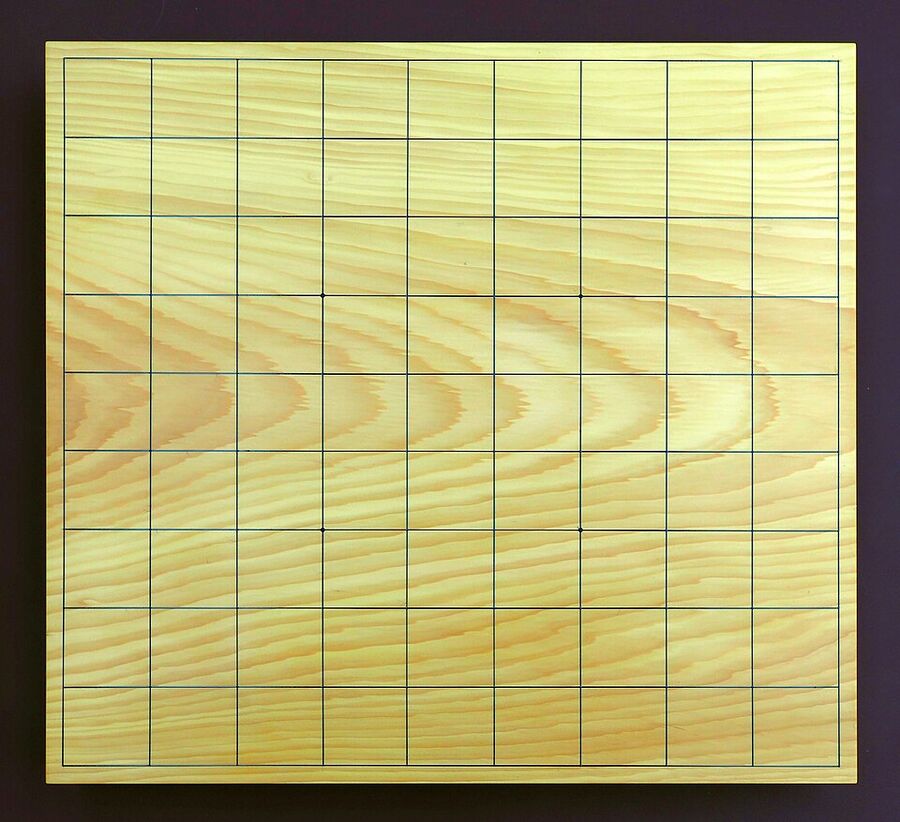
- Torreya nucifera, the species; boards from Kyushu are sold as hyuga kaya, as in the photograph.
- Shin-kaya is the spruce substitute, per Wikipedia's go equipment article; katsura (see Katsura) and spruce are also named there as lighter-coloured, fine-grained board woods.
- A shogi board, as in the photograph, uses the same wood with different markings.
Working and finishing
I found no machining or finishing data. Treat any project in kaya as specialist, and practise on a cheaper wood.
Staining and finishing colour
It is valued for its natural yellow-gold colour, so staining defeats the purpose. I found no stain tests.
Sustainability and handling
Wikipedia lists T. nucifera as Least Concern and notes the tree is protected in Japan. I searched the Species+ database on 2026-09-30 and found no CITES listing. The Lacey Act bars US trade in plants taken in violation of law, including foreign law, and has covered timber since 2008. The EU deforestation regulation covers wood and furniture from 30 December 2026 for large and medium operators. I found no sourced toxicity data; extract the dust.
Popular projects
Go boards, and shogi boards such as the one pictured. At these prices it is rarely used for furniture.
Buying notes
Buy finished boards from reputable Japanese dealers, with grade and origin stated. Compare with spruce (shin-kaya) and katsura boards if budget matters. Since the tree is protected in Japan, ask for provenance.
Typical projects
- go boards
- shogi boards
Sources
Researched 2026-09-30. Prices, conservation status and CITES listings on this page are indicative and were checked on that date. They change: confirm them with your supplier, and with the relevant authority before importing or exporting.