


Overview
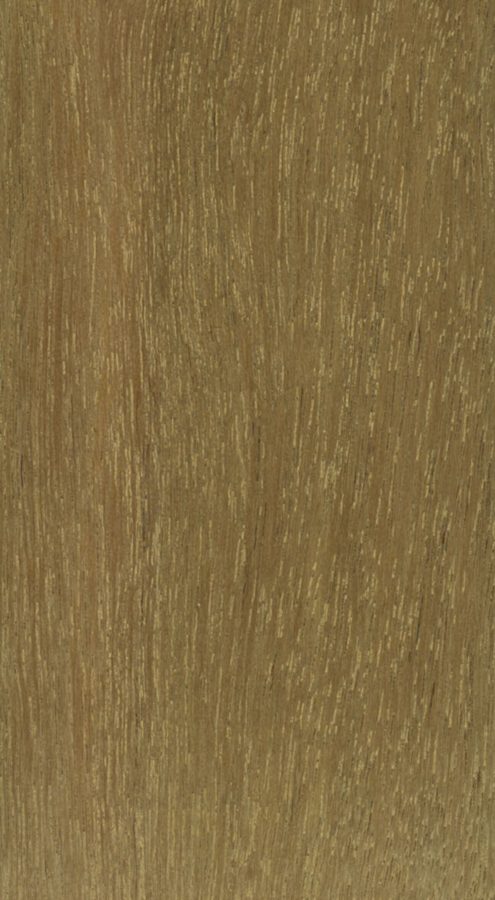
Keruing is the trade name for a group of heavy Dipterocarpus hardwoods, also sold as apitong or yang. It is a plain, medium-brown, hard and resinous timber used for flooring, truck decks and heavy construction rather than fine furniture. It is rarely a first pick for a woodworker, and its sustainability record is poor.
Pros
- Hard (1,390 lbf) and strong; Timber Development UK compares its strength with teak, and rates it a little stiffer.
- Generally easy to work, with straight to slightly interlocked grain (Wood Database).
- Moderate price for an imported wood, when you can find it.
- Used for flooring and trailer decks, where hardness matters.
Cons
- Large movement: high shrinkage in drying, fairly large movement in service, and slow, difficult drying.
- Resin exudes from the wood, builds up on tools and makes finishing difficult.
- Silica dulls cutters; Timber Development UK rates working qualities as difficult overall.
- Only moderately durable, with moderate to poor insect resistance (Wood Database).
- Most species are threatened (see below).
Variants and subspecies
Dozens of Dipterocarpus species are sold as keruing, with weight from 640 to 960 kg/m3 and a group average of about 740 (Timber Development UK). Differences in colour, density and resin content between lots are normal. "Apitong" and "yang" are other trade names for the same group. "Asian mahogany" is a wishful trade name: Wood Database notes it is much less stable than true mahogany. Kapur looks similar but has resin in concentric ducts; see Kapur.
Working and finishing
Works fairly easily with sharp, carbide-tipped tools, although silica dulls them and interlocked or quartersawn stock can pick up; reduce the cutting angle. Resin exudes, particularly on end grain, so test the finish. Gluing is variable. Nails and screws hold reasonably well. Dry it slowly: high temperatures increase resin exudation and cupping.
Staining and finishing colour
Stains satisfactorily, but resin makes varnishing and polishing demanding (Timber Development UK). The bland yellow-brown to reddish-brown colour darkens on exposure. Always test the finish on an offcut.
Sustainability and handling
Not listed in the CITES Appendices (Cirad Tropix sheet; statuses checked 2026-09). Wood Database says many Dipterocarpus species are on the Red List and calls most critically endangered, citing an over-80% population decline. Wikipedia pages citing IUCN show a spread: D. alatus Vulnerable and D. grandiflorus Endangered. I could not open the Red List itself, so the CR badge is the worst case for the group. Lacey Act and EUDR duties were not researched; ask the supplier for legality and species documents. Skin irritation has been reported, so extract dust. Keruing is a poor ethical choice unless you can verify the species and certification.
Popular projects
Flooring, trailer and truck decks, heavy structural and utility use. It is seldom chosen for furniture, where the movement and resin are drawbacks.
Buying notes
Sold as lumber or flooring planks, uncommonly in North America. I found no US retail list price. Check for resin on end grain and for cupping before purchase.
Typical projects
- flooring
- trailer and truck decks
- heavy construction
- utility furniture
Sources
Researched 2026-09-30. Prices, conservation status and CITES listings on this page are indicative and were checked on that date. They change: confirm them with your supplier, and with the relevant authority before importing or exporting.