


Overview
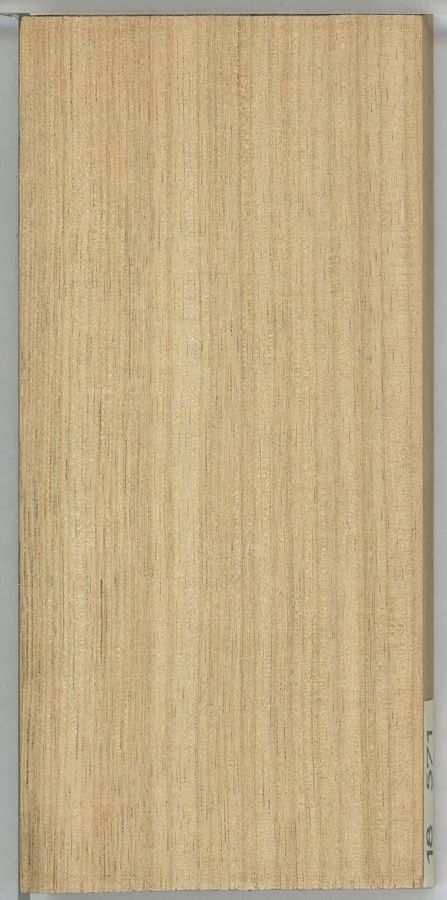
Limba (Terminalia superba) is a light yellowish to golden brown with grey to nearly black streaks (black limba) or plain (white limba). It is the guitar-body wood known as korina. It is easy to work.
Pros
- Easy to work; glues and finishes well, with small blunting effect.
- Black limba has attractive dark streaks.
- Janka 670 lbf, about 555 kg/m3.
- In relatively good supply as boards and veneer.
- Moderate price; plantation-grown.
Cons
- Non-durable and susceptible to insects.
- Reported to cause skin and respiratory irritation, hives, asthma-like symptoms, and bleeding of the nose and gums.
- Splinters tend to become infected and heal slowly.
- Wild supplies have diminished in places such as the Republic of the Congo.
- Black limba costs more than white.
Variants and subspecies
- Black limba and white limba: same species; Wood Database says the name reflects the dark figuring.
- Korina, afara, frake, ofram: other trade names, with korina used for guitar bodies.
- Look-alike: Basswood for plain, soft stock.
Working and finishing
Easy with hand and machine tools. Glues and finishes well.
Staining and finishing colour
Mostly finished clear or tinted. Black limba's streaks show through clear finishes.
Sustainability and handling
CITES: not listed (Wood Database; APHIS CITES Timber Species Manual, checked 2026-09-30). It is also not on the Red List; Wood Database calls that omission unfortunate. IUCN: not evaluated; the species is cultivated on plantations, but wild supplies have diminished in some regions (Wood Database). FSC availability is not verified here. The US Lacey Act makes it unlawful to trade wood taken or exported in breach of the source country's laws (fws.gov/law/lacey-act), so buy from dealers who can name the country and species. If a piece will be exported to or sold in the EU, Regulation (EU) 2023/1115 (the EUDR) requires due-diligence evidence that wood products are deforestation-free and legally produced; check its current application date with your buyer.
Ethical call: reasonable, especially from plantation sources. Health: skin and respiratory irritation, hives, asthma-like symptoms and nose and gum bleeding reported. The US National Cancer Institute reports strong, consistent associations between wood-dust exposure and cancers of the nasal cavity and sinuses, so use extraction and a respirator when sanding.
Popular projects
Electric guitar bodies (as korina), veneer, furniture and turned objects.
Buying notes
Woodworkers Source lists korina 4/4 at $9.99 and black limba at $12.99; Bell lists striped black limba at $10.00 per board foot (September 2026).
Typical projects
- electric guitar bodies
- veneer
- furniture
- turned objects
Sources
Researched 2026-09-30. Prices, conservation status and CITES listings on this page are indicative and were checked on that date. They change: confirm them with your supplier, and with the relevant authority before importing or exporting.