


Overview
Nanmu, Phoebe zhennan, is a laurel-family tree endemic to China and one of the traditional high-status building and furniture timbers. Wikipedia records royal use, including pillars in the Forbidden City. I found no Janka, density or working data from a source I could open. Consider it for restoration work, carved panels and showpiece joinery, and treat it as a legally restricted wood.
Pros
- Centuries of use in imperial building and furniture (Wikipedia).
- A prized grade exists: Wikipedia reports semi-fossilised "wu mu" nanmu at over $10,000 per cubic metre in 2012.
Cons
- IUCN Vulnerable, and under China's second-class national protection (Wikipedia). Wild-sourced wood is a legal and ethical risk.
- No hardness, density or working figures from a source I could open.
- No US lumber price; the best-known price signal is for a rare special grade.
Variants and subspecies
- Phoebe zhennan, the species.
- Wu mu is Wikipedia's term for semi-fossilised nanmu, the most valuable grade.
- I did not verify other species sold as "nanmu"; ask for the Latin name.
Working and finishing
I found no machining, gluing or finishing data for nanmu. Test cuts, glue and finish on offcuts.
Staining and finishing colour
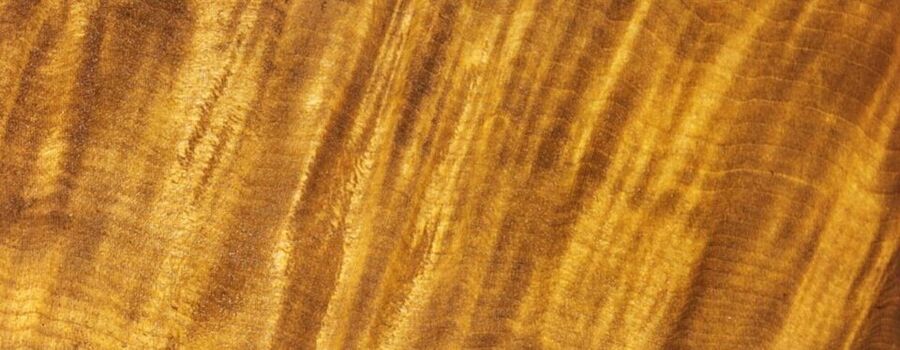
No stain tests found. The photograph shows a figured grain that most makers would show with a clear finish. Test on offcuts if you plan to colour it.
Sustainability and handling
Wikipedia lists Phoebe zhennan as IUCN Vulnerable and protected under China's second-class national protection. On 2026-09-30 I searched the Species+ database and found no CITES listing, so this is not a CITES issue, but Chinese domestic law is the issue. The US Lacey Act bars trade in plants taken in violation of law, including foreign law, and has covered timber since 2008. That makes wild-harvested nanmu from China high-risk for US buyers. The EU deforestation regulation covers wood and furniture from 30 December 2026 for large and medium operators. I found no sourced toxicity data; extract the dust.
Popular projects
Palace pillars and beams (Wikipedia) and classical furniture. I found no sourced list of other uses.
Buying notes
If you can buy it at all, insist on a Latin name, origin, harvest date and paperwork showing legal harvest.
Typical projects
- palace pillars and beams
- classical furniture
- carved panels
- boxes
Sources
Researched 2026-09-30. Prices, conservation status and CITES listings on this page are indicative and were checked on that date. They change: confirm them with your supplier, and with the relevant authority before importing or exporting.