

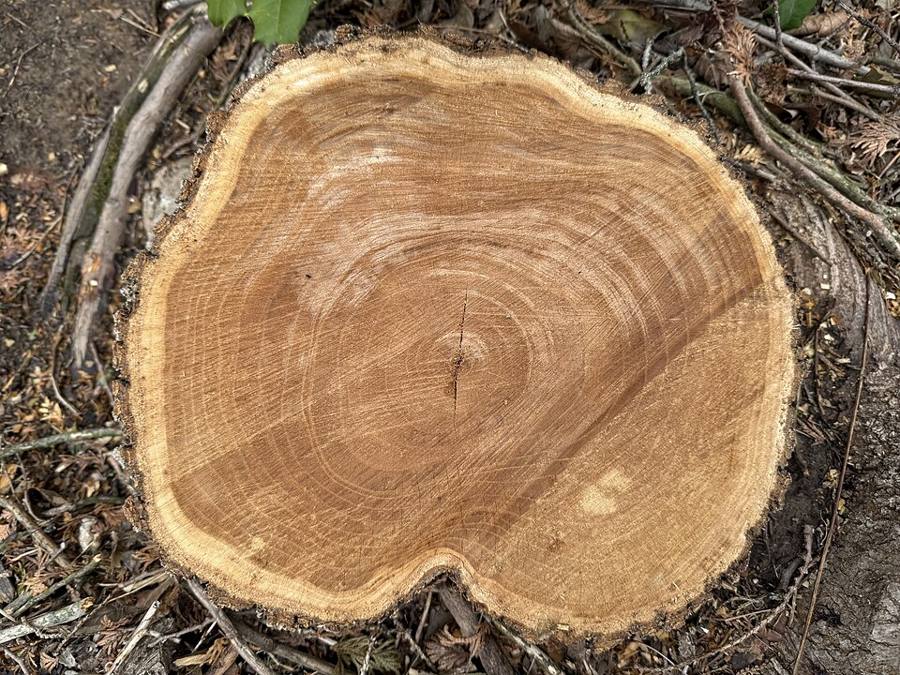

Overview
A very light, soft, fine-textured cedar with a long history in canoe building, fencing and shingles. It is durable and cheap when milled in small sizes, but it is weak, so it is a wood for light or exterior work rather than furniture frames.
Pros
- Durable to very durable against decay, and resists termites and powder-post beetles (Wood Database).
- Very light and easy to work with hand and machine tools.
- Fine, even texture and straight grain.
- Weathers to a pleasing silvery grey.
Cons
- Soft and weak (Janka 320 lbf) with poor screw-holding (Wood Database).
- Sands unevenly because of density differences between earlywood and latewood.
- Mostly available in small sizes and rough form.
- Contains plicatic acid (see Sustainability and handling).
Variants and subspecies
- Often confused with Western red cedar, which is bigger, redder and more common in wide boards.
- Pin-knotty boards are common in fence and shingle stock.
- Not the same as Alaska yellow cedar or Incense cedar.
Working and finishing
Cuts and shapes easily. Predrill generously, since weak fibres split and hold screws poorly. Use ring-shank nails or stainless screws and glue joints when possible.
Staining and finishing colour
Accepts finishes readily, though it sands unevenly. Outdoors it is best left to weather or finished with a penetrating oil. Pigment stain is seldom used.
Sustainability and handling
Not CITES-listed (Wood Database; checked 2026-09-30); IUCN Least Concern as of 2026-09-30. The Wood Database reports that the wood can cause skin irritation, runny nose and asthma-like symptoms, and that it contains plicatic acid, as does western red cedar. Use dust extraction.
Popular projects
Canoes and small boats, fence posts and rails, shingles, garden furniture and planters, and bird boxes.
Buying notes
Typically sold in smaller sizes for fencing and shingles, mainly in the north-east US and eastern Canada. The Wood Database calls the price mid-range for a domestic softwood; no retail listing was opened, so the range shown is an estimate.
Typical projects
- canoes
- fence rails and posts
- shingles
- outdoor furniture
- planters
- boat ribs
Sources
Researched 2026-09-30. Prices, conservation status and CITES listings on this page are indicative and were checked on that date. They change: confirm them with your supplier, and with the relevant authority before importing or exporting.