

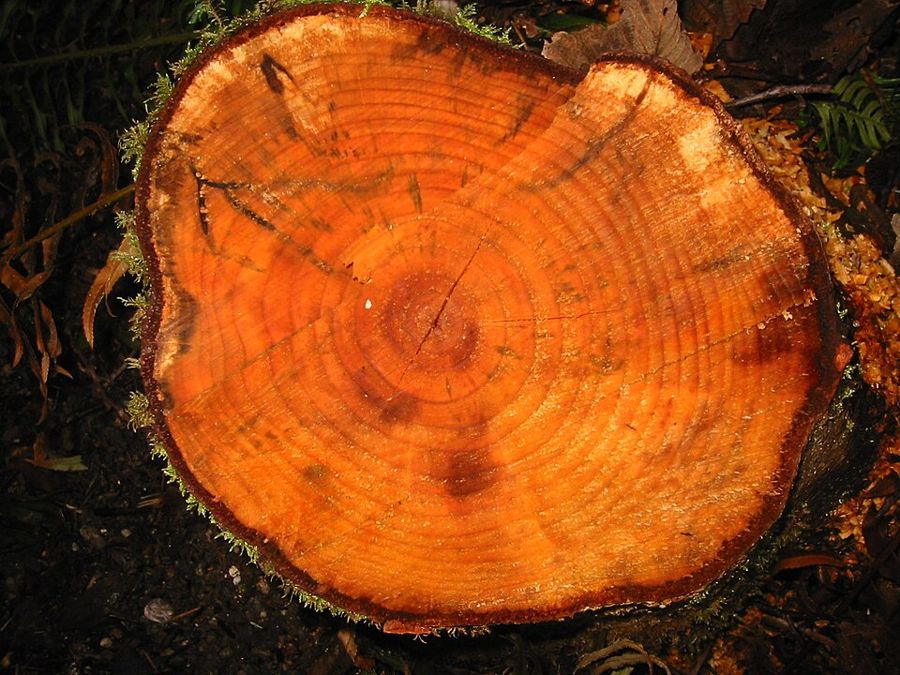

Overview
Red alder (Alnus rubra) is the Pacific Northwest's workhorse hardwood: a light tan to reddish brown wood with a fine, uniform texture that darkens and reddens with age. It is soft but stable, easy to machine and takes finishes well, and the Wood Database says it is sometimes used as a lower-cost alternative to Black cherry. Pick it for cabinets, painted or stained furniture and guitar bodies.
Pros
- Very easy to work with hand and machine tools; it sands especially easily.
- Turns, glues and finishes well.
- Good stability, with little movement in service once fully dried, per the Wood Database.
- Moderately priced, with a cheap knotty grade and a pricier clear grade.
- Light (about 450 kg/m3 dried) at 590 lbf Janka.
Cons
- Rather soft; care is needed to avoid denting in some applications.
- Non-durable to perishable for decay resistance, and logs need to be converted and dried quickly to avoid staining or decay.
- Large aggregate rays make occasional small streaks that can be mistaken for defects.
- Reported to cause eye, skin and respiratory irritation (see below).
- Clear grade costs far more than knotty.
Variants and subspecies
- Knotty alder: the inexpensive grade, listed at $3.75 to $4.30 per board foot.
- Clear (superior) alder: far dearer, at $7.19 in one list; the Wood Database says clear red alder is priced closer to other cabinet hardwoods.
- Substitute for cherry: see Black cherry.
Working and finishing
The Wood Database says red alder is very easy to work with both hand and machine tools and sands especially easily, though it is soft enough to dent. It turns, glues and finishes well. There is no characteristic odour. Dry stock quickly: the Wood Database warns freshly cut logs should be sawn and dried promptly to avoid stain and decay.
Staining and finishing colour
Colour is a light tan to reddish brown, with no visible difference between heartwood and sapwood, and it darkens and reddens with age. The Wood Database says it finishes well but gives no stain guidance. Since it is used as a lower-cost cherry alternative, test any cherry-toned stain on offcuts first.
Sustainability and handling
The Wood Database reports red alder as not listed in the CITES Appendices (checked 2026-09-30) and as Least Concern on the IUCN Red List, and calls it the most abundant hardwood in the Pacific Northwest. US-grown timber is still covered by the Lacey Act, which as amended in 2008 prohibits trade in plants and timber taken, possessed, transported or sold in violation of law (Wikipedia's summary of the Act); buy from dealers who can name the source. The Wood Database says that, though severe reactions are quite uncommon, alder in the Alnus genus has been reported to cause eye, skin and respiratory irritation. The Wood Database's wood-dust article treats wood dust in general as an irritant or sensitizer and notes that fine dust can cause cumulative lung damage, so extract at the source and wear a respirator when sanding or machining.
Popular projects
Cabinets, furniture, millwork, rustic knotty-grade pieces, electric-guitar bodies, plywood and veneer. The Wood Database lists veneer, plywood, furniture, cabinetry, millwork, pallets and guitar bodies.
Buying notes
Sold in two grades, knotty and clear. Knotty is inexpensive, on par with other utility woods; clear costs much more. Retail lists show about $3.75 to $4.30 per board foot for knotty, and $7.19 for a clear grade at one seller. Red alder is the most abundant hardwood of the Pacific Northwest, so it is easiest to find there. Check that the grade matches the look you want.
Typical projects
- cabinets
- furniture
- millwork
- guitar bodies
- veneer
- knotty rustic pieces
Sources
Researched 2026-09-30. Prices, conservation status and CITES listings on this page are indicative and were checked on that date. They change: confirm them with your supplier, and with the relevant authority before importing or exporting.