


Overview
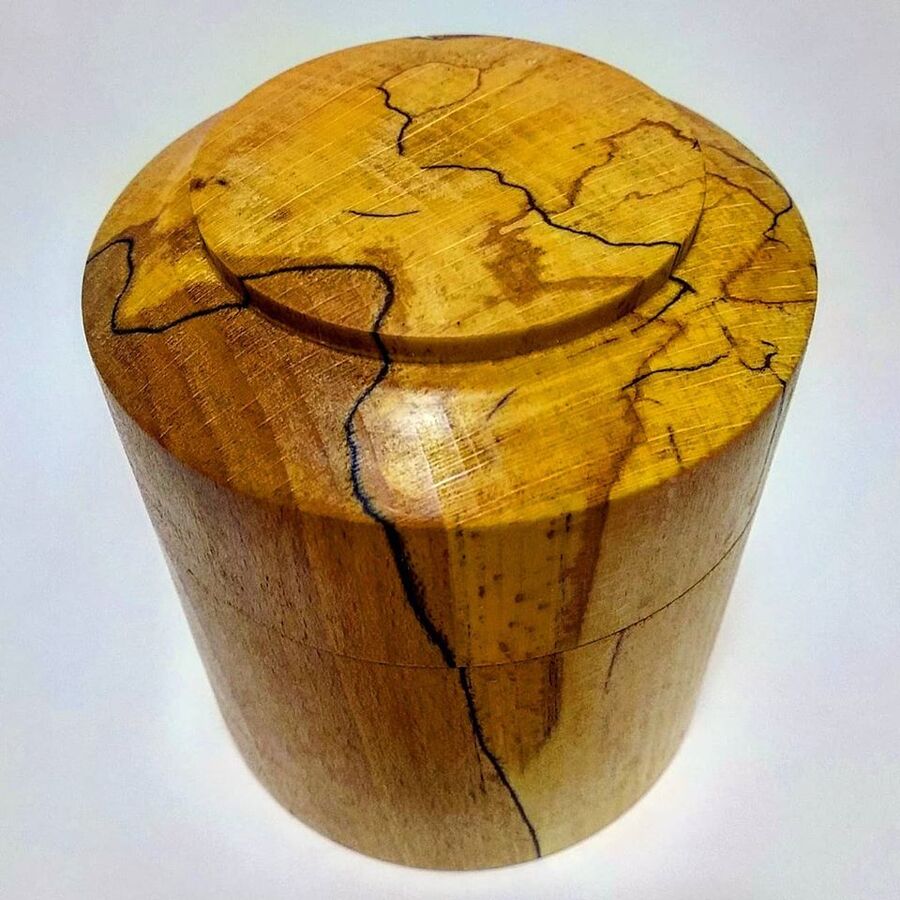
Spalted wood is wood that fungi have started to colour, and sometimes to rot, before it was dried. Wikipedia names three causes: pigmentation, white rot and zone lines, the thin dark lines fungi build to wall off territory. It is not a species and not strictly salvaged, but the result is a board with marbled grey, black and pink patterns. People pick it for turning and decorative work, for the look, with the catch that spalting and decay are the same process and the timing decides whether the wood is sound.
Pros
- Striking, unrepeatable patterns, from fine black zone lines to bleached or coloured areas.
- Zone lines do not damage the wood themselves (Wikipedia).
- Caught at the right moment, the lumber is sound with little or no soft spots (Wood Database).
- Species commonly spalted, per the Wood Database: maple, sycamore, hackberry, beech, birch, hickory, tamarind and mango. Spalted mango is a common ukulele wood (Wikipedia).
Cons
- Variable strength. White rot bleaches by consuming lignin, causing weight and strength loss and "punky", soft areas (Wikipedia). Brown rot gives crumbly, cracked surfaces that cannot be stabilised.
- Hardness varies: spalted maple spans 700-1,450 lbf by species (Wood Database), with weight 30.2-44.0 lb/ft3 (485-705 kg/m3), so there is no single figure.
- Costly for what it is: about $18 per actual board foot in the listings I opened.
- Health: the Wood Database allergy and toxicity page lists maple as an irritant, sensitizer and asthma trigger, with "HP" (hypersensitivity pneumonitis, inflammation of the lung's alveoli from inhaled organic dust) noted for spalted maple.
Variants and subspecies
- Spalted maple, the common commercial form, with the hardness range given above. Sugar maple and aspen are the preferred woods for spalting (Wikipedia); pale hardwoods, including birch and beech, spalt best.
- Spalted beech and birch: Wikipedia lists maple, birch and beech as the pale hardwoods that spalt best.
- Zone-line vs bleached vs coloured: the three effects (Wikipedia) can occur separately or together.
- Spalting is also listed as a recognised figure type; see Figured wood for the others, and Hard maple for the host wood.
Working and finishing
Check each board by pressing an awl into the pale areas, since soft spots mean advanced decay (my suggestion). Wikipedia says the wood needs at least 20% moisture content for spalting to proceed and drying stops it, so properly dried spalted wood is stable in that sense. Expect tear-out where punky patches meet sound grain (my inference); take light cuts with sharp tools.
Staining and finishing colour
The colour is the point, so use clear finishes. The Wood Database says hard maple blotches under stain and needs pre-conditioner, gel stain or toner; spalted maple stock probably behaves similarly, though I found no source on that. Test on offcuts.
Sustainability and handling
I found no certification source for spalted lumber, so ask the seller where it came from. The key hazard is dust: the Wood Database page lists spalted maple under hypersensitivity pneumonitis, so wear a good respirator and use extraction when sanding and turning.
Popular projects
Turned boxes and bowls (the image shows a spalted beech box), ukulele bodies (Wikipedia mentions spalted mango for ukuleles) and decorative panels. Because strength can be reduced by decay, keep it to decorative surfaces and away from load-bearing parts (my inference from the strength loss Wikipedia describes).
Buying notes
Rare Woods USA sells individual boards. Its A-grade S2S 0.81 in boards ran $21.60 and $20.27 each (A grade), which computes to about $17.8-17.9 per actual board foot. Check soft spots before buying and avoid boards with crumbly brown-rot patches.
Typical projects
- turned boxes and bowls
- ukulele bodies
- decorative panels
Sources
Researched 2026-09-30. Prices, conservation status and CITES listings on this page are indicative and were checked on that date. They change: confirm them with your supplier, and with the relevant authority before importing or exporting.