


Overview
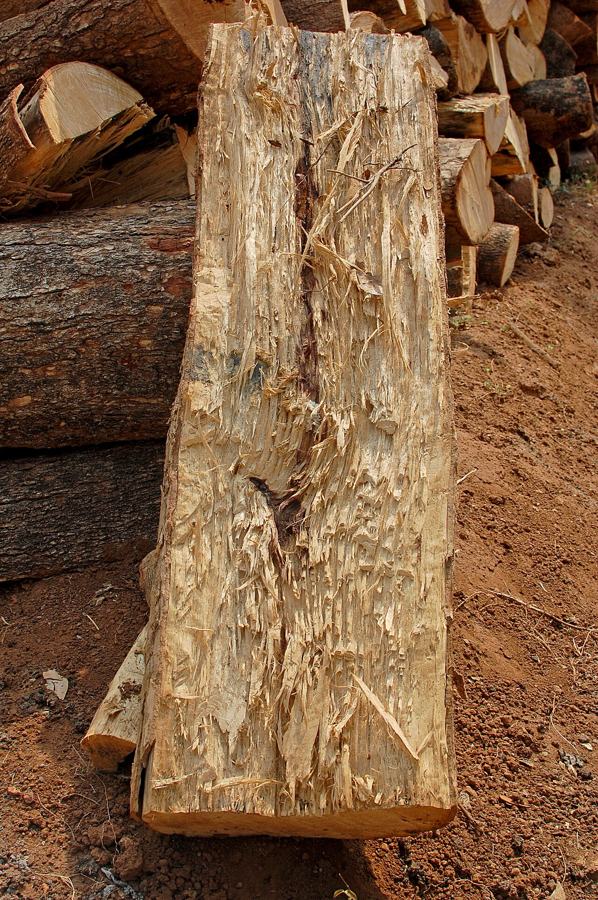
Tamarind is the fruit tree behind the sour pods; its wood is one of the hardest and densest of the orchard timbers, with a dark reddish-brown heartwood that polishes to a high shine. The heartwood is narrow, so many boards are mostly pale sapwood, and that sapwood is often sold as "spalted tamarind". It suits small, hard-wearing items and turning rather than large furniture.
Pros
- Extremely hard: Janka about 2,690 lbf (Wood Database), so it wears and dents less than oak or maple.
- Heartwood is durable to very durable and resistant to insects (Wood Database).
- Turns, glues and finishes well; the heartwood takes a high natural polish.
- Comes from fruit trees, not forest clearance.
Cons
- Considered difficult to work: density and interlocked grain make it tear, and the heartwood blunts cutting edges.
- Heartwood is narrow, usually only in older, larger trees; pale sapwood fills most boards.
- Sapwood is non-durable and prone to insect and fungal attack, so spalted stock needs care.
- High price for an imported hardwood, and small boards.
Variants and subspecies
- Heartwood: dark reddish brown, durable and very hard. The premium grade.
- Sapwood / "spalted tamarind": pale yellow with spalting lines; softer and less durable, and the common product.
- No named subspecies are sold under separate trade names.
Working and finishing
Sharp carbide, shallow passes and a slow feed. Drill pilot holes for any screws. Because the grain interlocks, a card scraper or a high-angle plane beats a standard plane for the final surface. It glues well, though dense oily-feeling stock benefits from a solvent wipe just before the glue goes on.
Staining and finishing colour
The density closes the surface to penetrating stain, so most makers use clear oil, wax or lacquer to show the natural polish. Spalted sapwood takes finishes unevenly: seal first. Colour deepens over time.
Sustainability and handling
Not in the CITES Appendices (checked 2026-09 against the Appendices in force from 5 March 2026). GBIF reports the species as Least Concern on the IUCN Red List (checked 2026-09); Wood Database states it is not on the Red List, so its entry is likely older. The Lacey Act's 2008 amendment extends to timber products (Wikipedia, Lacey Act), and the EU deforestation regulation applies to wood products from 30 December 2026 for large and medium operators. Wood Database says unspecified toxicity reports exist, so wear a dust mask and gloves, and avoid skin contact with the dust.
Popular projects
Turned bowls, carvings, cutting and butcher-block surfaces, boxes, tool handles, and small furniture components where the hardness matters.
Buying notes
Sold as small lumber and blanks, often labelled "spalted" (sapwood). One US retailer listed 4/4 spalted tamarind at $32.50 per board foot in 2026-09; I found no other price, so check supplier listings. For anything structural look for heartwood, not sapwood.
Typical projects
- turned bowls
- carvings
- small boxes
- knife handles
- butcher blocks and small furniture
Sources
Researched 2026-09-30. Prices, conservation status and CITES listings on this page are indicative and were checked on that date. They change: confirm them with your supplier, and with the relevant authority before importing or exporting.