


Overview
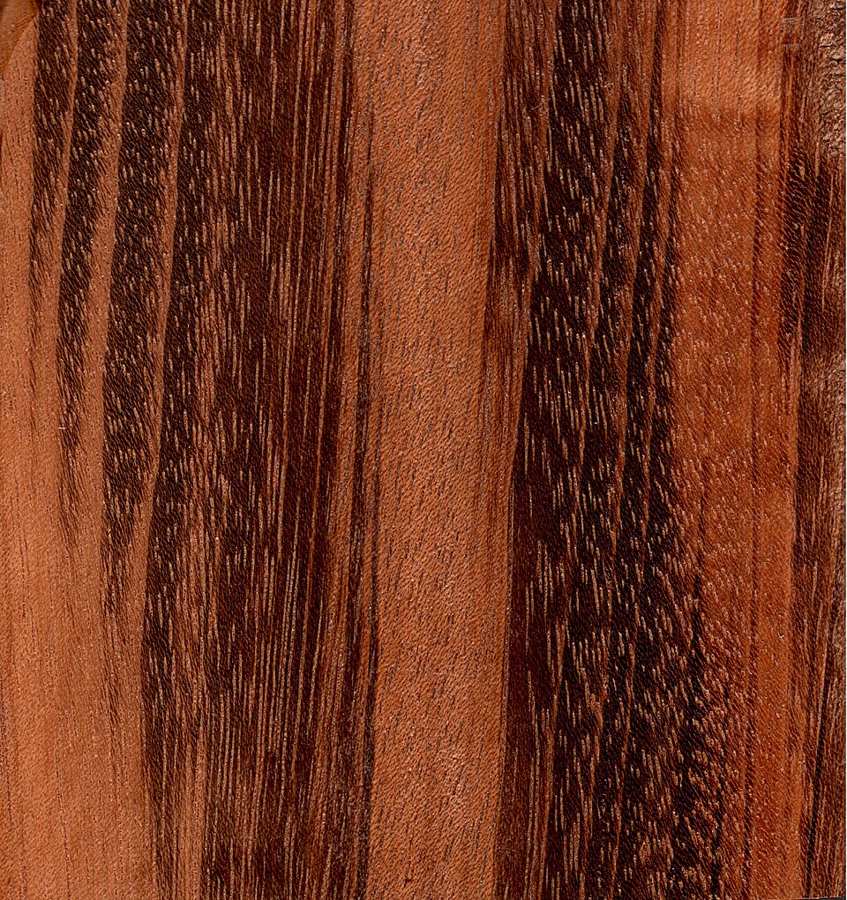
Goncalo alves (Astronium spp.), sold as tigerwood or Brazilian tigerwood in the flooring trade, is a medium reddish brown with irregular dark-brown to black streaks that look like tiger stripes. It is stiff, hard and weathers well. People choose it for striking floors, cabinetry and turned pieces.
Pros
- Bold striped figure that darkens with age.
- Janka 2,170 lbf and about 905 kg/m3, with superb stiffness, strength and hardness.
- Very durable with excellent weathering properties.
- Generally not too hard to work for its density.
- IUCN Least Concern and not CITES-listed.
Cons
- Resists moisture absorption, which makes gluing difficult.
- Irregular, figured grain can tear out; moderate blunting effect on cutters.
- Reported as a sensitizer, with eye and skin irritation.
- Density and mechanical properties vary widely by source.
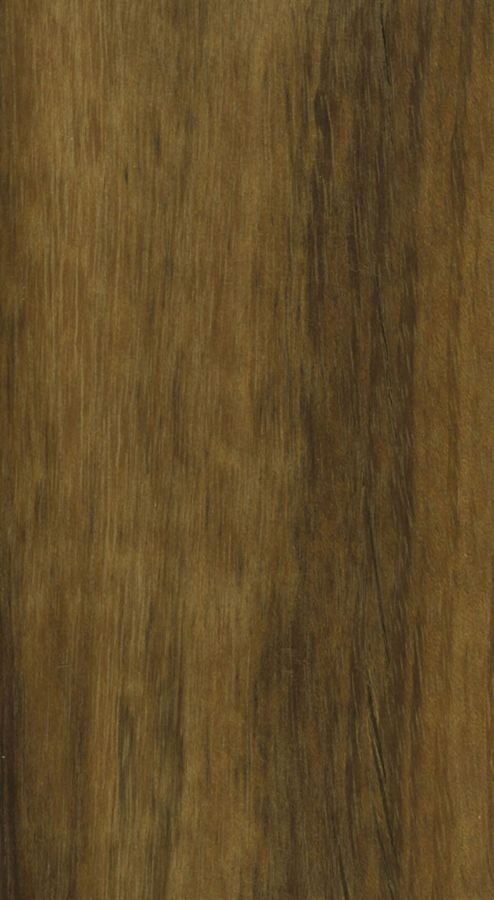
- Some boards are uniform and lack the stripes buyers expect.
Variants and subspecies
- Astronium species: sold as goncalo alves, tigerwood and muiracatiara.
- Jobillo: a name Wood Database says woodturners use for higher grades.
- Striped vs plain: some pieces are uniformly coloured.
- Not to be confused with other woods sold as 'tigerwood'; check the botanical name. For a different striped wood see Zebrawood (zebrano).
Working and finishing
Sharp tools and moderate feed rates; figured boards need care when planing. Glue joints should be prepared by wiping with solvent first. It turns and finishes well and polishes well. Pre-drill for screws.
Staining and finishing colour
Seldom stained. Clear oil or varnish enhances the contrast, and the colour darkens with age. Oily surfaces can slow finish drying; test first.
Sustainability and handling
CITES: not listed (Wood Database; APHIS CITES Timber Manual, checked 2026-09-30). IUCN: Least Concern. FSC availability is not verified here. The US Lacey Act makes it unlawful to trade wood taken or exported in breach of the source country's laws (fws.gov/law/lacey-act), so buy from dealers who can name the country and species. If a piece will be exported to or sold in the EU, Regulation (EU) 2023/1115 (the EUDR) requires due-diligence evidence that wood products are deforestation-free and legally produced; check its current application date with your buyer.
Ethical call: among the safer tropical choices. Health: reported as a sensitizer, with eye and skin irritation. The US National Cancer Institute reports strong, consistent associations between wood-dust exposure and cancers of the nasal cavity and sinuses, so use extraction and a respirator when sanding.
Popular projects
Flooring, cabinetry, show furniture, veneers, pool cues, archery bows, knife handles and turned objects.
Buying notes
Sold as lumber, veneer and craft blanks. Two retailers list 4/4 at $16.99 and $22.00 per board foot (September 2026). Because the name 'tigerwood' is loose, ask for Astronium on the invoice.
Typical projects
- flooring
- furniture
- cabinetry
- pool cues
- archery bows
- turned objects
More pictures

Sources
Researched 2026-09-30. Prices, conservation status and CITES listings on this page are indicative and were checked on that date. They change: confirm them with your supplier, and with the relevant authority before importing or exporting.