

Adirondack Rustic
History
Rustic furniture grew out of the Adirondack Mountains of New York beginning in the later nineteenth century, flourishing for more than 150 years and reaching its high point during the era of the Great Camps, the vast private family retreats built in the woods. There, craftsmen worked by hand, building chairs, tables, beds and cabinets from trees used nearly as they were found — bark-on limbs, roots, burls and saplings — and the same look was produced commercially too, notably by the Old Hickory Chair Company's hickory-pole furniture. A related but distinct strand of the tradition, the plank chair, has its own origin story: Thomas Lee built the first Westport chair at Westport, New York, in 1903 from wide boards, and Harry Bunnell patented the design in 1905. The later, slat-backed Adirondack chair familiar today descends directly from Lee's original.
Elements
Rustic pieces let the material dictate the form: posts and rails stay round, irregular and tapering because that is how the branch or sapling grew, and forks and natural bends are pressed into service as brackets and arms rather than being cut away. Backs and tops carry the style's main ornament: geometric mosaics of split willow and yellow-birch twigs, or panels of white birch bark, since decoration here is the natural material arranged rather than applied. The plank chair, by contrast, is built of wide flat boards: a vertical front leg, long sloping runners that form the back legs, and a raked seat and back, originally one broad board and later several slats.
Designs
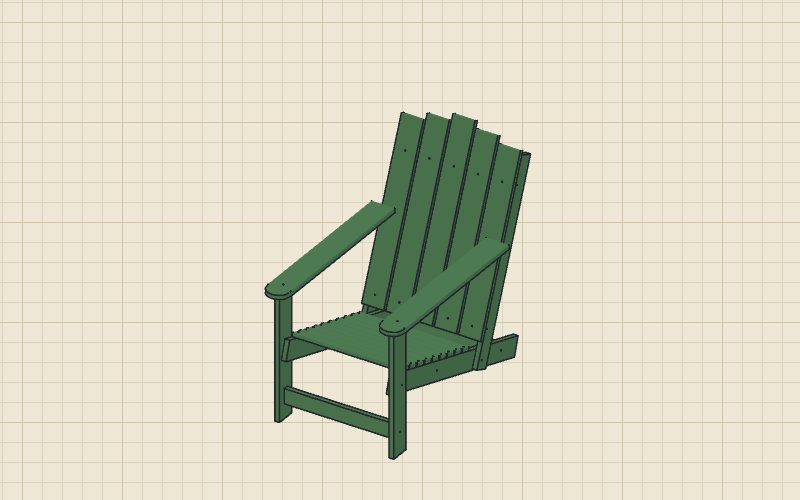
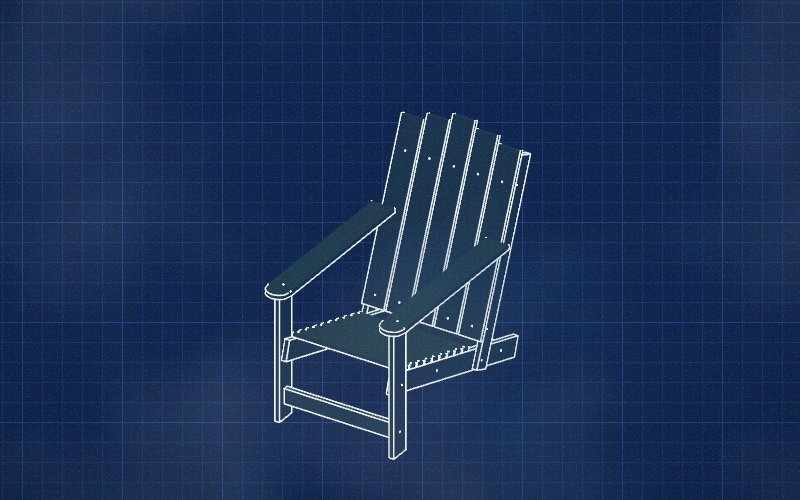
Adirondack Plank Chair
25.5 × 41.6 × 39.8 in (648 × 1057 × 1010 mm)
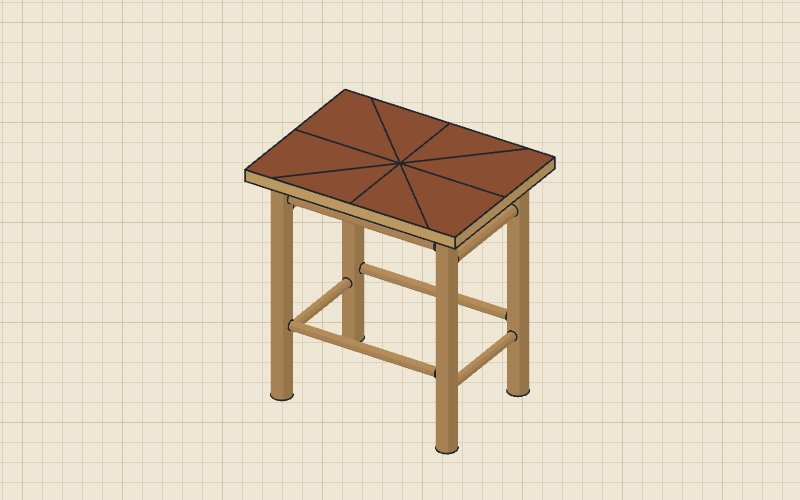
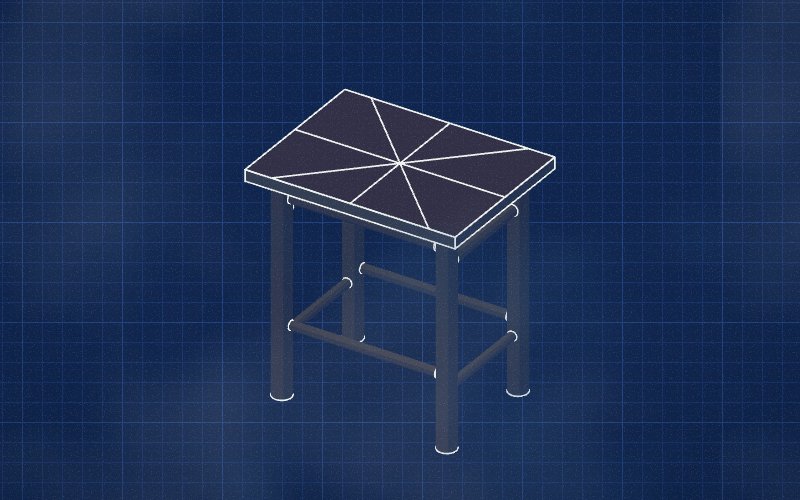
Adirondack Pole Side Table
22.0 × 16.5 × 23.6 in (560 × 420 × 601 mm)
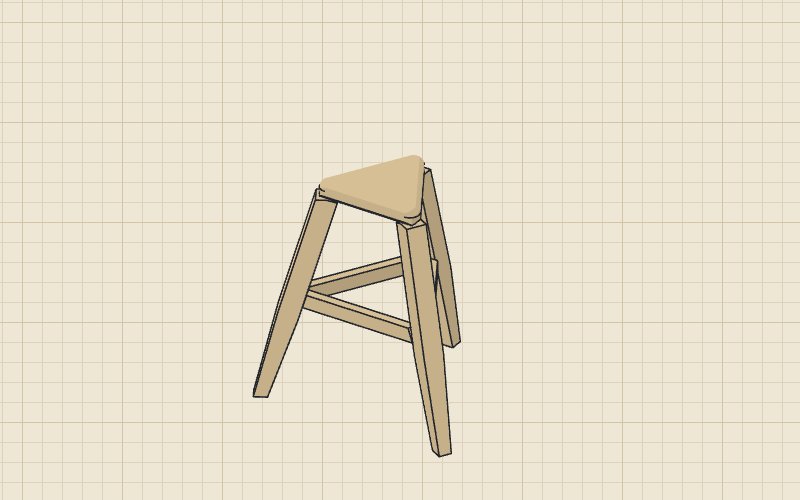
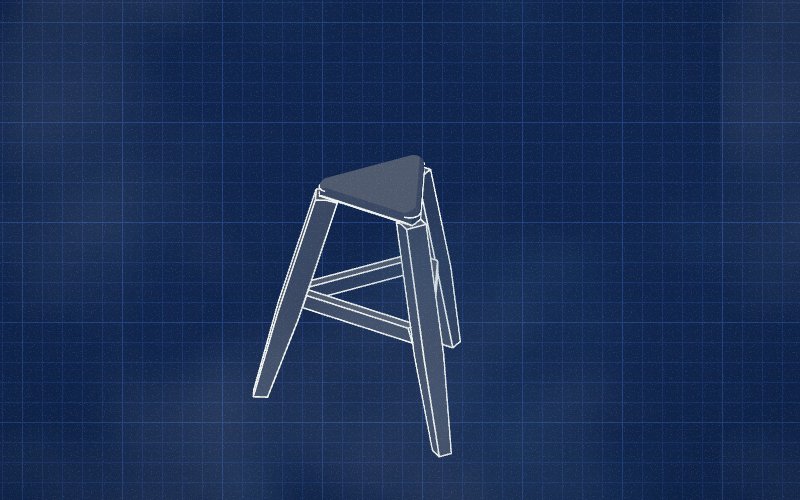
Three-Legged Milking Stool
17.7 × 15.3 × 18.9 in (448 × 388 × 480 mm)
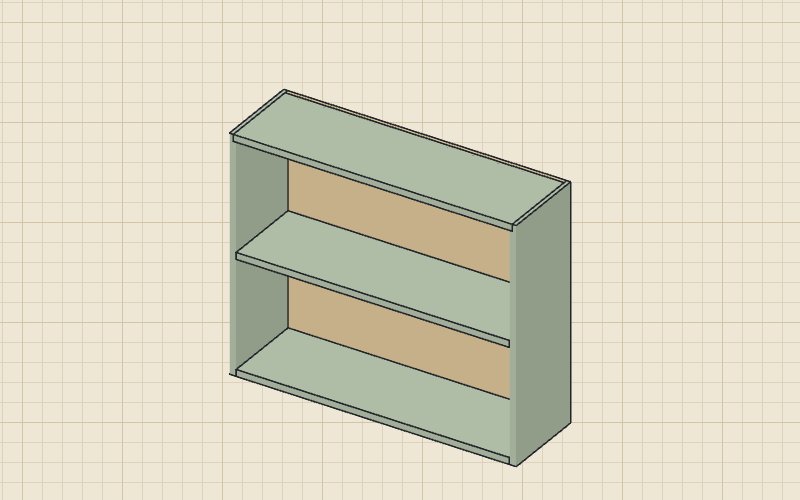

Wall-Mounted Bookshelf
31.5 × 9.4 × 26.0 in (800 × 240 × 660 mm)
Hardware for this style
Hinges, pulls, fasteners and other hardware that guides to this style name.
- Screws and bolts
- Wood screw