

Overview
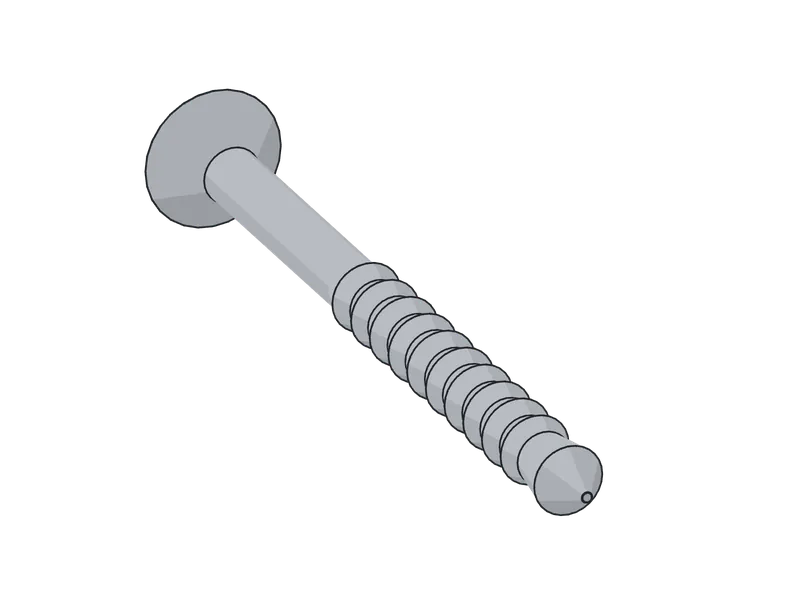
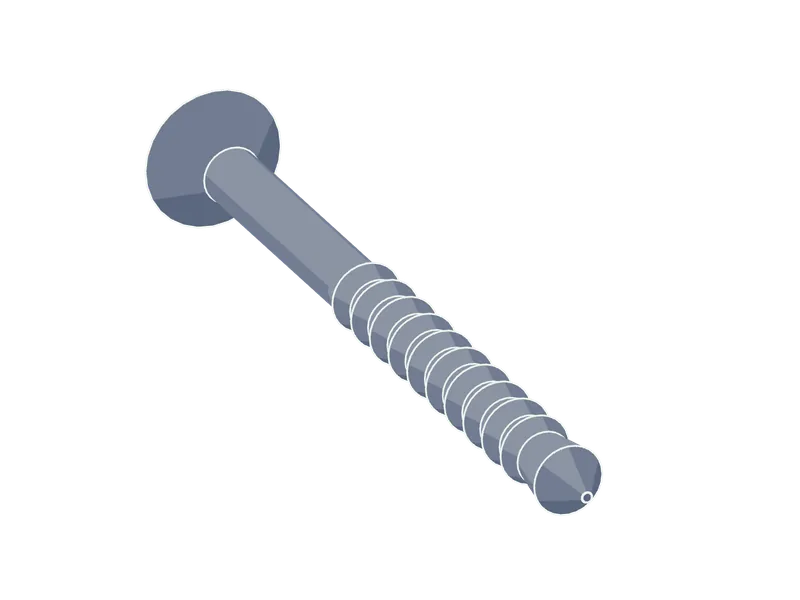
A wood screw is a metal screw with a sharp point and a thread that cuts its own way into the wood. Older cut screws are tapered and need a tapered pilot hole; modern rolled screws are parallel with a thread wider than the shank and are driven into a drilled pilot. The smooth shank under the head is why a screw can pull two boards together: the shank spins free in the top board while the thread bites in the lower one.
Types and sizes
- Gauge and length (No. 6, No. 8, No. 10; length in inches or millimetres) are the size.
- Head: flat (countersunk) heads sit flush; round or pan heads sit proud and take a washer; oval heads are decorative.
- Metals: zinc-plated steel is the cheap general choice; brass for period furniture and for oak; stainless for outdoors; blackened steel for iron-look hinges.
- Plug-covered screws: Greene and Greene furniture counterbores the screw and covers it with an ebony plug.
- Size ladder: 4.2 mm (No. 8) is the all-round furniture screw; use the next size down in thin stock.
Where it is used
Hinges, pulls, hardware plates and shelf brackets; plank chairs and benches, where boards are screwed together; table-top attachments; and hidden fixings like glue blocks and cleats. Adirondack plank chairs and contemporary plywood furniture rely on screws; Greene and Greene work uses them as a visible feature with plugs. The example library models a 4.5 x 50 mm wood screw with a clearance hole bored by the join.
Choosing and sizing
Choose a length that puts two-thirds of the screw in the receiving board, and a diameter no more than one-fifth of that board's thickness. In hardwood, expect a screw to need a pilot about 70 percent of the thread's root diameter; in softwood about 50 percent. Pilot and clearance holes are not optional in hardwood: an undrilled No. 8 in maple will snap its head.
Installation
- In the top board, drill a clearance hole equal to the shank, 4.2 mm (No. 8).
- In the lower board, drill a pilot hole to the root diameter: about 3 mm (1/8 in) in hardwood, 2.5 mm (3/32 in) in softwood.
- Countersink or counterbore (10 mm, 3/8 in, for a plug) so the head sits flush.
- Drive with a screwdriver, or a drill with the clutch set, until the head seats; stop there.
- In brittle hardwoods, drive a steel screw first and replace it with a brass one.
Wood movement and species
A screw crossing the grain of a wide board (a tabletop screwed to rigid rails) restrains movement and cracks the top; use slotted holes or Figure-8 tabletop fastener instead. Screws hold poorly in end grain: use a plug or a cross dowel. Steel screws corrode in damp tannin-rich oak (White oak, Red oak), staining the wood blue-black; the galvanic corrosion of dissimilar metals (brass fittings with steel screws) is a second hazard. Use brass or stainless screws. In MDF (medium-density fibreboard) and Particleboard, edge holding is poor; see Confirmat screw.
Common mistakes
- No pilot hole: the screw splits the board.
- Too large a pilot: the screw spins and has no grip.
- Brass screws sheared by driving them first.
- Head left proud: use a countersink bit.
Related
- Pocket-hole screw, Confirmat screw: screws made for particular joints.
- Butt hinge, Corner brace: the usual fixings for them.
- Machine screw and T-nut: when you need to take the joint apart repeatedly.
Styles it suits
Suitable for
Fixes into: hardwood, softwood, engineered.
Poor choice in
The reasons are in the wood movement and species section above.
In our designs
Our example designs model this as WoodScrew, placed with a hardware_mount join.
Sources
Updated 2026-10-03. Sizes and ratings are typical trade figures drawn from the sources above. A load rating is the maker's rating for one product, not a property of the type: check the maker's own sheet, and test a fit on scrap before cutting good wood.