

Pasadena Bungalow
History
This custom furniture was produced roughly between 1905 and 1911 in and around Pasadena, Southern California, designed by a pair of architect brothers for the houses they built — most famously a 1908 Pasadena residence — and made by the workshop of another pair of brothers working as cabinetmakers. It shares the broader Arts and Crafts movement's belief in openly expressed construction, the same conviction that shaped English Arts and Crafts work, but carries that idea further, refining visible joinery until it reads as jewellery rather than plain structure.
Every edge in this furniture is softened and every joint made to stand slightly proud, then rounded over by hand, with ebony pegs, splines, and inlays of silver and copper turning structural details into deliberate ornament.
Elements
The forms stay rectilinear but never feel hard-edged: members are layered and stepped so each part reads as its own distinct element, and every arris is heavily eased into a soft profile. A recurring lower-edge detail — nicknamed a 'lane change' for the way it steps up in a quick S-curve partway along an apron, rail, or stretcher before continuing parallel — appears singly or in pairs throughout the work. Square legs with eased corners sometimes carry a subtle indent near the foot, and brackets reinforce the underside of aprons and arms.
Joinery is the real ornament here: finger (box) joints on drawers and case corners are cut proud and gently pillowed rather than flush; breadboard ends stand proud on both face and edge, with an ebony spline let into the seam; square ebony plugs, domed and polished, cap screws and pegs, many of them purely decorative rather than structural. Tall chair backs carry shaped crest rails with the same cloud-lift profile, inlaid splats, and arms that step forward to overlap the front legs. Mahogany and teak form the primary wood, set off by ebony accents and inlays of silver, copper, and mother-of-pearl, with mortise-and-tenon joinery underlying nearly everything — often hidden behind a decorative faux spline.
Leaders in this style: historical designers and makers whose work inspired it (inspired by, not reproduced):
Designs
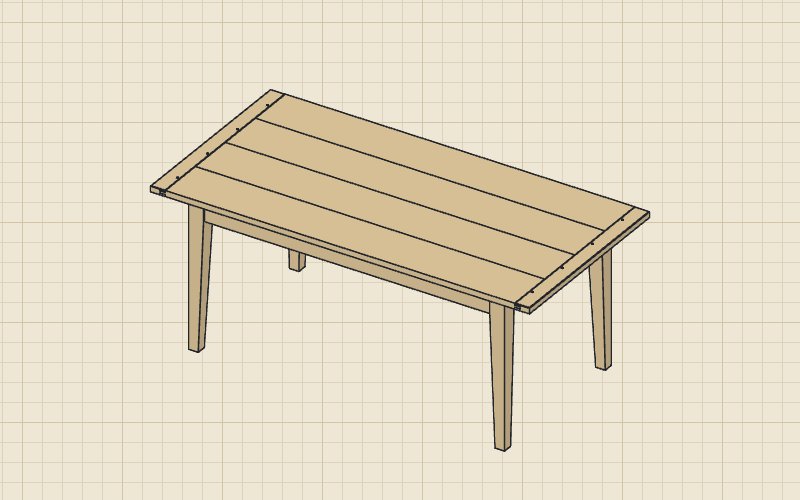
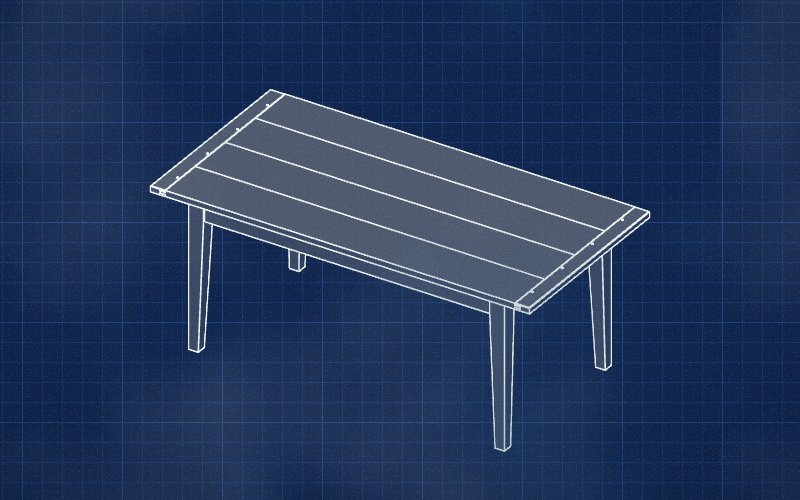
Dining Table for Six
70.9 × 35.4 × 29.1 in (1800 × 900 × 740 mm)
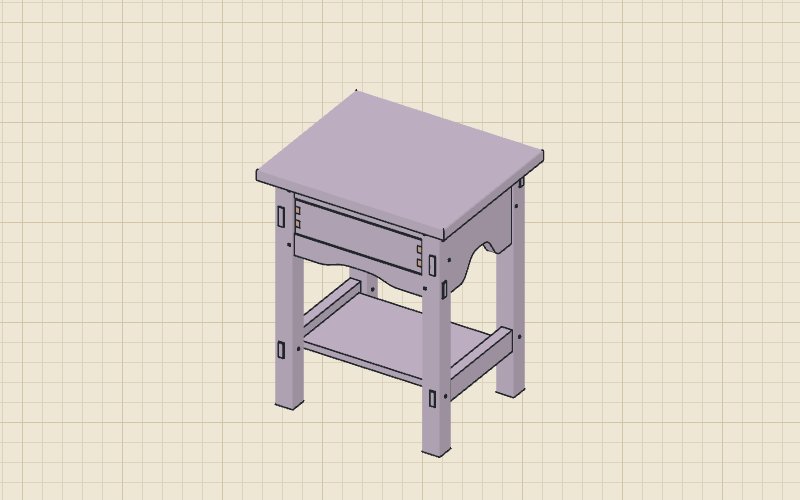
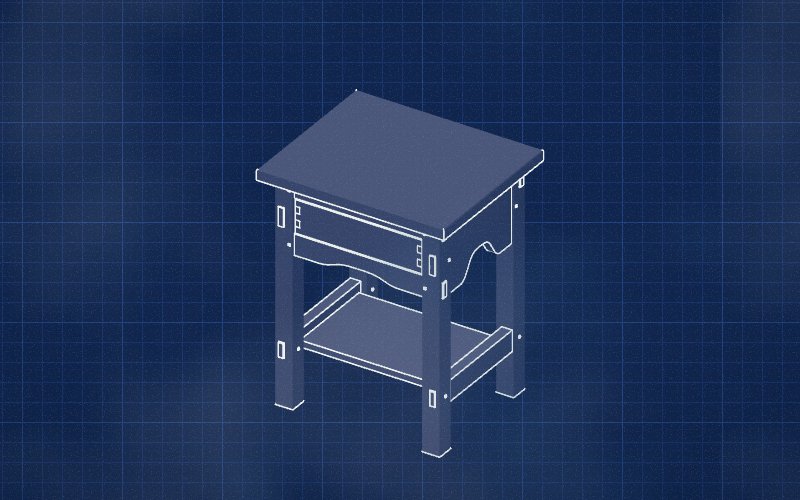
Pasadena Bedside Chest
19.7 × 16.5 × 24.4 in (500 × 420 × 620 mm)
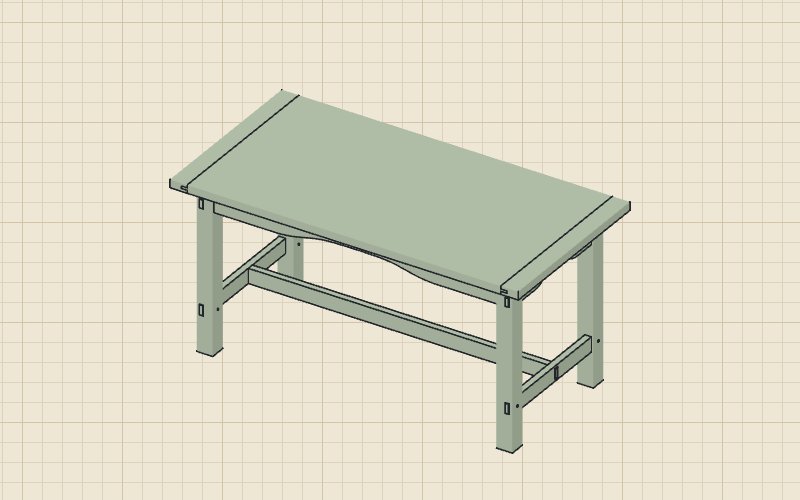
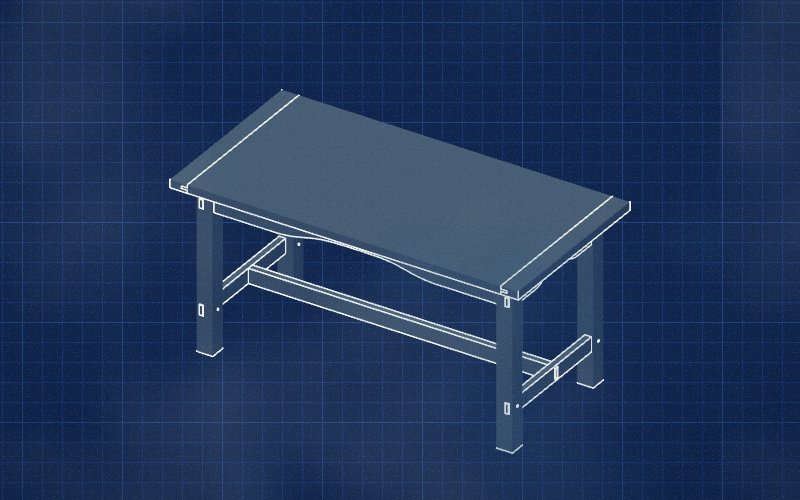
Pasadena Library Table
59.1 × 29.9 × 29.1 in (1500 × 760 × 740 mm)
Hardware for this style
Hinges, pulls, fasteners and other hardware that guides to this style name.
- Screws and bolts
- Wood screw