

Overview
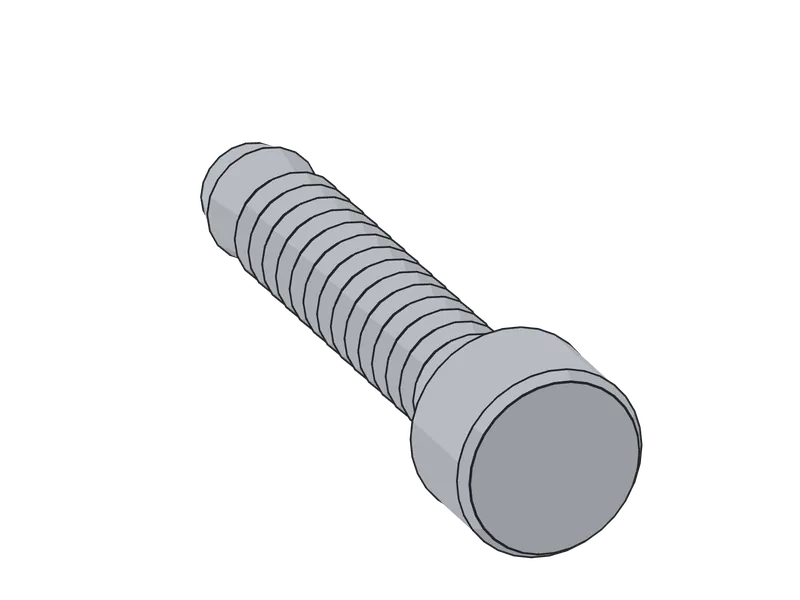
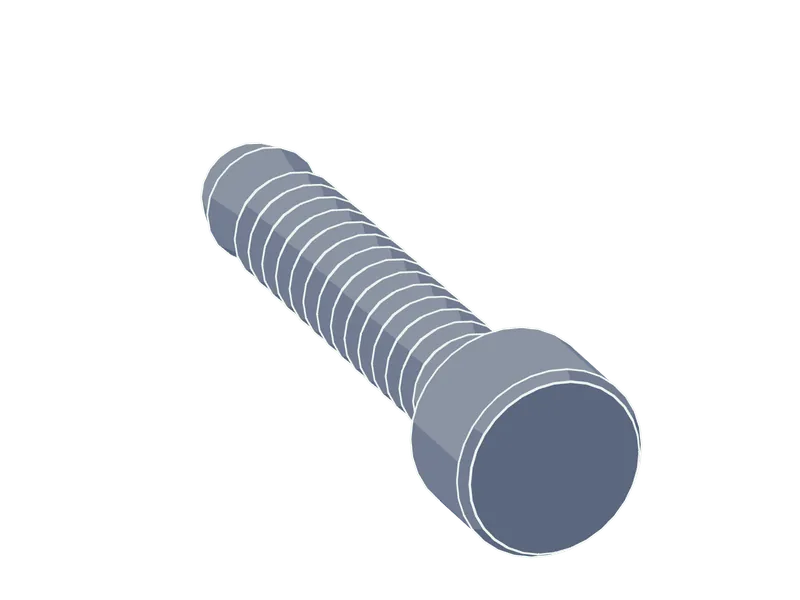
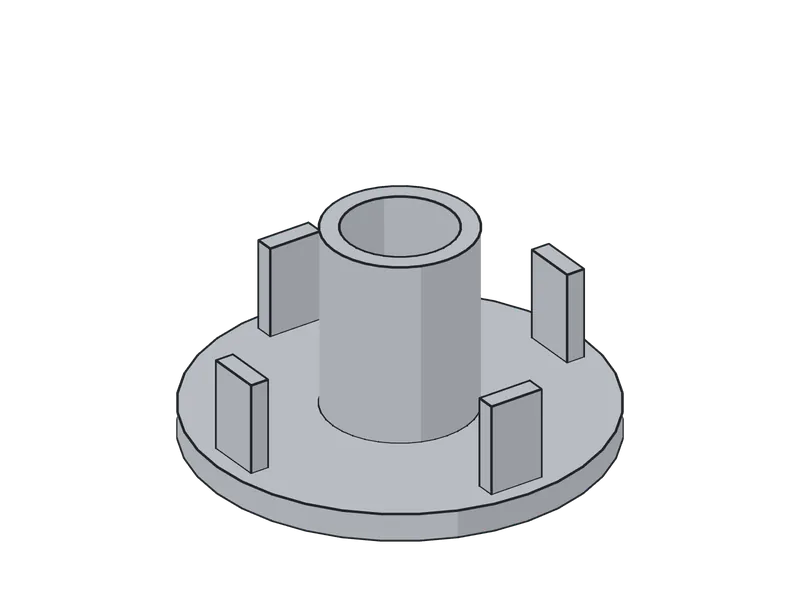
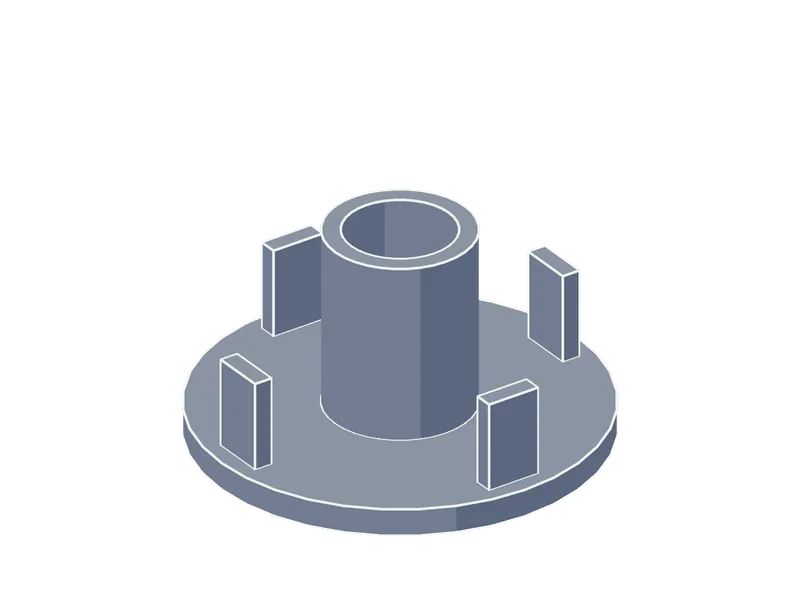
A machine screw has a uniform thread and is made to mate with a nut, not to cut its own way into wood. A T-nut is a nut with a broad flange and a short threaded barrel, usually with small prongs. It is driven into a drilled hole from the back side of the board and the flange holds it. Together they give a threaded connection in a board that is otherwise too soft to take a thread: tighten, undo and tighten again as often as you like.
Types and sizes
- Metric and imperial: M6 is nearly, but not exactly, 1/4-20 (6.0 mm against 6.35 mm), and M8 against 5/16-18 likewise; the sizes are close but not interchangeable, so choose one system for a project.
- Prong T-nut: the flange has prongs that bite into the face as you hammer it home. A pronged nut cannot hold a screw pulled hard from the face; for loads pulling the nut out, use the type with a bolt-on flange or a flanged insert with screw holes.
- Barrel: 6 to 10 mm (1/4 to 3/8 in); the barrel length sets the board thickness it fits.
- Screw: a socket cap with a hex key or Torx drive gives the best pull. Brass or black-oxide screws are the tidy choice where the head shows.
Where it is used
Table leg plates and bed rails with removable legs; shelf-and-case knock-down joints where a hex key is acceptable; pulls and handles that must be replaced; the adjustable jigs and shop-built fixtures that use T-track. Knock-down furniture of Danish and mid-century American design often relied on bolts of this kind to ship flat.
Choosing and sizing
Pick the screw diameter at about one-fifth to one-quarter of the board's thickness: M6 in 19 mm (3/4 in) stock, M8 in 25 mm (1 in) or thicker. The T-nut barrel must be no longer than the board is thick, or the screw bottoms out in the wrong place. Space T-nuts at least 25 mm (1 in) from an edge or end, and 40 mm (1-1/2 in) apart in a row.
Installation
- Drill the clearance hole through the board at the diameter of the T-nut barrel (typically 8 mm, 5/16 in, for M6).
- Counterbore the back for the flange if you want it flush.
- Place the T-nut from the back and drive it home with a hammer or by pulling it in with a screw and washer.
- Bring the mating part up and thread the screw through it; tighten with a hand key, not an impact driver.
- Glue the flange down with epoxy where the connection will be taken apart often.
Wood movement and species
A T-nut grips the wood by its prongs, so the grip depends on the board holding its shape. Cupping lifts the flange; seasonal swelling can loosen or crush the prongs. Use quarter-sawn stock where you can. Hard species such as Hard maple and White oak resist pull-out best; the prongs may split Eastern white pine and Yellow poplar at a board edge. In MDF (medium-density fibreboard) and Particleboard use a flanged insert with screw holes.
Common mistakes
- Hammering a T-nut into a hole that is too large: it spins.
- T-nut on the load side, so the load pulls the flange out of the wood.
- Mixing metric and imperial threads: a stripped thread results.
- Barrel too long, so the screw jams against the end of the barrel.
Related
- Threaded insert: a threaded fitting that goes into the edge or end of a board.
- Cross dowel and bolt: a bolt that passes through a board and engages a barrel nut.
- Wood screw: the permanent, non-removable alternative.
- Bar pull: bar pulls are often held by machine screws.
Styles it suits
Suitable for
Fixes into: hardwood, softwood, sheet, engineered.
More pictures
Sources
Updated 2026-10-03. Sizes and ratings are typical trade figures drawn from the sources above. A load rating is the maker's rating for one product, not a property of the type: check the maker's own sheet, and test a fit on scrap before cutting good wood.