

Mid-century Modern
History
Mid-century modern furniture emerged in the United States roughly between 1940 and 1970, as postwar manufacturers and designers adapted wartime materials and production methods, moulded plywood above all, into furniture for the home. A handful of manufacturers worked with a distinct roster of designers: a husband-and-wife design team developed moulded plywood forms first with one producer and then another; a design director at a major manufacturer set the era's storage and case-goods idiom from the later 1940s; another designer brought Scandinavian-influenced wood-and-webbing chairs to a furniture company starting in 1941; and a designer at another firm combined modern lines with traditional craft and fine veneers.
Elements
Two branches run through the style. One is moulded plywood, where veneers and glue were pressed in moulds into three-dimensional shells, separate seat, back and spine components typically joined not wood to wood but through rubber shock mounts. The other is a more traditional line of fine solid and veneered cabinetry: modular case pieces in walnut, rosewood or teak veneer with thin edges, sliding doors and porcelain or recessed pulls, built with dados, rabbets and dowels over solid-wood edging. Across both branches, forms are low and horizontal, lifted off the floor on thin legs so the furniture reads as floating; legs are typically round or square, tapered toward the foot, often splayed a few degrees and finished with a brass ferrule where they meet the floor.
Ornament is almost entirely the figure of the veneer itself: book-matched walnut, rosewood, or bleached mahogany finished under clear lacquer or oil. Solid-wood frame chairs use mortise and tenon or dowel joinery with webbing stretched across the frame, while slat benches combine lap-jointed cross members with finger-jointed legs. Across the style, the wood is treated plainly and the construction kept visually quiet, letting proportion and material carry the design.
Leaders in this style: historical designers and makers whose work inspired it (inspired by, not reproduced):
Designs
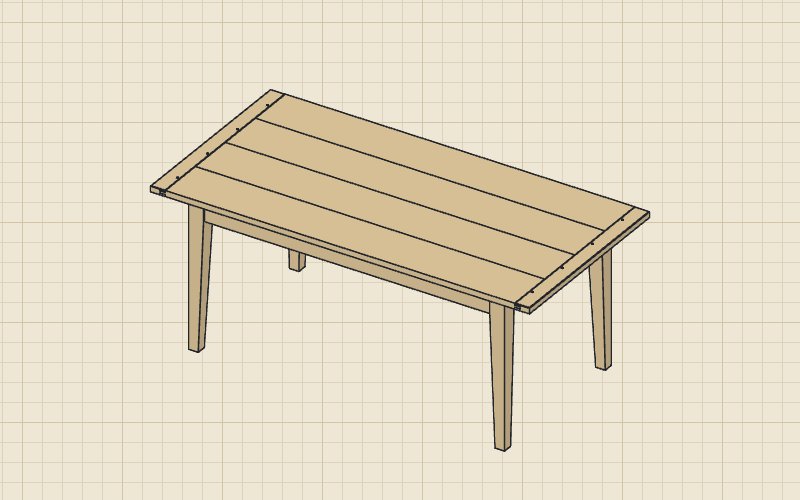
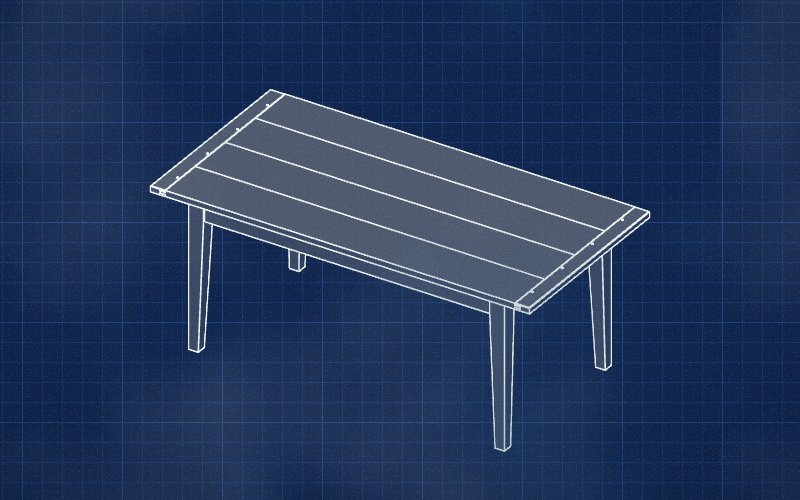
Dining Table for Six
70.9 × 35.4 × 29.1 in (1800 × 900 × 740 mm)
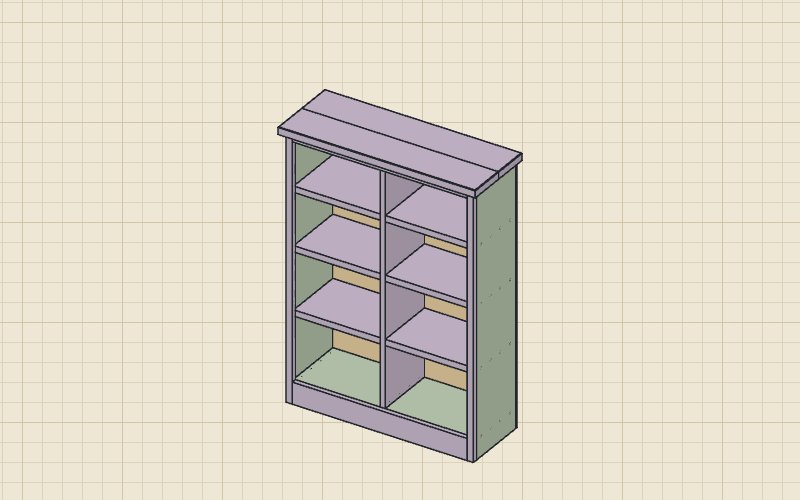

Knock-Down Bookcase
31.5 × 11.8 × 43.3 in (800 × 300 × 1100 mm)
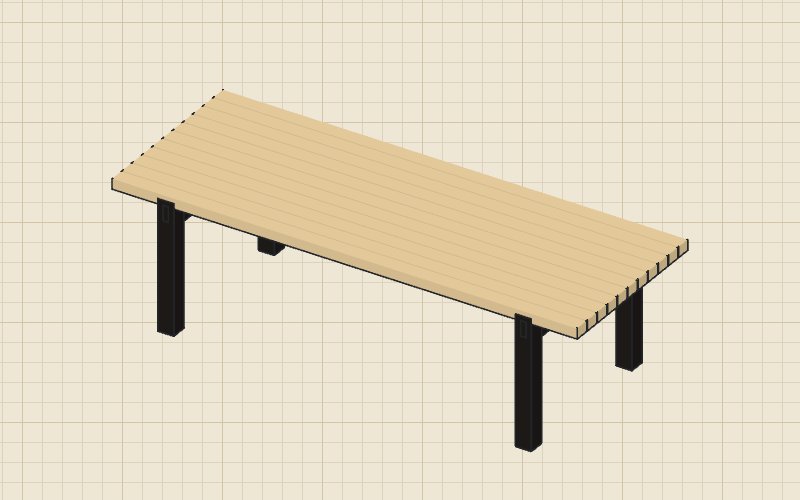
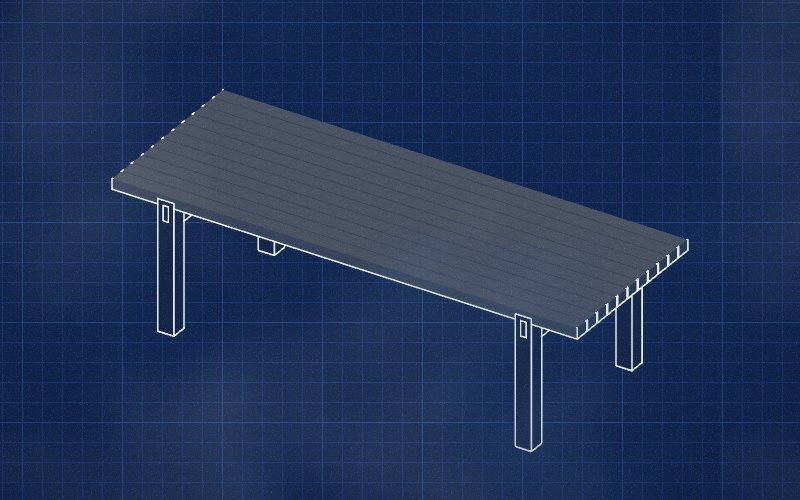
Mid-Century Slat Platform Bench
48.0 × 18.0 × 14.0 in (1219 × 458 × 356 mm)
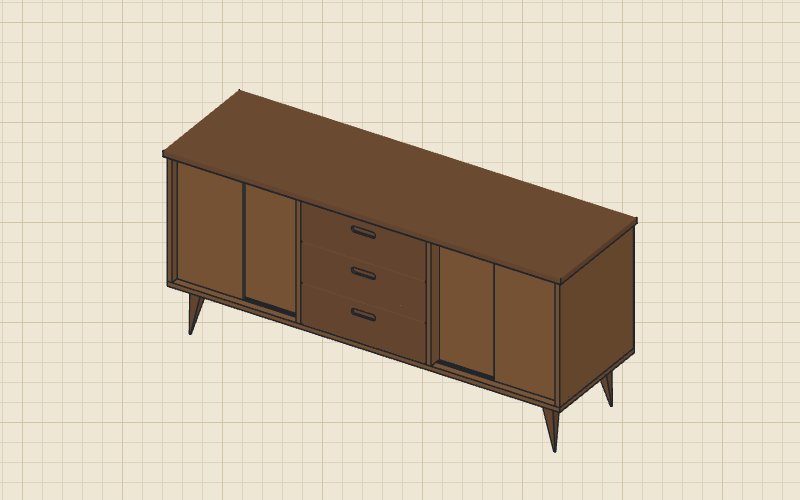
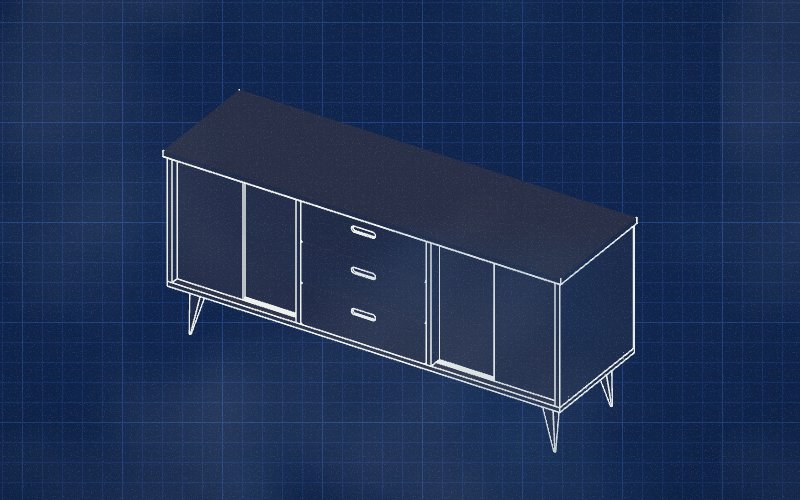
Mid-Century Walnut Credenza
59.8 × 18.1 × 27.6 in (1520 × 460 × 700 mm)
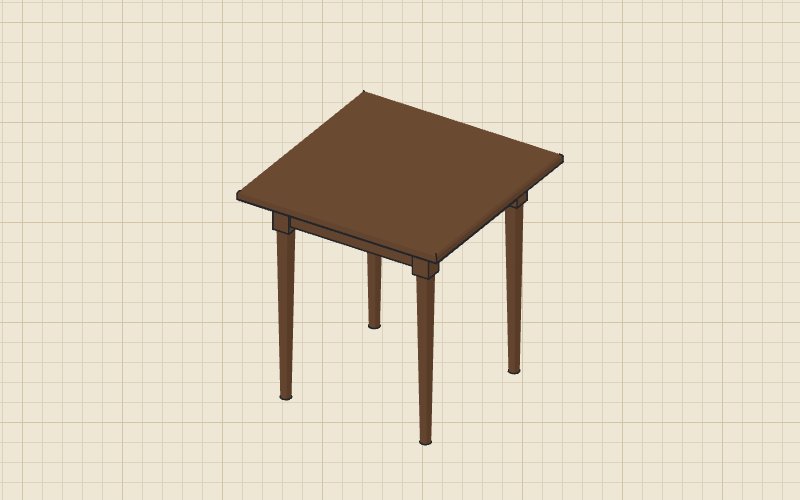
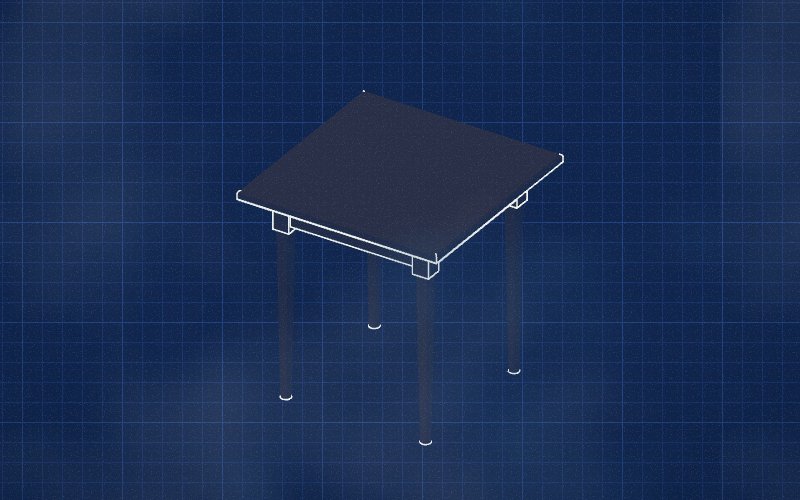
Walnut Side Table
19.7 × 19.7 × 20.5 in (500 × 500 × 520 mm)
Hardware for this style
Hinges, pulls, fasteners and other hardware that guides to this style name.
- Pulls and escutcheons
- Cup pull (bin pull)
- Screws and bolts
- Confirmat screw Machine screw and T-nut
- Knock-down and bolts
- Cross dowel and bolt Hanger bolt Threaded insert