

Overview
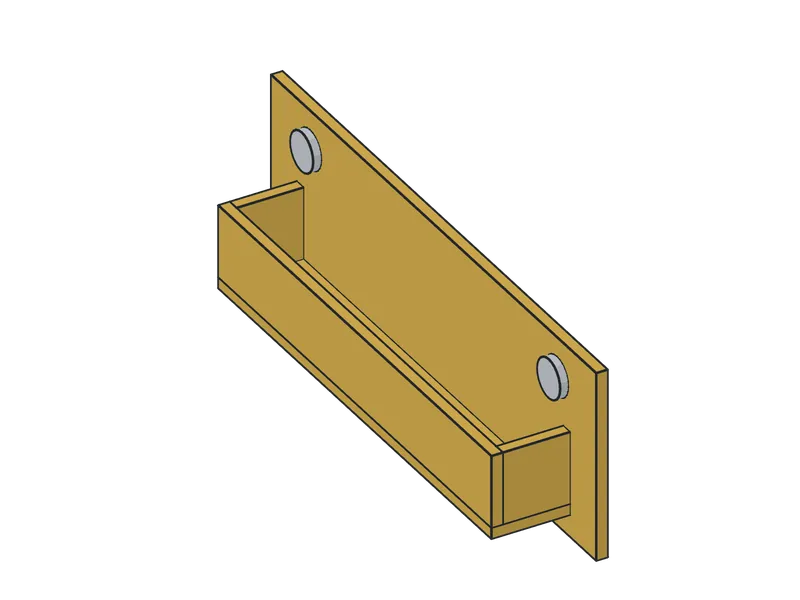
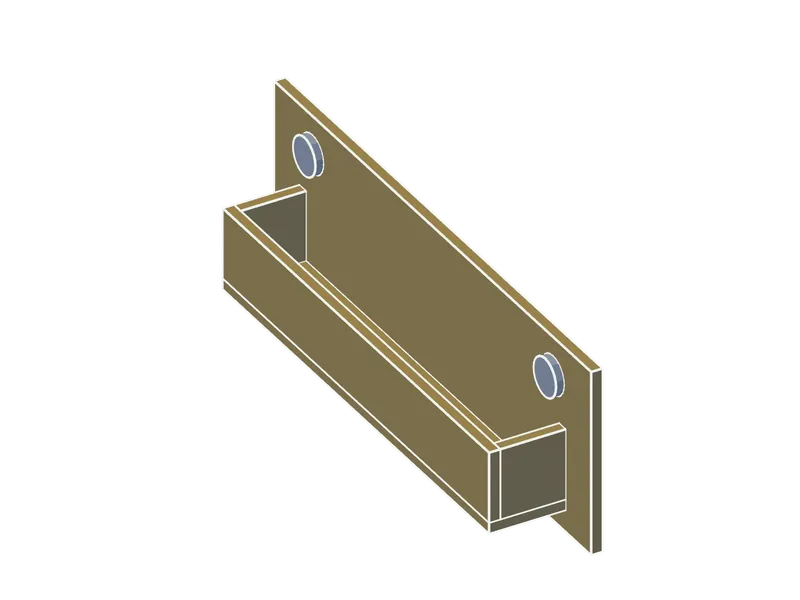
A cup pull (also called a bin pull or shell pull) is a one-piece grip: a curved or flat cup with a narrow lip at its top edge, usually riveted or cast to a rectangular backplate. You curl your fingers under the lip and pull. Reference sources group cup, shell and bin styles as the plate-shaped alternative to a U-shaped handle or a knob. It is the traditional grip for a deep drawer, an apothecary or file drawer, a tool chest and a wide kitchen drawer.
Types and sizes
- Backplate with cup: the common form, held by two screws through the plate.
- Flush or recessed cup: set into a mortise so the lip is almost level with the drawer front (modern designs).
- Typical sizes: 75 to 100 mm (3 to 4 in) wide; the screw centres are quoted as "centres" and run 64 to 76 mm (2-1/2 to 3 in).
- Metals: brass and bronze for period furniture, hammered or oil-rubbed finishes for the Arts and Crafts look, plain steel or black oxide for a utility look.
Where it is used
Craftsman and Mission furniture, and English Arts and Crafts furniture, used hammered metal pulls and handles as part of the design. Mid-century American casework used recessed and finger-scoop pulls, which a flush cup pull echoes. A cup pull is also the default choice when a drawer front is deep and a small knob would be hard to grip.
Choosing and sizing
Match the pull width to the drawer: about one-quarter to one-third of the drawer front width, with a 75 mm (3 in) pull on drawers up to about 600 mm (24 in) wide and a 100 mm (4 in) pull above that. Choose a lip that your finger can slip under, about 10 to 15 mm (3/8 to 5/8 in) deep. A heavy drawer wants two pulls or a bar pull.
Installation
- Mark the vertical centre of the drawer front and the centre between the two screws.
- Drill from the face through the front using the supplied screws as a guide; pull and screw lengths should leave 3 mm (1/8 in) of wood showing at the inside face of a 19 mm (3/4 in) front.
- If you want a flush fit, rout a plate recess to the plate thickness (often 1.5 to 2 mm, 1/16 in) first.
- Drive the screws by hand; brass screws shear in hardwood unless the pilot is the full size and a steel screw of the same thread has cut the path first.
Wood movement and species
A drawer front moves across its width with the seasons, so a plate fixed with two screws set along the grain direction will not crack the front. Do not use more than two fixings in a wide solid front. Pulls are rarely affected by species, but steel or plated screws can stain tannin-rich oak (see Wood screw) and soft pine can crush under a small plate, so use the screws that come with the pull, plus washers where the front is thin.
Common mistakes
- Pulls set too close to the top: the drawer tips as it opens; centre the pull in the upper third of a tall front.
- Screws too long: the point shows on the inside face of the front.
- Plate not square: use a block to hold the pull while the pilots are marked.
Related
- Bar pull: a single bar on two posts, for wider drawers.
- Knob: for lighter drawers and doors.
- Escutcheon (keyhole plate): when the drawer also locks.
- Wood screw: the fixing that holds the plate.
Styles it suits
Suitable for
Fixes into: hardwood, softwood, sheet.
Sources
Updated 2026-10-03. Sizes and ratings are typical trade figures drawn from the sources above. A load rating is the maker's rating for one product, not a property of the type: check the maker's own sheet, and test a fit on scrap before cutting good wood.