

Overview
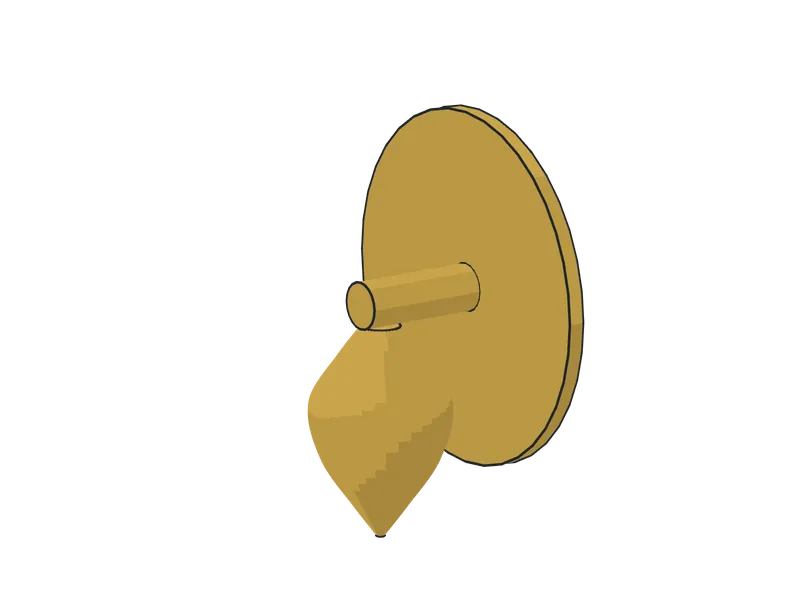
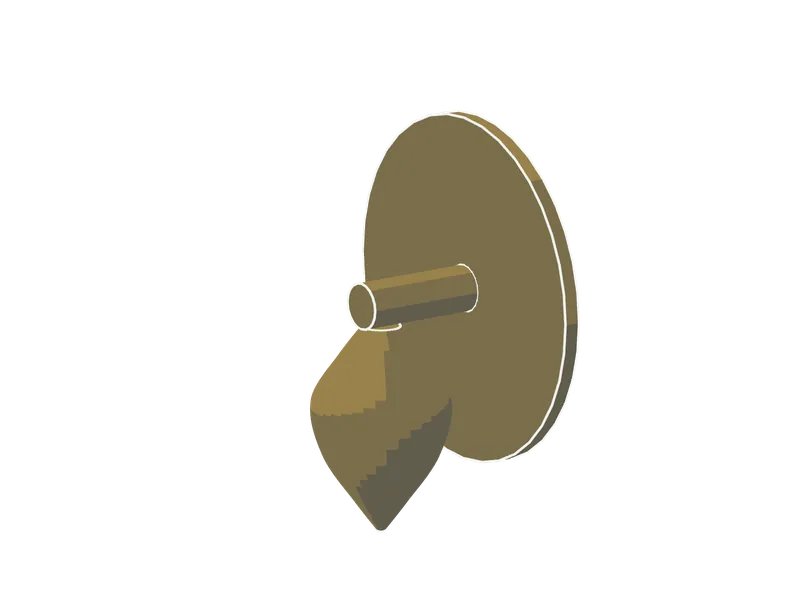
A drop pull is a small pendant, shaped like a tear or acorn, hanging from a short bail or post on its own small plate. The reference taxonomy lists it among the swing or drop pulls, a form of bail handle. It is the typical hardware of William and Mary chests and lowboys, where pairs of brass teardrops sit on a decorated drawer front, and it remained in use on early Queen Anne furniture.
Types and sizes
- Teardrop on a round backplate: the post passes through the plate, the front and a nut on the inside.
- Teardrop on a ring or loop: a bail the drop hangs from; the neighbouring Bail pull (batwing and forged) is the larger version.
- Sizes: a drop 15 to 20 mm (5/8 to 3/4 in) across and about 24 mm (15/16 in) off the face; plate 40 to 50 mm (1-1/2 to 2 in).
- Materials: cast or turned brass, polished or lacquered; antique-finished brass for restoration work.
Where it is used
William and Mary chests of drawers and lowboys in the example library carry teardrop pulls. In the style guide, brass tear-drop pulls with small backplates are listed among the period hardware, with lacquer and japanning for the decoration. They are small pulls for shallow drawers.
Choosing and sizing
Use two pulls on a drawer wider than about 450 mm (18 in), placed one-quarter in from each end; one centred pull for a small drawer. Choose a drop sized to the drawer front: a 15 mm (5/8 in) drop looks right on a drawer 100 mm (4 in) deep, an 18 to 20 mm (3/4 in) drop on 150 to 200 mm (6 to 8 in).
Installation
- Mark the centres and drill a clearance hole for the post, usually 6 mm (1/4 in), with a brad-point bit and a backing board.
- Fit the plate and the drop and nut on the inside; tighten until the drop swings freely and does not rub the plate.
- Mount the plate square to the drawer front; a small plate shows any slope.
- If the front is a veneer, drill from the face with the sharpest bit and tape the exit to avoid chipping.
Wood movement and species
Pulls this small do not fight wood movement, but their small plates sit flat against the front, and a front that cups will lift them. Soft brass nuts strip easily. Acidic woods such as oak can discolour brass with moisture; seal the inside of the hole with Dewaxed shellac before fitting.
Common mistakes
- Post too long, so the nut bottoms out against the inside of the drawer before the plate seats.
- Drop that binds on the plate: the hole is not square to the front.
- Setting the plate on a bumpy veneer surface.
Related
- Bail pull (batwing and forged): the larger relative.
- Escutcheon (keyhole plate): pair with a key plate if the drawer locks.
- Knob: the plainer alternative.
Styles it suits
Suitable for
Fixes into: hardwood.
In our designs
Our example designs model this as Pull_TearDrop, drawn with the turned shape, placed with a hardware_mount join.
Sources
Updated 2026-10-03. Sizes and ratings are typical trade figures drawn from the sources above. A load rating is the maker's rating for one product, not a property of the type: check the maker's own sheet, and test a fit on scrap before cutting good wood.