

Queen Anne
History
Queen Anne is the style of the S-curve, taking shape in England from around 1700 through the 1730s (spanning Anne's reign of 1702–14, though most of the chairs now called by her name were made under George I) before crossing to America, where it held through roughly 1730 to the 1760s in cabinetmaking centers including Boston, Newport, New York and Philadelphia. It followed directly from the straighter, heavier William and Mary style, softening every straight structural member into a curve.
The style's most distinctive innovation, the cabriole leg, together with its vase-shaped splat and yoke-shaped crest rail, are widely thought to draw on the Chinese yoke-back chair, reflecting the period's appetite for imported Asian forms. Across both England and its American colonies, the style produced a wave of new furniture types built around its curved forms: tea tables, dressing tables and drop-leaf tables became common alongside the chairs and case pieces that defined the look.
Elements
Queen Anne furniture is compact, curvilinear and restrained, built around the idea that the outline itself — rather than applied carving — should carry the design. The cabriole leg is its signature: a convex knee curving over a concave ankle, laid out on two faces of a square blank and shaped down to a form ending in a pad, slipper, trifid or (late in the period) ball-and-claw foot, often softened where it meets the rail by small glued knee blocks. Chair backs pair this leg with a solid vase-shaped splat standing in a shoe on the rear seat rail, framed by a yoke-shaped crest rail with rounded ends and stiles subtly spooned to fit the sitter's back. Case pieces gained broken-scroll bonnet tops on cabriole legs, and stretchers largely disappeared from case furniture, though New England chairs often kept turned ones.
Ornament stays restrained and concentrated: carved scallop shells on the knee, crest rail or skirt, with C-scrolls, acanthus carving and fans appearing in richer regional work. English pieces favored figured walnut veneer, while American work leaned toward solid figured walnut, cherry, maple and, increasingly, mahogany, finished with shellac or varnish and fitted with brass batwing pulls.
Construction demanded real skill precisely because the design had so little ornament to hide behind: the square post above each cabriole knee is left square to take the seat-rail mortises, seat rails are tenoned into the legs, and in Philadelphia work the side rails were often tenoned straight through the rear stiles, their tenon ends visible at the back. Case pieces relied on dovetailed joinery and drawer runners, with the high chest's upper case lifting free of the lower.
Designs
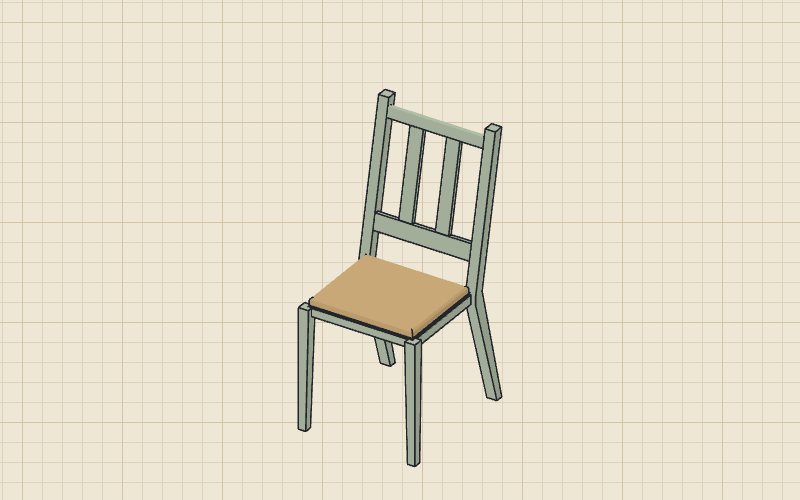
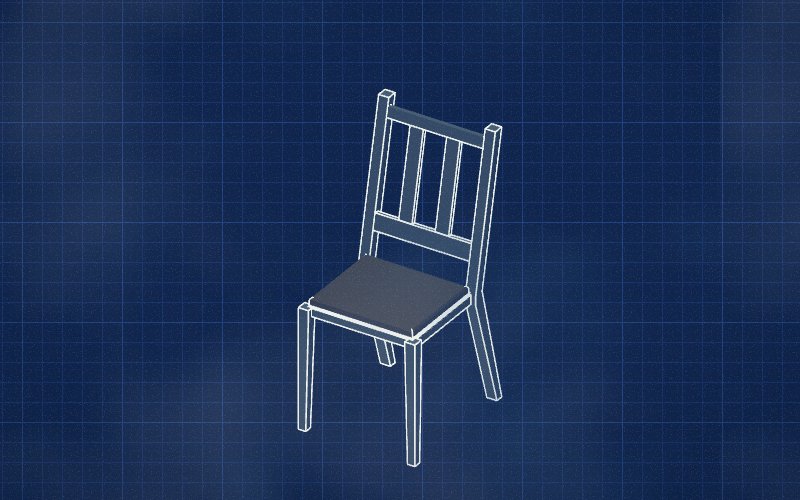
Dining Chair
17.3 × 20.4 × 39.4 in (440 × 517 × 1000 mm)
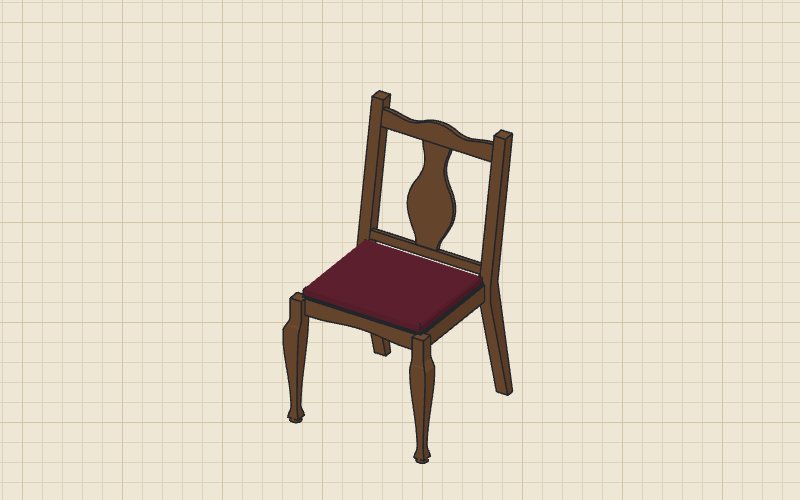
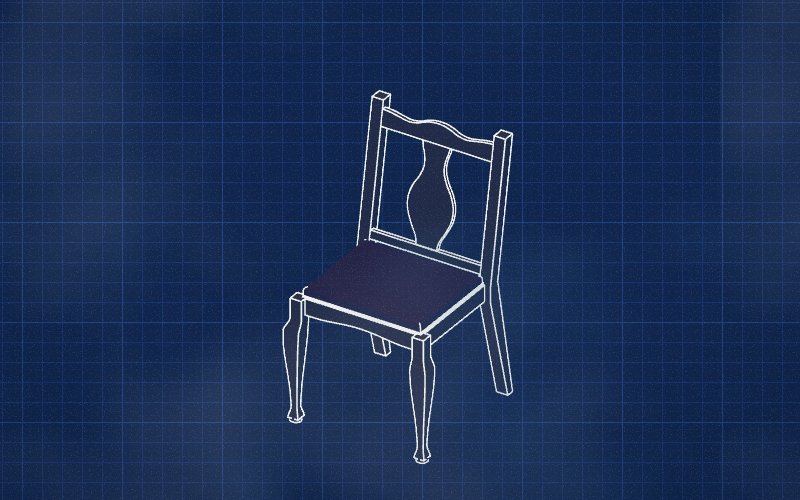
Queen Anne Side Chair
20.9 × 21.4 × 37.4 in (532 × 544 × 950 mm)
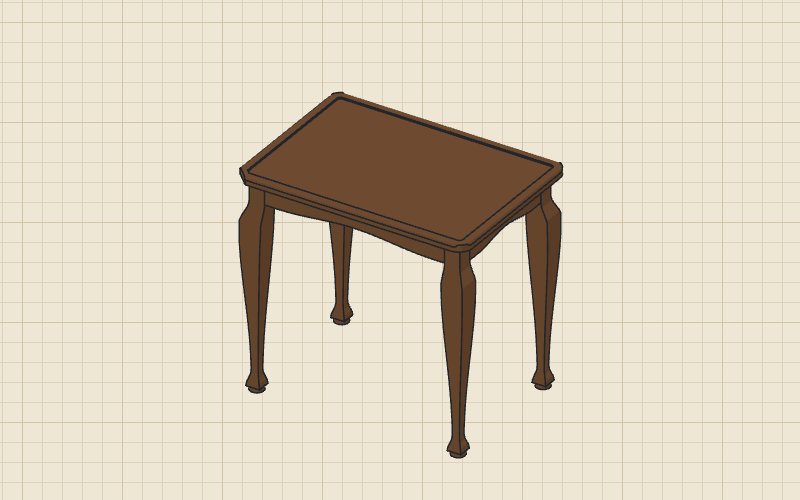
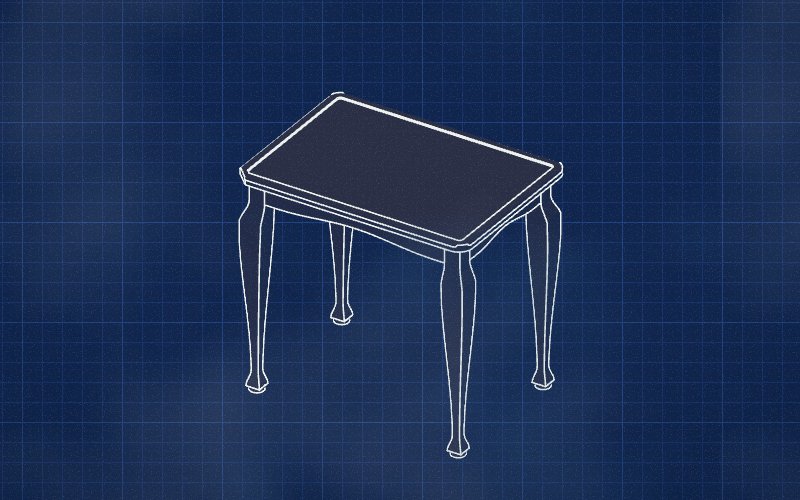
Queen Anne Tea Table
29.9 × 21.3 × 27.6 in (760 × 540 × 700 mm)
Hardware for this style
Hinges, pulls, fasteners and other hardware that guides to this style name.
- Hinges
- Back-flap hinge
- Drawer slides
- Wooden drawer runner
- Pulls and escutcheons
- Bail pull (batwing and forged) Drop pull (teardrop) Escutcheon (keyhole plate)
- Locks
- Cabinet and chest lock