

William and Mary
History
William and Mary is generally reckoned the first cabinetmakers' style in the English-speaking world, current in England during the joint reign of roughly 1689 to 1702 and lasting somewhat longer in America, from about 1690 to 1730. Dutch and Huguenot craftsmen working around the court of William III brought walnut veneer, marquetry, lacquer work and the dovetailed board carcase into English and, through emigration and trade, American cabinetmaking, centered on Boston, New York and Philadelphia.
The style's look follows directly from these imported techniques: the earlier joiner's frame-and-panel box gave way to flat veneered surfaces, because veneer needs a large, stable, flat ground — a dovetailed board case rather than a framed one — and because the baroque taste of the moment prized a lively, contrasting surface over the plainer joined construction it replaced.
Elements
Case pieces grew taller and lighter than the Jacobean furniture before them, lifted off the floor on vigorously turned legs, and the period introduced new forms outright: the high chest of drawers (a chest on its own stand) with a matching dressing table, the fall-front scrutoire, the cabinet on stand, the tall-back cane chair and the daybed. Legs are typically trumpet-turned — a long shaft flaring upward into a bell or cup beneath the case — tied near the floor by flat, shaped stretchers in a serpentine X or cross pattern, and terminating in turned bun, ball or turnip feet; high chests and dressing tables carry scalloped or arched skirts between the legs, and tall chair backs carry carved, pierced crest rails over cane panels or split banisters.
Ornament here is the veneer itself — burl and figured walnut on drawer fronts, bordered by herringbone banding and cross-banding, with English work adding oyster veneers sliced across small branches and floral "seaweed" marquetry — alongside japanning, the Western imitation of Asian lacquer made in Boston from the 1710s. Construction replaces the frame-and-panel box with a dovetailed board carcase: through dovetails at the case corners hidden under applied mouldings, half-blind dovetails at the drawer fronts, and turned legs tenoned into the case bottom with the flat stretcher pierced and pinned so a foot's own pin passes through it. Primary woods are walnut, solid and veneered, and maple, with English work reaching further for exotics like olive, laburnum and kingwood in veneer and inlay.
Designs
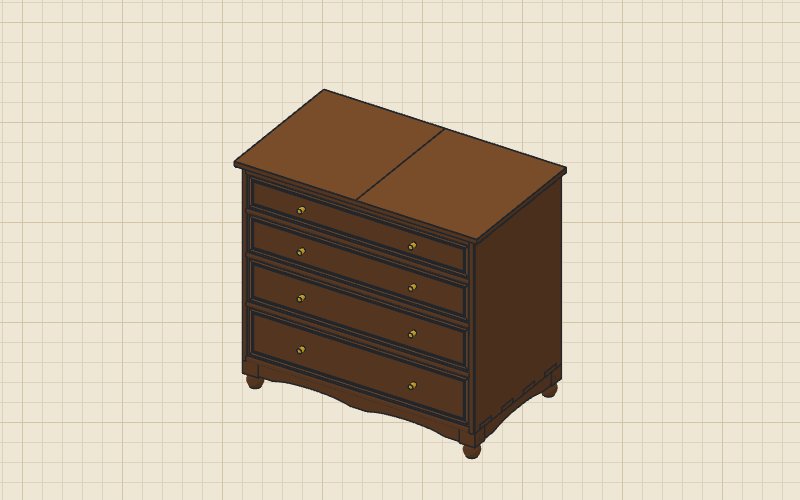
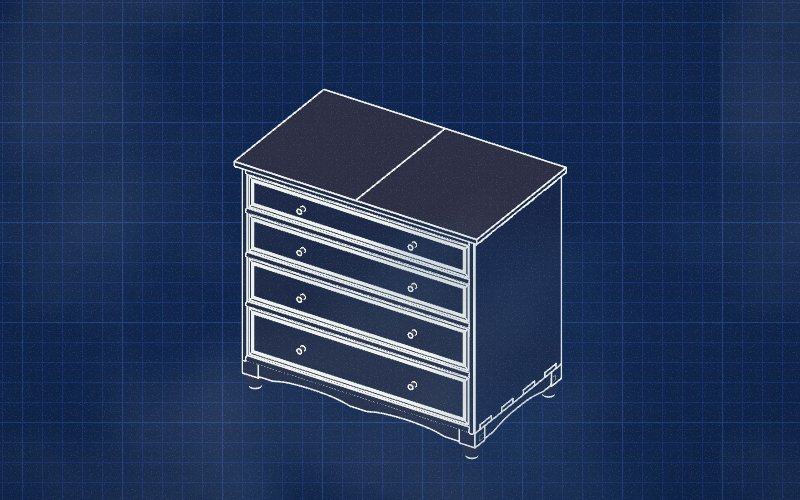
William and Mary Chest of Drawers
37.8 × 22.2 × 34.7 in (960 × 564 × 881 mm)
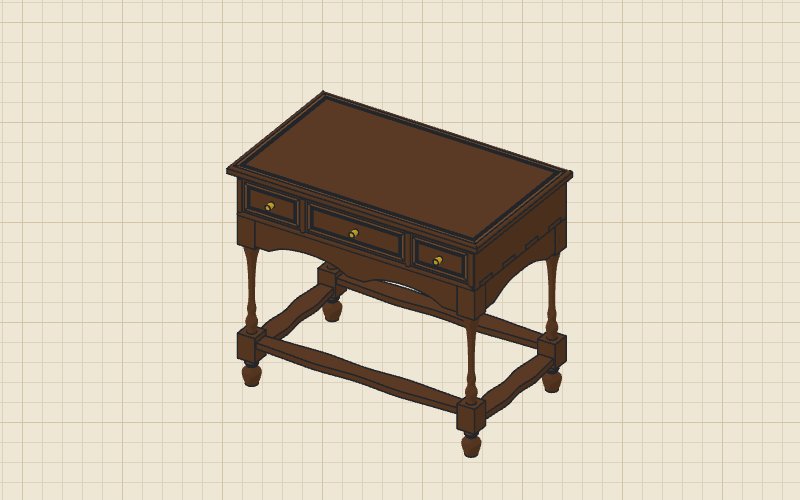
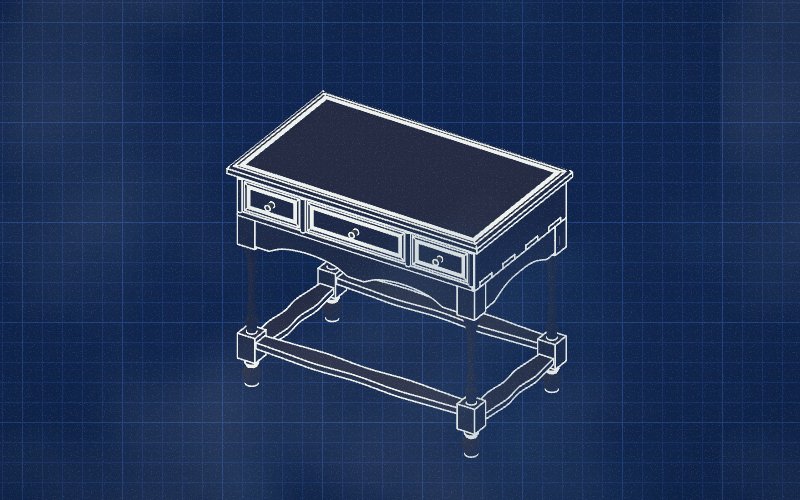
William and Mary Lowboy
33.9 × 20.7 × 29.1 in (860 × 526 × 740 mm)
Hardware for this style
Hinges, pulls, fasteners and other hardware that guides to this style name.
- Hinges
- Back-flap hinge
- Pulls and escutcheons
- Drop pull (teardrop)