

Empire
History
Empire furniture is imperial neoclassicism, developed in Paris under Napoleon by his architects Charles Percier and Pierre-François-Léonard Fontaine, who designed interiors and furniture that quoted Greek, Roman, and — after the French campaign in Egypt — Egyptian antiquity directly. The style flourished during the Consulate and Napoleon's Empire from roughly 1800 to 1815, lingering into the Restoration, and was executed by makers such as François-Honoré-Georges Jacob-Desmalter working in massive, symmetrical mahogany forms with flat, highly figured veneers and gilt-bronze mounts.
The style crossed the Atlantic through French émigré cabinetmakers, notably Charles-Honoré Lannuier in New York, and through the later work of Duncan Phyfe, producing an American Empire, or late classical, furniture from about 1815 to 1840. In the 1830s this American strand simplified further into a bold, flat, machine-friendly "pillar and scroll" phase that lasted into the 1850s, designed around forms that could be cut directly with a saw and finished in mahogany veneer, as published in pattern books like Joseph Meeks & Sons' 1833 broadside and John Hall's 1840 "Cabinet Makers' Assistant."
Elements
The furniture is massive, architectonic, and strictly symmetrical, built from broad flat surfaces organized around columns, pilasters, and plinths, and it produced forms such as the sleigh bed, the gondola chair, and the round pedestal guéridon table. Legs and feet quote antiquity directly: the sabre leg curves forward at the front of a chair and back at the rear in the manner of the Greek klismos, while carved animal legs end in lion's-paw feet, and winged caryatid, swan, dolphin, and griffin figures serve as supports. A broad, curved tablet crest rail running in one continuous line with the rear legs and stiles defines the Grecian chair, alongside lyre-back forms and scroll-ended Grecian couches.
In France the primary ornament was ormolu, gilt-bronze mounts cast as laurel wreaths, stars, bees, swans, and palmettes applied to grounds of flame mahogany veneer, with moldings kept minimal so the metalwork and the figured veneer could carry the design. American Empire added carved acanthus, cornucopia, and paw feet along with stencilled gilt decoration and brass inlay, while the later pillar-and-scroll phase abandoned carving almost entirely in favor of flat, sawn C- and S-scroll supports whose only ornament was the mahogany veneer's figure and a French-polished shellac finish over the whole.
Leaders in this style: historical designers and makers whose work inspired it (inspired by, not reproduced):
Designs
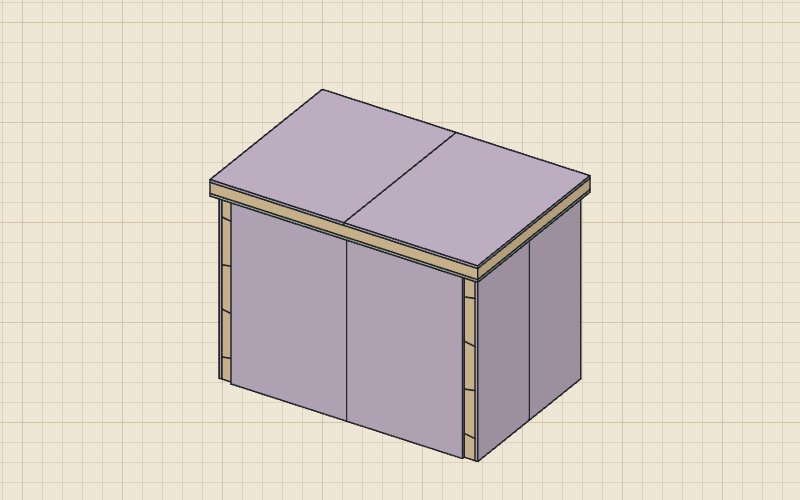
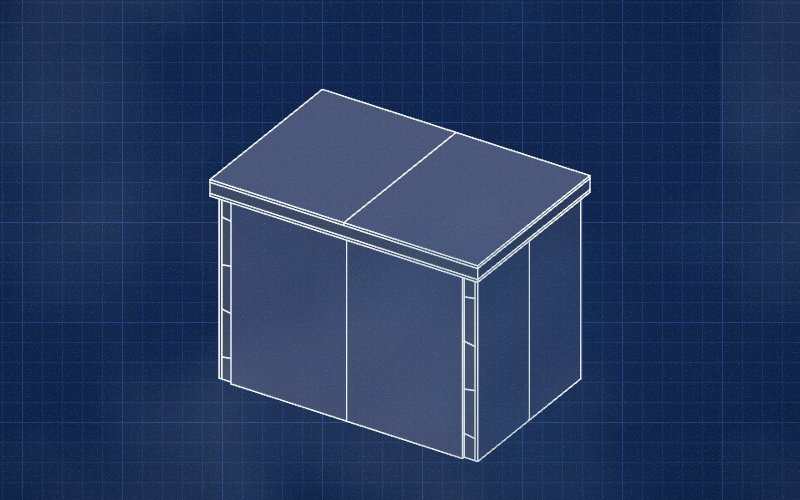
Biedermeier Document Box
11.7 × 7.7 × 8.6 in (296 × 196 × 218 mm)
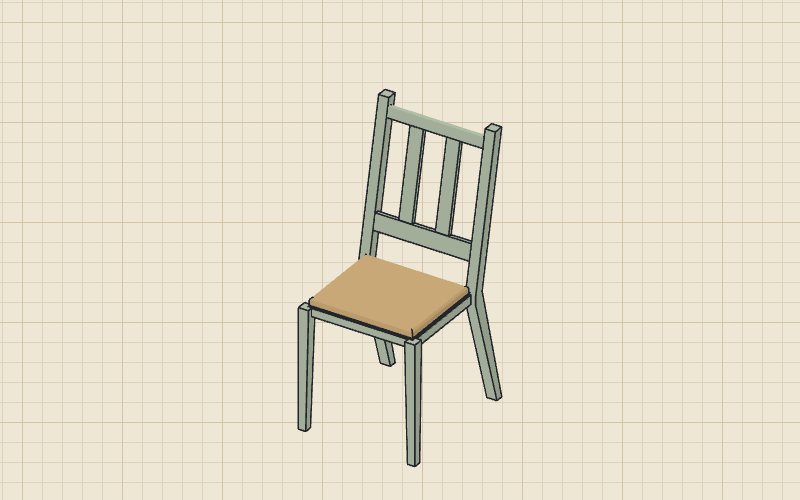
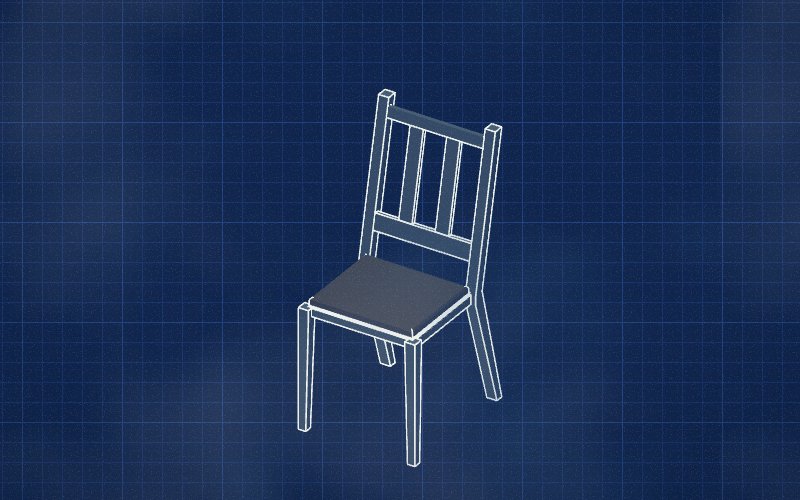
Dining Chair
17.3 × 20.4 × 39.4 in (440 × 517 × 1000 mm)
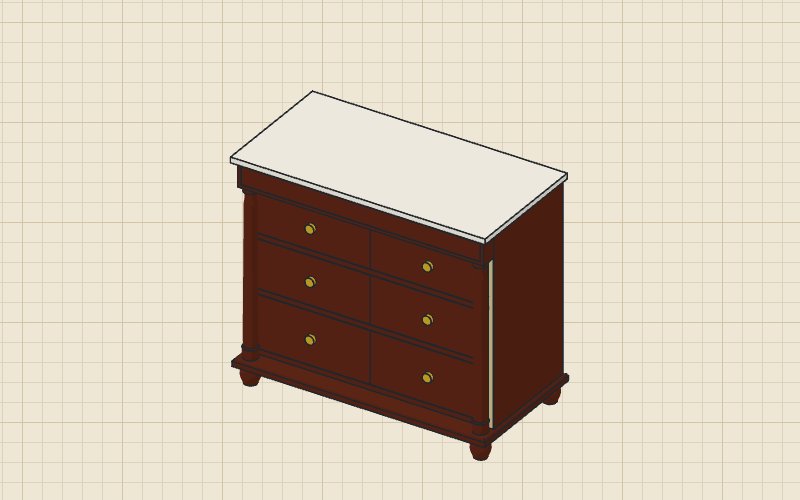
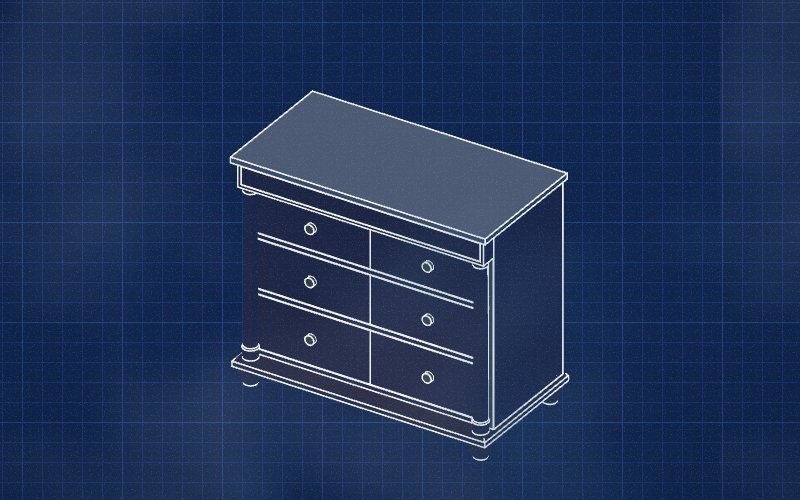
Empire Columned Chest
44.9 × 23.5 × 39.4 in (1140 × 596 × 1000 mm)
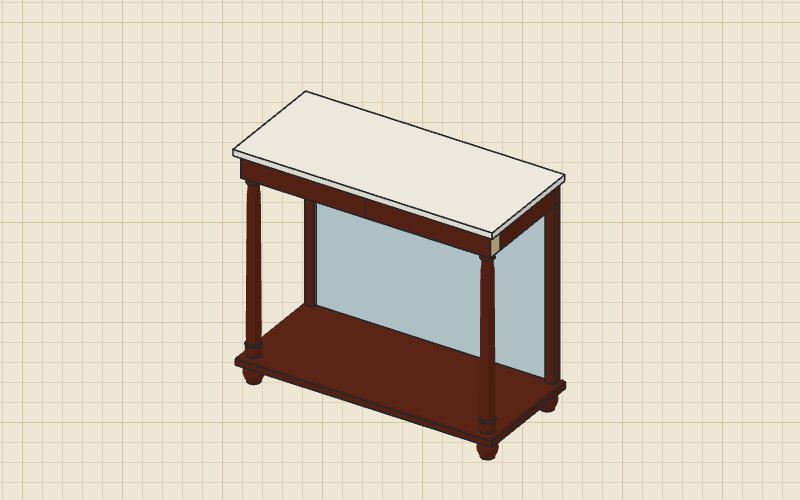
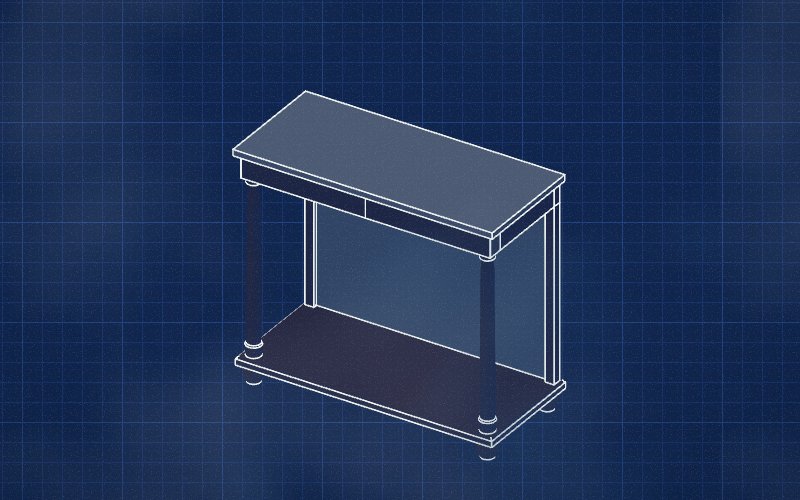
Empire Pier Table
40.9 × 18.7 × 36.2 in (1040 × 474 × 920 mm)