

Pennsylvania German
History
Pennsylvania German furniture was made by German-speaking immigrants from Switzerland, the Palatinate and the Upper Rhine who settled in southeastern Pennsylvania, chiefly Lancaster, Berks and neighboring counties, through the eighteenth and into the mid-nineteenth century, roughly 1740 to 1850. Related Germanic traditions also took root in New York's Hudson Valley and North Carolina's Piedmont. These makers carried Continental European joinery practice and forms across the Atlantic, most distinctively the schrank, a large wardrobe, and the lidded dower chest, adapting them to their new setting while keeping a shared set of folk decorative motifs. Because owners' names and dates were often painted or inlaid directly onto the furniture as part of its decoration, many surviving pieces can be traced to specific families and years.
Elements
The style is defined by massive, architectural case pieces: schranks and chests with bold projecting cornices and base mouldings, sitting on ogee or straight bracket feet, or on turned feet with tenons wedged through the case bottom. The schrank itself is a large two-door wardrobe, often with drawers below and raised-panel doors, built with a separate cornice and base designed to lock onto the case so the whole piece could be broken down for moving. Dower chests instead have a lift lid, an internal till, and typically two or three drawers set into the base. Decoration follows a shared set of folk motifs painted onto softwood grounds of blue, red, brown or black: tulips in pots, hearts, birds, rampant unicorns and mounted horsemen, the latter two associated particularly with Berks County, alongside sponge or smoke-work effects.
In the finer walnut case pieces of Lancaster County, ornament instead took the form of sulfur inlay from around the 1760s: designs and lettering cut as channels and filled with molten sulfur that set pale yellow, often used to record an owner's name and date. Hardware runs to large wrought-iron strap hinges with tulip-shaped ends, and brass or iron locks and escutcheons. Construction follows heavy Continental joiner's practice: frame-and-panel work pegged with wooden pins, wedged dovetails on drawers and drawer frames, thick drawer bottoms nailed or pinned in place, and case feet joined by tenons wedged through the bottom board.
Designs
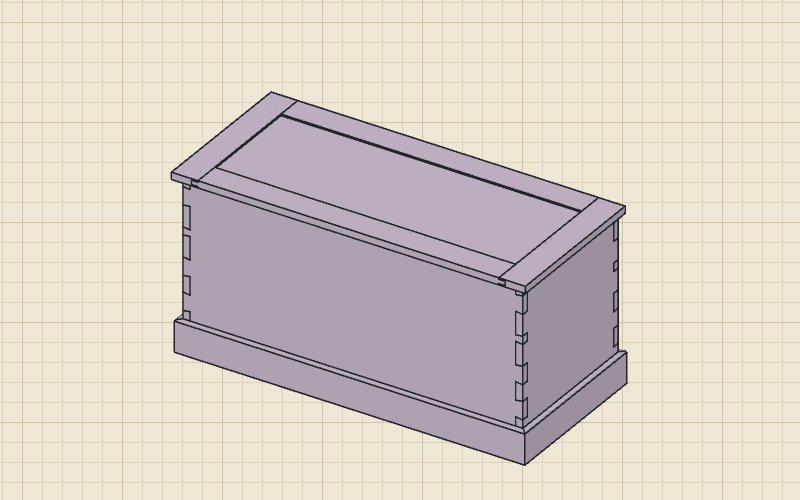
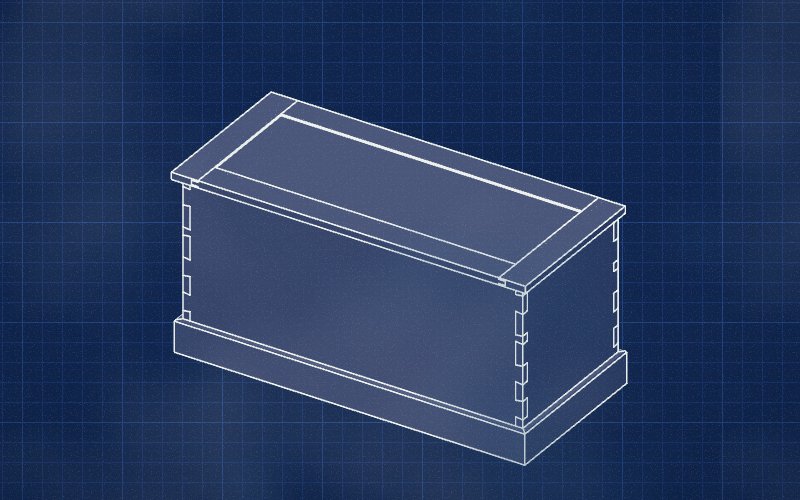
Dovetailed Blanket Chest
39.4 × 18.1 × 19.7 in (1000 × 460 × 500 mm)
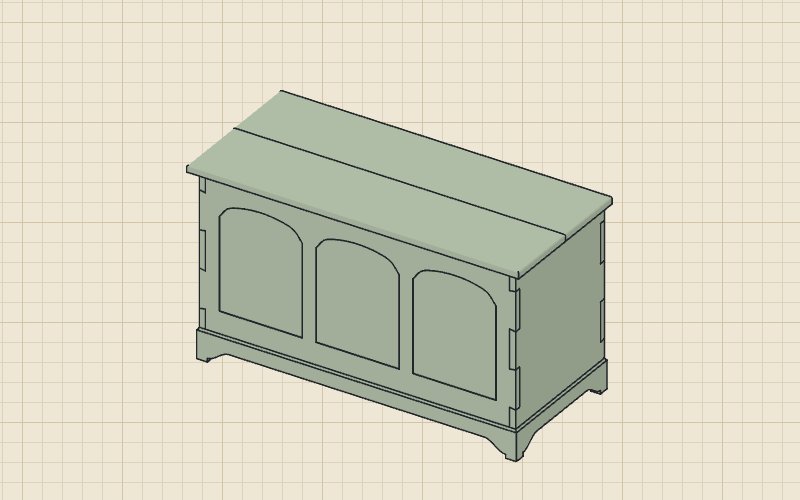
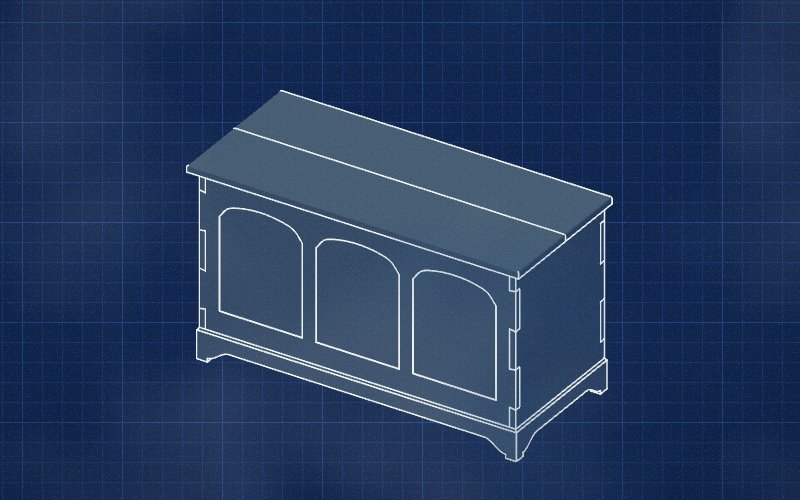
Pennsylvania German Dower Chest
47.2 × 21.3 × 27.2 in (1200 × 540 × 690 mm)
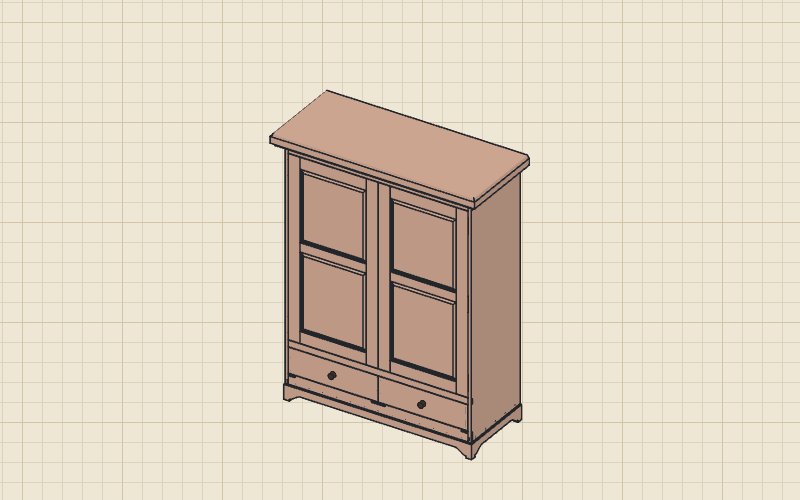
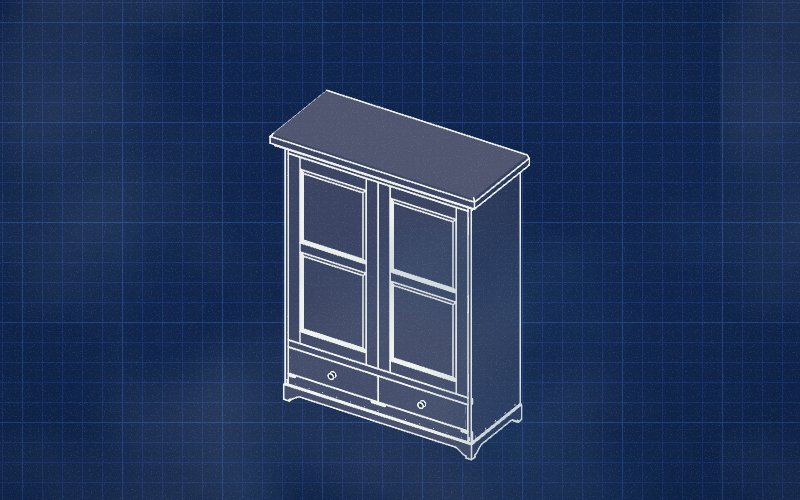
Pennsylvania German Schrank
61.4 × 26.2 × 78.7 in (1560 × 666 × 2000 mm)
Hardware for this style
Hinges, pulls, fasteners and other hardware that guides to this style name.
- Hinges
- Strap hinge
- Pulls and escutcheons
- Escutcheon (keyhole plate)
- Locks
- Cabinet and chest lock
- Nails
- Cut nail Wrought nail