

Overview
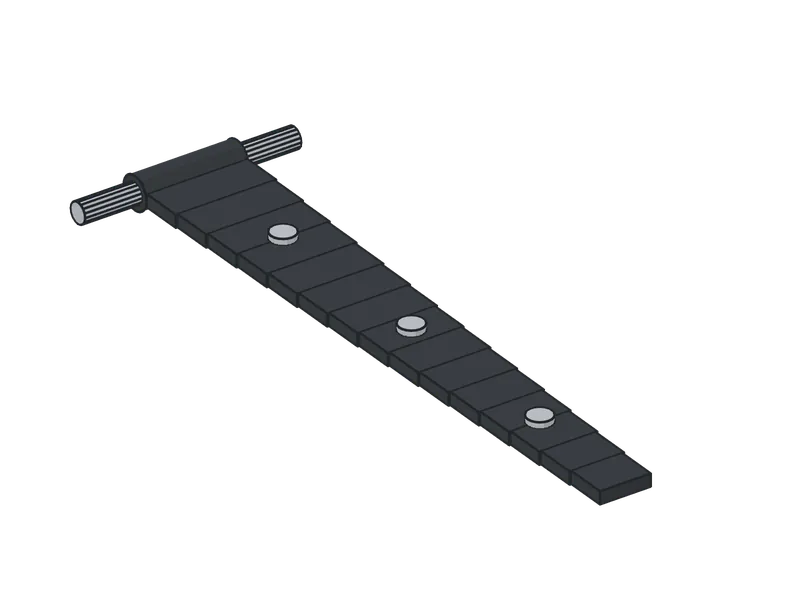
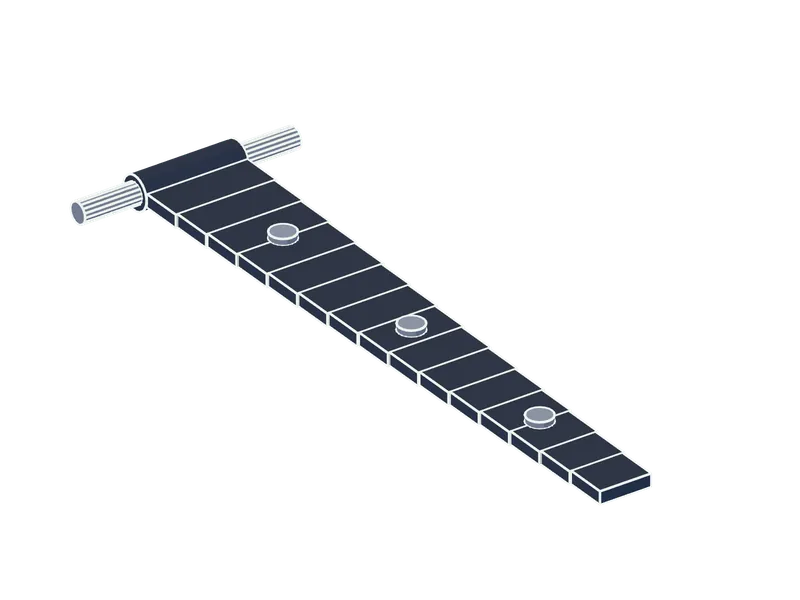
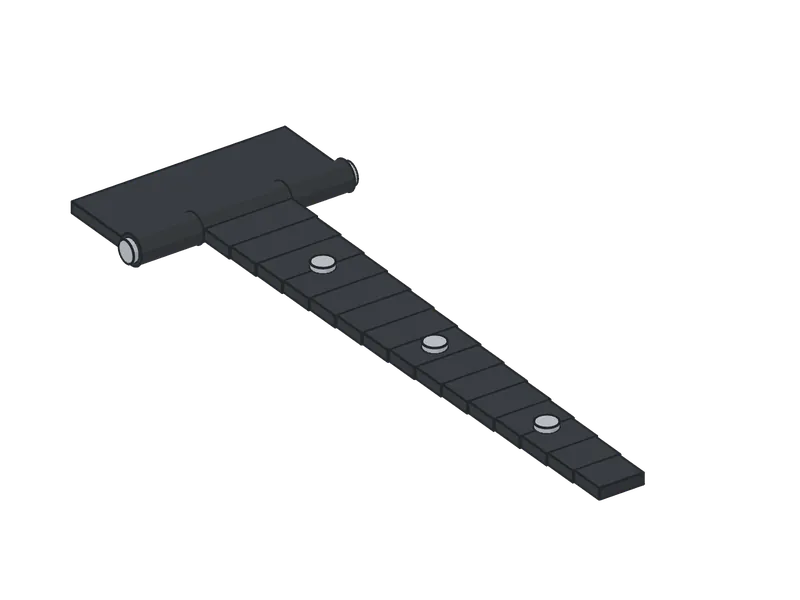
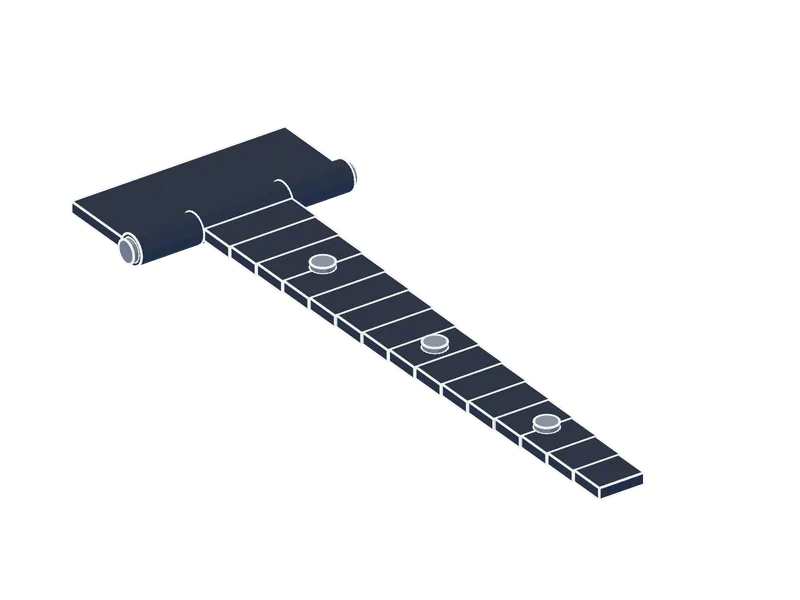
A strap hinge has one long, tapering strap fixed to the face of the door and a pin or knuckle at the hinge edge that turns on a plate, pintle or second leaf on the frame. The T-hinge is the common variant: a long strap on the door and a short leaf on the frame, forming the T. Because the strap runs across the door, it holds plank and ledged doors together as well as hanging them. People choose it when the hardware is meant to be seen, or when a door is too thin or too heavy for butt hinges to grip.
Types and sizes
- T-hinge, strap and pintle, cross-garnet: the same idea with different frame ends. A strap and pintle swings on a pin driven into the frame.
- Hand-forged wrought iron has tulip, fleur-de-lis or spade ends; stamped steel copies the shape at a lower cost.
- Length is the stated size: 6 in (150 mm) for boxes, 10 to 14 in (250 to 350 mm) for cupboards, 18 to 24 in (450 to 600 mm) for planked doors.
- Finishes are black paint, japanning, waxed bare iron and black oxide; brass-plated versions exist for lighter work.
Where it is used
Pennsylvania German chests and schranks hung on large iron straps with tulip ends; country and vernacular work uses plain T-hinges on plank doors and six-board chests; Arts and Crafts and Craftsman cabinets use hammered or black straps as a visible feature; Eastlake furniture adopts strap-like hinges as ornament; Japanese chests carry large iron hinges and lock plates.
Choosing and sizing
Traditional rule: the strap should reach about two-thirds of the way across the door. Use two straps on a door up to about 1 m (40 in) high; add a third for taller or heavier doors. The frame leaf or pintle should be fixed into solid frame stock, not into a thin side panel.
Installation
- Set the door in its opening on shims with the gap you want (about 2 mm, 1/16 in).
- Mark and drill pilot holes in the strap through the existing holes with the strap held square.
- Use screws, or nails clenched on the back, as the style demands.
- Fix the door leaf first, then the frame leaf with the door in place.
- No mortise is needed; allow for the strap's thickness if the door must close flush.
Wood movement and species
A strap fixed across a wide plank door restrains it: the boards cannot shrink or swell freely, so a long rigid strap screwed to every board can crack one in a dry winter. Use fewer fixings across the width, or slot the holes. Black iron on the tannin-rich oaks (White oak, Red oak) leaves dark stains in damp air; paint or wax the iron and seal the wood. Soft Eastern white pine holds screws in side grain but crushes under round heads if over-driven.
Common mistakes
- Strap too short for the door: the door sags at the free edge. Use the two-thirds rule.
- Screws only along the grain of one board: the strap splits the board. Spread fixings.
- Frame leaf screwed into end grain: pulls out. Fix to side grain or through-bolt.
- Door binds because the strap's thickness was not allowed for in the gap.
Related
- Butt hinge and Piano hinge: concealed alternatives for flush doors and long edges.
- Wrought nail and Cut nail: the period fixings for a hand-forged strap.
- Cabinet and chest lock: chests often pair a strap hinge with a surface lock and escutcheon.
Styles it suits
Suitable for
Fixes into: softwood, hardwood.
Poor choice in
The reasons are in the wood movement and species section above.
In our designs
Our example designs model this as StrapHinge, drawn with the leaf shape, placed with a hardware_mount join.
More pictures
Sources
Updated 2026-10-03. Sizes and ratings are typical trade figures drawn from the sources above. A load rating is the maker's rating for one product, not a property of the type: check the maker's own sheet, and test a fit on scrap before cutting good wood.