

Country Vernacular
History
Country furniture was made by village joiners, turners, chairmakers and farmers for ordinary households rather than city workshops, spanning roughly 1650 to 1900 across rural England and Wales and the American colonies and early United States — English ladder-back chairs date from as early as the seventeenth century, while the familiar American painted country work is mostly an eighteenth- and nineteenth-century phenomenon. It followed fashionable urban styles at a distance and simplified them considerably, so that a country Queen Anne chair might keep the recognizable splat shape while dropping the carving that a city cabinetmaker would have added, and it kept older forms in use long after fashionable centers had moved on.
What unites the style is not a single look but a shared method dictated by circumstance: local timber, paint used in place of costly figured wood, turning in place of carving, and nailed or pegged construction where a professional cabinetmaker would have cut dovetails.
Elements
Forms are sturdy and somewhat heavier in section than city furniture, shaped directly by use: worktables, dressers and hutches, chests, settles and benches. Legs are typically turned, with rings and a vase or taper shape, or plain square and straight or tapered; chest ends often run to the floor and are cut away in an arched or V-shaped "bootjack" profile to leave two feet. Chairs are built as turned ladder-backs and spindle-backs with woven rush seats, including regional English types, alongside country versions of the Windsor chair. Tops and cases favor wide single boards in pine, oak or elm, dressers and hutches carry an open plate rack over a base of drawers and cupboards, and simple six-board plank chests are common.
Paint is the style's characteristic finish, especially in America — red, blue, green and other colors in milk-, lime- or oil-bound paints, occasionally decorated further over the ground color. Where ornament appears at all, it is turned rings, balls and vases, shaped scalloped rack sides or cut-out aprons, rather than gilding or fine inlay. Construction leans on board work — nailed or rabbeted-and-nailed six-board chests — pegged mortise-and-tenon frames for tables and cupboards, simple dovetailed or nailed drawers, and turned chair frames with round tenons fitted into bored holes; tool marks are typically left visible on hidden surfaces, a mark of furniture built for use rather than display.
Designs
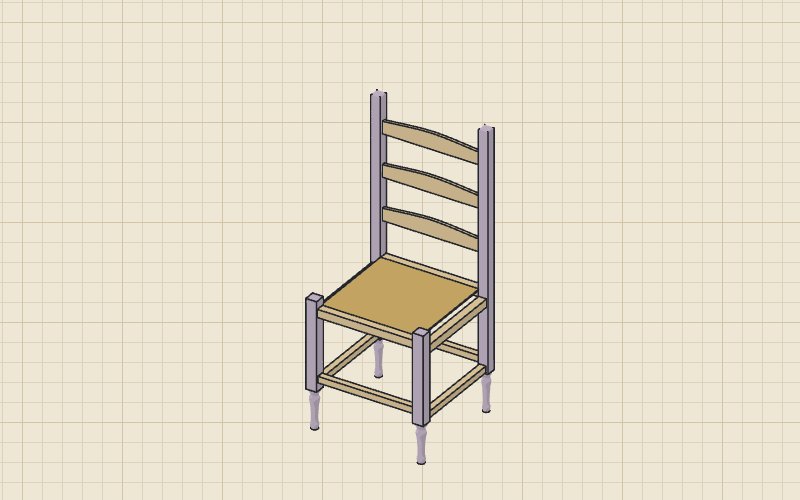
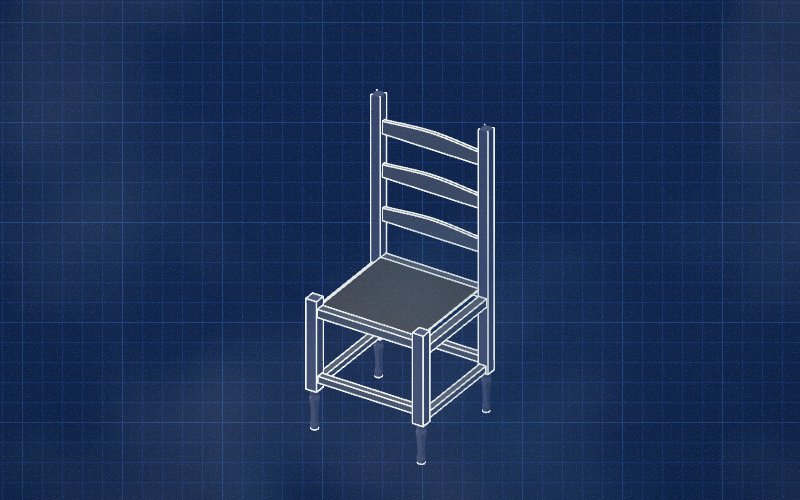
Country Ladder-Back Chair
17.3 × 16.5 × 40.9 in (440 × 420 × 1040 mm)
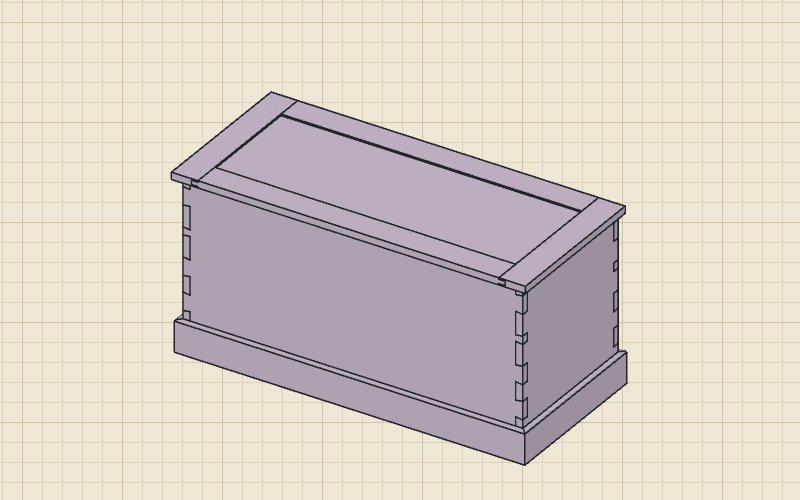
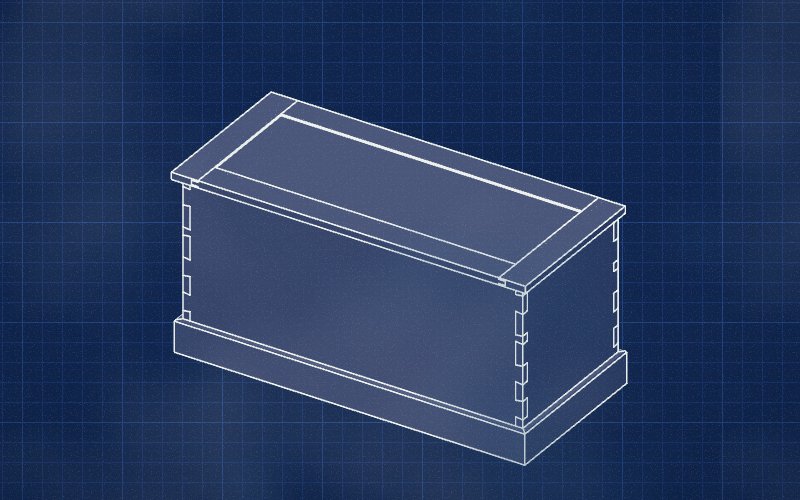
Dovetailed Blanket Chest
39.4 × 18.1 × 19.7 in (1000 × 460 × 500 mm)
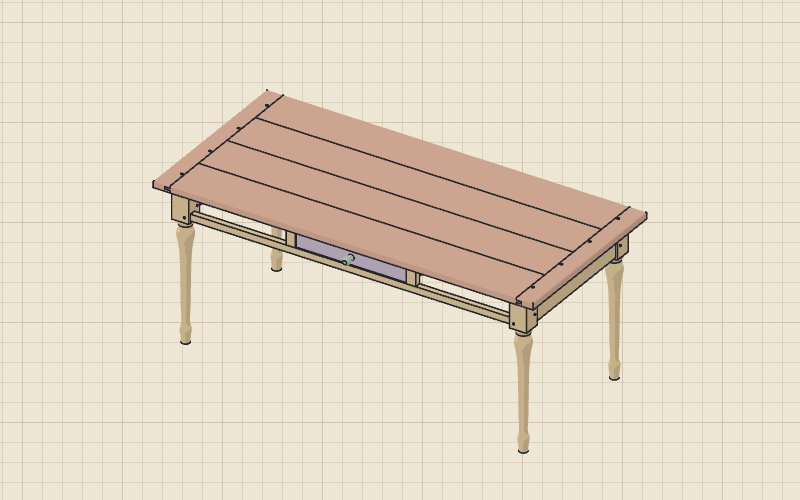
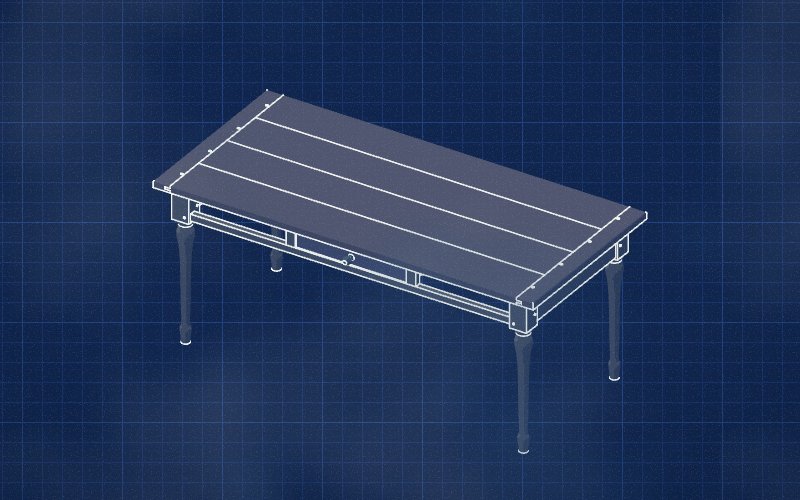
Farmhouse Harvest Table
70.9 × 33.5 × 29.9 in (1800 × 850 × 760 mm)
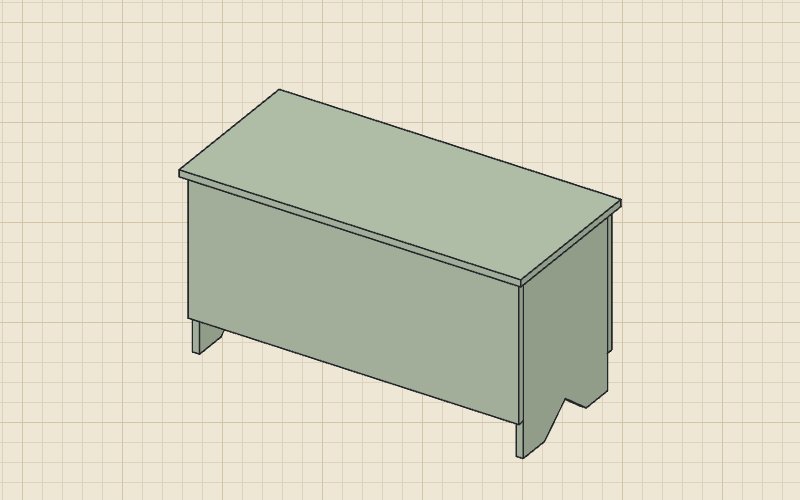
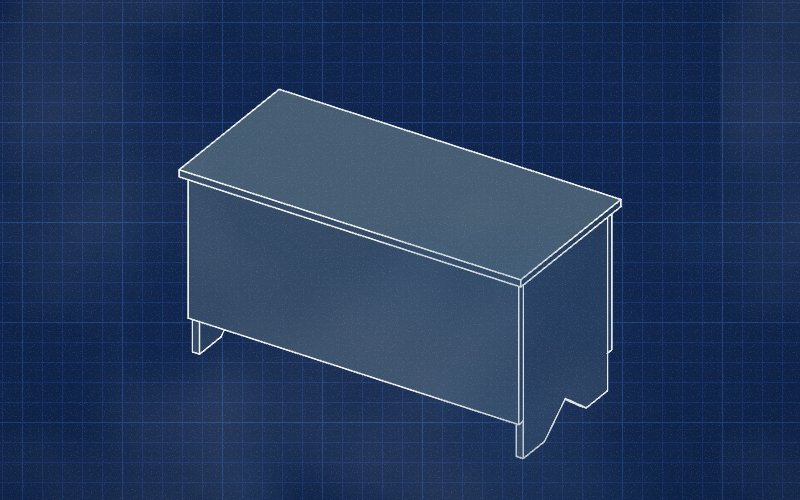
Six-Board Chest
36.6 × 16.9 × 19.6 in (930 × 430 × 499 mm)
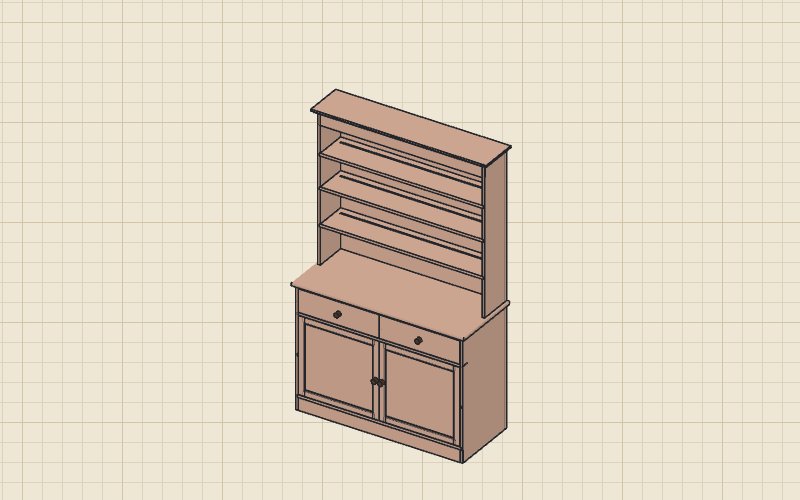

Welsh Dresser with Plate Groove
49.6 × 20.8 × 78.7 in (1260 × 528 × 2000 mm)
Hardware for this style
Hinges, pulls, fasteners and other hardware that guides to this style name.
- Hinges
- Butt hinge Strap hinge
- Pulls and escutcheons
- Knob
- Nails
- Cut nail Wire brad Wrought nail