

Eastlake
History
Eastlake furniture takes its name from the English architect and writer Charles Locke Eastlake, whose 1868 book "Hints on Household Taste in Furniture, Upholstery and Other Details", published in an American edition in 1872, attacked the over-carved, curvaceous, glue-and-veneer furniture common in the Victorian era and argued instead for rectilinear, sturdily made pieces with modest ornament. It was a reform movement operating from within the Victorian period rather than a clean break from it, made in the United States roughly between 1870 and 1890, with English "art furniture" and Reformed Gothic pieces running alongside it.
American factories seized on the look, and the name, to produce inexpensive, machine-friendly furniture at scale — so successfully that Eastlake himself publicly disowned the American products sold under his name, saying he had nothing to do with what tradesmen were advertising as "Eastlake furniture." A higher-end version of the style, sometimes called Modern Gothic, was made by firms such as Kimbel & Cabus and cabinetmaker Daniel Pabst.
Elements
The style is rectilinear, angular, and upright, built from straight lines and simple geometry, with construction left visible rather than disguised — tall bedsteads and dressers carry flat, stepped crests, and short turned legs show incised rings or square legs have their corners taken off in chamfers. Rows of small turned spindles form galleries along crests and shelves, and the higher-end Modern Gothic variant pushes toward angular, sometimes asymmetrical silhouettes with ebonised surfaces and strap-like hinges.
Ornament is shallow and linear rather than sculptural: incised lines cut into flat surfaces form parallel bands, stylised flowers, and sunbursts, sometimes gilded within the grooves on ebonised pieces, alongside stop chamfers that end in a small lozenge or lamb's-tongue stop and panels of burl or contrasting veneer. This ornament suited the factory as much as the hand — incised lines could be cut with a router or shaper, spindles turned in quantity on a lathe, and chamfers run on a spindle moulder — which is why the look spread so quickly through American furniture-making after Eastlake's book appeared.
Leaders in this style: historical designers and makers whose work inspired it (inspired by, not reproduced):
Designs
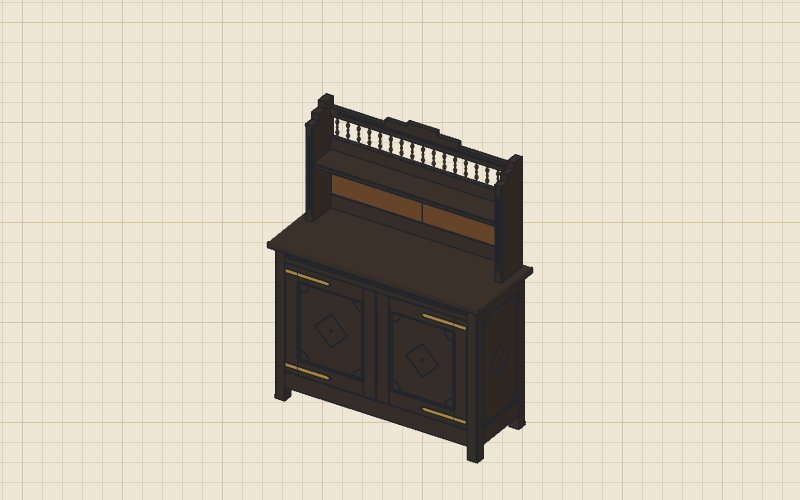
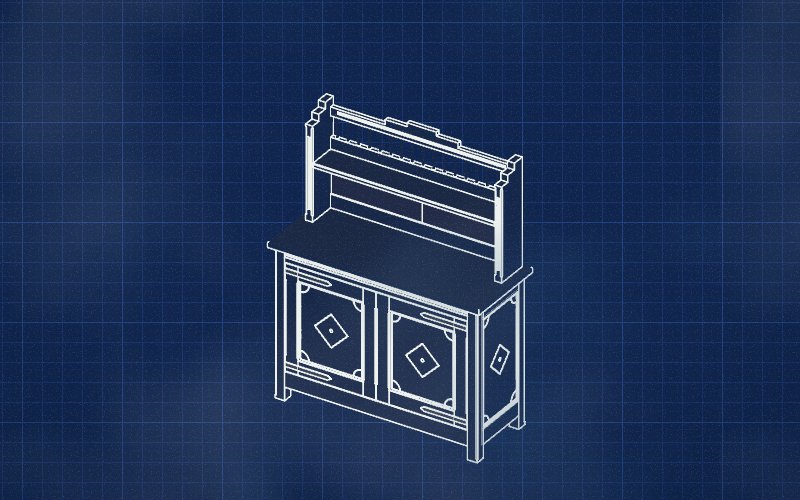
Incised Victorian Cabinet
43.3 × 17.3 × 53.5 in (1100 × 440 × 1360 mm)
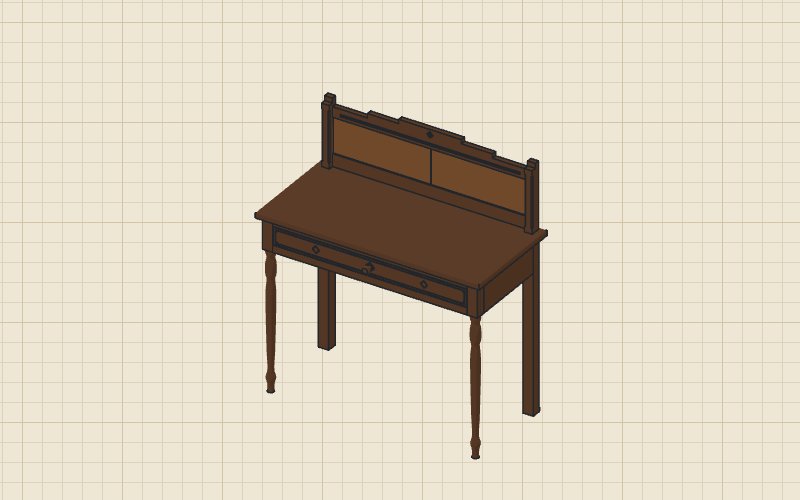
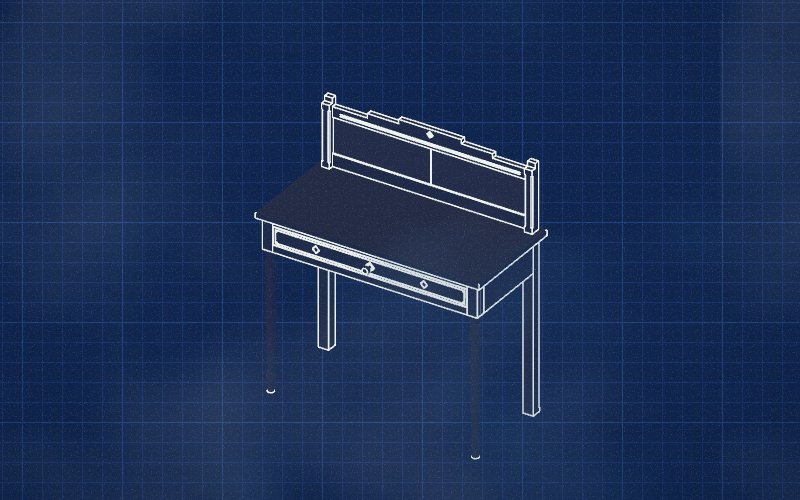
Incised Walnut Washstand
39.4 × 19.5 × 42.9 in (1000 × 496 × 1090 mm)
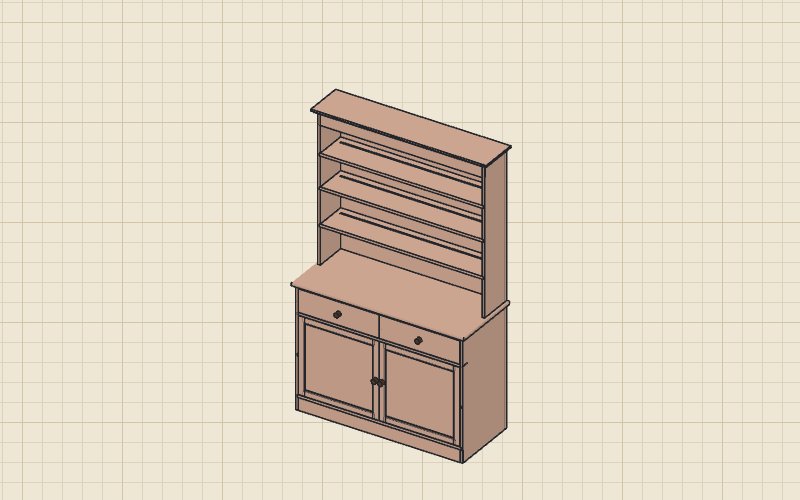

Welsh Dresser with Plate Groove
49.6 × 20.8 × 78.7 in (1260 × 528 × 2000 mm)
Hardware for this style
Hinges, pulls, fasteners and other hardware that guides to this style name.
- Hinges
- Strap hinge
- Knock-down and bolts
- Bed rail fastener
- Casters
- Cup caster