

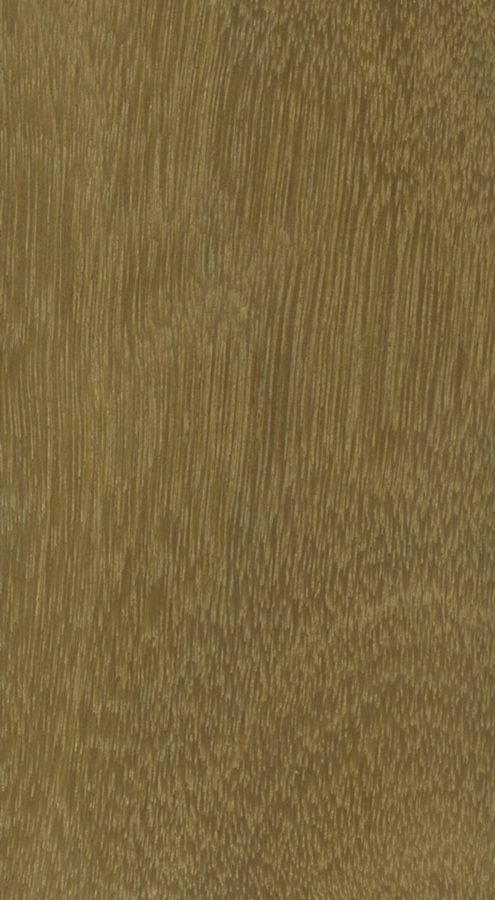

Overview
Balau is the dense end of the Shorea family: a heavy, hard, yellow-brown to red-brown timber used for decking, flooring and heavy construction. In Europe it is sold as bangkirai, the Indonesian name for Shorea laevis, which is also grouped as yellow balau. It is a good outdoor wood on paper, but its sustainability picture is mixed, and it is hard to work.
Pros
- Very hard (1,600 lbf) and strong; Timber Development UK compares its strength with greenheart.
- Durable outdoors: Malaysia classes yellow balau as very durable, with red balau less so (TDUK).
- Widely available and moderately priced for an imported timber.
- Glues, stains and finishes well (Wood Database).
Cons
- Hard to work because of density; pre-drill everything. Silica in some species blunts tools.
- Dries slowly with a tendency to end split; warping is variable (TDUK).
- Interlocked grain and coarse texture on red balau.
- Eye, throat and skin irritation from dust has been reported.
- Sources disagree on its durability and conservation status (see below).
Variants and subspecies
- Yellow balau / bangkirai: yellowish to reddish brown, moderately fine texture, "very durable" in Malaysian classification. Bangkirai is Shorea laevis (Wikipedia redirects the name there).
- Red balau: purplish-red to dark red-brown, coarse, moderately durable. Red selangan batu (Sabah) and alan (Sarawak, Brunei) are about equal to it.
- Trade confusion: the group is also called lauan, and the same Shorea genus supplies Meranti, which is far softer. "Ironwood" is a name given to several unrelated dense timbers: TRAFFIC notes merbau is called Moluccan ironwood (see Merbau (kwila)). Check the botanical name.
Weight depends on source: Wood Database gives 850 kg/m3; Timber Development UK gives 980.
Working and finishing
Use carbide, pre-drill and countersink screws, and expect to resharpen. Slow, even drying matters: buy stock that is already dry and seal end grain. It glues and finishes well, but because it is so dense, test glue joints and use stainless or coated fasteners outdoors.
Staining and finishing colour
Takes stain and finishes well (Wood Database). I did not find a source on how it ages outdoors, so test a sample.
Sustainability and handling
Not listed in the CITES Appendices (Cirad Tropix sheet for yellow balau; statuses checked 2026-09). Wikipedia, citing the 2017 IUCN assessment, lists Shorea laevis as Vulnerable, logged for timber and threatened by agriculture. Wood Database says many Shorea are on the Red List and the majority critically endangered, a much grimmer picture. I could not open the Red List directly to reconcile the two, so treat the VU badge as the minimum. Wood Database also rates balau non-durable against decay, whereas TDUK calls it durable to very durable. Treat durability as species- and lot-dependent. Lacey Act and EUDR duties were not researched; ask for legality and species documents. Dust irritates, so extract it.
Popular projects
Decking, flooring, heavy structural work and marine or freshwater construction.
Buying notes
Sold mainly as decking and heavy lumber. One US supplier (LL Johnson, 2026-09) lists red balau S4S decking at $3.36 to $5.20 per linear foot; I derived about $6.70 to $8.30 per nominal board foot from this, so treat it as indicative. Insist on certified stock and avoid undocumented bangkirai.
Typical projects
- decking
- flooring
- heavy construction
- marine and freshwater construction
Sources
Researched 2026-09-30. Prices, conservation status and CITES listings on this page are indicative and were checked on that date. They change: confirm them with your supplier, and with the relevant authority before importing or exporting.