


Overview
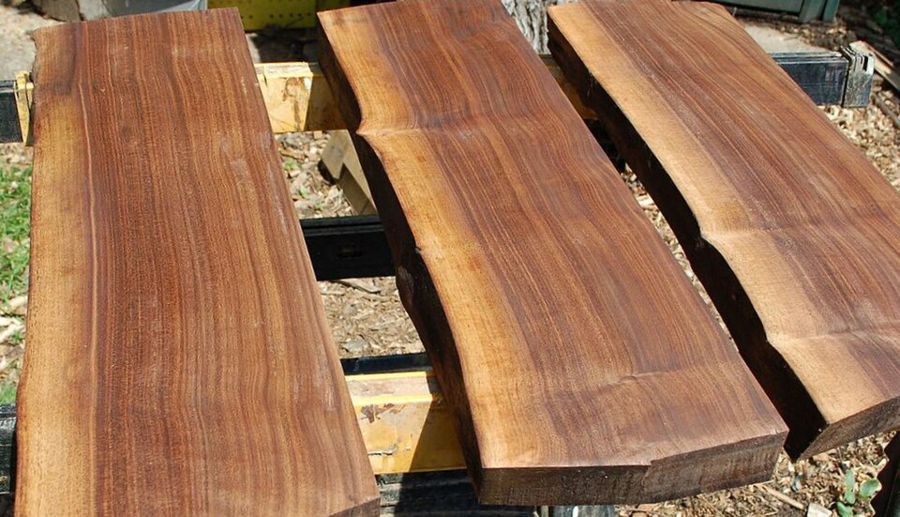
Black walnut (Juglans nigra) is the benchmark dark American furniture hardwood: a chocolate-brown heartwood, straight grain and easy machining. The Wood Database says it is hard to overstate its popularity among US woodworkers, and puts its combination of working qualities and colour in a class of its own among temperate hardwoods. People pick it for tables, case furniture and anything where a rich dark wood should look finished with nothing more than oil or varnish.
Pros
- Easy to work by hand or machine when the grain is straight and regular; it also steam-bends well.
- Good dimensional stability, shock resistance and strength, per the Wood Database. Shrinkage is 5.5% radial and 7.8% tangential (green to oven-dry), a modest 1.4 ratio.
- Rated very durable for decay resistance.
- Colour needs no stain, and the figure options (curl, crotch, burl, birdseye) are plentiful.
- Glues and finishes well.
Cons
- Premium price for a domestic wood; the Wood Database puts it in the high range.
- Boards are often narrow, and the pale sapwood has to be planned around or accepted, so waste can be high.
- Tear-out in planing is the usual problem on irregular or figured grain.
- Susceptible to insect attack despite its decay resistance.
- At 1,010 lbf it is softer than white oak (1,350 lbf), so tabletops will take dents more readily.
- Reported as a sensitizer (see below).
Variants and subspecies
- Plain, straight-grained boards are the everyday stock.
- Figured walnut: curl, crotch (feather), burl and birdseye all occur; the Wood Database shows them as sample boards and projects. Expect steep price rises for each, and more tear-out.
- Sapwood is pale yellow-grey and sits beside the dark heartwood; the Wood Database warns waste can be high if sapwood is not accounted for in a project.
- Claro / California walnut (Juglans hindsii) is a different species with its own entry: Claro walnut.
- Butternut (J. cinerea) is a paler, much softer cousin; see Butternut.
Working and finishing
Wood Database reports that walnut is typically easy to work provided the grain is straight and regular, with planer tear-out sometimes a problem on irregular or figured grain. It glues and finishes well and responds well to steam bending. A faint, mild odour is released while cutting; the odour is common to most Juglans except butternut, and the Wood Database notes it can help separate true walnut from unrelated lookalikes.
Staining and finishing colour
The Wood Database notes walnut takes stain and finish well but is rarely stained, since the heartwood already ranges from pale brown to dark chocolate, sometimes with grey, purple or reddish casts. That variation between boards is the thing to manage: sort and match boards for a single piece. Clear oil, shellac or varnish all work.
Sustainability and handling
The Wood Database reports black walnut as not listed in the CITES Appendices (checked 2026-09-30) and as Least Concern on the IUCN Red List. US-grown timber is still covered by the Lacey Act, which as amended in 2008 prohibits trade in plants and timber taken, possessed, transported or sold in violation of law (Wikipedia's summary of the Act); buy from dealers who can name the source. The Wood Database says severe reactions are uncommon but black walnut has been reported as a sensitizer, with eye and skin irritation the usual complaints. The Wood Database's wood-dust article treats wood dust in general as an irritant or sensitizer and notes that fine dust can cause cumulative lung damage, so extract at the source and wear a respirator when sanding or machining.
Popular projects
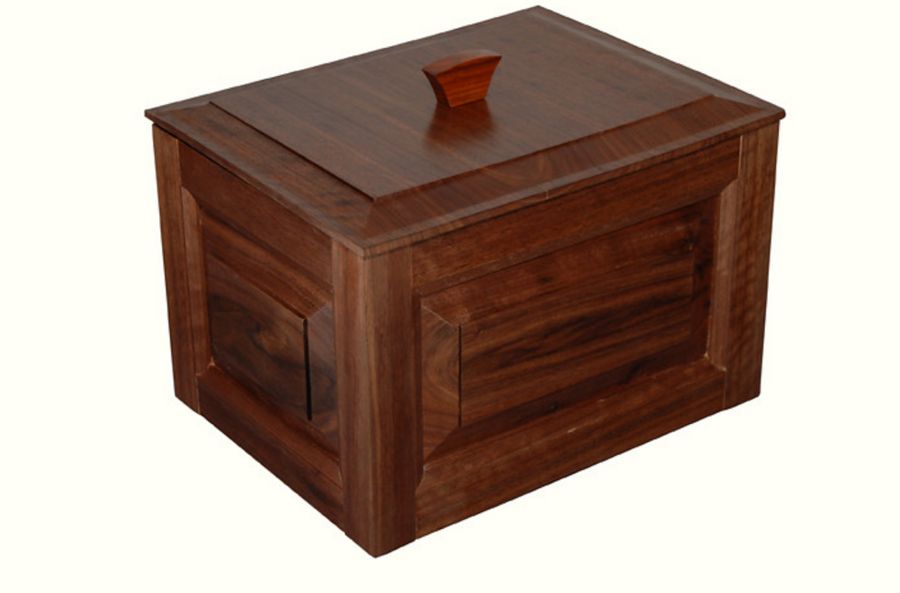
Dining and coffee tables, desks, cabinets and chests, bed frames, mid-century-style furniture, gunstocks, turned bowls and small boxes, and veneer. The Wood Database also notes it can stand in for ebony and other dark woods in limited situations.
Buying notes
Sold rough or surfaced, commonly in 4/4 and thicker, and as veneer. Retail lists run from about $8.50 to $16.50 per board foot, depending on seller, grade and surfacing. Ask about width, sapwood content and whether the stock is air- or kiln-dried. Figured boards, burl and crotch are priced individually. Plain claro walnut is usually priced slightly above eastern black walnut.
Typical projects
- dining tables
- desks
- cabinets
- bed frames
- gunstocks
- turned bowls
- veneered panels
Finishes that suit this
- Boiled and raw linseed oil
- Mineral oil for cutting boards
- Polymerized linseed oil (stand oil)
- Tung oil
- Walnut oil and other food oils
- Danish oil
- Hardwax oil
- Oil and wax blends
- Paste wax
- Furniture polish and finish revivers
- French polish and padding
- Rubbing out a finish
- Wipe-on application
- Finishing schedules by species
- Tabletop finish schedules
Finishes to avoid
More pictures

Sources
- www.wood-database.com/black-walnut
- en.wikipedia.org/wiki/Juglans_nigra
- www.wood-database.com/wood-articles/wood-dust-safety
- en.wikipedia.org/wiki/Lacey_Act_of_1900
- www.johnsoncreekhardwoods.com/price-list-1
- crlumber.com/price-list
- dougwhitehardwoods.com/hardwoods
- countryconcepts.com/hardwood-softwood-prices
- www.kunzcarpentry.com/hardwood_lumber.html
- www.thewoodyard.com/current-pricing-list
Researched 2026-09-30. Prices, conservation status and CITES listings on this page are indicative and were checked on that date. They change: confirm them with your supplier, and with the relevant authority before importing or exporting.