


Overview
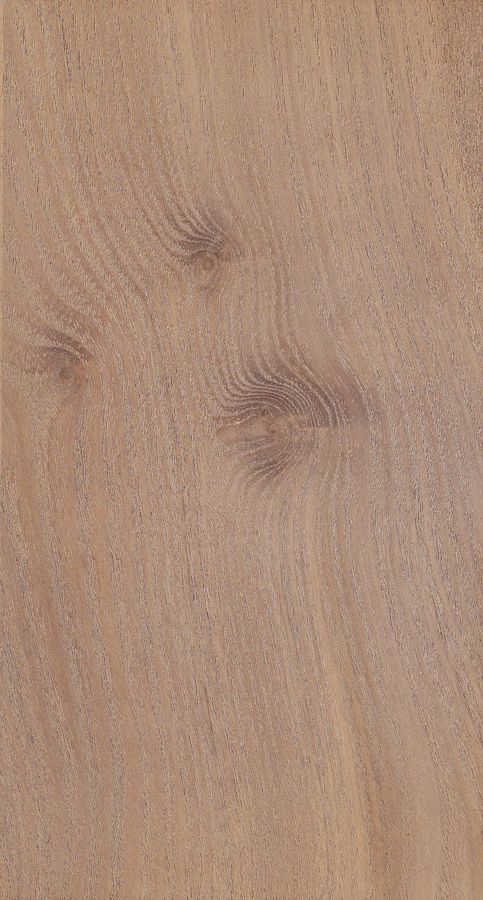
Catalpa (Catalpa speciosa and C. bignonioides) is a light, stable, decay-resistant hardwood with an open, ash-like grain and a colour from grey-tan to golden brown. The Wood Database says it is rarely seen as lumber, and notes it is more decay-resistant than other soft carving woods such as butternut and basswood.
Pros
- Rated durable for decay and holds up well in direct ground contact; suitable for outdoor carvings.
- Low shrinkage: 2.5% radial and 4.9% tangential.
- Generally easy to work; turns and glues well.
- Light (about 460 kg/m3 dried) at 550 lbf.
- Nearly the entire trunk is heartwood.
Cons
- Open, coarse texture: pore-filling is needed for a smooth finish.
- Sanding can leave indents and ridges where the lighter latewood sands faster than the earlywood; use a rigid-backed sanding block.
- Scattered supply; not consistently available as lumber.
- Some Catalpa species have been reported to cause skin irritation.
- Soft compared with oak or ash.
Variants and subspecies
- Catalpa is sold from C. speciosa and C. bignonioides; the Wood Database does not separate them.
- Look-alike: the Wood Database says the appearance somewhat resembles ash; see White ash.
Working and finishing
The Wood Database says catalpa is generally easy to work with hand and machine tools, turns and glues well, and finishes well, though pore-filling is needed for a smooth surface. Sand with care, using a rigid-backed block, to avoid ridges between the soft and hard growth bands. It has a faint, spicy odour.
Staining and finishing colour
Colour ranges from a neutral grey-tan to a richer golden brown with narrow grey sapwood. The Wood Database does not give stain guidance. Test stain on offcuts, and fill pores first if you want a smooth surface.
Sustainability and handling
The Wood Database reports catalpa as not listed in the CITES Appendices (checked 2026-09-30) or on the IUCN Red List; Wikipedia's page for Catalpa bignonioides gives Data Deficient (2018), so there is no strong conservation concern but limited assessment. US-grown timber is still covered by the Lacey Act, which as amended in 2008 prohibits trade in plants and timber taken, possessed, transported or sold in violation of law (Wikipedia's summary of the Act); buy from dealers who can name the source. The Wood Database says that, although severe reactions are quite uncommon, some catalpa species have been reported to cause skin irritation. The Wood Database's wood-dust article treats wood dust in general as an irritant or sensitizer and notes that fine dust can cause cumulative lung damage, so extract at the source and wear a respirator when sanding or machining.
Popular projects
Outdoor carvings, fence posts, cabinetry, utility wood and turned pieces, per the Wood Database's list.
Buying notes
Not always consistently available as lumber because the trees are scattered. The Wood Database says board prices should be moderate, or a bit above average for turning and carving blanks. No retail list price was found. Ask local sawmills and urban-wood suppliers.
Typical projects
- outdoor carvings
- cabinetry
- fence posts
- turned pieces
- utility wood
Sources
Researched 2026-09-30. Prices, conservation status and CITES listings on this page are indicative and were checked on that date. They change: confirm them with your supplier, and with the relevant authority before importing or exporting.