


Overview
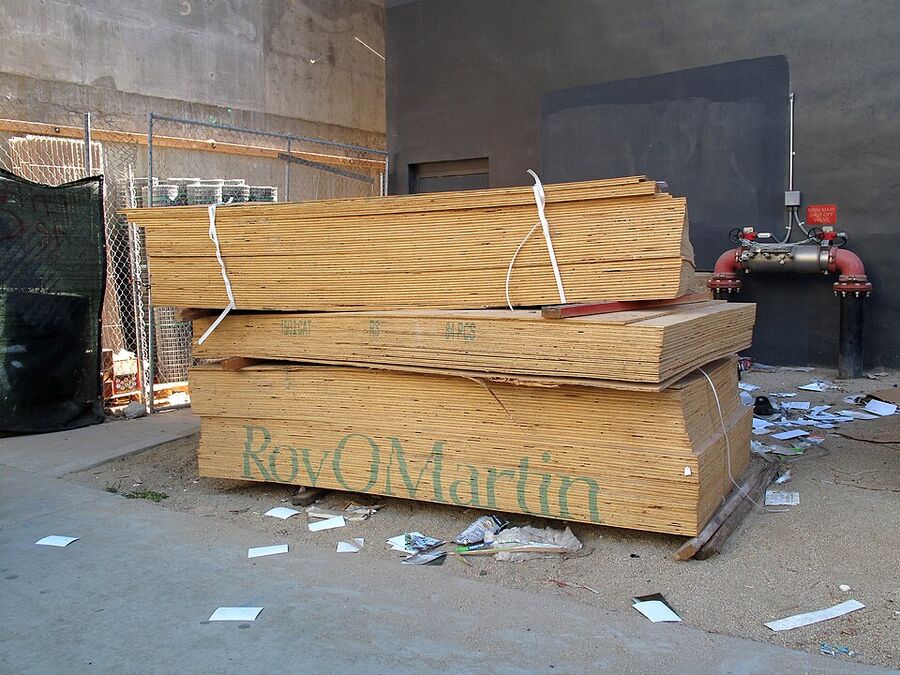
CDX is the common softwood plywood of the construction trade. In the letter code, C is the face veneer grade, D the back, and X refers to the exterior-type glue. Toledo describes CDX as rough on both sides and generally the lowest grade of plywood, with open knots on both faces. APA says Exposure 1 panels, including "CDX", resist construction moisture but are not suitable for permanent outdoor exposure. It is for roofs, walls and floors, and sometimes for shop furniture.
Pros
- Cheapest plywood: Toledo sells 1/2 in at $28.40 and 3/4 in at $37.95.
- Structural and made to APA PS 1 / PS 2 standards, with span ratings (sheathing shows two numbers such as 32/16 for roof or subfloor, per APA).
- Strong and stiff in the long direction for its cost.
- Columbia Forest Products says PF (phenol-formaldehyde) is the glue in exterior structural softwood plywood such as CDX, so it is not a urea-formaldehyde concern.
- Widely available and cuts easily.
Cons
- Faces are rough and have open knots and patches; it is not made for appearance (Toledo).
- Core gaps and voids; edges are ragged.
- Not stable in water: Exposure 1 does not mean permanent outdoor use (APA).
- Thickness varies and warps if stored wet or flat unsupported.
- Heavy and splintery.
Variants and subspecies
- CDX (C/D, exterior-type glue): the rough sheathing standard. APA grade stamps for sheathing include "Rated Sheathing" with a span rating.
- Exposure 1 vs Exterior: APA says Exterior panels withstand long-term weather exposure and Exposure 1 panels resist construction moisture only.
- BB/CC exterior-glue plywood: Toledo lists a 3/4 in 4x10 at $99.95; see Exterior and structural plywood (fir).
- Sanded plywood: smoother grades for cabinets; see Sanded pine plywood and ACX plywood.
- OSB: the cheaper structural alternative; see OSB (oriented strand board).
- Species: the sheet may be southern pine, Douglas-fir or other softwood; see Southern yellow pine and Douglas fir.
Working and finishing
Cut with a fine-tooth carbide blade, face up on a circular saw and face down on a table saw, to limit splintering. Fill voids with filler, sand with 100 grit and finish with paint or clear finish if you want a workshop look. Seal edges for any moisture exposure. Edge screws split thin plies; use pilot holes. The patches in the face can telegraph through paint.
Staining and finishing colour
Softwood faces with knots and patches do not stain evenly; patches show as different colour. Paint is the realistic finish. For a deliberately rough look, a clear coat or wipe-on oil shows the grain and knots and darkens the yellow.
Sustainability and handling
The EPA's TSCA Title VI formaldehyde rule does not cover structural plywood (PS 1) or structural panels (PS 2), per EPA's FAQ (checked 2026-09-30). The glue is phenolic. A 3/4 in 4x8 sheet is heavy; use two people. Store flat, off the ground and under cover, because Exposure 1 panels resist construction moisture but not constant soaking.
Popular projects
Roof, wall and floor sheathing, garage and shop storage, workbench bases, shop cabinets, sheds, concrete forms (sheet not oiled), and rough furniture and stage sets.
Buying notes
Sold 4x8 and 4x10 in 3/8, 1/2, 5/8 and 3/4 in. Indicative Toledo prices (September 2026): 3/8 in $23.30, 1/2 in $28.40, 5/8 in $33.70, 3/4 in $37.95. Pick the flattest sheets from the top of the stack, check for delamination at the edge, and look for the APA stamp.
Typical projects
- roof and wall sheathing
- subfloors
- shop cabinets
- garage storage
- workbench tops
- sheds and forms
Sources
- www.toledoplywood.com/product-category/categories/exterior-plywood/cdx
- www.apawood.org/plywood
- www.socomi.com/wp-content/uploads/APA_SandedPlywood.pdf
- www.columbiaforestproducts.com/resources/frequently-asked-questions
- www.epa.gov/formaldehyde/frequent-questions-regulated-stakeholders-...
- commons.wikimedia.org/wiki/File:Plywood_panels_for_new_construction...
Researched 2026-09-30. Prices, conservation status and CITES listings on this page are indicative and were checked on that date. They change: confirm them with your supplier, and with the relevant authority before importing or exporting.