


Overview
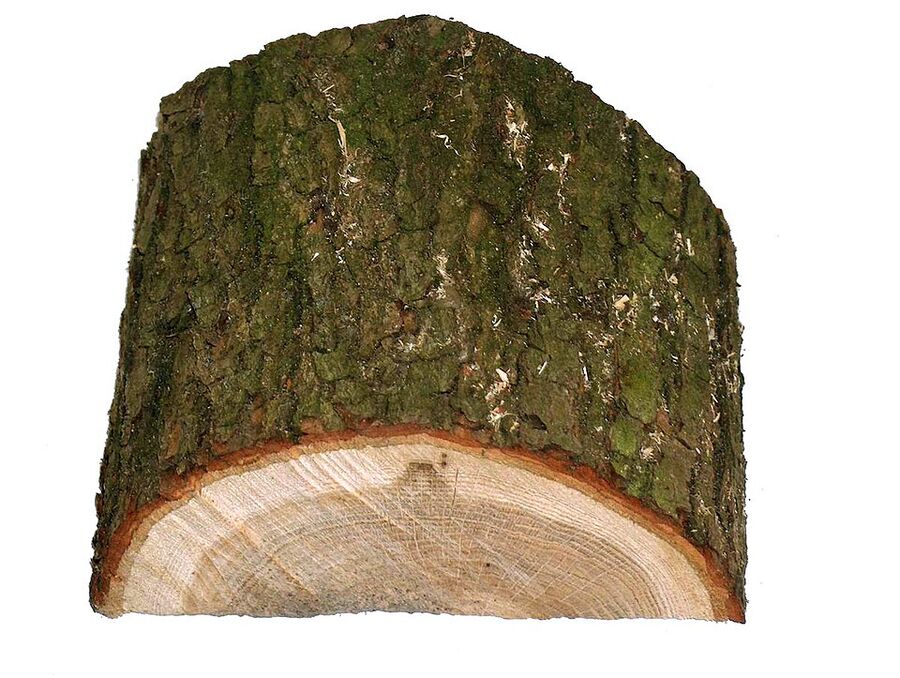
European oak is the wood most of the Continent's furniture, joinery and barrels have been made from: two closely related species, English or pedunculate oak (Quercus robur) and sessile oak (Q. petraea), traded together. It looks much like American White oak but is a little softer and lighter, and it reaches US buyers as an imported specialty timber. Choose it for an authentic European look, for veneered work, or for brown and bog oak figure.
Pros
- Wood Database rates English oak as having very good decay resistance, and it is commonly used in boatbuilding.
- Good results with hand and machine tools, and it steam-bends well. It glues, stains and finishes well.
- Softer than white oak (Janka 1,120 lbf against 1,350 lbf for white oak), so edges and screws are somewhat easier to deal with.
- Wide, plentiful and traditionally sold in a range of grades and cuts across Europe.
Cons
- Reacts with iron, particularly when damp, causing black staining. Use brass or stainless fittings.
- Oak is reported as a sensitizer (rare), with eye and skin irritation and asthma-like symptoms the usual reactions.
- In the US it is an import, so it is dearer than domestic oaks: Hearne lists European oak at $14-17 per bf, against $8-10 for 4/4 white oak at ordinary US yards.
- Shrinkage is substantial (English oak 4.7% radial, 8.4% tangential), so wide plain-sawn boards move; quartersawn is steadier.
Variants and subspecies
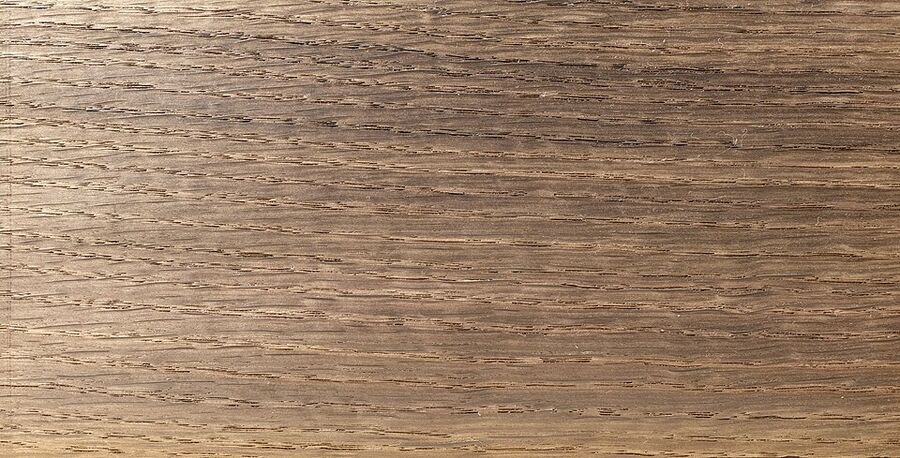
- English oak (Q. robur): Janka 1,120 lbf, about 675 kg/m3; light to medium brown, often with an olive cast.
- Sessile oak (Q. petraea): Janka 1,120 lbf, about 710 kg/m3; Wood Database calls it nearly identical to English oak, with a medium yellowish-brown colour. Both are in the white oak group, and they are sold together.
- Brown oak: oak (almost always English) infected by the fungus Fistulina hepatica, which gives a rich golden-brown wood once dried. Wood Database says demand is high and prices are high. Hearne lists it at $15-19.
- Bog oak: oak preserved for centuries or millennia in peat. Iron salts react with the tannins and turn it dark brown to nearly black. Supply is limited and Wood Database says prices are very high.
- Spessart oak: a premium German-origin selection listed by Hearne at $22-25 per bf. I did not find an independent definition of its grading, so treat it as a dealer's term.
- For the American counterpart see White oak; for the red group see Red oak.
Working and finishing
Wood Database reports good results with hand and machine tools, steam-bending and gluing. Pores are large (ring-porous, with tyloses), so fill them for a glass-smooth film finish. Pre-drill hard stock and avoid steel wool, which stains it on contact with tannins.
Staining and finishing colour
Takes stain and dye evenly. As with white oak, tannin makes ammonia fuming effective for a deep brown, and iron in water or tools can leave dark stains. Brown oak already has a golden to chocolate tone and is usually just oiled or waxed. Bog oak is dark through its full depth, so finish it clear.
Sustainability and handling
Wood Database reports English oak as not CITES-listed; its page gives the IUCN status as least concern, and Wikipedia's IUCN-based taxobox gives least concern for both Q. robur and Q. petraea (checked 2026-09-30). Forests in Europe are widely certified; FSC and PEFC both operate there (PEFC was founded by European small forest owners). If you ship to or sell in the EU, the EU Deforestation Regulation covers wood and furniture, applying from 30 December 2026 for large and medium operators and 30 June 2027 for micro and small operators (European Commission, checked 2026-09-30). US importers must make a Lacey Act plant declaration giving the scientific name, value and quantity of what they bring in (16 USC 3372(f)). Oak dust is a reported sensitizer; use extraction.
Popular projects
Dining and refectory tables, kitchen and built-in cabinetry, panelled interiors, flooring, doors and windows, veneered carcases, and barrels. Wood Database lists cabinetry, furniture, interior trim, flooring, boatbuilding, barrels and veneer as typical uses.
Buying notes
In Europe it is moderately inexpensive and available from yards in waney-edged or planed boards. In the US look for specialty importers selling it by the board foot, often as European flitch (boards cut in sequence from one log). Ask whether stock is English, sessile, or unspecified; for most furniture the difference is cosmetic. Brown and bog oak are sold by the piece and are much more expensive.
Typical projects
- dining tables
- cabinetry
- interior joinery
- flooring
- boat parts
- barrels
- veneered panels
Finishes that suit this
Hardware that suits this
More pictures

Sources
- www.wood-database.com/english-oak
- www.wood-database.com/sessile-oak
- www.wood-database.com/brown-oak
- www.wood-database.com/bog-oak
- en.wikipedia.org/wiki/Quercus_robur
- en.wikipedia.org/wiki/Quercus_petraea
- www.hearnehardwoods.com/price-list
- www.suttontimber.co.uk/trade/prices
- environment.ec.europa.eu/topics/forests/deforestation/regulation-de...
- www.law.cornell.edu/uscode/text/16/3372
- pefc.org/discover-pefc/what-is-pefc
- fsc.org/en/about-us
Researched 2026-09-30. Prices, conservation status and CITES listings on this page are indicative and were checked on that date. They change: confirm them with your supplier, and with the relevant authority before importing or exporting.