


Overview
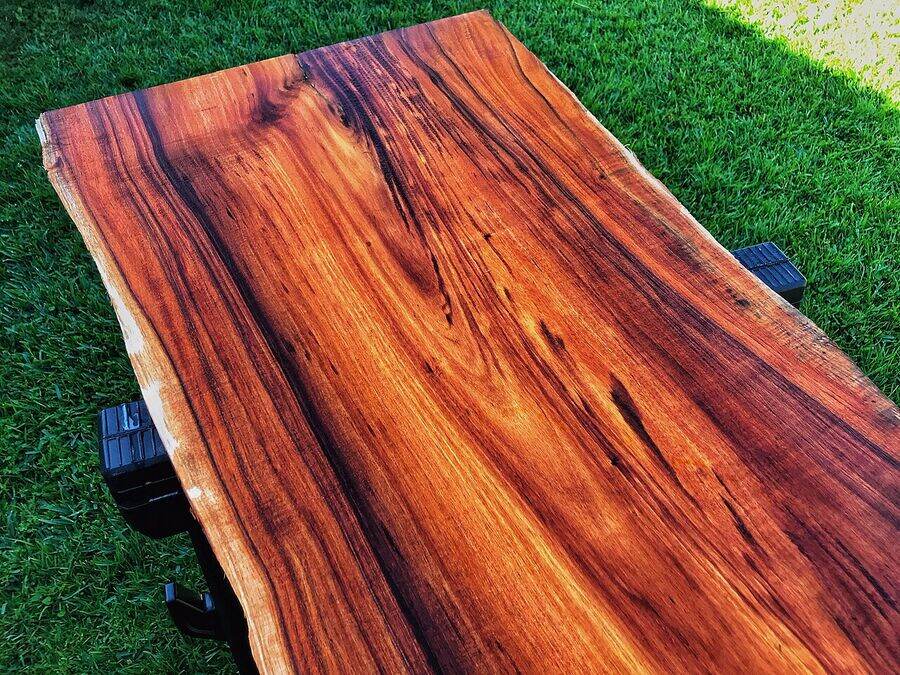
A live-edge slab is a lengthwise cut through a whole log, thick and wide, with the tree's natural edge left on one or both sides. Wikipedia describes live edge as a style of furniture that keeps the natural edge of the wood, with George Nakashima a well-known maker. Slabs make a table top in one or two pieces, with all the grain and character of the tree. They are also the heart of the live-edge and Resin and epoxy river tables look. Pick them when the single piece is the point.
Pros
- Dramatic, one-of-a-kind faces with natural figure.
- Few glue joints in a wide single top.
- Often milled from Urban wood logs that would otherwise be chipped.
- Wide range of species and prices, from rustic to premium.
Cons
- Drying is slow and unforgiving; thick slabs can crack, cup and twist.
- Wide solid tops move with the seasons; fixings must allow it.
- Heavy, awkward to move and flatten, and pricey in wide sizes.
- Bark can detach, and the edge may hold insects or debris.
Variants and subspecies
- Rustic grade: Cassens describes 1.25 to 2.25 inch slabs, 8 to 24 inches wide, with knots, crotch figure and fillable voids.
- Premium wide slabs: Lancaster prices black walnut from $13 per board foot under 20 inches wide to $28 at 45 inches and over.
- Species: walnut, ash, cherry, maple, oak, elm, burl and exotics, with prices rising for walnut, cherry and wide stock.
- Kiln-dried versus air-dried or green: kiln-dried is ready to use; green slabs need years of drying.
Working and finishing
Flatten with a router sled or wide planer; a wide slab seldom fits a normal planer. Fill voids and cracks with epoxy or butterfly keys. Fix the top to a base with slotted holes or figure-eight fasteners rather than screws, so it can move. Seal both faces and the edge with the same finish so moisture exchange is balanced. Remove loose bark and clean the edge first.
Staining and finishing colour
Walnut, cherry and koa usually need only oil, wax or hard-wax oil; the natural colour is the draw. Pale species such as ash and maple can be dyed. Let a slab reach equilibrium moisture before finishing. Any stain must be tested on the same board, since heartwood, sapwood and the bark edge take colour differently.
Sustainability and handling
Slabs are only as green as the log: urban removals and storm-felled trees are good sources (see the USRW definition in Urban wood); ask for species and origin. The drying rule of thumb from Lancaster Live Edge is one year of air drying per inch of thickness, then kiln drying, with up to 20 percent moisture entering the kiln and 12 percent or less coming out. Kitsap Dry Kiln recommends air-drying to 20 to 25 percent first, a kiln run of four to twelve weeks, and a final 8 to 12 percent, and notes that drying can exceed two years. Wear a mask when planing or sanding; dust is an irritant.
Popular projects
Dining tables, coffee tables, desks, bar tops, benches and floating shelves, and headboards.
Buying notes
Sold by the board foot (thickness times width times length divided by 144) or as a single priced slab; Cassens's example is a 2-inch walnut slab, 8 feet long and 22 inches wide, at $10 per board foot, about $290. Ask whether the slab is kiln-dried and its moisture reading, check for cracks and rot, and look at both faces. Avoid green slabs unless you plan to dry them, and note that wide dried walnut sits at the top of the price range.
Typical projects
- dining and coffee tables
- benches
- desks
- bar tops
- shelves
- headboards
Finishes that suit this
Sources
Researched 2026-09-30. Prices, conservation status and CITES listings on this page are indicative and were checked on that date. They change: confirm them with your supplier, and with the relevant authority before importing or exporting.